




Three Legged Pine Table
A three legged pine table offers sturdy vernacular charm, standing firm on uneven floors while bringing rustic warmth to any room.
Three Legged Pine Table
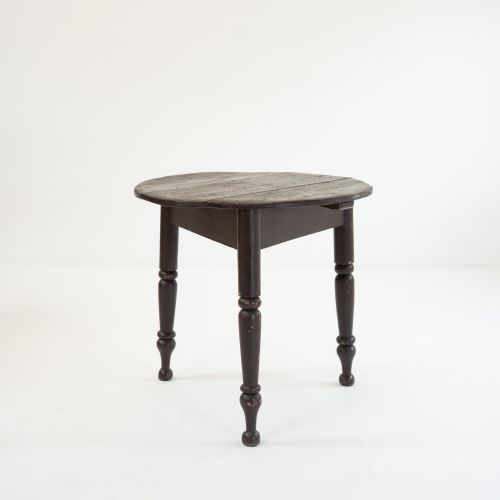
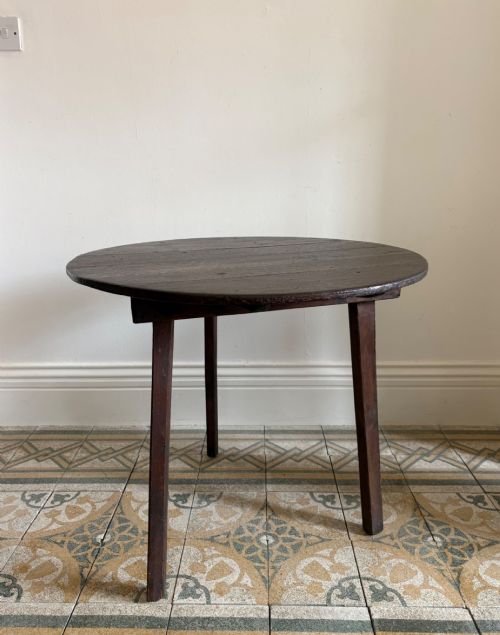
A three legged pine table most commonly appears here as a cricket table, an enduring form rooted in British vernacular tradition. These pieces span the eighteenth and nineteenth centuries, including items from Welsh and English country workshops.
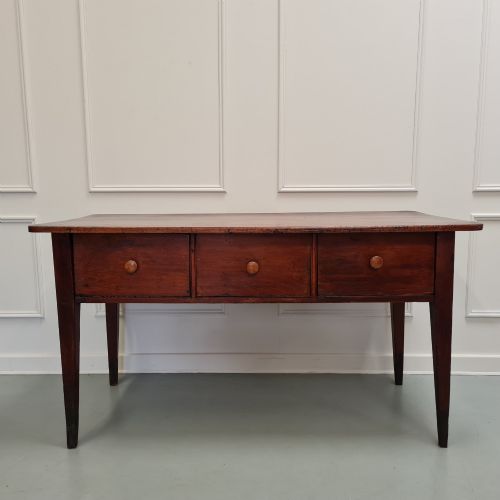
Beyond traditional cricket tables, the selection incorporates occasional tables, side tables, and larger serving pieces sharing similar timber construction. Makers utilised pine alongside oak, fruitwood, and cast iron to build functional furniture for taverns, farmhouses, and domestic interiors.
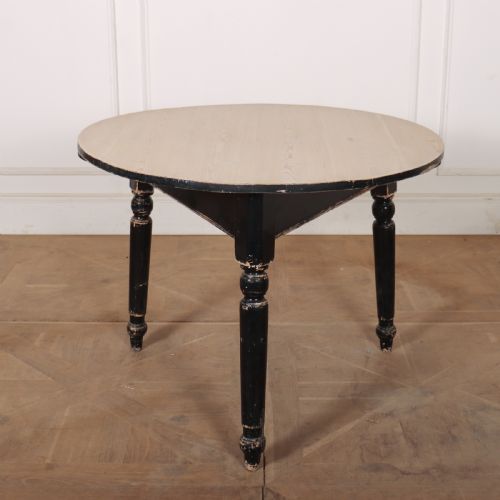
Regional variations emerge across English and Welsh examples, showing distinct turnings and paint finishes. Buyers encounter both stripped natural timber and aged painted surfaces reflecting generations of use.
How they were made
Construction relies upon solid pine for tops and bases, occasionally paired with oak plank tops or fruitwood elements. Carpenters employed pegged joints and sturdy stretchers to stabilise the three-legged frame.
Three legs mean no midnight stumbles cause a wobble on uneven flagstones.
What varies in quality
Quality depends upon the integrity of the original construction and the character of the timber. Tables retaining honest patination and untouched structural joinery stand apart from heavily restored examples.
The sophistication of the turning on the three legs and the balance of the proportions dictate the visual success of each piece. Regional distinctiveness, such as robust Welsh vernacular framing, adds depth of character.
The Three Legged Pine Table Glossary
- Cricket table
- A small round table supported by three legs, historically designed to stand steady on uneven flagstone floors. This form sits at the core of British vernacular furniture.
- Vernacular furniture
- Everyday objects made by local tradesmen using regional materials rather than following metropolitan high-style designs. These pieces prioritise practical utility and local character.
- Bobbin turning
- A type of lathe-turned decoration resembling a string of spools or bobbins. It appears frequently on the legs of nineteenth-century tables.
- Plank top
- A table top constructed from wide solid boards joined together. Oak and pine feature commonly in these sturdy surfaces.
- Patina
- The surface sheen and colour developed through age, wear, and cleaning over many decades. It serves as a key indicator of authenticity.
Three Legged Pine Table: Frequently Asked Questions
Why do these tables have three legs?
Three legs ensure that a table rests firmly on uneven cottage floors without rocking. This practical geometric certainty made the design popular in farmhouses and taverns.
Over centuries, this functional requirement evolved into a distinct aesthetic form appreciated in country interiors.
Where were cricket tables used?
They served as versatile household items used beside chairs, for dining, or for games in rural homes and public houses. Their compact footprint allowed them to fit into small spaces.
Today they function effectively as lamp tables or small centre tables in modern rooms.
How do I care for antique pine?
Keep wooden furniture away from direct heat sources and extreme humidity fluctuations to prevent splitting. Regular dusting with a dry cloth maintains the surface.
Avoid harsh modern chemical polishes that can degrade historical wax and paint finishes.
Are painted finishes original?
Many pieces retain layers of old or original paint applied to protect the soft pine timber. The presence of worn historical pigment adds significantly to the visual appeal.
Examining the underlying layers helps determine whether a finish dates to the period of manufacture.