





Traditional Swiss Wood Carving
Traditional Swiss wood carving brings expressive animal and rustic figures into the home through finely whittled lindenwood and rich regional vernacular styling.
Traditional Swiss Wood Carving
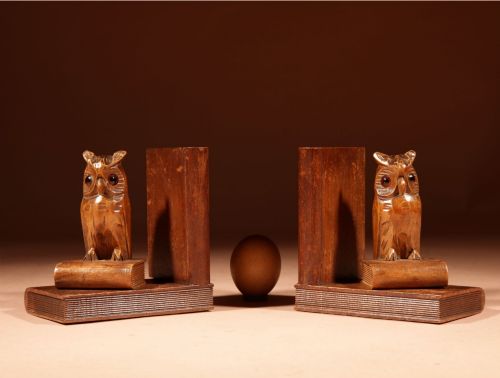
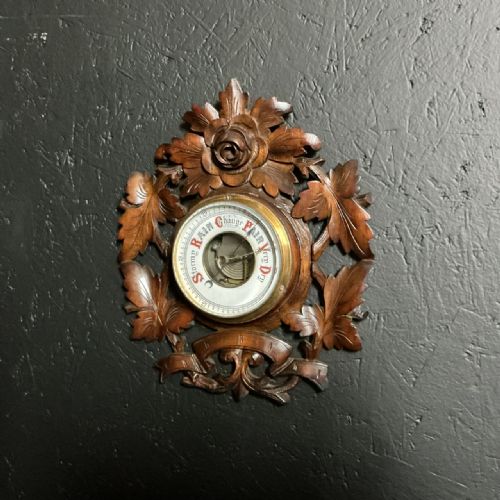
Traditional Swiss wood carving encompasses an array of decorative and functional objects including bookends, inkstands, table lamps, mantel clocks, wall barometers, and figures. These pieces frequently manifest in Black Forest, Swiss Folk Art, and Swiss Vernacular styles spanning the nineteenth century through the Edwardian era.
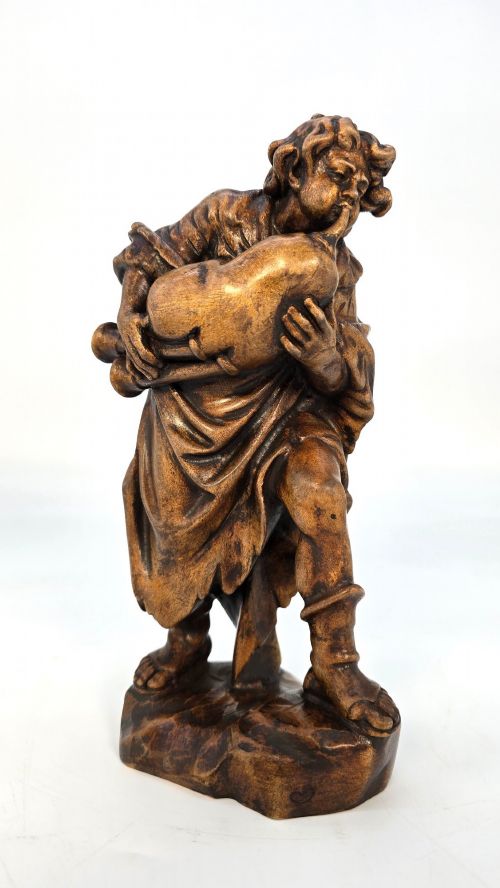
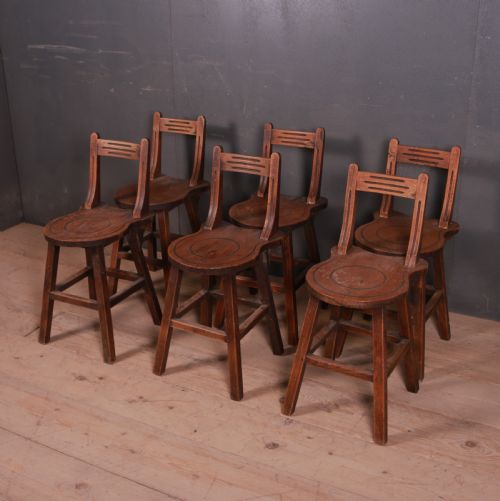
The objects most commonly encountered on this page range from figural sculptures of animals like bears and owls to household furnishings such as chairs and lovespoons. Many pieces serve a practical purpose while displaying elaborate hand-carved details characteristic of Alpine workshops.
Makers utilised native timbers to construct enduring items that capture nineteenth-century rural aesthetics. Collectors encounter both small decorative figurines and larger functional items like clocks and barometer frames.
How traditional Swiss wood carving pieces were made
Carvers shaped these works primarily from lindenwood, limewood, and yew-wood, selecting timbers that accepted fine chisel work without splitting. Artisans utilised hand tools to carve detailed fur, feathers, and foliage directly into the solid wood.
Metal and brass components were occasionally integrated for mechanisms such as clock movements and barometers, while glass protected delicate dials. Fabric elements sometimes supplemented interior components on lamps and furnishings.
Traditional Swiss Wood Carving Retail Price Guide 2026
Typical asking prices for traditional swiss wood carving among the pieces listed under this phrase on Sellingantiques today, from the lower quarter to the upper quarter. They describe what is for sale here now, not the wider market.
What varies in quality in traditional Swiss wood carving
Quality in traditional Swiss wood carving rests upon the depth of relief and the naturalism achieved in anatomical forms, particularly in animal figures and human subjects. Master carvers imparted distinct expressions and fluid motion, whereas lesser examples remain stiff and simplified.
The integrity of the timber and the preservation of crisp chisel marks across intricate surfaces dictate the desirability of a piece. Finer items retain their original surface patination without excessive sanding or modern restoration blurring the hand-carved textures.
The Traditional Swiss Wood Carving Glossary
- Lindenwood
- A pale, close-grained timber frequently utilised by carvers for its cooperative texture and lack of prominent grain. This wood allowed artisans to execute deep, intricate undercutting without splintering.
- Black Forest
- A regional style of wood carving originating from the European mountainous borderlands associated with wildlife and rustic domestic objects. Pieces in this aesthetic typically depict bears, owls, and forest foliage.
- Treen
- Small handmade wooden household utensils and decorative objects produced for everyday utility or display. These items showcase domestic woodworking traditions across centuries.
- Escabelle
- A traditional style of wooden chair featuring pegged joints and vernacular joinery common in Alpine regions. Such seating forms part of regional domestic furnishings.
- Lovespoon
- A decorative wooden spoon carved as a token of affection, often featuring symbolic motifs such as leaves and vines. Carvers traditionally fashioned these from single pieces of timber.
Traditional Swiss Wood Carving: Frequently Asked Questions
How were these wooden items used?
These carved pieces served both practical domestic roles and purely decorative functions in period interiors.
Items like inkstands, chairs, and table lamps provided daily utility while animal sculptures and barometers adorned studies and living spaces.
What woods were used for carving?
Carvers predominantly utilised lindenwood, limewood, and yew-wood sourced from local forests.
These timbers offered consistent grain structures that permitted detailed chisel work for fur, feathers, and botanical motifs.
How do I date these carvings?
Dating relies on stylistic indicators, integrated hardware, and construction methods associated with nineteenth-century and Edwardian workshops.
Evaluating the wood patination and mechanical components helps place items within specific periods.