


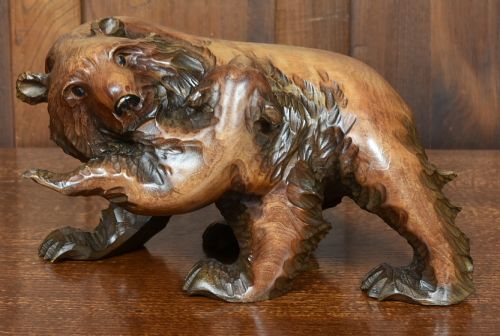
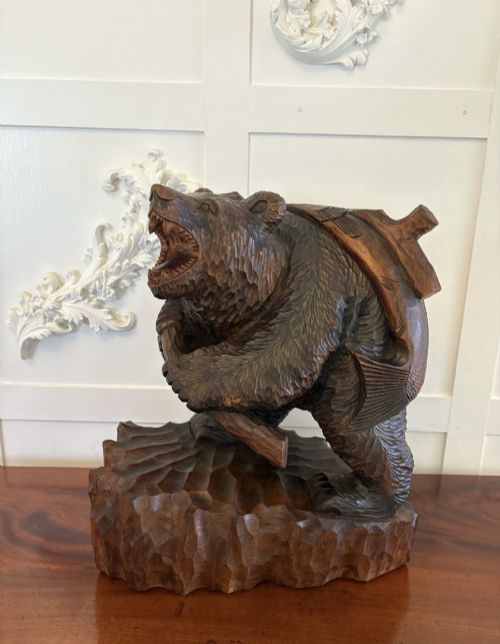
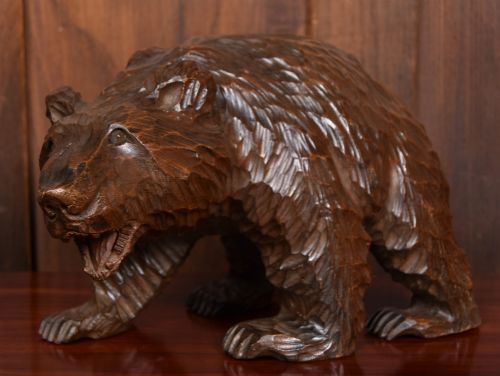
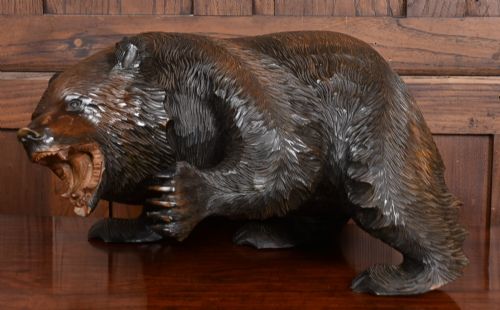
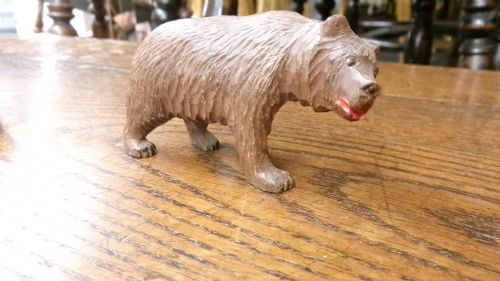


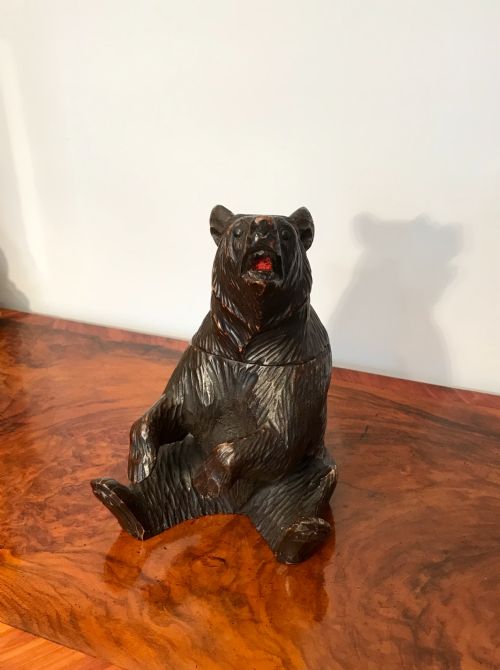
Hand Carved Bear Figure
These hand carved bear figure carvings combine the charm of folk art with meticulous timber work, offering character and history for any room.
Hand Carved Bear Figure
A hand carved bear figure represents a rich tradition of animal sculpture spanning the Victorian and Edwardian eras, as well as the early twentieth century. These carvings frequently take the form of Black Forest or Swiss and Japanese folk art, recording naturalistic poses of bears with cubs, fish, or functional elements like inkstands and floor lamps. Buyers encounter everything from miniature figures to substantial linden wood statues.
The objects on this page show significant variety in both scale and purpose. Alongside standalone decorative sculptures and statuettes, the inventory includes practical items such as lamp bases and inkstands fitted with glass or metal components. The regional carving traditions present span European workshops and Japanese woodcraft from the nineteenth century onward.
How they were made
The makers of these items relied primarily on linden wood, walnut, and other dense hardwoods, shaping the timber with hand gouges and chisels to capture the thick fur and muscle structure of the animals. Workshops often utilised linden wood for its fine grain, which allowed carvers to execute deep relief and lifelike textures without splitting. Details such as stud eyes were integrated into the wooden heads to bring expression to the piece.
Regional carving schools developed distinct technical approaches to surface finish. Black Forest pieces often display dark staining and varnished patination to accentuate the dramatic grain of the wood. Japanese folk art carvings employ precise knife work to define individual tufts of fur and naturalistic postures.
Hand Carved Bear Figure Retail Price Guide 2026
Typical asking prices for hand carved bear figure among the pieces listed under this phrase on Sellingantiques today, from the lower quarter to the upper quarter. They describe what is for sale here now, not the wider market.
What varies in quality
Quality in a hand carved bear figure rests upon the anatomical accuracy and depth of the carving. Superior pieces demonstrate an intimate understanding of bear anatomy, with fluid movement in the limbs and realistic tension in the paws. Weaker carvings appear stiff, with flat tool marks and uniform fur texture lacking individuality.
The handling of secondary materials also separates the grades of work. Fine examples incorporate well-fitted glass eyes, original metal mountings for inkstands, or integrated wooden bases that complement the sculpture. Pieces missing key functional elements or bearing clumsy later repairs sit lower down the scale.
The Hand Carved Bear Figure Glossary
- Black Forest
- A regional style of wood carving originating in the mountainous borderlands of Central Europe, particularly associated with realistic animal figures and furniture. These items frequently depict bears engaged in human activities or natural poses.
- Linden wood
- A pale, fine-grained timber favored by carvers for its softness and consistent density. It permits intricate detailing without excessive risk of splintering.
- Inkstand
- A desk accessory featuring a tray for pens and one or more inkwells. In carved bear figures, these often combine taxidermy or wood sculpture with glass or metal vessels.
- Folk art
- Objects created by self-taught or traditional artisans within a specific cultural community. These works prioritize utility, regional iconography, and direct expression over academic academic rules.
Hand Carved Bear Figure: Frequently Asked Questions
What materials were used to make these bears?
Carvers utilised various timbers, most notably linden wood and walnut, alongside occasional metal and glass components for eyes or inkwells.
The choice of wood depended on the regional tradition, with softer hardwoods allowing for deep fur texturing and complex poses.
How do I date a carved wooden bear?
Dating relies on stylistic clues, wood patination, and construction methods, with pieces spanning the Victorian and Edwardian periods.
Examining the base, eye materials, and wear patterns helps distinguish nineteenth-century examples from later twentieth-century work.
Were these carvings purely decorative?
While many pieces functioned as standalone sculptures and statuettes, others served practical purposes in the home or office.
Artisans incorporated bear figures into functional objects such as floor lamps, desk inkstands, and table lamps.
What is the difference between styles?
Black Forest carvings tend toward dark patination and dramatic poses, whereas Japanese folk art examples often feature distinct knife work and naturalistic observation.
Both traditions capture the animal's form but reflect the unique aesthetic priorities of their respective regional workshops.