

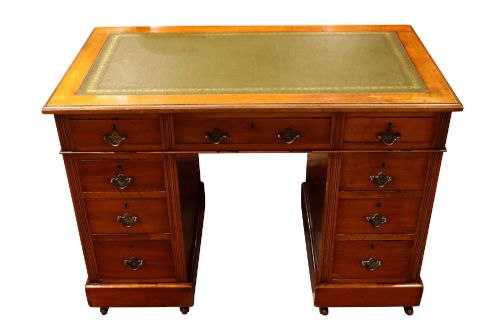
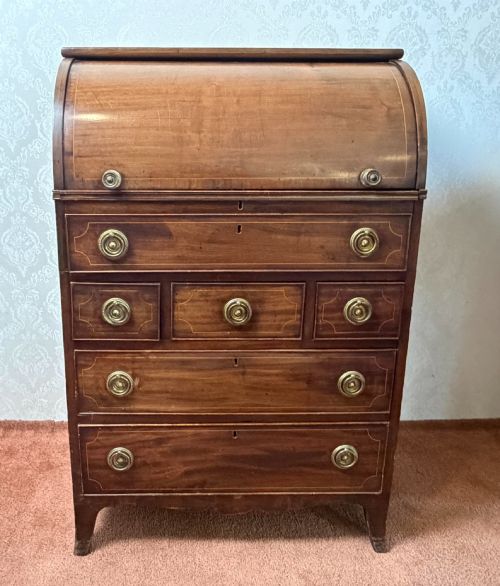
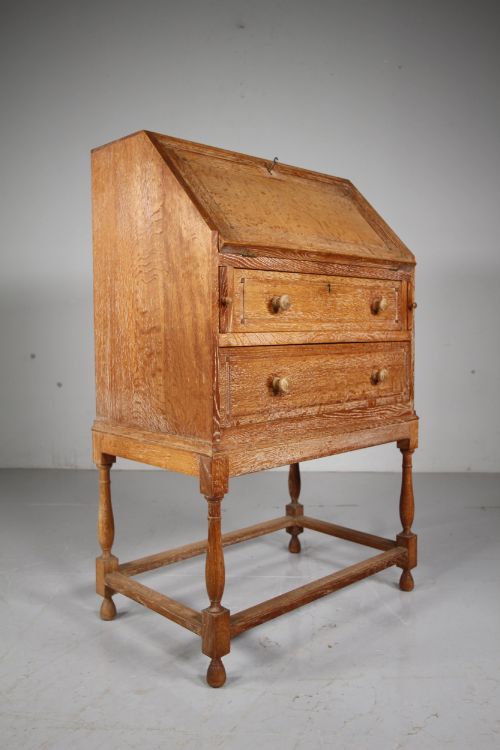
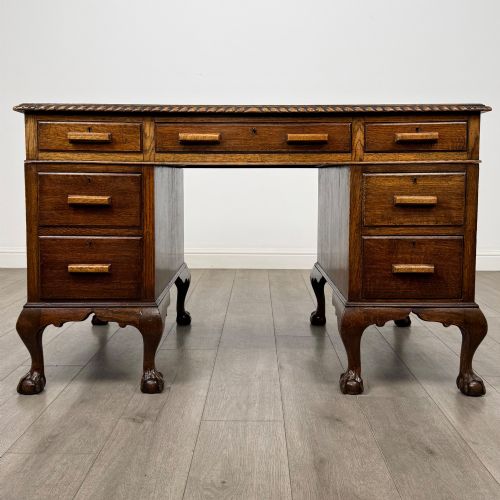
Traditional Study Bureau
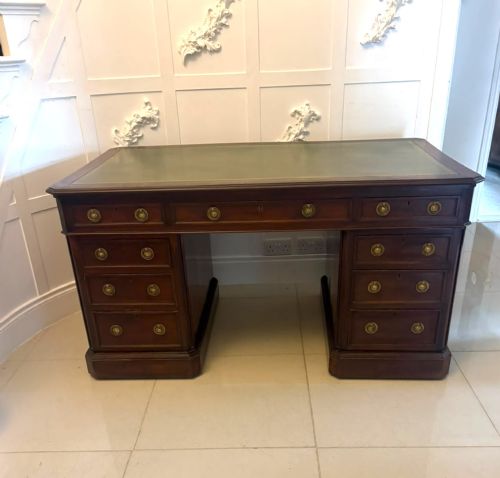
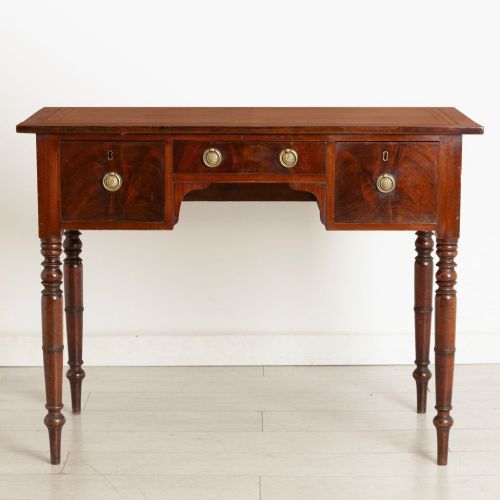
A traditional study bureau provides a dedicated writing space, bringing timber warmth and orderly pigeonholes to the room.
Traditional Study Bureau
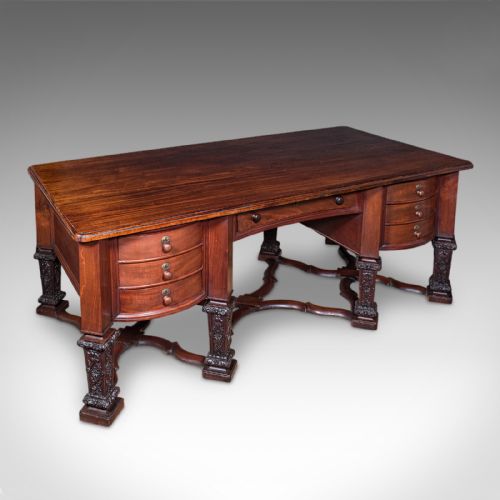
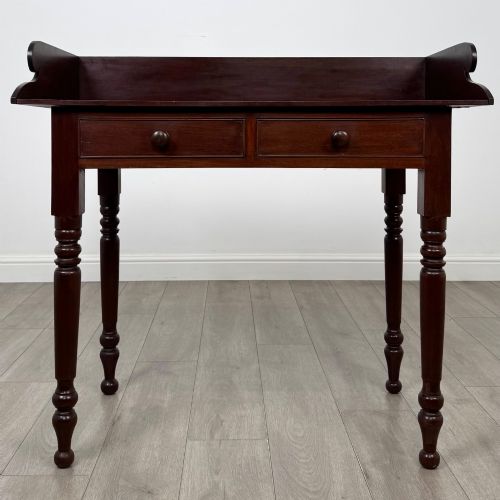
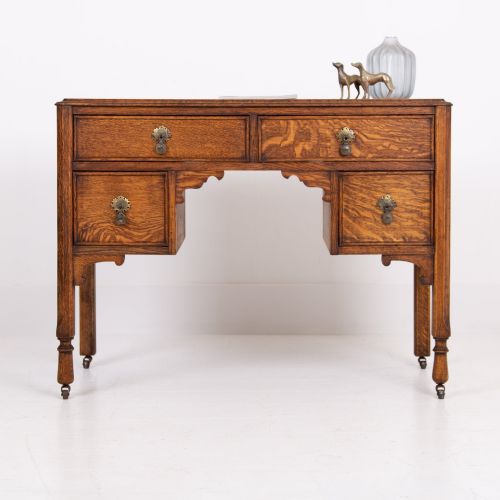
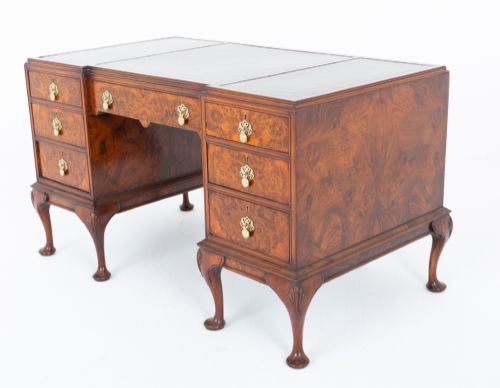
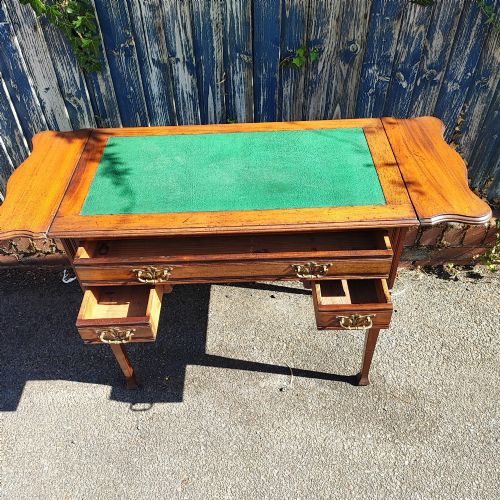
A traditional study bureau encompasses various forms designed for writing and correspondence, spanning pedestals, kneeholes, writing tables, and fall-front writing desks.
The versions most frequently met on this page include mahogany, oak, and walnut pedestal desks alongside Edwardian and Victorian writing tables.
Originating primarily from the nineteenth and early twentieth centuries, these pieces incorporate revival styles such as Queen Anne, Georgian, and Chippendale alongside utilitarian banker and partner desks.
How they were made
Cabinet makers utilised solid woods and veneers including mahogany, oak, walnut, burr walnut, and satinwood, often applying detailed inlay work.
Writing surfaces frequently incorporated inset leather panels, whilst structural hardware utilised brass for handles and drawer pulls.
Construction techniques combined traditional joinery with specialised mechanisms like tambour shutters and drop-side flaps.
Listings feature woods such as mahogany, oak, walnut, burr walnut, and satinwood across Victorian, Edwardian, and Georgian periods.
What varies in quality
The grade of timber selection sets the standard, ranging from plain utility cuts of oak to highly figured burr walnut and banded satinwood veneers.
Detailing in the cabinetwork distinguishes fine production, seen in crisp boxwood stringing, hand-cut dovetailing, and the preservation of original brass hardware.
Makers' marks and labels provide documentary evidence of workshop origin, elevating the standing of specific pieces above unmarked commercial equivalents.
Heals of London·Wylie and Lochhead Glasgow·Gillows·Maple and Co
The Traditional Study Bureau Glossary
- Pedestal desk
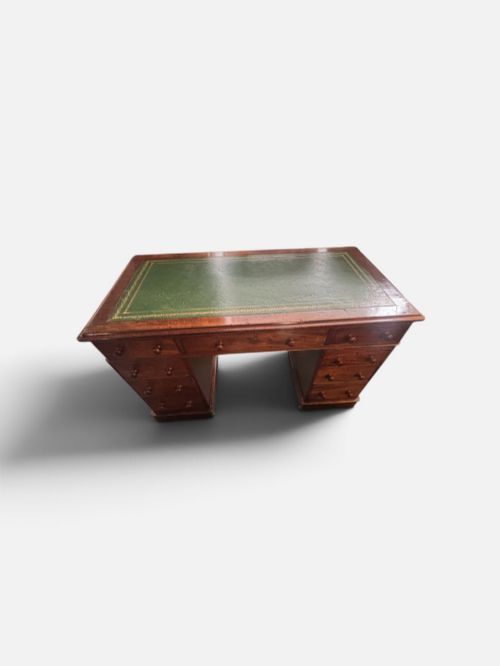
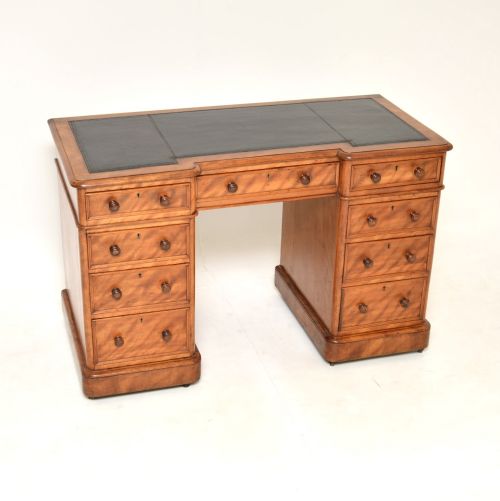
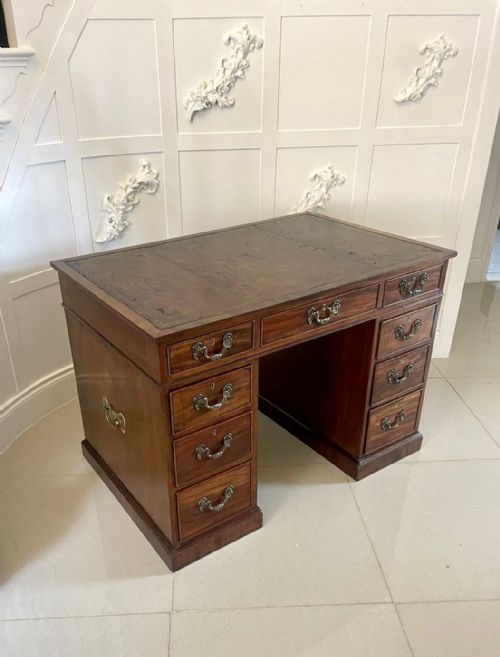
- A writing desk built with two supporting banks of drawers flanking a central kneehole space. These often feature inset leather writing surfaces on top.
- Tambour
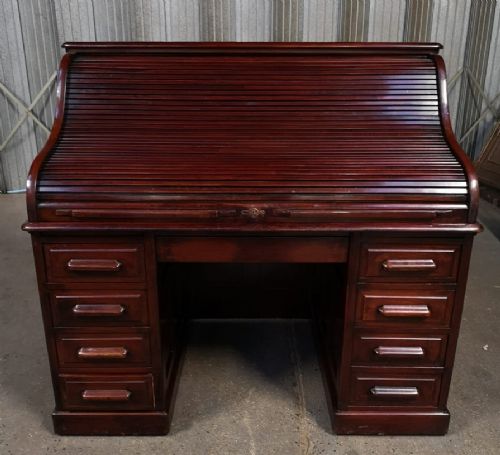
- A flexible shutter formed of narrow vertical strips of wood glued to canvas, allowing a desk top to slide open smoothly. This mechanism conceals pigeonholes and small drawers.
- Kneehole desk
- A compact writing desk featuring a central recess for the legs, positioned beneath a single drawer and flanked by pedestals. They serve well in smaller studies.
- Carlton house desk
- A refined writing desk featuring a raised superstructure of small drawers and compartments curving around the back and sides of the leather-topped writing surface. Originating in the late eighteenth century, revival versions appeared frequently in the Edwardian era.
- Bureau Mazarin
- An elaborate kneehole writing cabinet dating to the late seventeenth century, often characterised by intricate marquetry and a central cupboard recessed beneath the writing surface.
Traditional Study Bureau: Frequently Asked Questions
What is a pedestal desk?
A pedestal desk is a heavy writing table supported by two columns of drawers, typically topped with a panel of tooled leather.
These pieces offer substantial workspace and generous storage within domestic studies and libraries.
How do I care for leather desk tops?
Leather writing surfaces require gentle cleaning with a slightly damp cloth followed by occasional neutral wax treatments to prevent cracking.
Avoiding direct sunlight helps preserve the colour and suppleness of the hide over decades of daily use.
Are roll top desks Victorian?
Roll top desks appear across both Victorian and Edwardian periods, utilising tambour mechanisms to secure the writing deck.
Victorian examples generally use solid mahogany or walnut, whereas Edwardian versions frequently employ oak.
What is a Davenport desk?
A Davenport is a compact Victorian desk featuring a sloping writing lid above a side-opening set of drawers.
Its small footprint made it ideal for boudoirs and modest Victorian drawing rooms.
How do I identify Georgian revival pieces?
Georgian revival desks imitate eighteenth-century proportions and mahogany veneers, often produced during the early twentieth century.
Examination of the secondary woods and internal drawer construction usually reveals the later manufacturing date.