
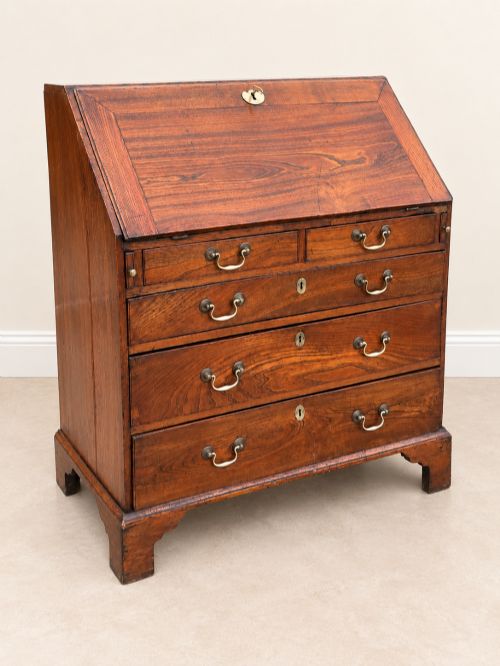
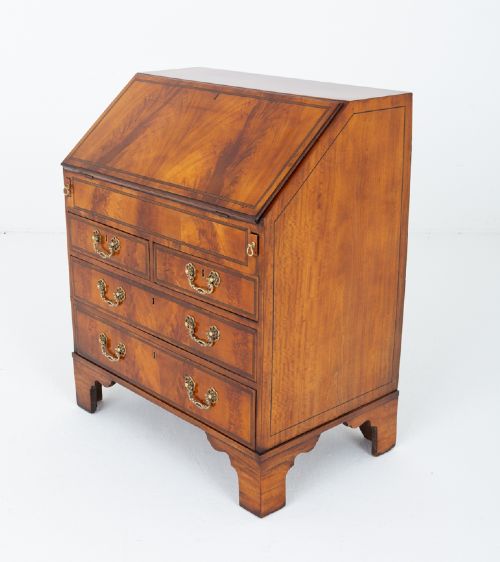
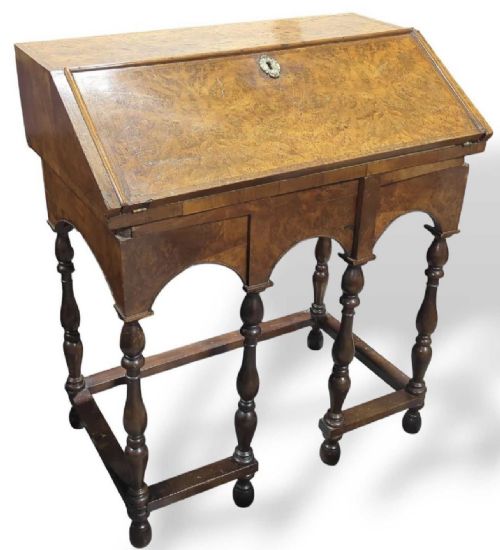
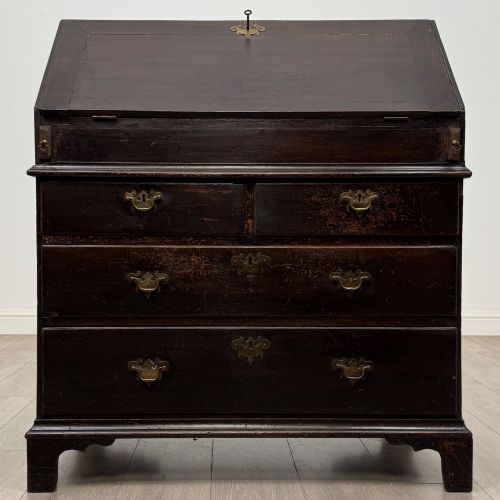
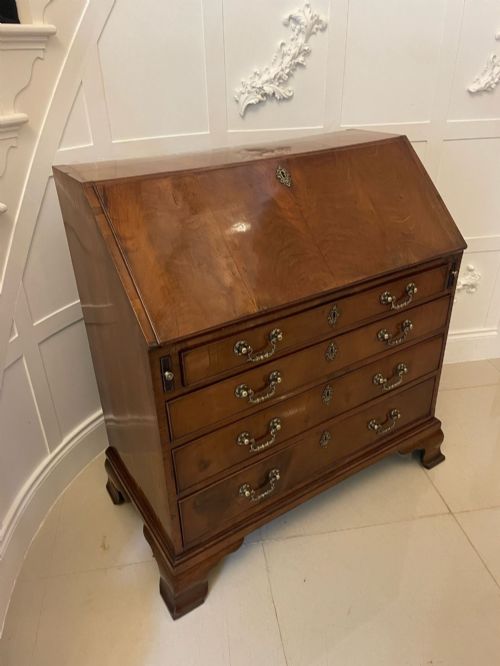
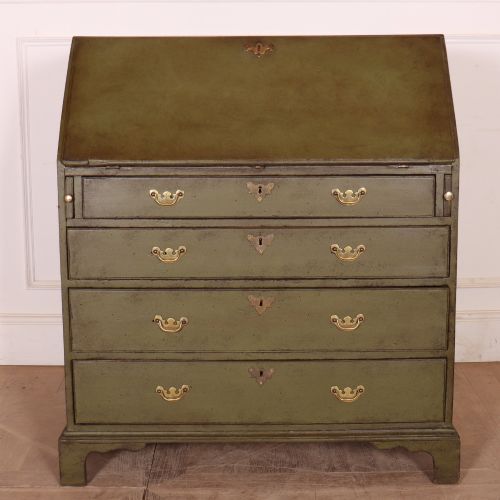


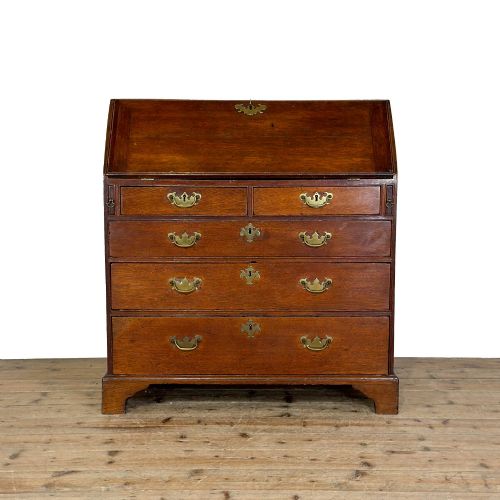
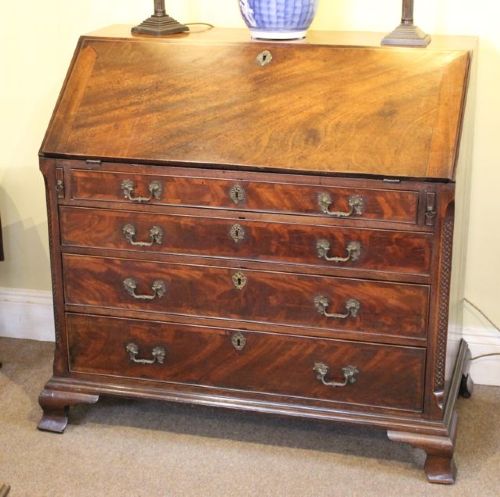
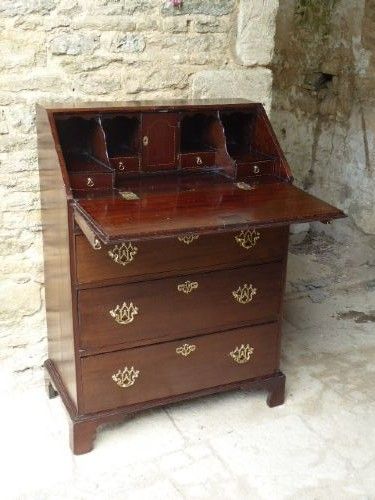
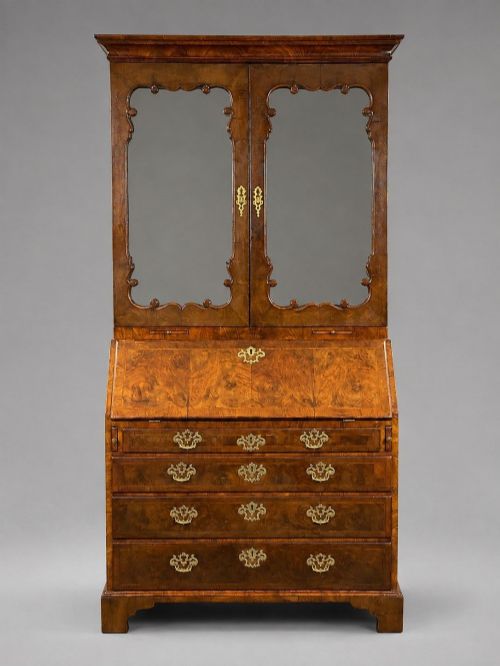
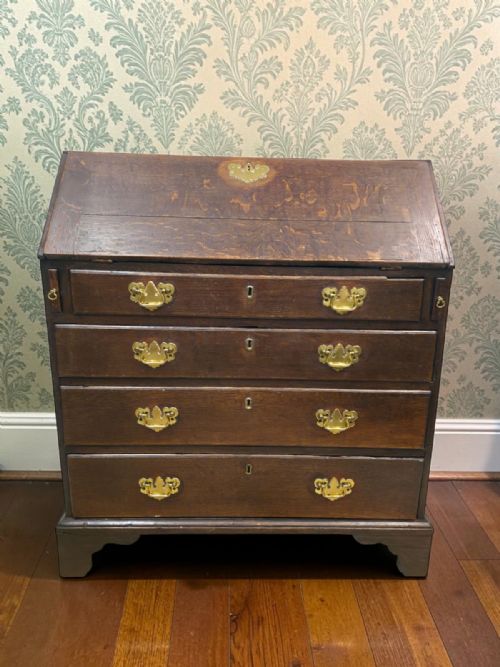
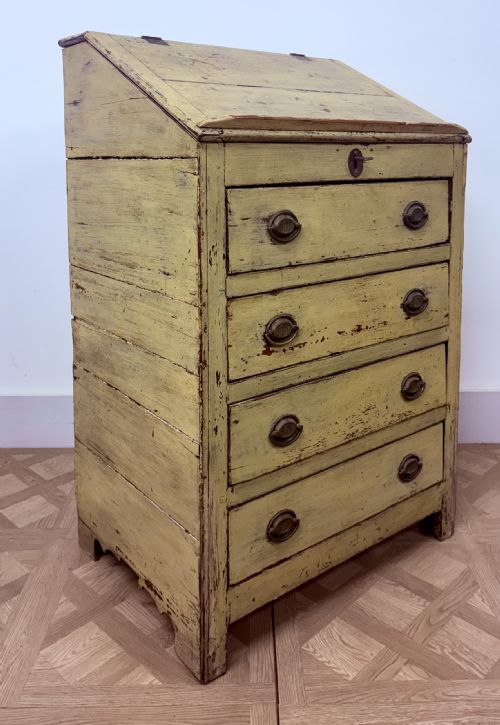
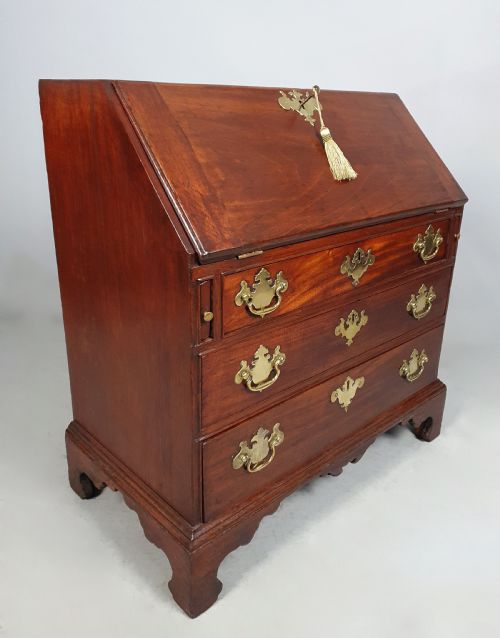
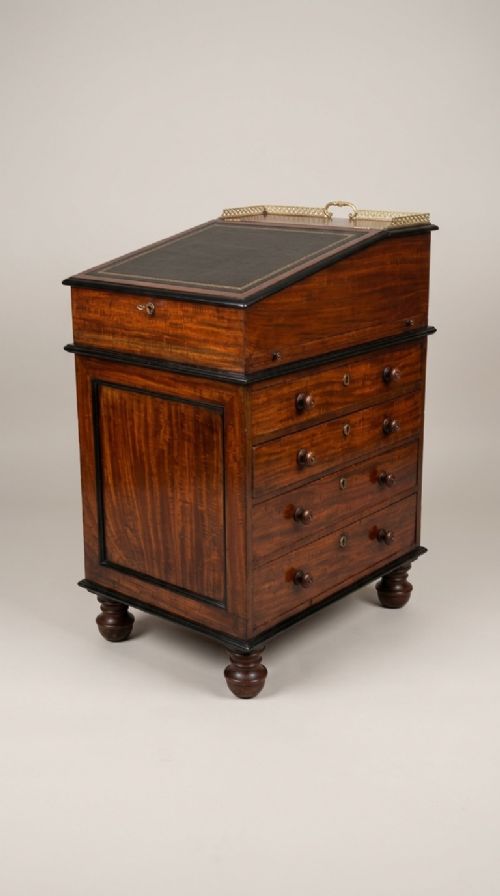
Georgian Writing Slope Bureau
A georgian writing slope bureau brings practical domestic writing space and secret compartments into a room with understated architectural presence.
Georgian Writing Slope Bureau
A georgian writing slope bureau is a versatile piece of furniture designed for correspondence and storage, combining a slant-front writing surface with banks of interior drawers and pigeonholes. When exploring this selection, a buyer encounters everything from compact fall-front desks to taller bureau bookcases and clerks' desks.
The pieces span the eighteenth and nineteenth centuries, including distinct reigns such as George I, George II, and George III, alongside Regency and Edwardian revivals. Oak, mahogany, and walnut appear frequently in regional English workshops and more elaborate city commissions.
Forms range from simple provincial elm and oak workstations to sophisticated cabinet work in figured walnut, burr walnut, and padauk wood. Many rest on bracket feet or stands, offering practical proportions for modern domestic placement while retaining period character.
Materials and Construction
Cabinet makers built these pieces using solid timbers like oak, elm, and mahogany, frequently applying figured walnut or burr walnut veneers to primary display surfaces. Secondary woods such as cedar and pine often form internal drawer linings and hidden compartments.
Joinery relied on dovetail construction for drawers and sturdy frame-and-panel techniques for carcases, ensuring durability across centuries of daily opening and closing. Brass handles, escutcheons, and original ironwork provided functional hardware that secured the drop-front writing surface.
Surfaces received hand-applied polish, wax, or traditional paint finishes that highlighted the natural grain pattern and colour of the chosen wood. Interior fittings required precise woodworking to accommodate secret wells, small drawers, and sliding compartments.
Materials span mahogany, oak, walnut, burr walnut, elm, fruitwood, padauk, and cedar, complemented by brass and leather.
Distinctions in Execution
The distinction between standard utility items and exceptional examples lies in the choice of timber and the complexity of the interior arrangement. Master cabinet makers selected veneers with striking grain figures and handled secondary woods with equal care.
Refinement shows in the execution of the pigeonholes, small drawers, and secret compartments concealed behind the fall-front writing surface. Superior pieces retain original brass hardware, working locks, and structurally sound writing slopes that withstand regular use.
Gillows of Lancaster
The Georgian Writing Slope Bureau Glossary
- Bureau
- A desk featuring a sloping fall-front that opens to reveal a fitted interior of small drawers and pigeonholes. It typically sits above a chest of drawers.
- Fall-front
- The hinged writing flap that drops down to a horizontal position for writing. When closed, it conceals the inner compartments.
- Davenport
- A compact form of writing desk featuring a sloped top above a pedestal of drawers. It originated in the Regency period.
- Escritoire
- An alternative term for a writing cabinet or bureau. These pieces often incorporate numerous internal compartments for stationery and documents.
- Bracket foot
- A simple architectural foot supporting the corners of case furniture. It often takes an ogee or shaped profile on eighteenth-century pieces.
Georgian Writing Slope Bureau: Frequently Asked Questions
What is inside a bureau?
Opening the fall-front reveals an arrangement of small drawers, pigeonholes, and central compartments designed for storing letters and writing materials. Many examples include secret compartments or sliding wells.
These internal fittings vary from simple oak layouts in provincial pieces to architectural multi-tiered drawers in walnut and mahogany commissions.
How do I date a bureau?
Dating relies on timber choice, construction methods, and hardware styles. Eighteenth-century pieces frequently employ oak, walnut, or early mahogany with hand-cut dovetails.
Later nineteenth-century examples and Edwardian revivals often show machine-sawn elements and different secondary woods inside the drawers.
Where were these desks used?
They served as private workspaces in domestic parlours, libraries, and bedrooms for managing correspondence and household accounts. Clerks also used larger utilitarian oak desks for business.
The compact footprint allowed them to function in principal living areas without dominating the room.
Are writing slopes different?
A writing slope is a portable box placed on a table for writing, whereas a bureau is a complete piece of furniture incorporating storage drawers below.
Both items share the characteristic sloping writing surface and internal compartment layout designed for paper and ink.