


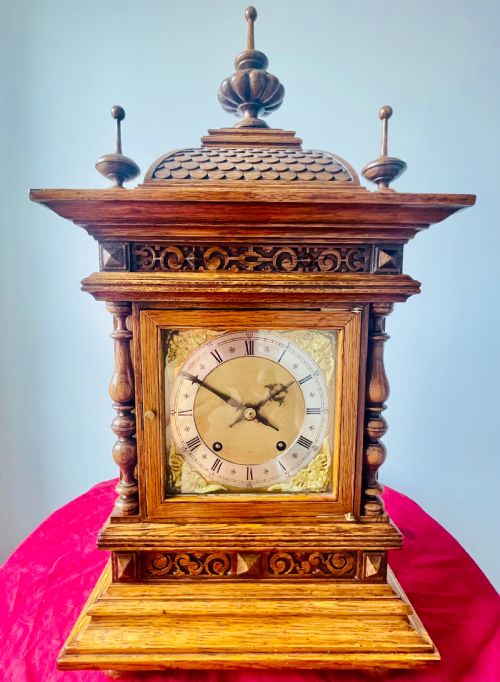


Traditional Striking Mantel Clock
These traditional striking mantel clocks bring audible mechanical rhythm and period cabinetwork into a room.
Traditional Striking Mantel Clock
A traditional striking mantel clock is a self-contained timekeeper designed to stand on a shelf or mantelpiece while sounding the hours and often the quarters. When you search for this phrase, you encounter mechanical clocks driven by springs or weights, ranging from compact desk versions to substantial architectural cases.
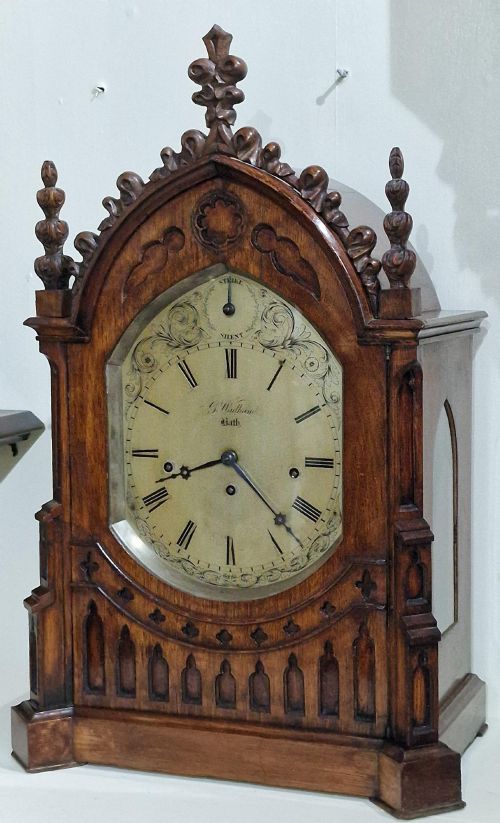
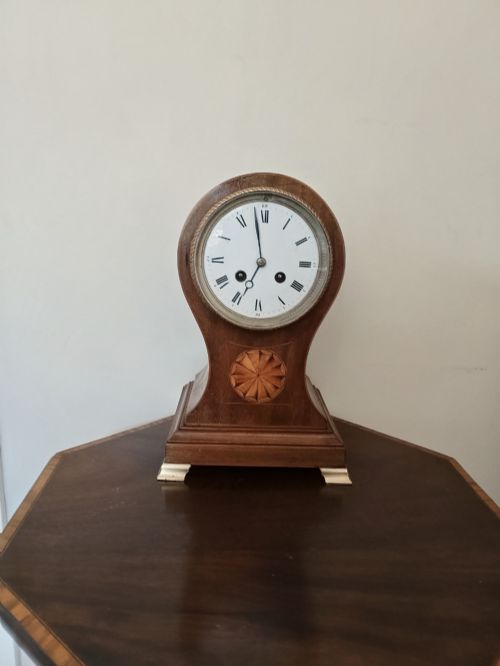
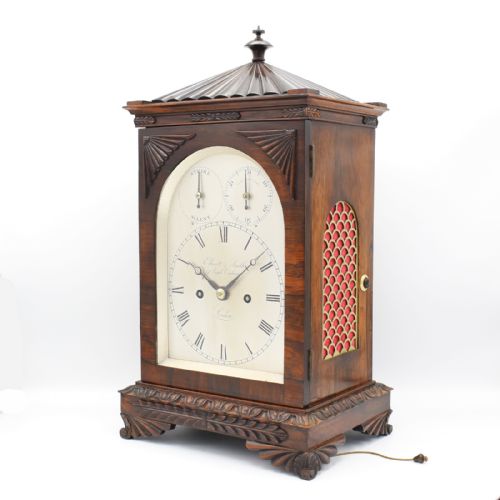
The selections span several centuries, drawing heavily on Georgian and Victorian periods alongside Edwardian and later 20th-century examples. You will frequently meet mahogany and walnut table clocks, alongside architectural pieces fashioned from black slate or marble and occasional brass lantern forms.
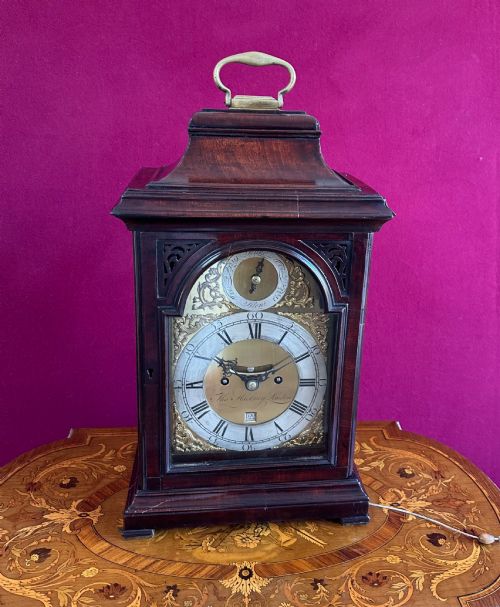
Makers ranged from provincial English watchmakers to notable London firms and Continental workshops such as Winterhalder & Hofmeier. The predominant formats are bracket clocks with carrying handles and architectural mantel models featuring visible glass panels or enamel dials.
Materials and Construction
Cabinetmakers utilised dense timbers such as mahogany, walnut, and oak to house the delicate brass movements, frequently enhancing the exterior with fine inlay, brass mounts, or green and gold lacquer. These timber cases protected the intricate gear trains while providing stable housing for the pendulum or balance wheel.
The mechanical interiors rely on brass wheels, plates, and fusee or spring-driven mechanisms designed to regulate time and drive striking trains on bells or gongs. Dials incorporated white enamel with painted numerals or engraved brass chapter rings protected behind bevelled glass doors.
Assessing Quality
Quality rests in the precision of the mechanical movement and the integrity of the cabinetwork. Fine examples employ complex twin or triple fusee gear trains that maintain even tension for accurate timekeeping, whereas simpler models rely on standard spring barrels.
The distinction between ordinary and superior pieces is found in the hand-finished engraving on brass dial plates, the weight of the cast bronze or brass mounts, and the crispness of the timber cabinetry. Makers who signed their work on the dial or movement backplate generally maintained higher standards of horological execution.
Mappin & Webb·Winterhalder & Hofmeier·Goldsmiths & Silversmiths·Mathias Bauerle·John Witherston
The Traditional Striking Mantel Clock Glossary
- Fusee
- A conical pulley used with a chain or cord to maintain equal power as the mainspring unwinds. This device ensures consistent force reaches the escapement for better timekeeping accuracy.
- Verge escapement
- An early type of mechanism that controls the release of the gear train using a crown wheel and pallets. It is commonly found in older bracket clocks.
- Quarter striking
- A mechanism that sounds the quarters of the hour on bells or gongs in addition to striking the full hour count. It requires a more complex gear train than standard hourly striking.
- Platform escapement
- A self-contained balance spring and escapement assembly used in portable clocks such as carriage clocks. It allows the clock to keep time without needing a vertically hanging pendulum.
- Chapter ring
- The outer ring on a clock dial that bears the hour numerals. In traditional pieces, these are frequently engraved brass or painted enamel.
Traditional Striking Mantel Clock: Frequently Asked Questions
How do I wind a striking mantel clock?
Most mechanical models require a key inserted into the dial holes to tension the springs or lift the weights. Care must be taken not to over-wind the mechanism.
Striking trains often have a separate winding arbor from the timekeeping train, meaning both must be wound regularly to maintain full function.
What is the difference between a bracket clock and a mantel clock?
Bracket clocks originally featured wall brackets for support and typically possess a arched top with a carrying handle. Mantel clocks are generally broader architectural cases designed to rest directly on a fireplace shelf.
Both categories overlap considerably in modern terminology, covering portable mechanical timepieces housed in wood, marble, or metal.
How do I date an antique clock?
Dating relies on stylistic clues in the timber case, the shape of the dial, and the signature of the maker inscribed on the movement. Georgian pieces often feature simpler brass dials and distinct mahogany veneer work.
Victorian and later pieces frequently incorporate heavier marble cases, visible platforms, or more ornate brass casting associated with late 19th-century manufacturing.
Why does my clock strike the wrong hour?
Striking trains operate independently of the hands and can sometimes fall out of synchronisation if the hands are moved incorrectly. Advancing the minute hand slowly allows the striking sequence to catch up.
If the count remains incorrect, the internal rack or count wheel mechanism may require professional adjustment by a horologist.
Where should I place a heavy marble mantel clock?
Due to the substantial weight of slate and marble models, they require a sturdy, level surface capable of supporting heavy loads without shifting. Placing them securely away from high-vibration areas protects the delicate internal escapement.
Level placement is essential for pendulum-regulated movements to ensure the beat remains even and the clock does not stop.