


Traditional Step Stool
These traditional step stool pieces are practical climbs in timber and iron that collectors keep for both everyday utility and period character.
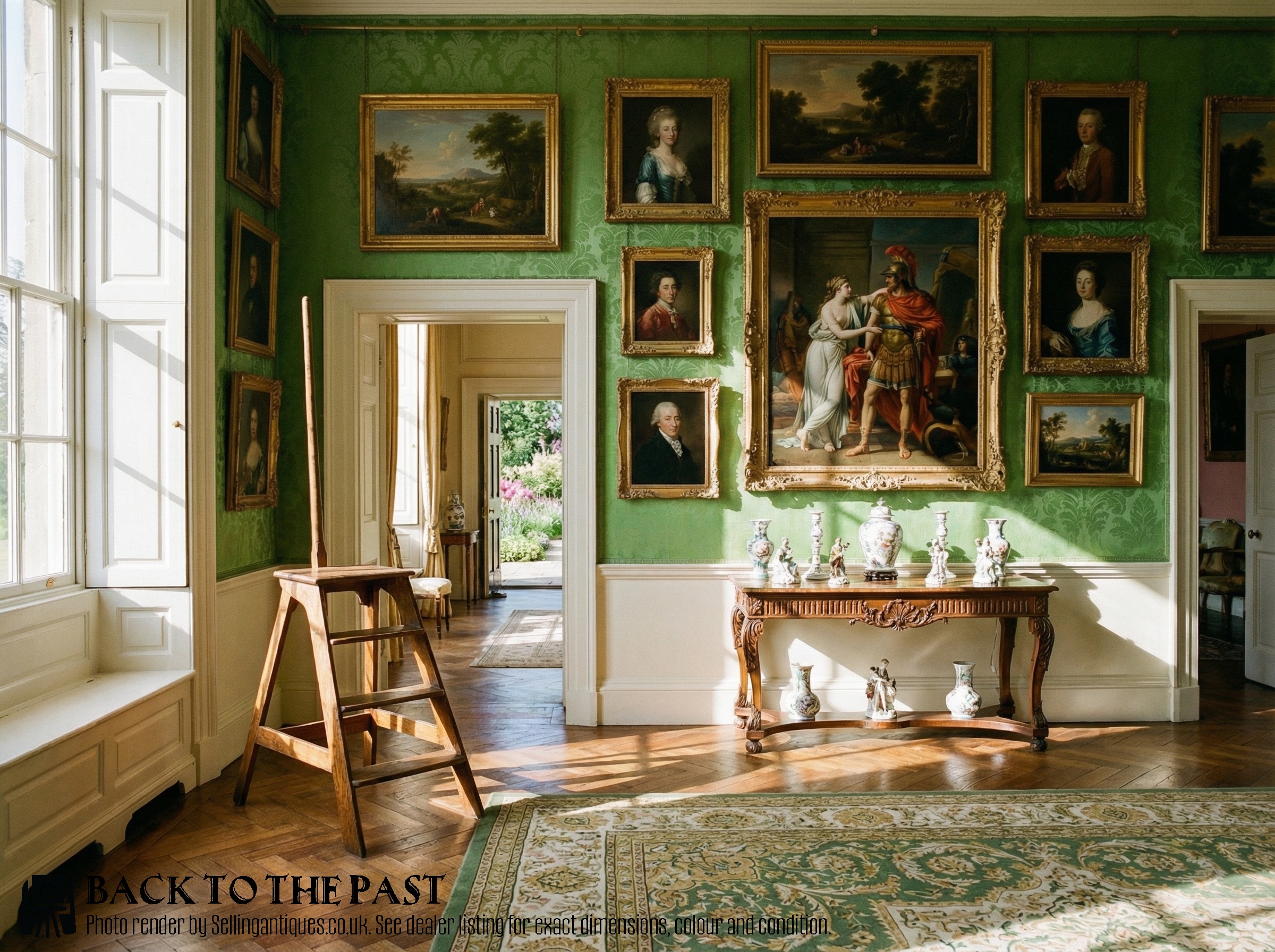
Traditional Step Stool
When you search for a traditional step stool, you encounter a practical climb of timber ranging from domestic kitchen helpers to grand library ascents. The items here span the nineteenth century, Edwardian era, and the nineteen-twenties and thirties, showing how builders solved the simple problem of reaching higher shelves.
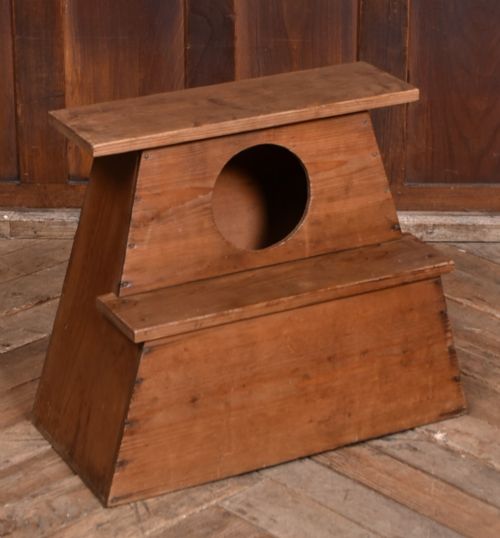
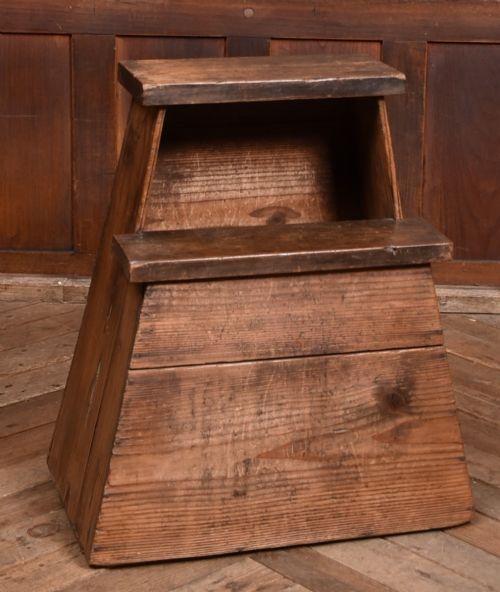
You meet heavy oak library steps, pine kitchen versions, and compact Japanese vendor stools among the listings. These pieces move between formal studies, rustic country homes, and compact urban spaces with equal ease.
How they were made
Carpenters relied primarily on oak, pine, and mahogany to build these climbs, often joining treads securely to sturdy uprights. Hardwood and cedar appear alongside iron fixings and brass details to reinforce joints that took heavy daily weight.
Many steps incorporate leather-topped treads to soften the footing and reduce wear on the wood underneath. Simple painted finishes and golden oak stains protect the timber while highlighting the grain of the period.
Styles range from Victorian country and Gothic Revival to Japanese folk art.
What varies in quality
The distinction between a utilitarian workshop ladder and a refined library piece lies in the choice of timber and the subtlety of the joinery. Golden oak and finely figured mahogany demonstrate a higher ambition than plain pine built purely for utility.
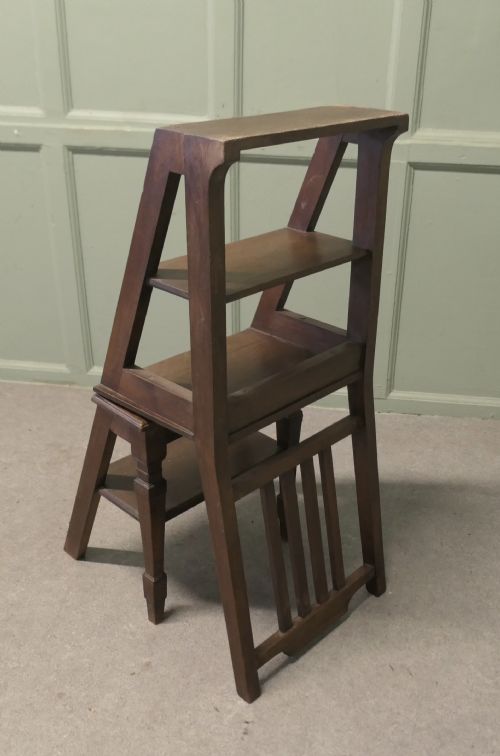
Metamorphic designs and spiral configurations demand precise engineering to function smoothly without losing structural stability. Simpler country stools rely on honest, robust construction rather than complex mechanical movement.
The Traditional Step Stool Glossary
- Metamorphic
- A piece of furniture that transforms from one object into another, such as a set of library steps converting into a chair. This clever dual purpose saved space in period rooms.
- Treads
- The horizontal surfaces or steps upon which a person places their feet to climb. On finer examples, these are covered in leather.
- Library steps
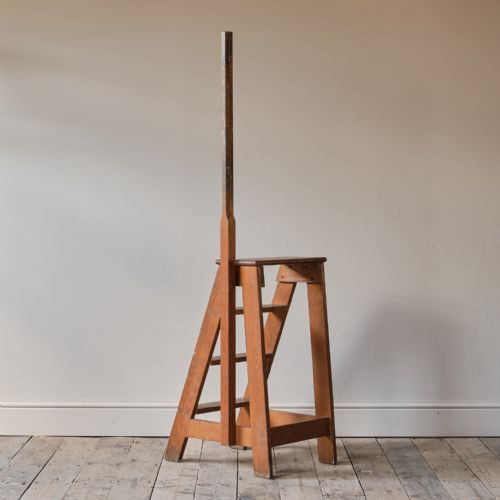
- Free-standing stair structures designed to reach high bookshelves in private studies and large libraries. They appear in formats ranging from compact sets to grand ladders.
- Golden oak
- A bright, warm shade and finish applied to oak timber, particularly popular in Edwardian and early twentieth-century furniture. It highlights the natural figuring of the wood.
Traditional Step Stool: Frequently Asked Questions
What are library steps used for?
These pieces provide safe access to high bookshelves in domestic libraries and studies.
Collectors also place them in hallways and living spaces as decorative stands for plants or objects.
How do I date a step stool?
Dating relies on observing the timber species, construction methods, and hardware used in the frame. Nineteenth-century pieces often display hand-cut joinery and heavy oak, while later items show machine-cut precision.
Styles also shift from utilitarian pine to refined mahogany and leather-topped designs as you move through the Victorian era into the nineteen-thirties.
Are metamorphic steps sturdy?
Period metamorphic steps were built for daily use by scholars and domestic staff, requiring solid structural integrity to function safely. The hinges and pivoting mechanisms must align precisely to support weight in both configurations.
Checking the pivot points ensures the piece remains reliable when shifting between a chair and a ladder.
Where should I place a stool?
These compact pieces fit easily beside bookshelves, in kitchens, or tucked into corners of a hallway. Their modest footprint makes them useful in rooms where floor space is limited.
They serve as both practical climbing aids and sculptural wooden accents in a period interior.