

Traditional Sporting Wall Art
Traditional sporting wall art captures the pulse of field sports, equestrian portraits, and canine studies through oils, watercolours, and prints.
Traditional Sporting Wall Art
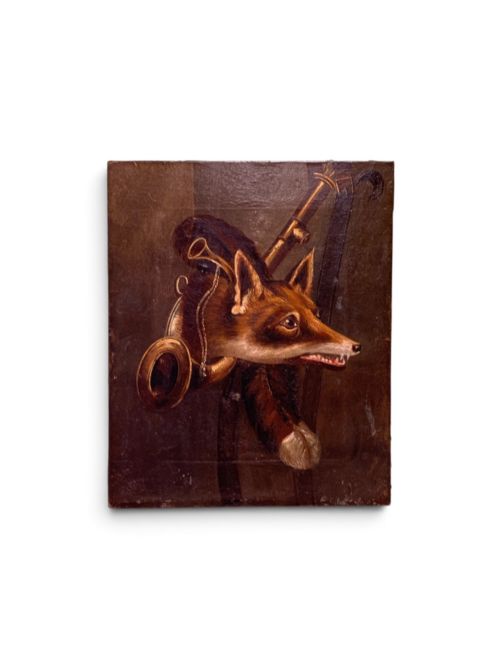
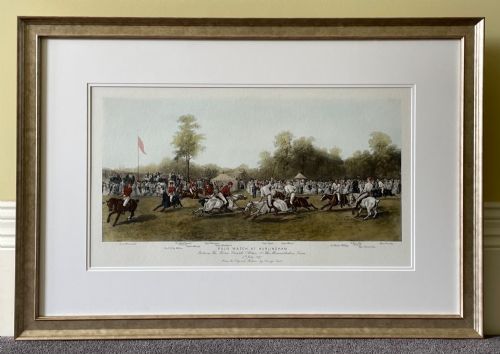
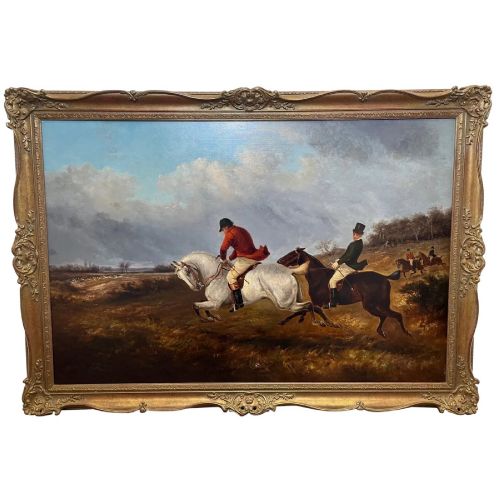
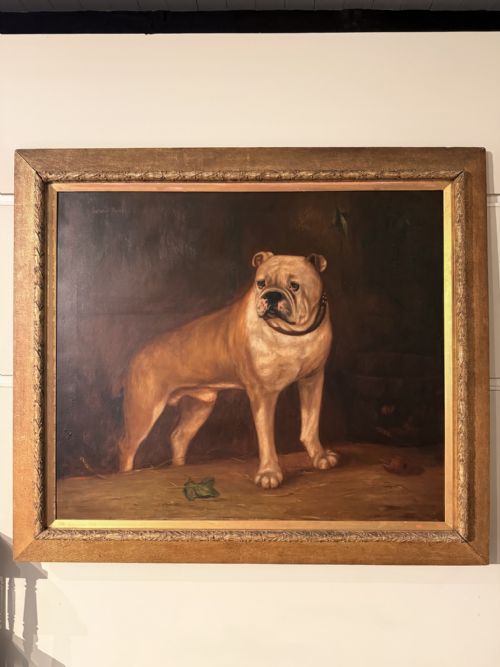
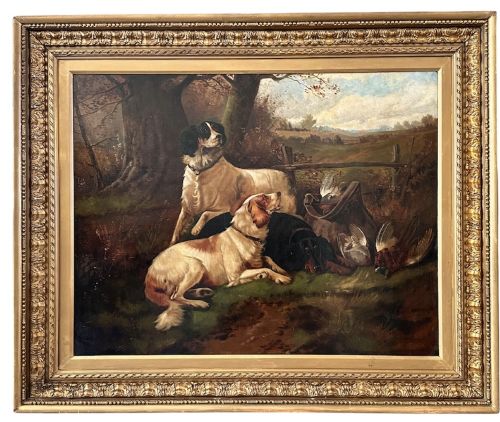
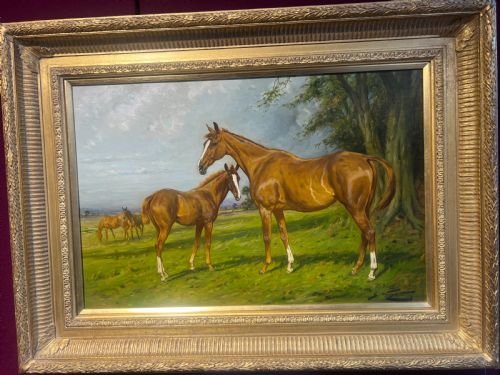
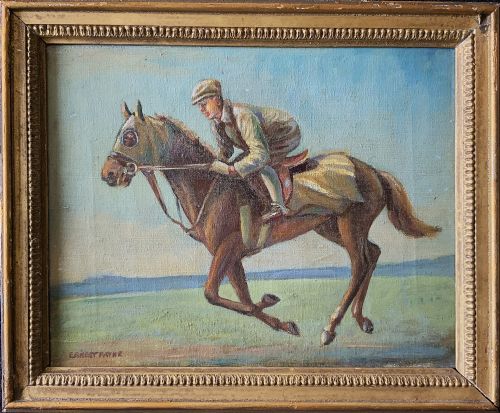
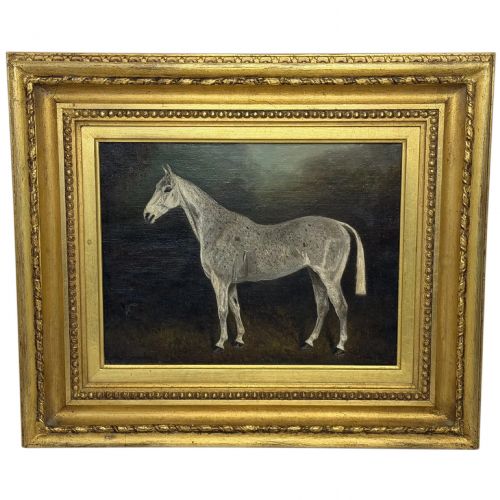
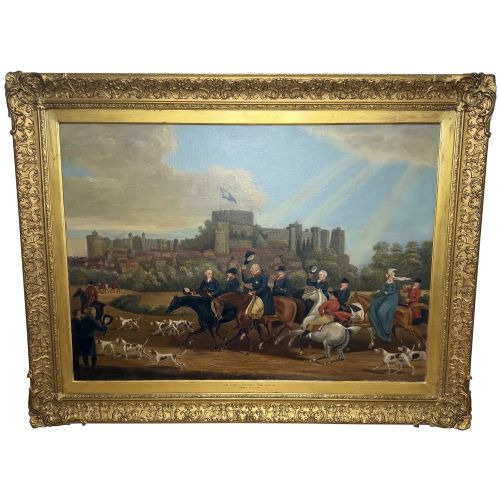
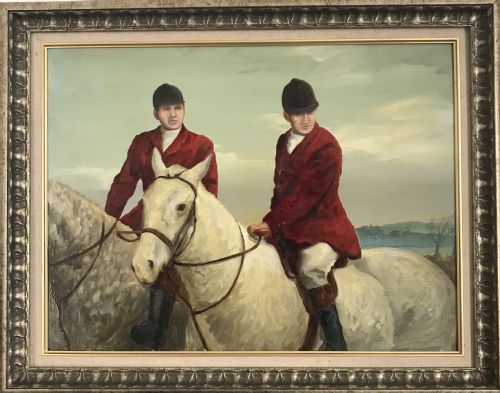
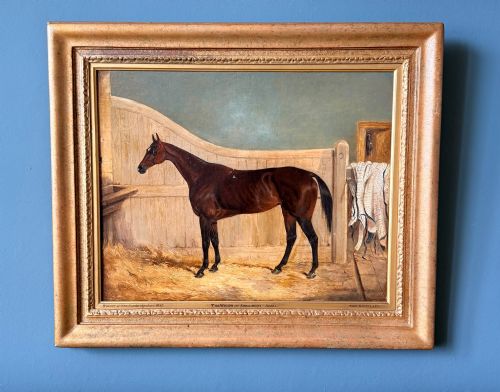
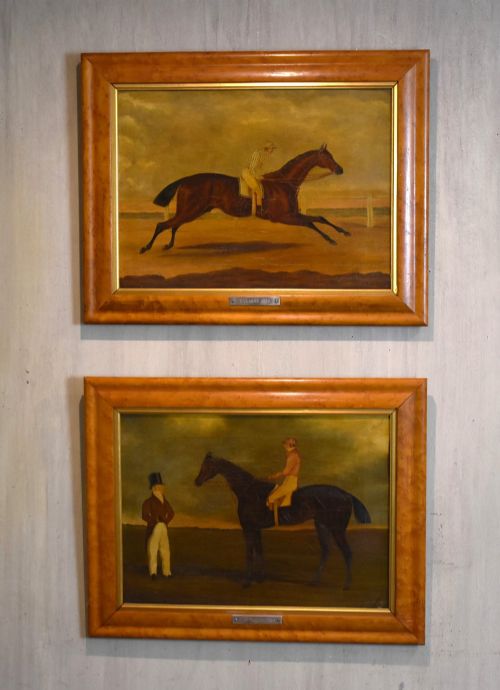
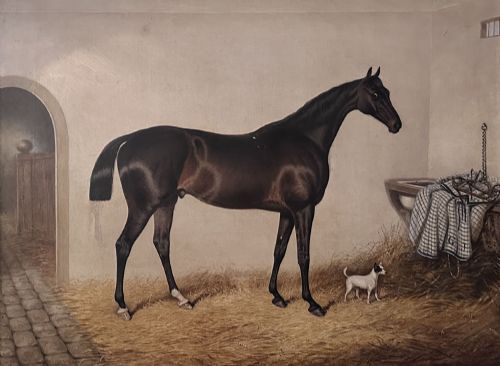
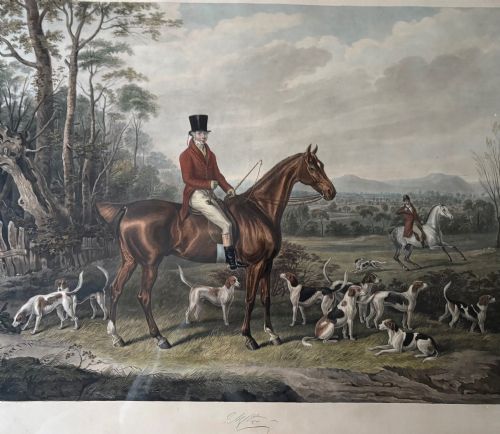
Traditional sporting wall art encompasses oil paintings, lithographs, and engravings depicting horses, hounds, hunts, and racehorses. These works record the central role of equine and canine subjects in rural life across the nineteenth and twentieth centuries.
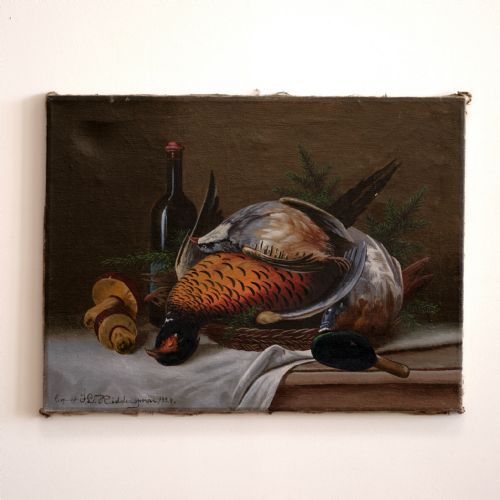
Buyers will most frequently find nineteenth-century oil paintings on canvas or panel, alongside early twentieth-century prints. The selection ranges from intimate individual animal portraits to large-scale hunt scenes involving riders and packs.
Materials and Technique
Painters applied oil pigments onto canvas stretched over wooden frames or directly onto pine panels, often framing the finished work in gilt wood. Printmakers utilised engraving, lithography, and aquatint techniques on paper, sometimes adding hand-colouring.
The physical construction relies on traditional joinery for frames and stable grounds for paint, with glass frequently protecting works on paper from environmental degradation.
Listings span from the eighteenth century to the mid-twentieth century, utilising canvas, paper, and wood.
Execution and Condition
Quality rests upon the anatomical accuracy of horses and dogs, the precision of brushwork in the rendering of coats and tack, and the compositional balance of the scene. Master painters capture movement and light with conviction, whereas lesser hands produce stiff, formulaic representations.
The integrity of the original canvas, the presence of stable craquelure without extensive retouching, and the harmony of period giltwood frames all distinguish the finer pieces.
Henry Barraud·Thomas Smythe·John Frederick Herring Snr·George Wright·Albert Clark·Basil Nightingale·Philip Henry Rideout·Michael Lyne
The Traditional Sporting Wall Art Glossary
- Aquatint
- A printmaking technique that produces tonal areas resembling watercolour washes. It allows creators to achieve subtle gradations of light and shade behind etched outlines.
- Eglomise
- The process of applying cold painting and gilding to the rear face of glass. This technique creates a reflective, lustrous finish popular in decorative panels.
- Lithography
- A planographic printing method based on the antipathy of oil and water. Artists draw directly onto a limestone slab or metal plate to transfer the image.
- Giltwood
- Timber carved and coated with gold leaf or gold paint. Frames executed in this material elevate the presentation of oil paintings.
- Panel
- A rigid wooden support used by artists instead of stretched canvas. Pine and mahogany were common choices for smaller oil studies.
Traditional Sporting Wall Art: Frequently Asked Questions
What subjects appear in traditional sporting art?
These works primarily feature horses, hunting hounds, racehorses, and coaching scenes. Individual animal portraits and full-scale hunt meets dominate the subject matter.
Artists also recorded polo matches, shooting parties, and steeplechases, reflecting the sporting interests of the period.
How do I date a sporting oil painting?
Dating relies on stylistic evidence, artist signatures, framing materials, and the construction of the canvas support. Costume details and equine tack also provide reliable chronological clues.
Examine the stretcher bars and canvas weave, as nineteenth-century materials differ noticeably from mid-twentieth-century equivalents.
Where should I hang these pieces?
These works suit traditional studies, dining rooms, and hallways with adequate wall space for framed canvases. Avoid direct sunlight and damp environments to protect the pigments and wooden frames.
Pairing oil paintings with neutral wall colours allows the rich tones of the hunting coats and equestrian subjects to stand out.