




Traditional Slope Top Desk
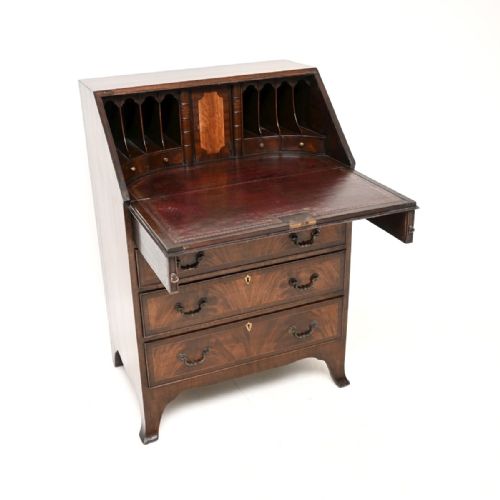
A traditional slope top desk offers a hinged writing flap that opens to reveal fitted pigeonholes and drawers.
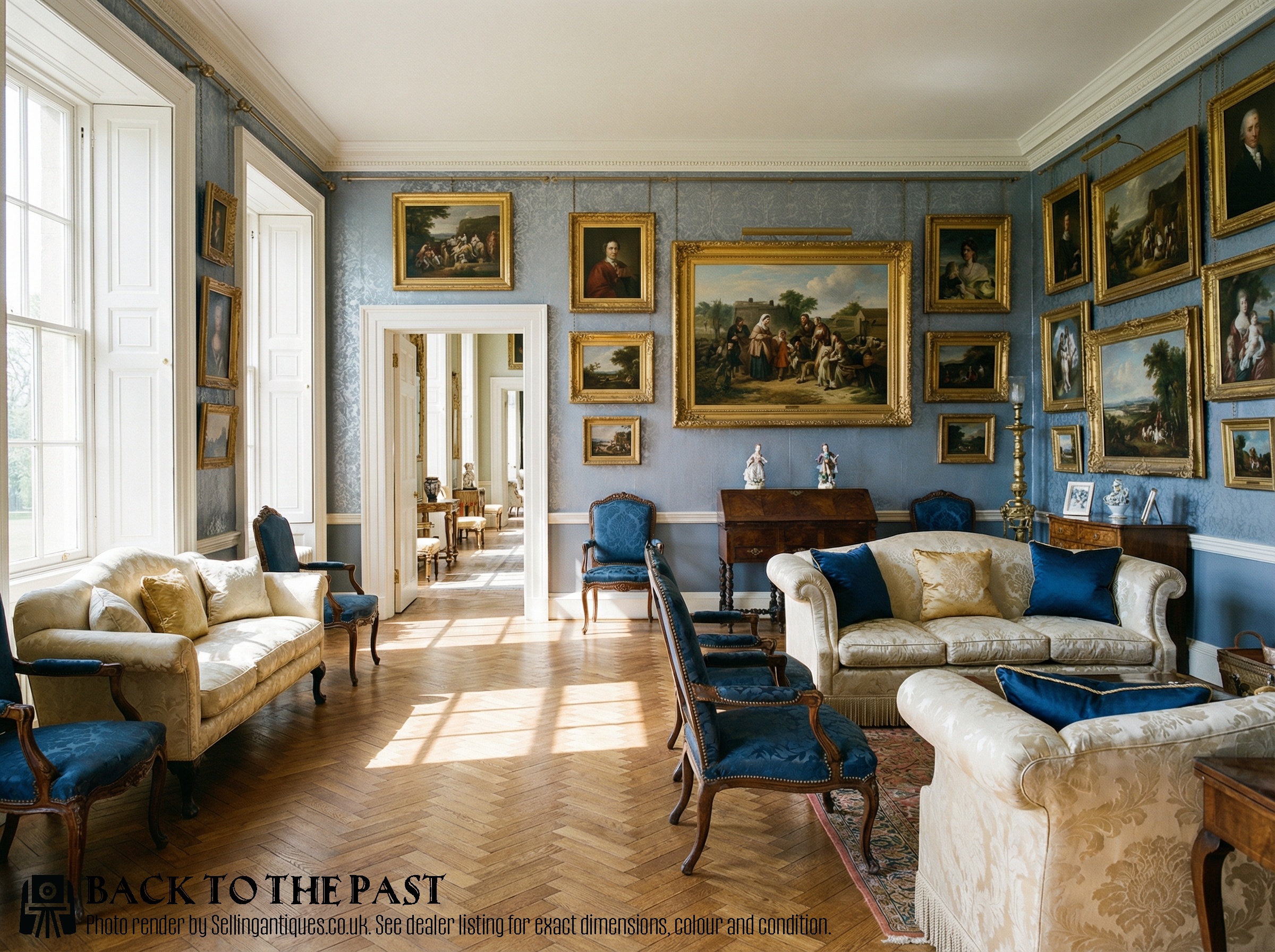
Traditional Slope Top Desk
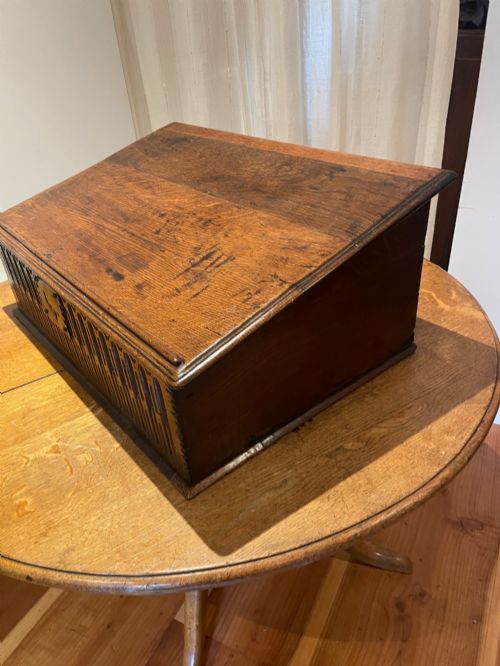
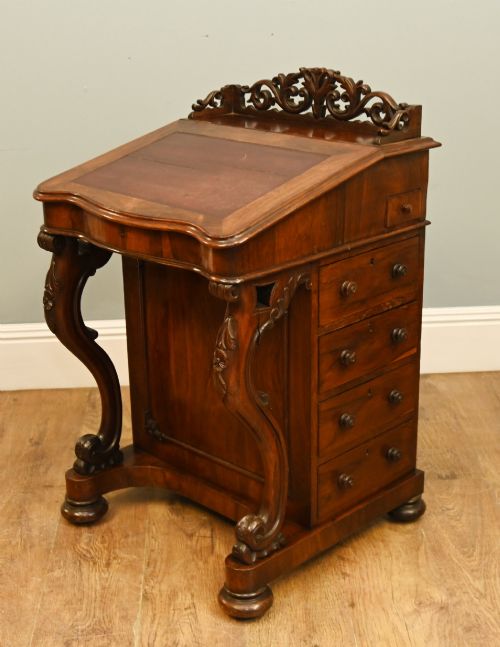
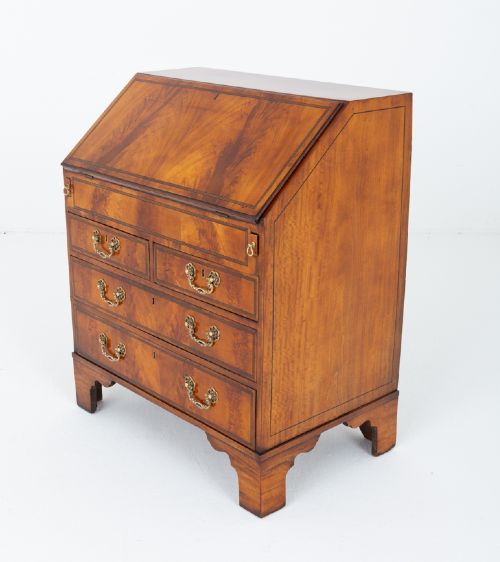
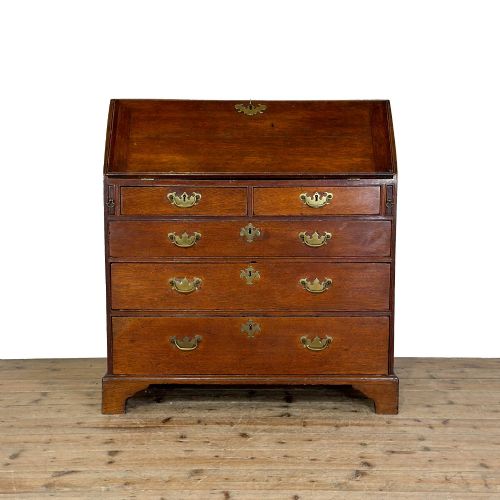
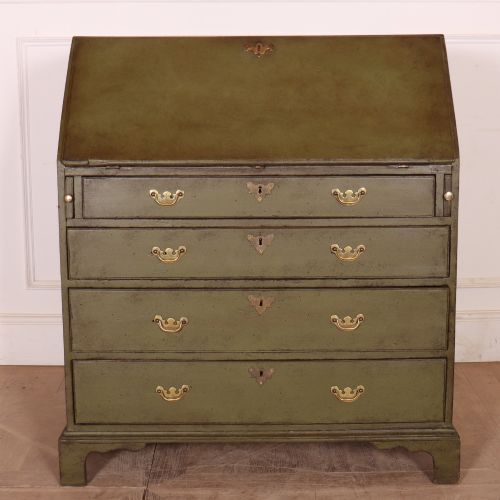
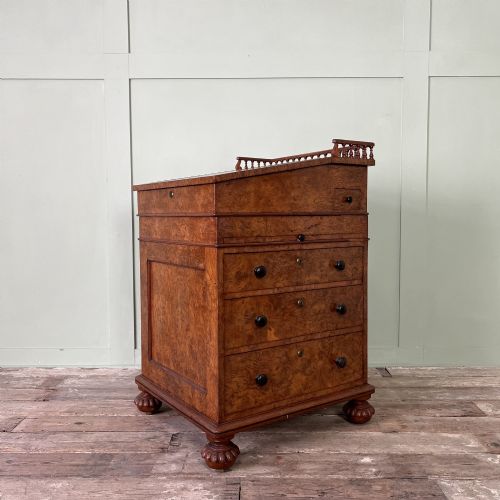
A traditional slope top desk is a piece of furniture built for writing, typically taking the form of a bureau or a Davenport desk. These pieces span several periods, including the eighteenth century, nineteenth century, and early twentieth century.
The versions most commonly met on this page include mahogany, oak, and walnut bureaux alongside compact Davenport desks. They emerge from styles ranging from Georgian and Victorian to William and Mary and Queen Anne revival.
Buyers look for these desks to provide a functional writing surface combined with enclosed storage for papers and correspondence. The interior compartments often feature small drawers and pigeonholes tucked beneath the sloping lid.
How they were made
Cabinetmakers constructed traditional slope top desks using solid timbers like oak, mahogany, and walnut, frequently applying veneers such as burr walnut, burr elm, and flame mahogany to visible surfaces. Secondary woods provided structural support within the drawer linings and internal partitions.
Fine brass hardware, including escutcheons, handles, and hinges, secured the fittings and doors. Leather inserts often lined the writing surfaces of Davenport desks, providing a smooth plane for penwork.
Traditional Slope Top Desk Retail Price Guide 2026
Typical asking prices for traditional slope top desk among the pieces listed under this phrase on Sellingantiques today, from the lower quarter to the upper quarter. They describe what is for sale here now, not the wider market.
Listings on this page feature oak, mahogany, walnut, rosewood, and elm across the eighteenth, nineteenth, and early twentieth centuries.
What varies in quality
The quality of a traditional slope top desk rests upon the selection of timber and the complexity of the interior arrangement. Finer examples display carefully matched veneer grains and intricately fitted internal compartments with secret drawers.
Construction methods such as dovetail joints in the drawers and the crispness of any carved ornamentation distinguish superior workshops from standard production pieces.
Gillow and Co·Gillows
The Traditional Slope Top Desk Glossary
- Bureau
- A writing desk with a sloping hinged lid that covers a compartment of small drawers and pigeonholes. It often sits upon a chest of drawers or a stand.
- Davenport desk
- A compact form of writing desk featuring a sloping top and drawers accessed from the side. It was developed during the nineteenth century.
- Pedestal desk
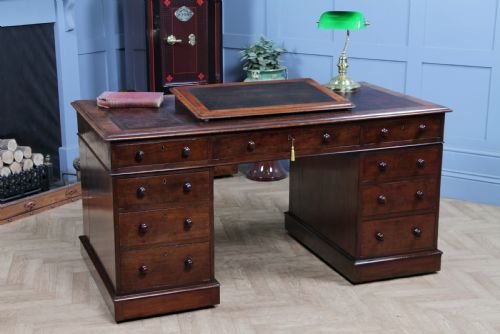
- A heavy freestanding desk supported by two banks of drawers or cupboards. Large examples provide extensive workspace and storage.
- Pigeonhole
- A small open compartment within a desk interior used for sorting letters and papers. These spaces are often concealed behind the main sloping lid.
- Veneer
- A thin layer of decorative wood applied to a firmer timber base. Cabinetmakers used burr walnut and flame mahogany veneers to create striking surface patterns.
Traditional Slope Top Desk: Frequently Asked Questions
What is a traditional slope top desk?
A traditional slope top desk is a writing cabinet featuring an angled lid that folds down to create a writing surface. These pieces house internal compartments, small drawers, and pigeonholes.
They appear primarily as bureaux or Davenport desks across eighteenth, nineteenth, and early twentieth-century styles.
How were Davenport desks used?
Davenport desks served as compact writing stations in parlours and studies. The sloping top held paper while drawers accessed from the side stored writing implements.
Their small footprint allowed them to occupy corners where larger pedestal desks could not fit.
How do I identify a Georgian bureau?
Georgian bureaux typically feature solid mahogany or oak construction with hand-cut dovetails on the internal and external drawers. The interior fittings often include shaped pigeonholes and small central doors.
Stylistic cues link them to eighteenth-century cabinetmaking traditions without modern mechanical fasteners.
Where should I place a slope top desk?
These desks suit studies, living rooms, or bedrooms where their compact forms provide both surface area and enclosed storage. Freestanding versions can sit away from walls if finished on all sides.
Ensure the room maintains stable humidity to protect the wood and veneer surfaces.