


Traditional Slant Top Desk
A traditional slant top desk brings domestic order through a fitted interior hidden behind a sloping writing flap.
Traditional Slant Top Desk
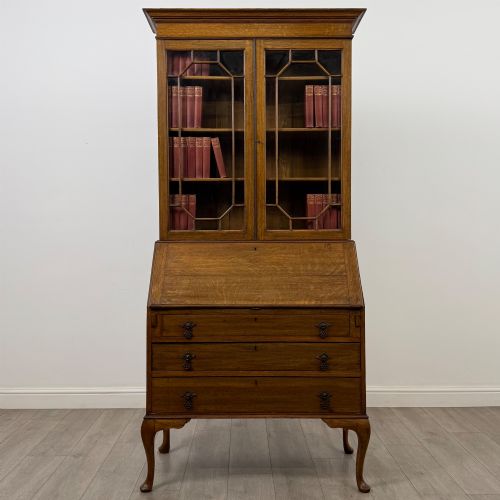
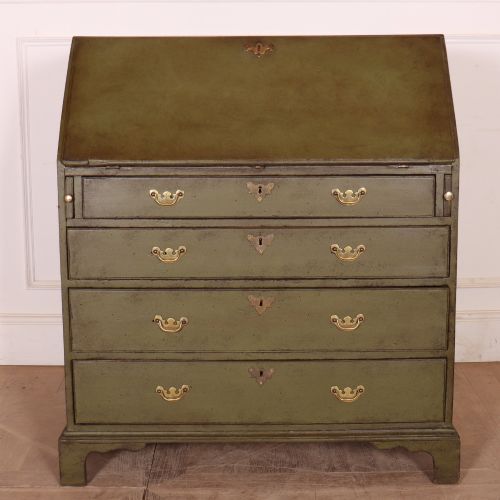
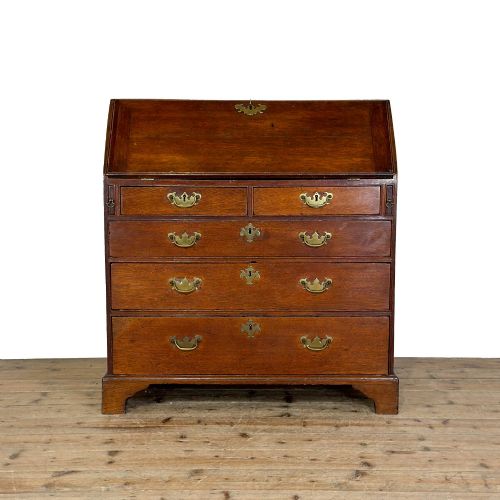
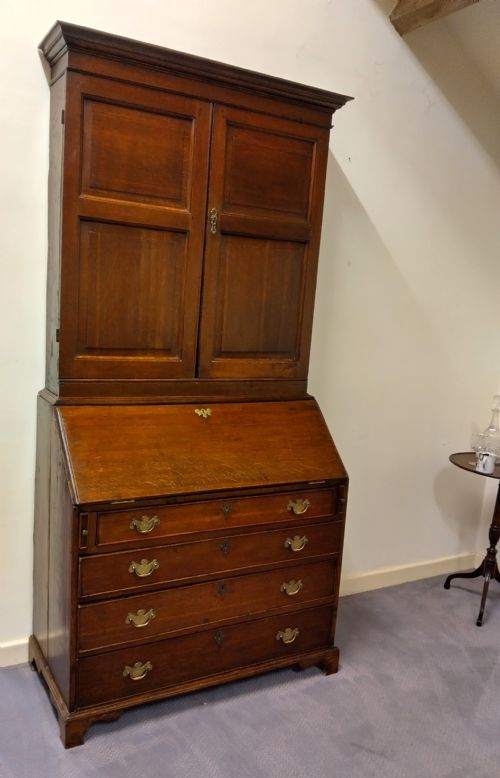
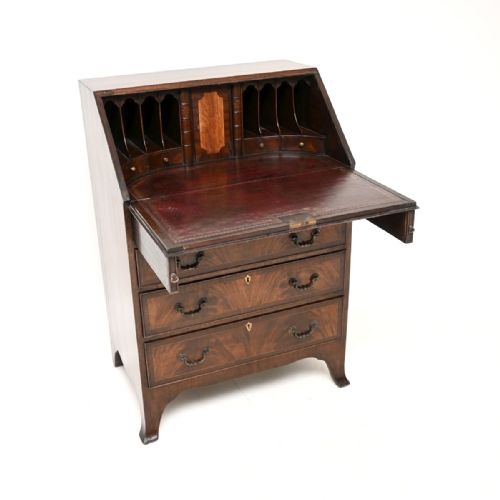
A traditional slant top desk encompasses writing cabinets with hinged sloping lids that open to reveal internal compartments, pigeonholes, and small drawers. These pieces emerge in formats ranging from substantial bureau bookcases to compact Davenport desks.
The materials span native timbers like oak alongside imported hardwoods including mahogany, walnut, and rosewood. Examples appear across the seventeenth, eighteenth, nineteenth, and early twentieth centuries, reflecting styles from Georgian simplicity to Edwardian utility.
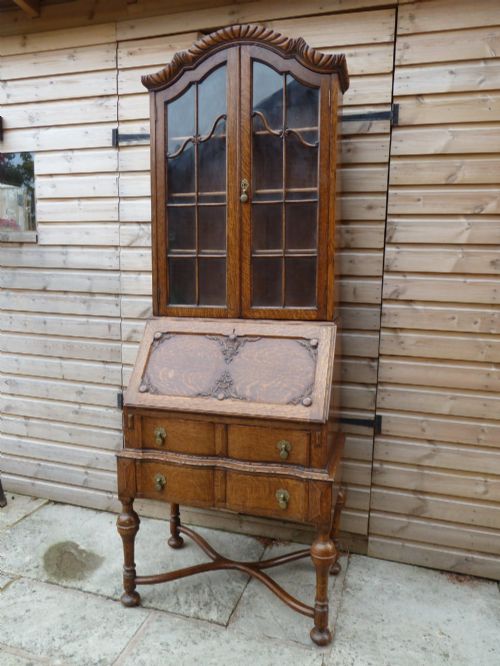
Makers construct these writing pieces with fitted lower cabinets containing graduated drawers or side pedestals. Certain iterations incorporate upper bookcase sections with glazed or panelled doors to store volumes above the desk surface.
Distinctions in craftsmanship and materials
The selection of timber grain defines visual hierarchy, separating standard planking from highly figured burr walnut, flame mahogany, or pollard oak veneers. Fine execution requires book-matched figuring and precise marquetry work across the fall front.
Internal complexity marks superior examples through secret compartments, shaped pigeonholes, and miniature drawers with crossbanded borders. Structural integrity relies on original brasses, sound secondary woods, and unaltered interior configurations.
Proportion and scale dictate the success of the form, balancing the slope angle against the depth of the lower drawers. Retaining the original fitted compartments without later alterations preserves historical authenticity.
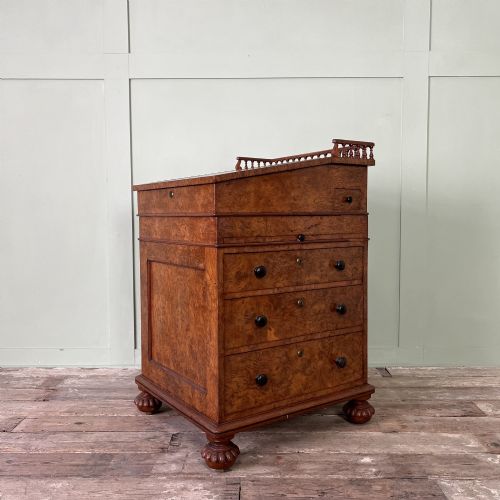
Cabinet forms include standard bureaux, bureau bookcases, and compact Davenport desks with side drawers.
Gillow and Co
The Traditional Slant Top Desk Glossary
- Bureau
- A sloping front desk designed for writing and storing papers. This form often includes internal drawers behind the fall front.
- Davenport
- A compact writing desk featuring a sloping top over a pedestal of drawers. The design gains popularity through the nineteenth century.
- Loper
- A pull-out wooden support arm that slides out from the desk carcase to hold the open writing flap. These prevent strain on the hinges.
- Fall front
- The hinged sloping writing flap that drops forward to create a horizontal desk surface. It conceals the internal pigeonholes when closed.
- Marquetry
- Decorative veneer patterns formed from thin pieces of wood and other materials fitted into a wooden ground. This technique creates floral or geometric motifs.
Traditional Slant Top Desk: Frequently Asked Questions
What is a slant top desk?
A slant top desk is a writing cabinet featuring a hinged sloping lid that opens to reveal an arrangement of small drawers and pigeonholes. When closed, the angled flap protects correspondence and keeps the writing surface neat.
These pieces developed through various centuries in formats ranging from tall bureau bookcases to compact pedestal writing desks. The interior layout typically includes hidden compartments and central doors alongside the letter slots.
How do I use a bureau in a modern room?
A bureau functions well as a compact workspace where the sloping flap closes to hide laptop computers and papers at the end of the day. The internal compartments organise stationery without requiring a separate set of desktop organisers.
Position the desk near natural light while leaving adequate clearance for the drop-down lid and pull-out support lopers. The lower drawers provide enclosed storage for household items or books.
What is the difference between a bureau and a Davenport?
A traditional bureau is a wide desk with a sloping front placed above a chest of full-width drawers. It sits directly on bracket feet or a moulded base.
A Davenport is significantly more compact, consisting of a sloping top set over a single pedestal of side drawers. This smaller form originates in the nineteenth century for use in parlours or tight spaces.
How do I identify eighteenth century walnut furniture?
Eighteenth century walnut pieces display rich figuring with varied grain patterns, often utilising veneers applied to oak carcases. Early examples feature warm patination and crossbanded borders around the drawer edges.
Construction details include hand-cut dovetails on the internal drawers and timber linings appropriate to the period. The presence of walnut gives way to mahogany as the century progresses.