
Traditional Side Armchairs
Traditional side armchairs encompass seating spanning the Georgian through to the Edwardian eras, offering solid timber frames and period upholstery.
Traditional Side Armchairs
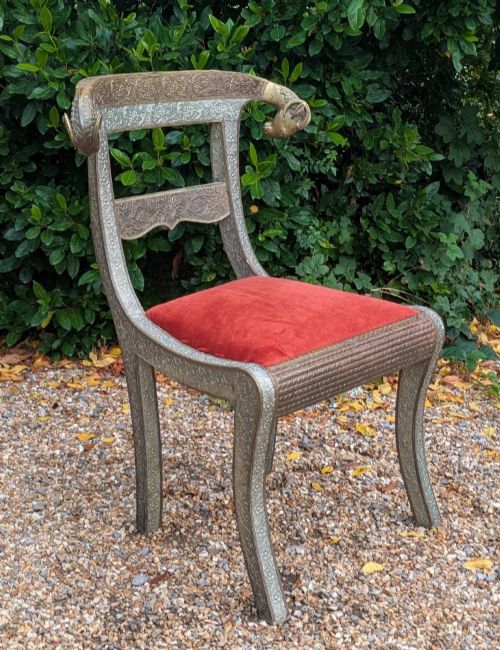
Traditional side armchairs appear across several distinct historical periods, notably the Georgian, Victorian, and Edwardian eras. Buyers searching for traditional side armchairs typically encounter mahogany and oak frames influenced by Chippendale, Hepplewhite, and Regency revival styles.
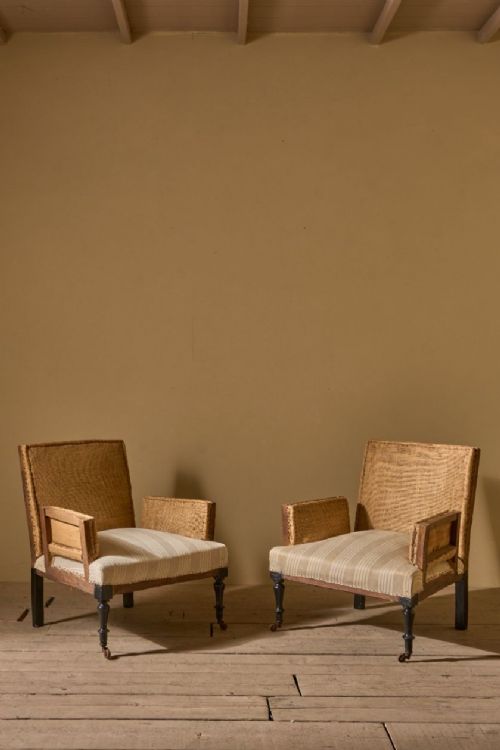
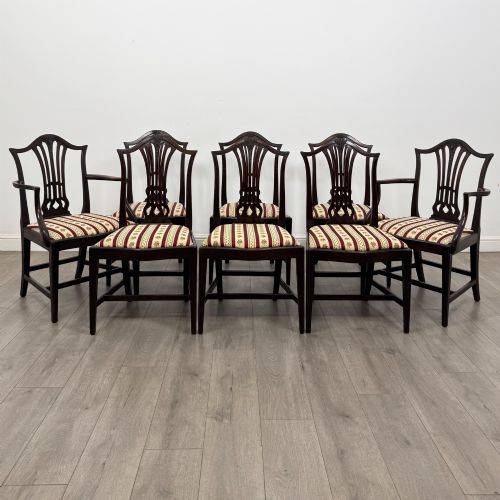
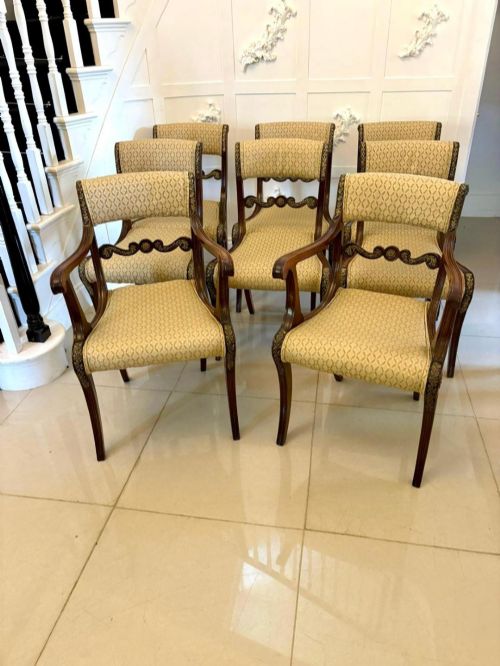
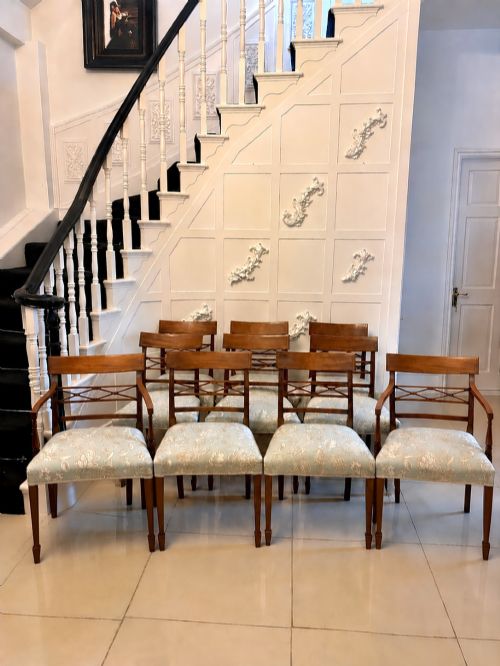
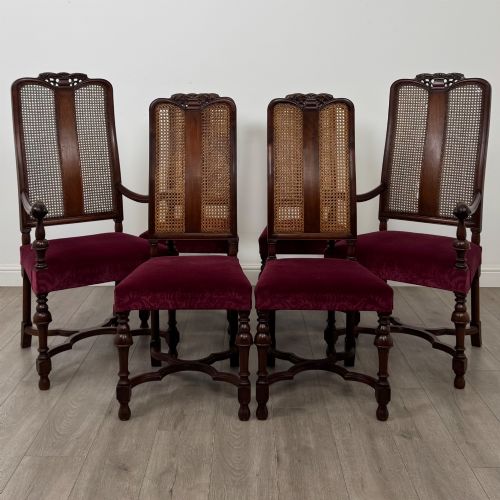
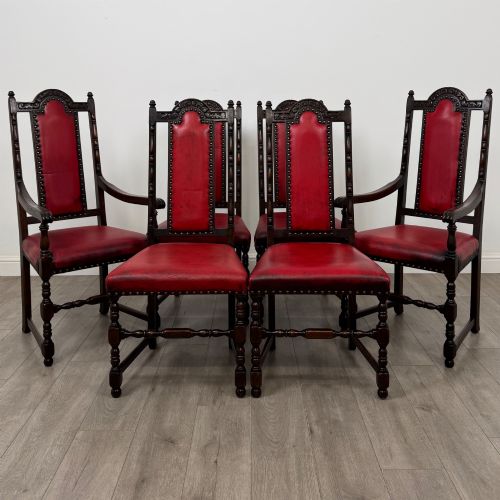
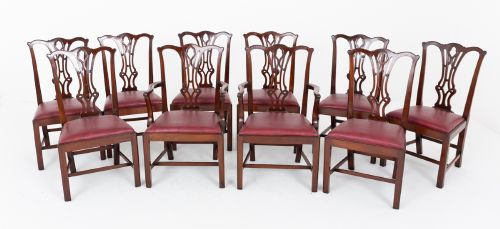
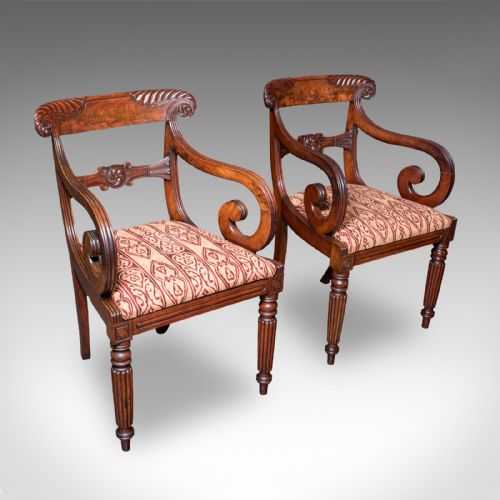
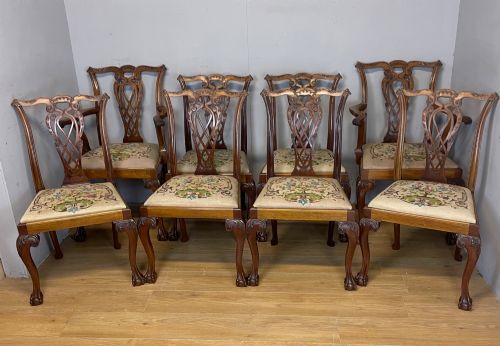
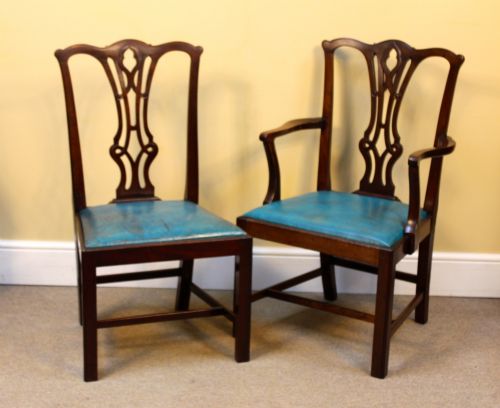
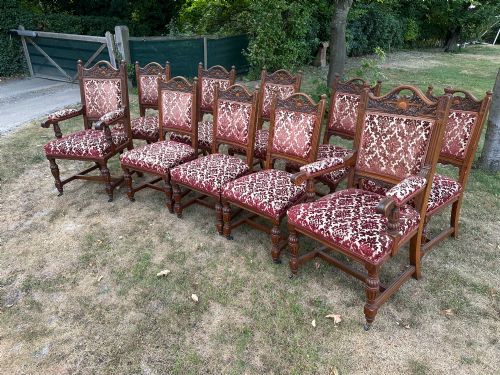
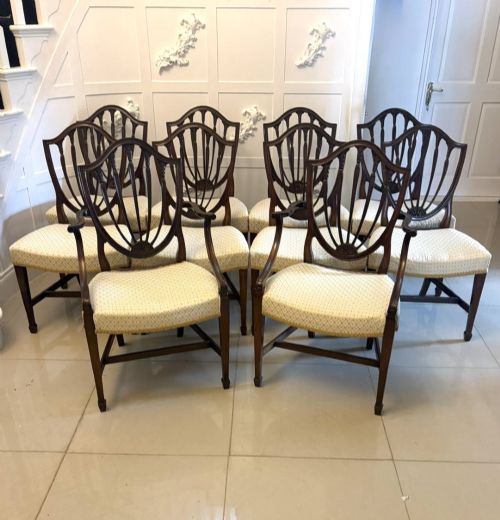
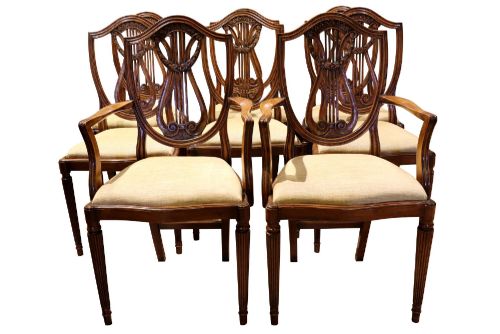
The selection includes individual elbow chairs, pairs of reception seats, and larger dining sets comprising both standard dining chairs and carver armchairs. Forms range from shield back and ladder back designs to open armchairs and bergère seats.
Origins span English workshops alongside examples reflecting Continental or regional influences, constructed in wood varieties from native oak to imported hardwoods.
How they were made
Frames rely primarily on solid mahogany and oak, shaped through traditional joinery and hand-carving on components such as chair backs and legs. Brass fittings appear on specific forms, while cane work integrates into bergère panels.
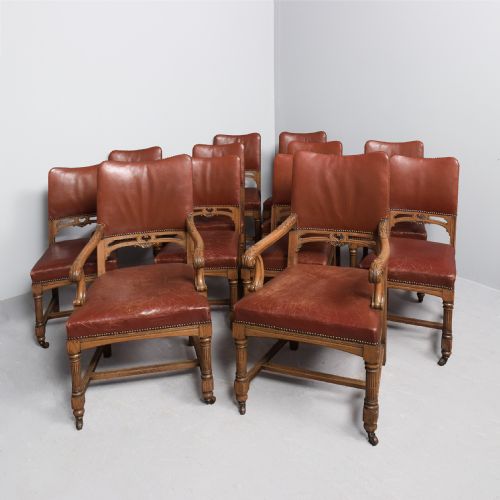
Upholstery techniques involve traditional stuffing secured beneath fabric, leather, or velvet coverings, often finished with brass nail detailing along the seat rails.
Revival styles represented include Chippendale, Hepplewhite, and Jacobean designs alongside Arts and Crafts examples.
What varies in quality
Quality separates through the crispness of the hand-carving on chair splats and rails, alongside the selection of timber grain in the mahogany or oak frames. Set uniformity also dictates distinction, particularly in matched dining groups where proportion and colour remain consistent across multiple chairs.
The integrity of the original frame construction, including tight joints and substantial timber gauge, distinguishes finer workshop production from standard utility seating.
Warings·Maple and Co
The Traditional Side Armchairs Glossary
- Carver
- An armchair designed with elbow supports, traditionally placed at the head of a dining table alongside matching side chairs.
- Shield Back
- A chair back shaped in the outline of a heraldic shield, frequently carved with drapery or wheatsheaves during the Hepplewhite revival.
- Bergère
- An enclosed upholstered armchair featuring woven cane panels set into the wooden frame sides and back.
- Cockpen
- A lattice-backed chair design influenced by Chinese fretwork styles popular in eighteenth and early twentieth-century revival pieces.
- Ladder Back
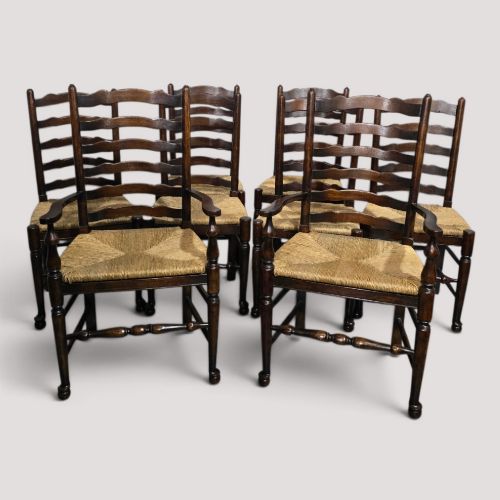
- A chair back constructed with multiple horizontal wooden slats running between the upright rear posts.
Traditional Side Armchairs: Frequently Asked Questions
What is a carver armchair?
A carver is a seated piece fitted with arm rests, traditionally utilised as the head chair at a dining table.
These chairs accompany sets of side chairs, sharing identical timber, leg style, and back design.
How do I identify a revival style?
Revival pieces replicate earlier historical aesthetics, such as Chippendale or Hepplewhite designs, executed during the nineteenth or twentieth centuries.
Examination of the timber dryness, tool marks, and construction methods helps distinguish these later interpretations from original pieces.
Where were these chairs placed?
These seats served primary roles in dining rooms, reception spaces, and morning rooms across period properties.
Elbow chairs and side chairs functioned around dining tables or stood against walls as occasional furniture.
What woods were commonly used?
Cabinet makers utilised mahogany and oak as the principal structural timbers for these seating forms.
Additional materials such as maple, cane, and various imported hardwoods appear in specific regional or revival pieces.