




Traditional Serpentine Bedroom Drawers
Traditional serpentine bedroom drawers bring an undulating, rhythmic front and rich timber figuring to a sleeping chamber.
Traditional Serpentine Bedroom Drawers
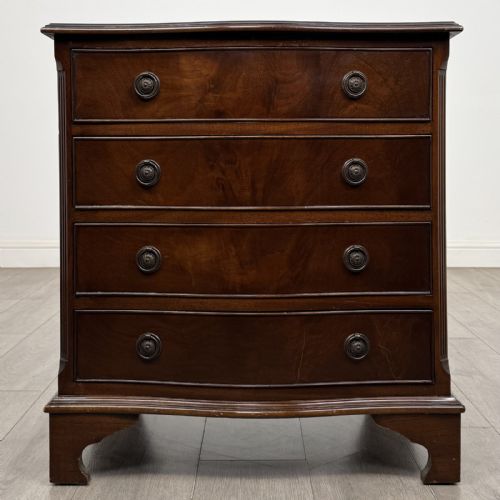
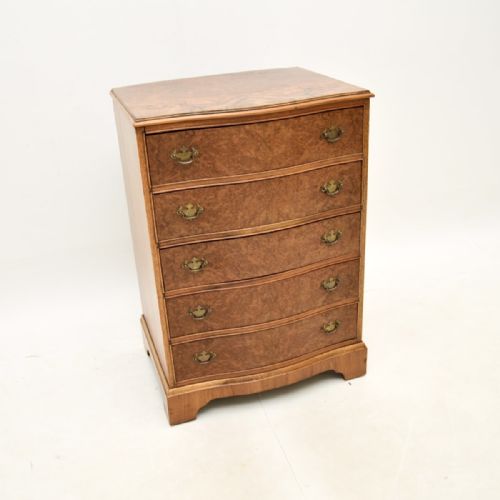
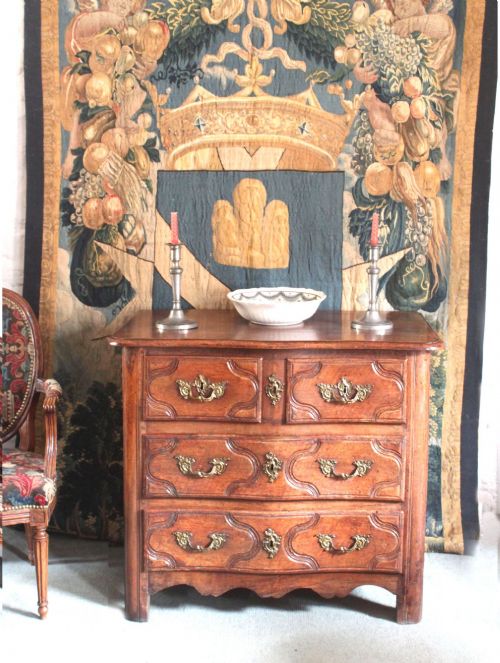
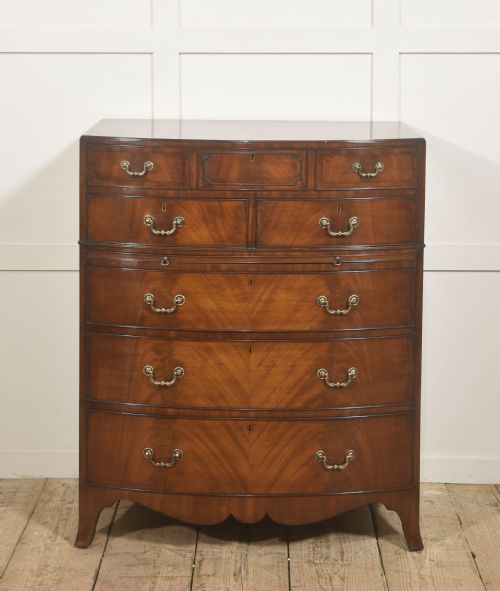
Traditional serpentine bedroom drawers take the form of chests, tallboys, and commodes featuring a curved front with a convex centre flanked by concave sides. These pieces emerge across several periods including Georgian, Regency, and Edwardian, alongside later revivals from the twentieth century.
The buyer most frequently meets mahogany and walnut examples on this page, often built as compact chests or larger tallboys. Pieces range from eighteenth-century origins to early twentieth-century interpretations, showing styles from French Provincial to Queen Anne and George III.
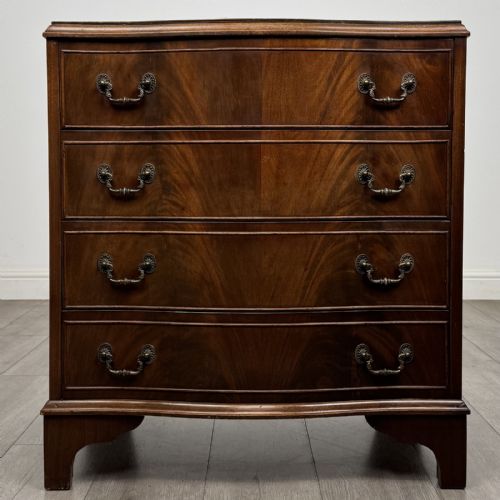
Forms vary from standard chests of four drawers to tallboys and commodes fitted with brass handles. The overarching shape remains consistent, defining the silhouette of the furniture regardless of the specific decade of manufacture.
Materials and construction
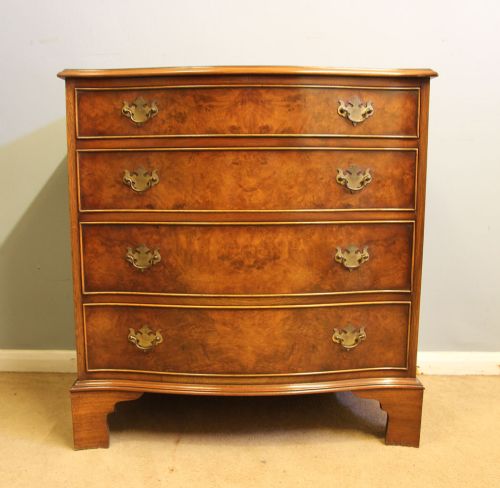
Cabinetmakers constructed traditional serpentine bedroom drawers using solid hardwoods such as mahogany and walnut, frequently applying burr walnut veneer to create intricate grain patterns across the curved drawer fronts. Wood inlay and painted wood also appear on select examples, adding decorative contrast to the primary timber.
Makers shaped the complex front profile by cutting and bending timber to follow the sweeping concave and convex curves. Brass handles provide the hardware, secured to drawers that follow the undulating contour of the carcase.
Traditional Serpentine Bedroom Drawers Retail Price Guide 2026
Typical asking prices for traditional serpentine bedroom drawers among the pieces listed under this phrase on Sellingantiques today, from the lower quarter to the upper quarter. They describe what is for sale here now, not the wider market.
Even the drawer locks followed the curve, requiring blacksmiths to shape internal mechanisms to match the wave.
Judging quality in serpentine furniture
Quality rests in the precision of the curved drawer fronts and the alignment of the timber grain across the undulating surface. Superior examples demonstrate seamless continuity in wood figure and careful execution of the complex serpentine shape.
The choice of primary timber and secondary veneers distinguishes the tiers of manufacture, with figured burr walnut and flame mahogany marking out finer pieces. Construction integrity within the drawer linings and the subtlety of the inlay further separate standard production from superior cabinetwork.
The Traditional Serpentine Bedroom Drawers Glossary
- Serpentine
- A furniture front characterised by a convex central section flanked by two concave curves. This profile requires advanced woodworking skill to execute cleanly across multiple drawers.
- Commode
- A low chest of drawers or cabinet, often of French origin. The term frequently applies to continental or revival pieces with serpentine profiles.
- Tallboy
- A tall chest of drawers, often constructed in two sections with an upper chest sitting upon a lower base. These pieces maximise storage verticality while retaining a serpentine footprint.
- Burr walnut
- A wood veneer taken from the burl growth of a walnut tree, producing swirling, knotty patterns. Cabinetmakers prize this material for decorative drawer fronts.
- Flame mahogany
- Timber veneer exhibiting a flickering, flame-like grain pattern. This figure appears on high-grade polished mahogany surfaces.
Traditional Serpentine Bedroom Drawers: Frequently Asked Questions
What is a serpentine chest?
A serpentine chest is a storage piece featuring a front contour that curves outward in the middle and inward at the sides. This distinctive shape creates movement and visual depth across the elevation of the furniture.
Cabinetmakers adopted this profile in the eighteenth century and continued producing it through various revival periods. The design balances utility with decorative elegance, making it a focal point in domestic spaces.
How do I date a serpentine chest?
Dating relies on examining the timber species, construction methods, hardware, and stylistic indicators present in the piece. Eighteenth-century examples differ in internal timber use and joinery techniques compared to Edwardian or 1930s revivals.
Secondary woods inside the carcase and the style of the brass handles offer further clues to the decade of manufacture. Comparing the overall proportions to established period styles helps narrow down the age.
Where should I place a serpentine chest?
These chests suit bedrooms, hallways, or living spaces where the undulating front can be appreciated without obstruction. Because the curved profile projects outward in the centre, placing the piece against a flat wall with adequate clearance allows the silhouette to stand out.
Pairing the chest with a simple mirror or keeping the top surface uncluttered maintains focus on the wood grain and curved lines. Adequate lighting helps highlight the figure of the mahogany or walnut veneer.
What is the difference between Georgian and revival pieces?
Georgian pieces date from the eighteenth and early nineteenth centuries, built by period craftsmen using contemporary construction standards and native or imported timbers. Revival pieces date from later eras like the Edwardian period or the 1920s and 1930s, copying earlier aesthetic movements.
Examining the internal drawer construction and timber ageing helps differentiate original period items from later interpretations. Both categories offer traditional serpentine forms but originate from distinct eras of production.