


Traditional Rush Seat Armchairs
Traditional rush seat armchairs combine regional vernacular frames with woven seating, offering durable domestic comfort from the eighteenth century onwards.
Traditional Rush Seat Armchairs
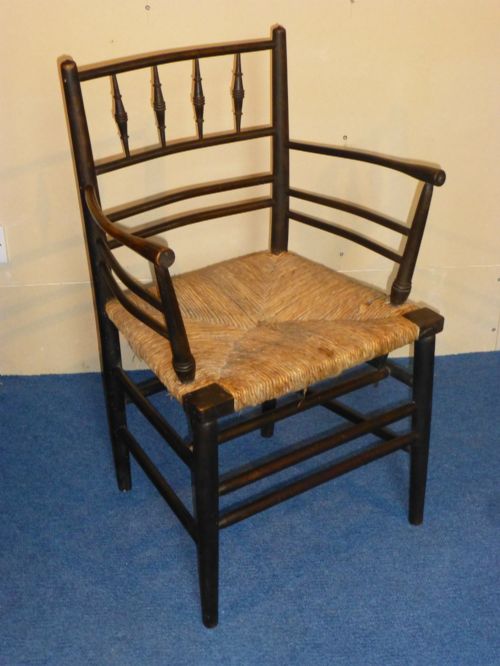
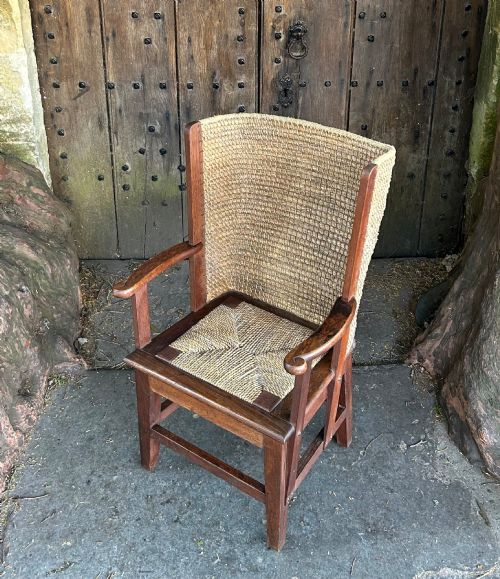
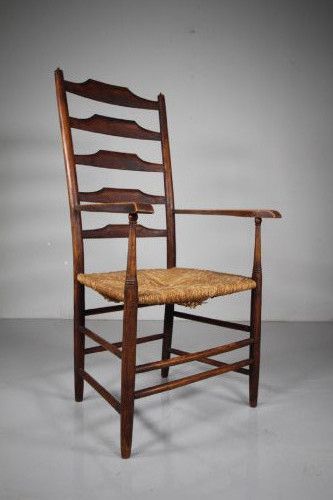
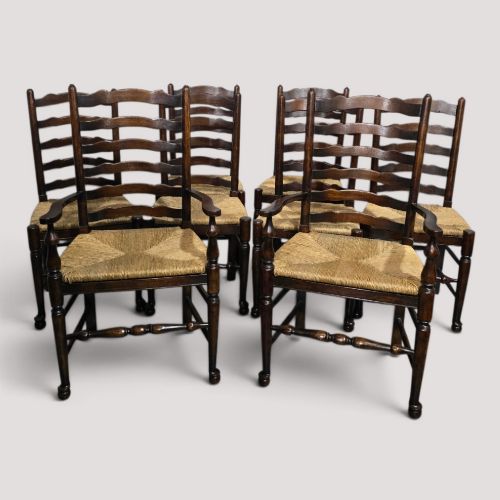
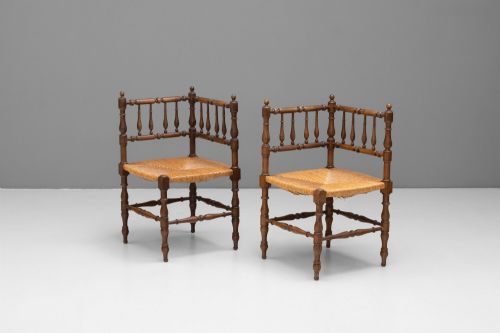
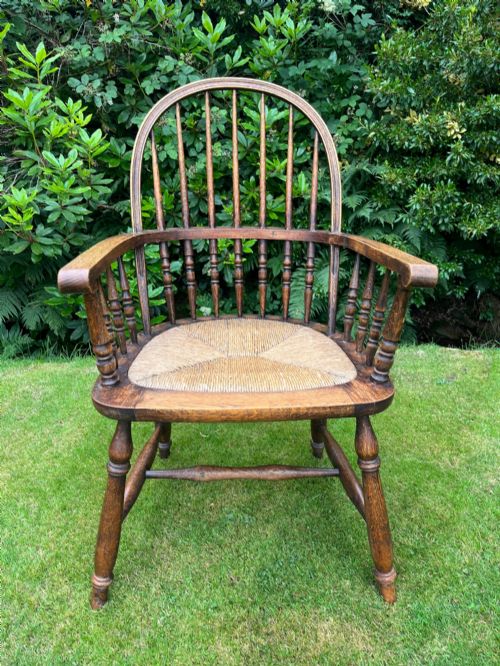
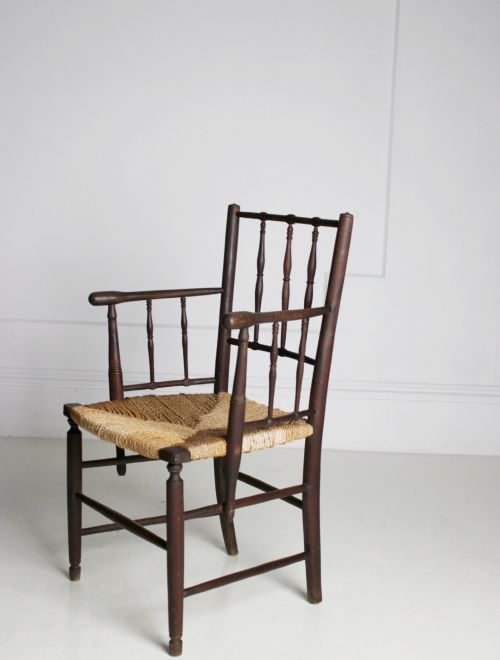
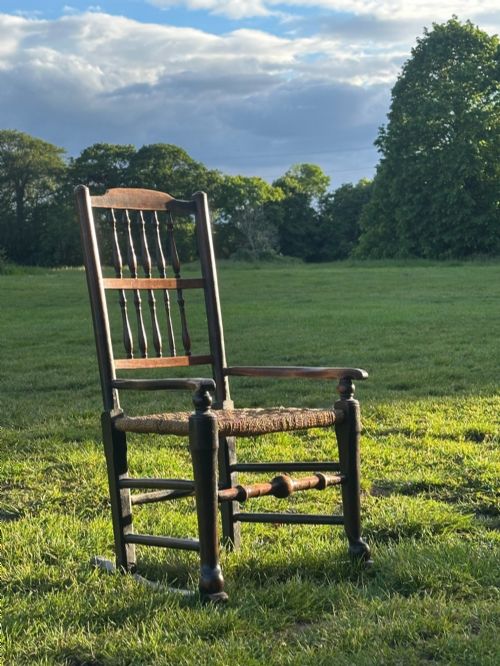
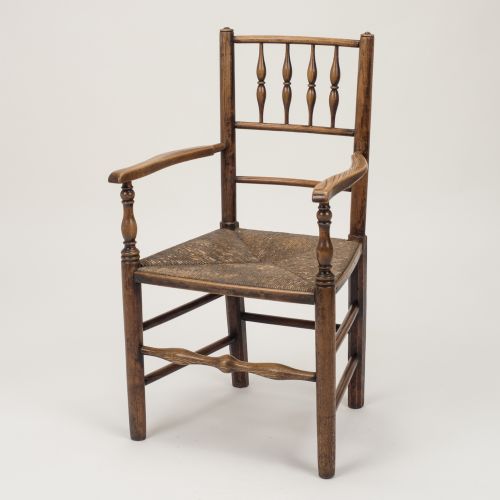
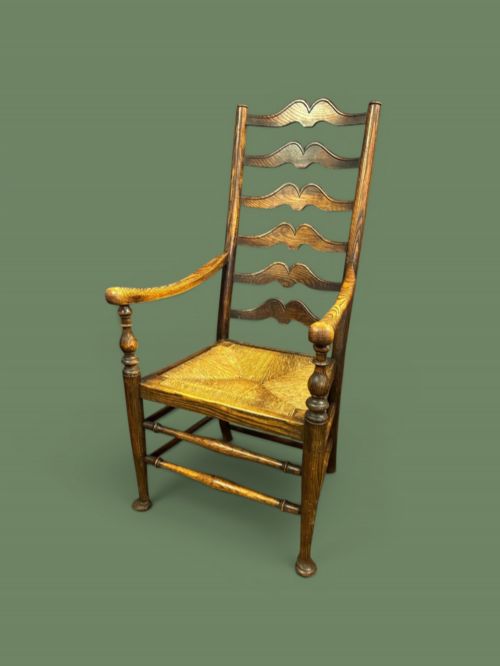
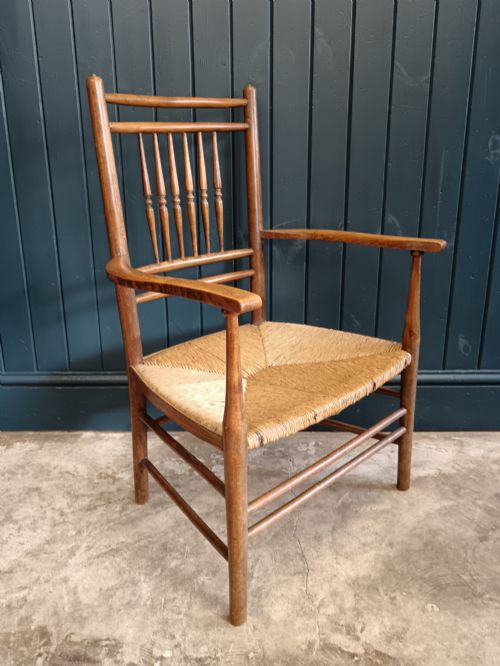
Traditional rush seat armchairs appear across several regional styles, most notably English, Scottish, Lancashire, Cheshire and Arts and Crafts vernaculars spanning the eighteenth, nineteenth and early twentieth centuries. These seating options take the form of ladderbacks, spindlebacks, Windsor frames, corner chairs, rocking chairs and low fireside armchairs designed for everyday farmhouse and cottage use.
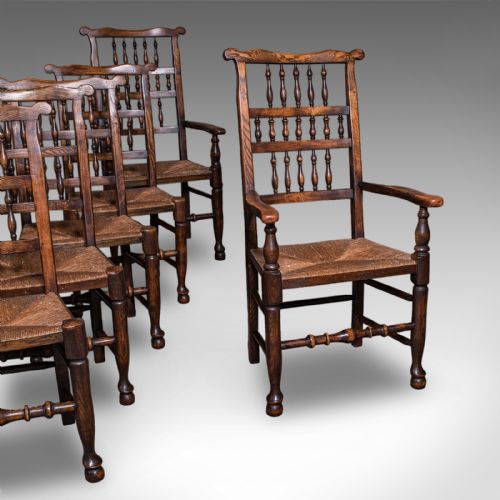
Makers working within these traditions range from country joiners to prominent workshops associated with the Arts and Crafts movement. Surviving pieces include single armchairs, carvers, and larger dining sets comprising side chairs alongside matching carver armchairs.
Materials and Construction
Frames are constructed from locally sourced native hardwoods including oak, elm, ash, beech, fruitwood and mahogany, sometimes finished with original paint, stain or ebonisation. Turnery and steam-bending shape the spindles, uprights and curved arms characteristic of country vernacular furniture.
Seats are hand-woven from natural rush, threaded tightly around wooden rails to create a durable, textured surface designed to support daily sitting over generations.
Some ladderback chairs include rocking rails, proving that farmhouse comfort centuries ago involved serious relaxation.
Evaluating Craftsmanship
Quality rests in the integrity of the timber selection and the precision of the frame's joinery, where tight pegging and balanced turnery distinguish superior workshop production from simpler vernacular items. The tightness and even tension of the woven rush surface further indicate the skill applied to the seating.
Design attribution also elevates certain examples, particularly where ladderback or spindleback frames connect to documented Arts and Crafts designers and London retailing firms through stamped marks or distinct stylistic traits.
Philip Webb·Philip Clissett·E W Godwin·Dicon Nance
The Traditional Rush Seat Armchairs Glossary
- Rush
- A marsh plant used for hand-weaving durable seating surfaces. It creates a textured, pliable matting across the chair frame.
- Ladderback
- A chair style featuring horizontal slats set between the upright rear posts. These backs provide sturdy support in country seating.
- Spindleback
- A construction method utilising thin turned wooden uprights fitted into the backrail. This technique lightens the frame while maintaining structural strength.
- Vernacular
- Furniture made by local regional craftsmen using traditional methods and native materials. These pieces reflect specific geographic styles rather than court fashions.
Traditional Rush Seat Armchairs: Frequently Asked Questions
How do I care for a rush seat?
Keep woven rush away from excessive moisture and direct heat sources to prevent the natural fibres from becoming brittle.
Clean the surface gently with a dry brush and apply a microcrystalline wax sparingly to the wooden frame only.
Are these chairs suitable for daily use?
Most traditional rush seat armchairs are constructed from solid native hardwoods designed for robust domestic service.
Check that the frame joints remain tight and the woven rush shows no major thinning before regular sitting.
How do I date a country armchair?
Dating relies on observing tool marks, timber combinations, turnery styles and structural wear consistent with known periods.
Eighteenth-century examples often display fruitwood and elm construction, while later nineteenth-century versions utilise ash and beech.