

Traditional Rural Artwork
Traditional rural artwork captures the quiet beauty of the countryside through paintings and watercolours depicting pastoral scenes.
Traditional Rural Artwork
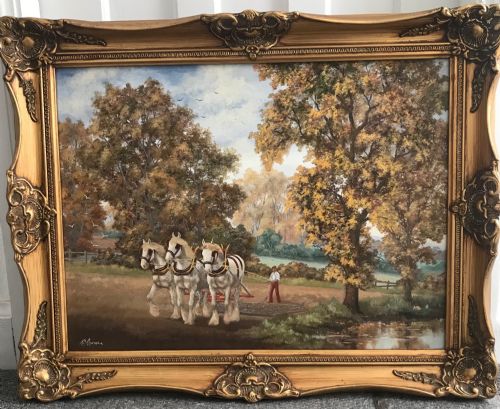
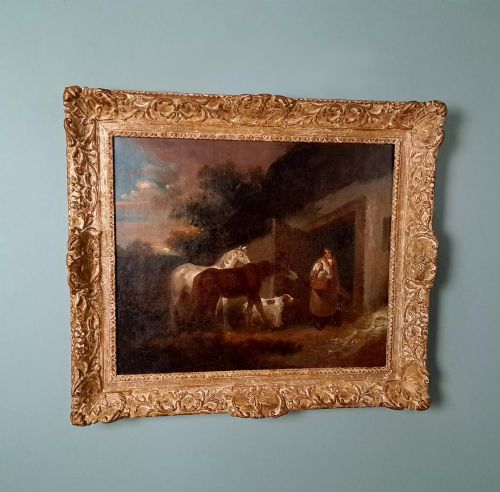
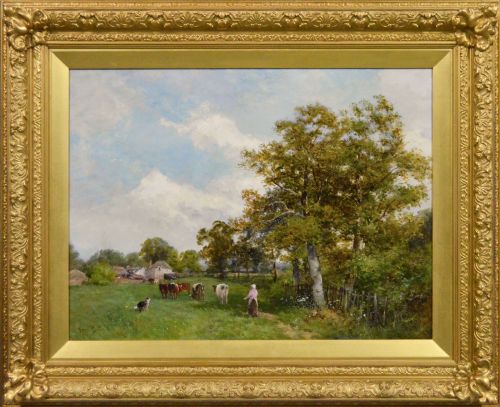
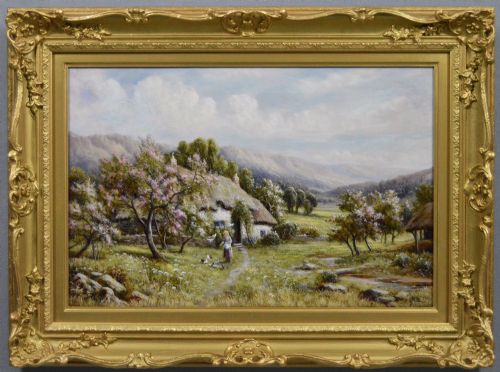
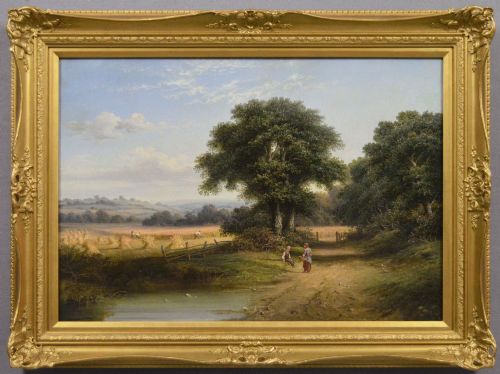
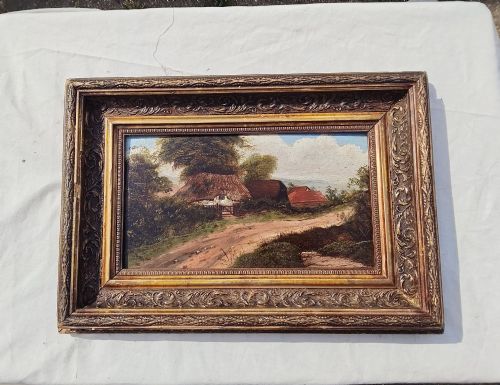
Traditional rural artwork comprises framed paintings and watercolours that focus on the British and European countryside, capturing everyday scenes of farming, cottages, and agrarian life. The pieces you will most commonly encounter here date from the nineteenth and early twentieth centuries, reflecting Victorian and Edwardian sensibilities towards nature and rural labour.
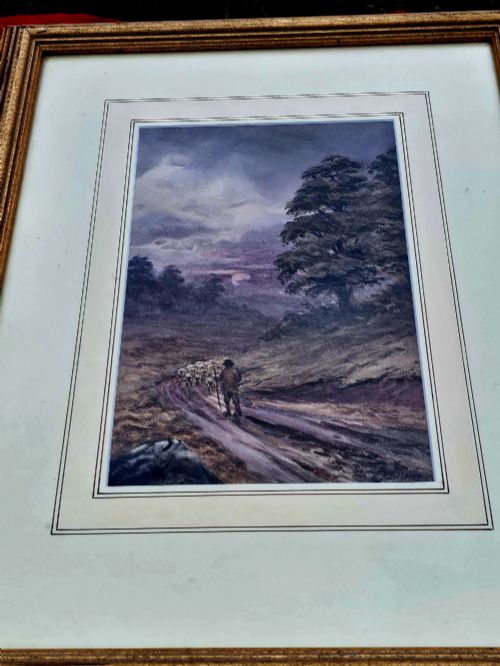
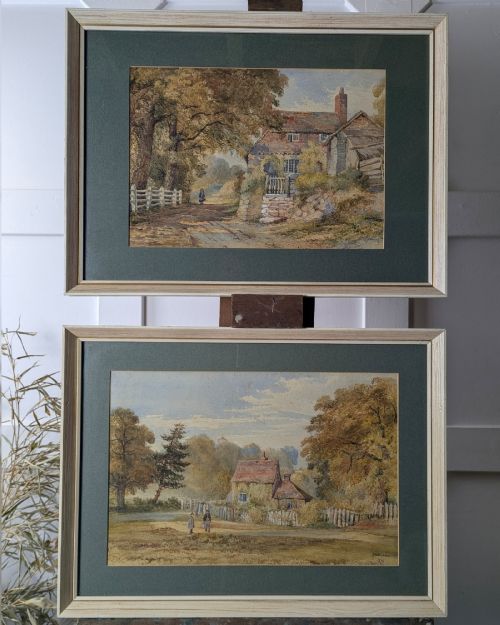
Subjects range from harvest landscapes and river views to detailed studies of livestock, farm horses, and shepherds tending flocks. These works record a vanishing agrarian landscape, often highlighting specific regional locations from Yorkshire to Sussex and beyond.
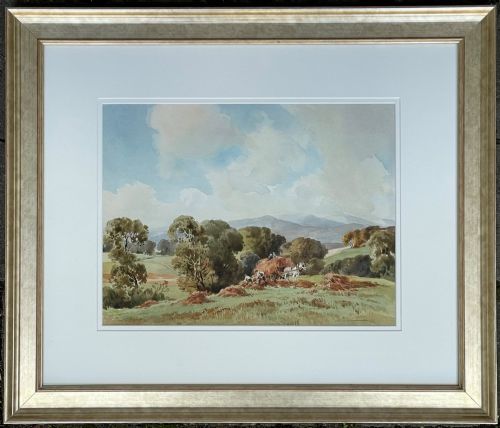
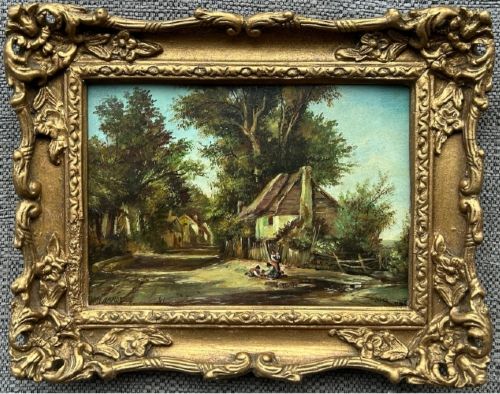
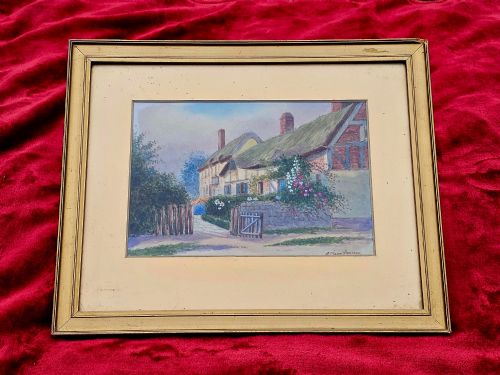
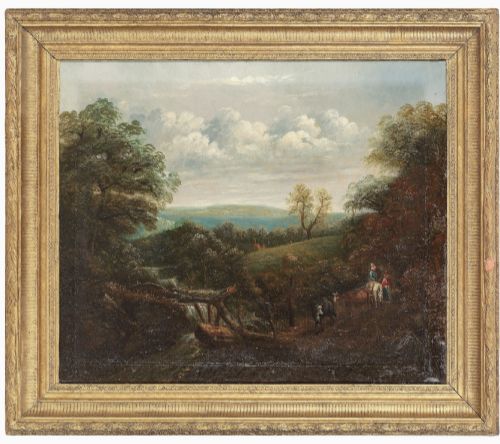
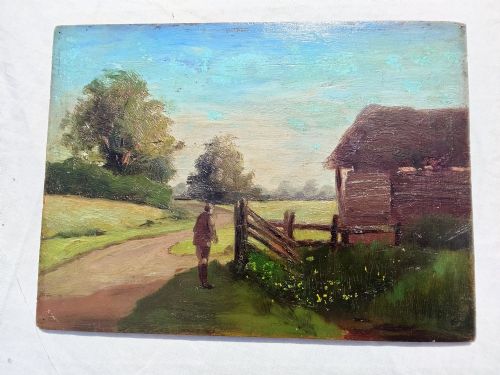
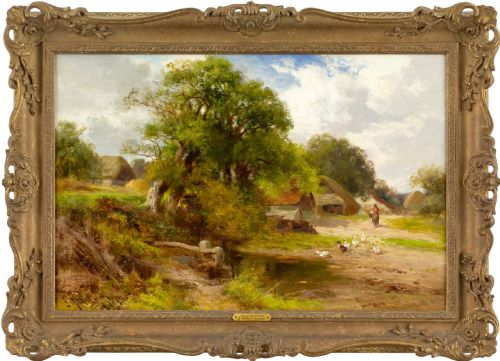
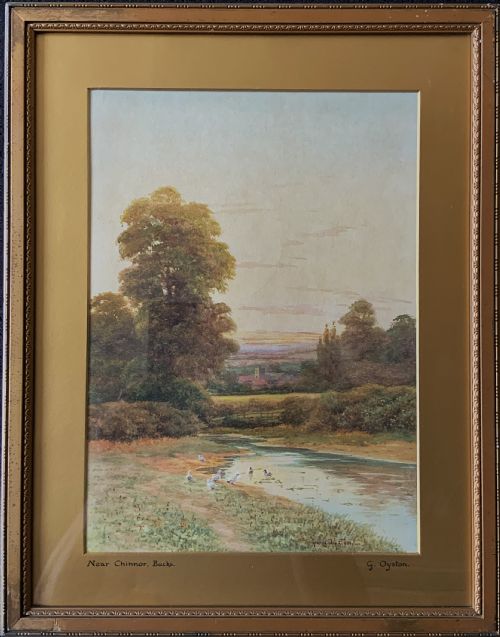
The objects themselves take the form of oil paintings on canvas, wood panels, or card, alongside delicate watercolours on paper. Most arrive framed in gilt or wood surrounds that complement the domestic pastoral aesthetic of the period.
Materials and techniques of the period
Painters of these rural scenes relied primarily on oil paint applied to canvas, wooden panels, or prepared boards, building up rich textures for fields, foliage, and skies. Watercolour on paper was equally prevalent, allowing artists to capture the transient light of open countryside with translucent washes.
Listings feature works spanning from the late eighteenth century through to the mid-twentieth century, predominantly utilising oil and watercolour.
Distinctions in quality and execution
The distinction between standard works and superior examples lies in the artist's command of light, atmospheric perspective, and anatomical accuracy in figures and animals. Finer paintings demonstrate subtle tonal gradations in skies and convincing textures in foliage, whereas lesser pieces rely on formulaic compositions and repetitive brushwork.
Provenance and attribution also elevate a piece, as works by documented regional school painters or exhibited artists command greater attention. The handling of finer details, such as the natural movement of livestock or the specific architecture of a thatched cottage, separates accomplished artists from amateur recorders.
Percy Lancaster·William Joseph Shayer Senior·David Bates·Robert John Hammond·Walter Heath Williams·John Horace Hooper·George Oyston·Henry Charles Fox·Herbert Royle·Reginald Grange Brundrit·James Kyd·William Hoggatt·Samuel Joseph Clark·James Orrock·William Henry Mander·Thomas Sidney Cooper
The Traditional Rural Artwork Glossary
- Oil on Canvas
- Pigment mixed with drying oil applied to a stretched woven fabric support. This combination allows for rich blending and deep colour saturation.
- Watercolour
- Paint consisting of colour suspended in a water-soluble binder, traditionally applied to paper. It produces luminous, transparent washes ideal for capturing shifting light.
- Norwich School
- A regional movement of artists inspired by the Norfolk landscape, active from the early to mid-nineteenth century. They focused on local scenery and everyday rural life.
- Pastoral Landscape
- A genre of art depicting country life and idealized rural scenes, often featuring shepherds, cattle, and rustic cottages. These works emphasise harmony between humans and nature.
- Gilt Wood
- Timber frames or decorative objects coated with a thin layer of gold leaf or metallic powder. They provide a traditional ornamental border for period paintings.
Traditional Rural Artwork: Frequently Asked Questions
What subjects appear most often?
These works frequently depict agricultural labour, including harvesting, ploughing fields, and herding sheep or cattle through rural lanes.
Views of thatched cottages, rivers, and specific regional farmlands also form a large portion of the available subjects.
How do I date these paintings?
Dating relies on stylistic clues, clothing styles of figures, framing materials, and artist signatures where available.
Many pieces carry specific dates in their titles or contemporary inscriptions on the reverse of the panel or canvas.
Were these painted outdoors?
Watercolours were frequently executed on location as direct observations of weather and light in the open countryside.
Larger oil paintings were typically finished in the studio using initial field sketches and studies for guidance.
How should I frame and display them?
Traditional gilt or simple wooden frames suit the aesthetic of these nineteenth and early twentieth-century works best.
Display them away from direct sunlight and excessive humidity to protect the oil paint, canvas, or watercolour paper from degradation.