
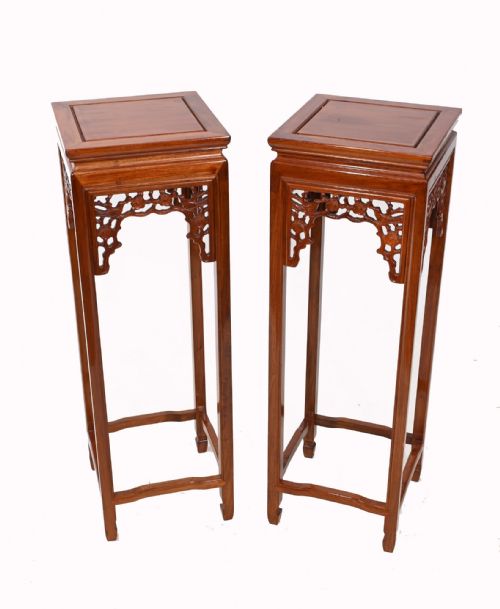


Traditional Rosewood Side Tables
Traditional rosewood side tables bring dense, figured grain and refined proportions to a room, offering practical surface space through centuries-old forms.
Traditional Rosewood Side Tables
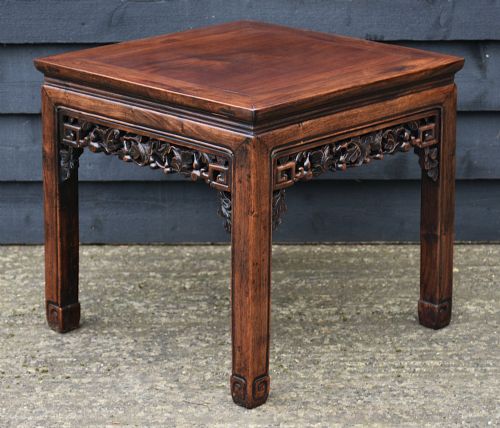
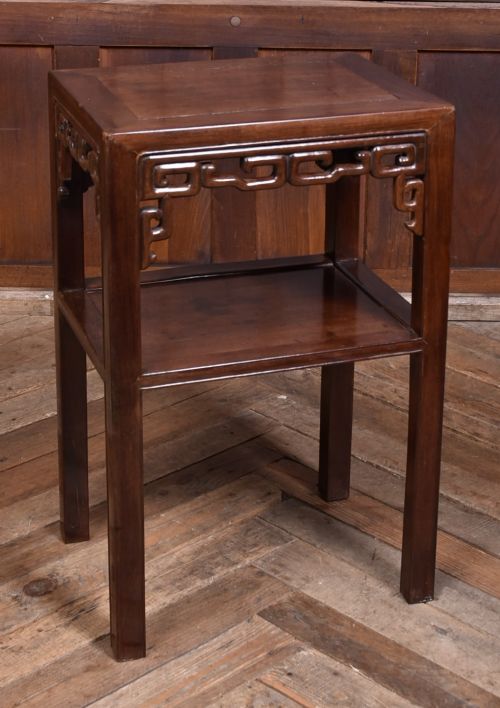
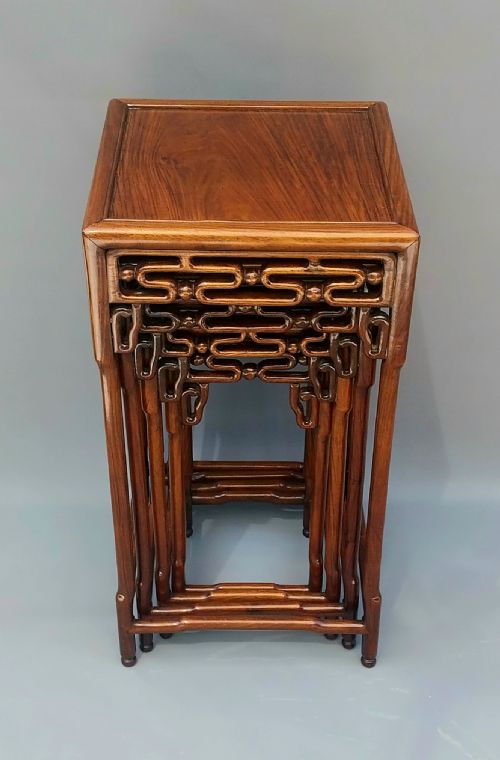
Traditional rosewood side tables encompass a variety of low tables, nests of four, plant stands, and altar tables spanning the nineteenth century and the early twentieth century.
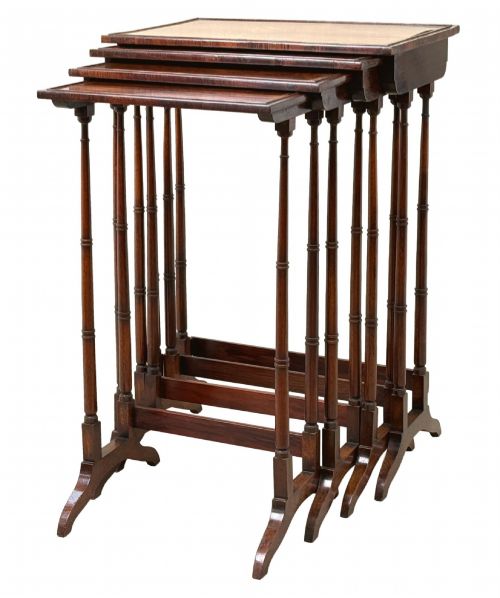
Buyers seeking traditional rosewood side tables will encounter both British Regency designs, such as quartetto nests, and Chinese export pieces fashioned from dense hongmu and hardwood.
These pieces function as lamp tables, occasional surfaces, and display stands, utilising compact footprints that suit both modern and historic interiors.
Materials and Technique
Cabinetmakers utilised heavy tropical hardwoods, specifically rosewood and hongmu, often complemented by satinwood stringing, marble inserts, and mother-of-pearl inlay.
Joinery relied on traditional framing and carving methods, particularly visible in the pierced aprons and recessed legs of Chinese Qing Dynasty tables and the slender turned columns of English Regency pieces.
Listings span the nineteenth century through the early twentieth century, featuring works from the Qing Dynasty alongside British Regency designs in rosewood, mahogany, and marble.
Assessing Quality
Quality rests upon the depth of the timber's natural figure, the crispness of hand-carved details, and the structural integrity of the joints across nests and stands.
Superior examples display balanced proportions and well-matched grain patterns, whereas lesser items show coarser carving and mismatched wood selections.
The Traditional Rosewood Side Tables Glossary
- Hongmu
- A dense, dark Chinese hardwood often translated as red wood, frequently used interchangeably with rosewood in traditional furniture.
- Quartetto
- A matched set of four graduating tables designed to nest together when not in use, popular in Regency and export workshops.
- Altar table
- A long, narrow rectangular table originating in China, characterised by upturned flange ends and open carved spandrels beneath the top.
- Pedestal stand
- A raised single-column support used to display decorative objects, vases, or plants within domestic interiors.
- Kang table
- A low domestic table traditionally placed upon a heated brick bed in China for dining or resting, now adapted as a coffee table.
Traditional Rosewood Side Tables: Frequently Asked Questions
How do I clean rosewood furniture?
Rosewood requires gentle dusting with a dry, soft cloth to maintain its natural lustre without stripping the aged finish.
Avoid placing these tables near direct heat sources or strong sunlight, which can dry out the dense hardwood over time.
What distinguishes hongmu from rosewood?
Hongmu is a general Chinese term describing various dense, highly prized red and dark hardwoods, of which rosewood is a primary constituent.
Furniture labelled as hongmu shares the heavy weight, rich colouration, and tight grain typical of fine rosewood pieces.
Were these tables meant for daily use?
Many of these pieces served practical domestic functions, from holding bedside water jugs and lamps to displaying prized porcelain vases.
Their robust hardwood construction ensures they remain durable enough for contemporary daily placement beside a sofa or bed.