



Bamboo Turned Nest of Tables
A bamboo turned nest of tables offers a practical tier of surfaces that slides away when floor space is needed.
Bamboo Turned Nest of Tables
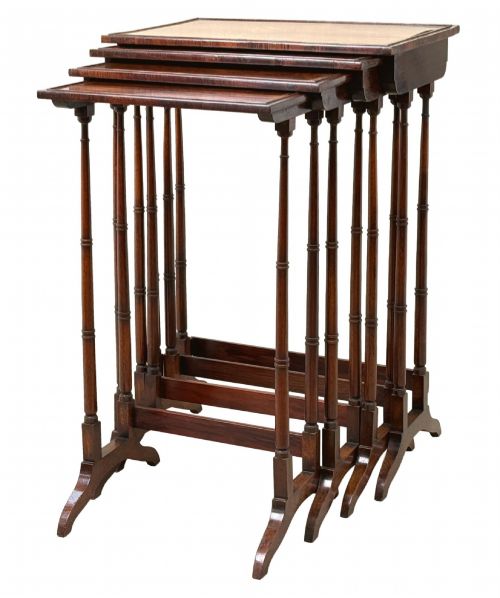
A bamboo turned nest of tables provides a set of graduating surfaces designed to stack neatly within one another when not in use. These pieces appear in forms ranging from Georgian style and Regency to Edwardian interpretations, often described as quartetto sets.
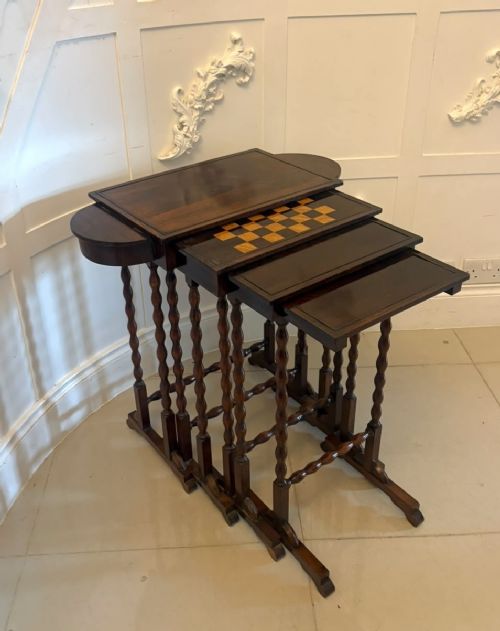
The pieces listed now include examples from the nineteenth century, Regency period, and Edwardian era. Buyers encounter tables configured as sets of three or four occasional surfaces, occasionally incorporating integrated chess boards.
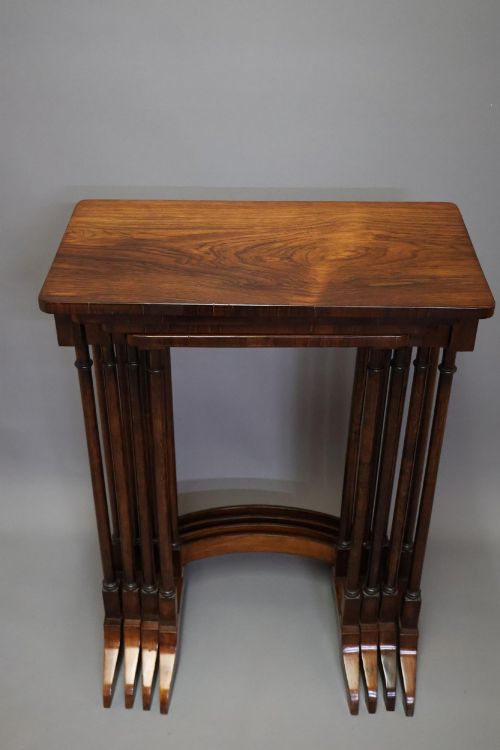
Originating as practical items for sitting rooms and parlours, these tables serve today as flexible side furniture. The most common versions on this page are rosewood, satinwood, and mahogany sets featuring turned supports.
How they were made
Maker construction relies on cabinet timbers such as mahogany, rosewood, and satinwood, shaped into slender frames. Turned supports mimic the segmented appearance of natural cane or bamboo, requiring precise lathe work.
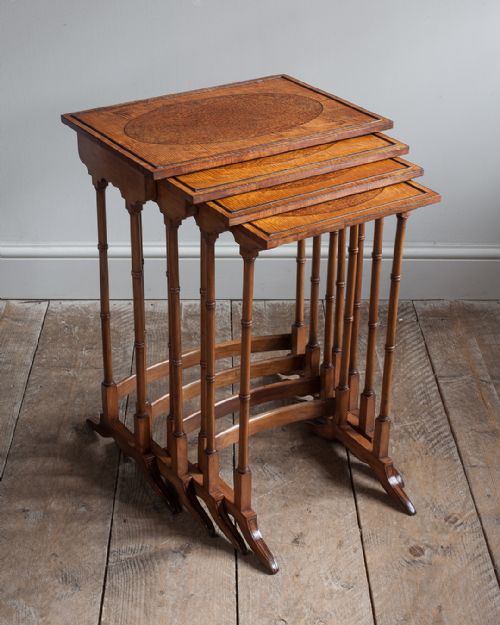
Surfaces often feature fine veneers and banded edges, supplemented by boxwood and ebony stringing details. Some examples incorporate lacquer work to achieve decorative Chinoiserie finishes.
Bamboo Turned Nest of Tables Retail Price Guide 2026
Typical asking prices for bamboo turned nest of tables among the pieces listed under this phrase on Sellingantiques today, from the lower quarter to the upper quarter. They describe what is for sale here now, not the wider market.
What varies in quality
Quality rests in the selection of cabinet timbers and the crispness of the turning on the legs. Grain matching across the graduating surfaces distinguishes superior sets from simpler utilitarian versions.
The rigidity of the frame when stacked and the precision with which the smaller tables slide into the primary frame demonstrate the joiner's skill. Finer examples incorporate complex details like integrated chess tables and contrasting stringing.
The Bamboo Turned Nest of Tables Glossary
- Quartetto
- A set of four graduating tables designed to nest together. This term appears frequently in nineteenth century descriptions of the form.
- Stringing
- A narrow inlay of contrasting wood, such as boxwood or ebony, used to outline table tops and legs. It defines the edges of finer mahogany and satinwood surfaces.
- Chinoiserie
- A decorative style reflecting Chinese artistic traditions, often applied through lacquer work on occasional tables. It appears on selected nineteenth century pieces.
- Occasional table
- A small, movable table intended for specific, temporary use around a room. These form the individual units within a nested set.
Bamboo Turned Nest of Tables: Frequently Asked Questions
What is a quartetto nest of tables?
A quartetto set consists of four graduating tables designed to slide neatly beneath one another. This configuration maximises surface area while occupying the floor space of a single small table.
The term appears often in nineteenth century descriptions of Regency rosewood and satinwood sets. Each table diminishes slightly in height and width to fit the next.
How were nested tables used historically?
These tables served as adaptable surfaces for tea, reading, or writing in nineteenth century drawing rooms. Servants or hosts could easily separate the stack to accommodate multiple guests.
When the gathering concluded, the tables nested back together to clear the floor. Edwardian and Regency homes utilised them for similar flexible entertaining needs.
Which woods are common in these sets?
Makers utilised dense cabinet timbers including rosewood, mahogany, and satinwood for their durability and grain pattern. Inlays of boxwood and ebony frequently provide decorative contrast along table edges.
Some examples also incorporate lacquer finishes to achieve specific decorative styles. Timber selection often reflects the prevailing taste of the Regency or Edwardian period.
How do I identify a Regency set?
Regency pieces often feature rosewood or mahogany construction with classical proportions and precise turning. These sets frequently carry the quartetto designation in period records.
Examining the timber grain and the style of the turned supports helps distinguish these earlier nineteenth century pieces from later Edwardian reproductions or adaptations.