





Rosewood Nest of Four
A rosewood nest of four brings together exceptional timber and clever design, offering four tables that slide neatly beneath one another.
Rosewood Nest of Four
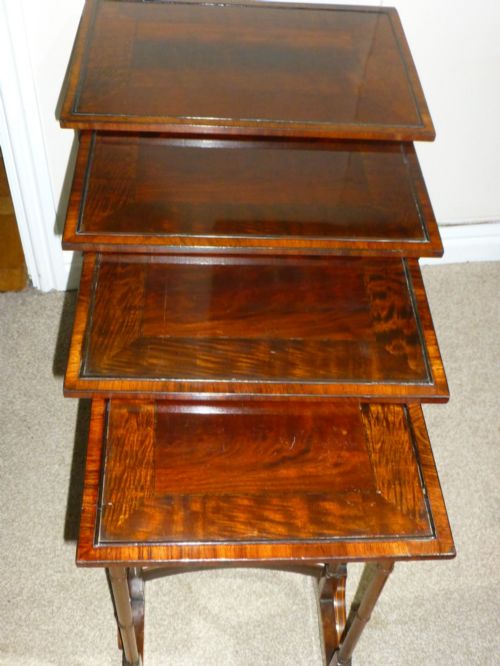
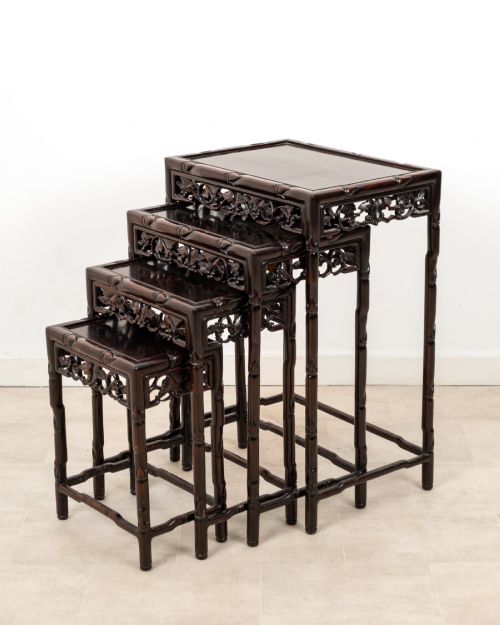
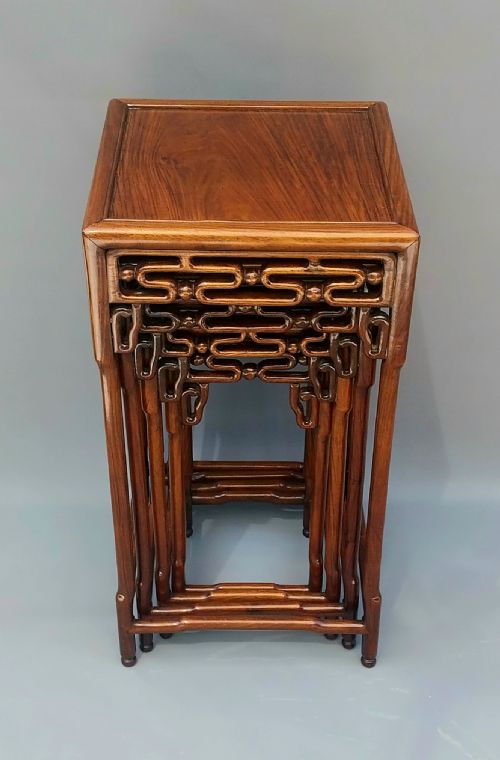
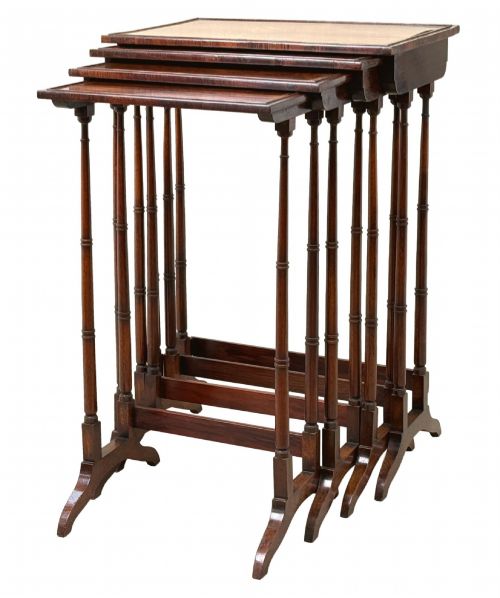
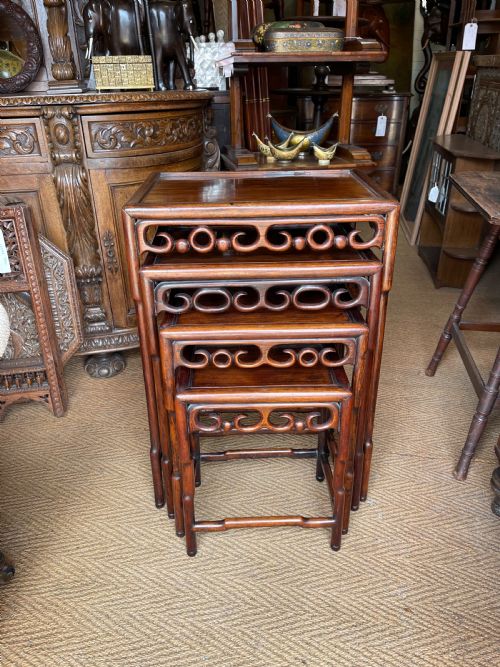
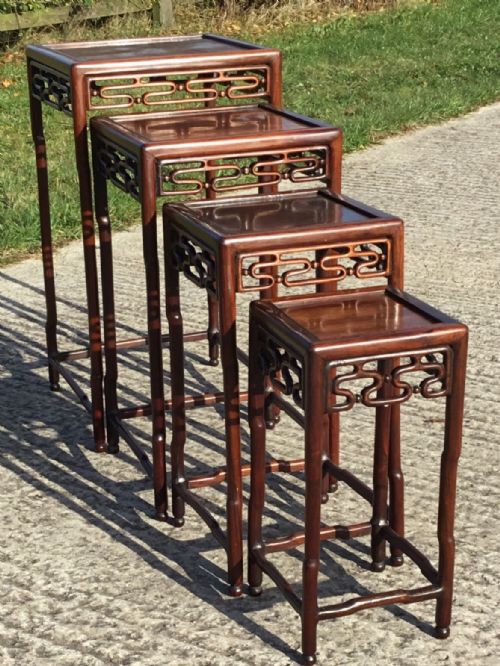
When you search for a rosewood nest of four, you encounter sets of four graduated tables designed to slide neatly beneath one another when not in use. These pieces appear in both Regency English and Chinese export traditions, reflecting distinct stylistic approaches to the form.
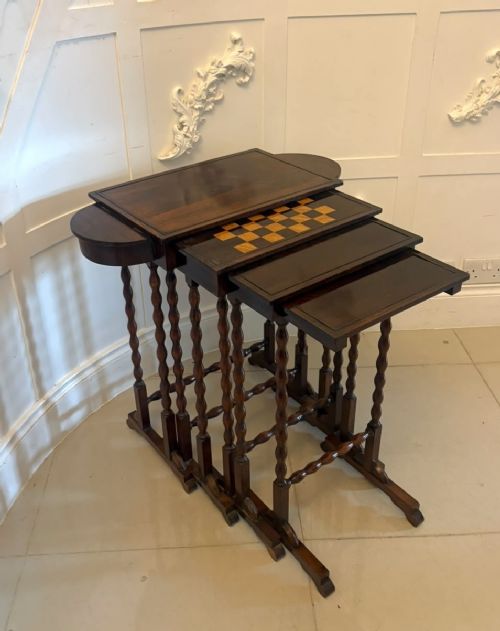
The English examples frequently adopt the quartetto style, often originating from the nineteenth century, sometimes incorporating integrated chess boards or parquetry. Chinese export versions utilise dense Asian hardwoods and rosewood, featuring carved details from the Qing dynasty and subsequent periods.
How they were made
Cabinetmakers constructed these sets using solid rosewood, hongmu, and various imported hardwoods, frequently combining them with contrasting satinwood or boxwood details. The wood selection provided the necessary structural strength for slender legs while displaying rich natural grain patterns across the tabletops.
Joinery techniques focused on precise graduated sizing so each table fit precisely beneath the next larger one. Carved ornamentation on Chinese export examples involved intricate hand-chiselling directly into the dense hardwood, whereas Regency versions relied on clean lines and turned supports.
Rosewood Nest of Four Retail Price Guide 2026
Typical asking prices for rosewood nest of four among the pieces listed under this phrase on Sellingantiques today, from the lower quarter to the upper quarter. They describe what is for sale here now, not the wider market.
Certain nineteenth-century sets double as clandestine chess arenas, concealing an integrated board for impromptu matches between tea courses.
What varies in quality
The grade of timber dictates much of the visual weight, with heavier, highly figured rosewood and dense hongmu sitting at the upper end of the scale. Subtle parquetry work, integrated games boards, and refined carving elevate particular sets above plain utilitarian versions.
Proportion and structural integrity define the remaining differences between examples. Tables that retain smooth sliding action across all four tiers without excessive wobble demonstrate superior original construction and careful ongoing maintenance.
The Rosewood Nest of Four Glossary
- Quartetto
- A set of four small tables designed to fit inside one another. This term appears frequently in Regency furniture descriptions.
- Hongmu
- A dense, dark Asian hardwood often grouped with rosewood in Chinese export furniture. It provides exceptional weight and durability.
- Parquetry
- Geometric wood inlay work forming decorative patterns on tabletops. This technique surfaces on nineteenth-century examples.
- Graduated
- Describing tables built in decreasing dimensions so each smaller piece slides beneath the preceding one. This scaling defines the form.
Rosewood Nest of Four: Frequently Asked Questions
What is a quartetto table?
A quartetto table refers to a set of four graduated occasional tables designed to nest together. Regency makers utilised this term for sets intended to be pulled out separately for tea or writing.
These pieces offer practical surface space that expands when needed and stores compactly. They represent a specific nineteenth-century British interpretation of the nested table concept.
How do English and Chinese sets differ?
English examples from the Regency period typically feature clean lines, slender turned supports, and sometimes rosewood veneers with satinwood stringing or chess boards. Chinese export pieces utilise dense hardwoods like hongmu and incorporate carved ornamentation.
Both traditions achieve the same space-saving function through graduated sizing. The distinction lies entirely in the decorative vocabulary and the specific timber densities employed.
Can these tables support everyday use?
Solid rosewood and dense Chinese hardwoods provide substantial structural durability. The graduated frames remain stable for holding drinks, books, or decorative objects.
Care should be taken with historical joins during relocation. Regular placement on level flooring ensures the legs maintain balanced weight distribution.
How are periods identified?
Period attribution relies on timber choice, construction techniques, and decorative style. Regency pieces show English cabinetmaking traits, while nineteenth-century Chinese export items display Qing dynasty carving influences.
Graduation tolerances and secondary woods provide further clues for dating. Examination of the underside often reveals the age of the timber and working methods.