

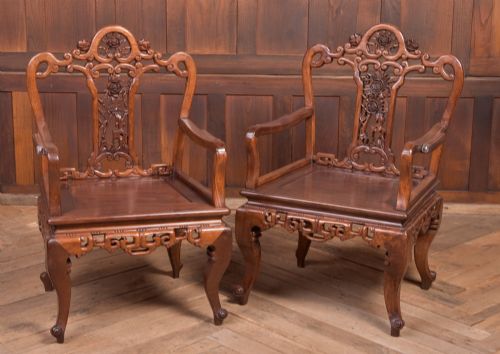


Traditional Rosewood Chairs
Traditional rosewood chairs bring dense timber and formal seating into a room, offering the durability of 19th-century cabinet work.
Traditional Rosewood Chairs
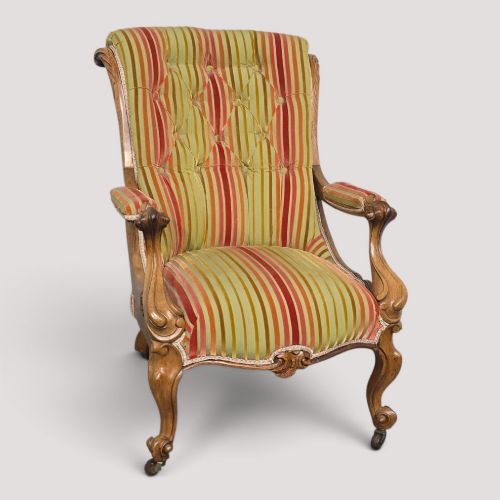
Traditional rosewood chairs comprise dining seats, library armchairs, and carved Chinese seating found across the 19th century. Buyers searching for traditional rosewood chairs encounter Regency sets, Victorian balloon backs, and hardwood throne chairs from the Qing Dynasty.
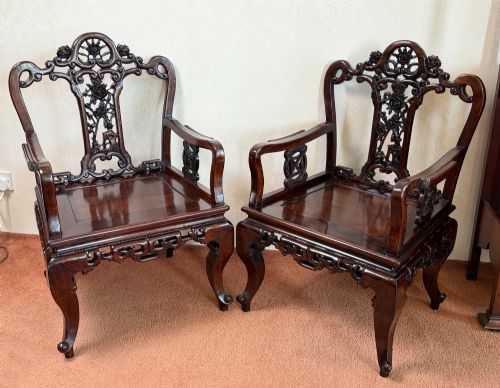
The domestic English forms centre on dining sets and library armchairs, while the Asian counterparts include horseshoe hall benches and carved hongmu seating. Most examples date from the Regency, William IV, and Victorian periods, alongside late 19th-century Chinese production.
Sets range from pairs to groups of ten, frequently constructed for formal dining rooms or libraries. The selection balances British upholstered seating with carved hardwood forms from Chinese workshops.
How they were made
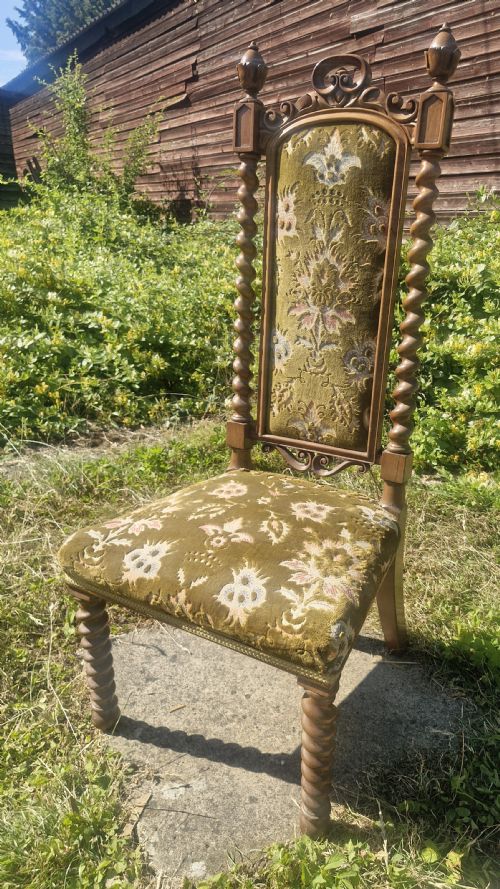
Cabinet makers utilised dense rosewood and exotic hardwoods for structural frames, shaping them through carving and joinery. British pieces often incorporate upholstered pads covered in fabric, velvet, or textile.
Chinese pieces rely on carved hardwood construction without upholstery, showcasing the natural grain of the timber. Brass castors appear on certain Regency and Victorian library armchairs to aid movement.
Traditional Rosewood Chairs Retail Price Guide 2026
Typical asking prices for traditional rosewood chairs among the pieces listed under this phrase on Sellingantiques today, from the lower quarter to the upper quarter. They describe what is for sale here now, not the wider market.
Listings span the Regency, Victorian, and Edwardian eras alongside Qing Dynasty Chinese hardwood production.
What varies in quality
The depth and crispness of the carving distinguish standard production from superior examples, particularly on balloon backs and Qing Dynasty throne chairs. Timber selection also dictates grade, with heavily figured rosewood and dense hongmu commanding greater visual weight.
Completeness of a set influences standing, as matched groups of six or ten retain higher uniformity than assembled groupings. The structural integrity of the joints and the preservation of original upholstery materials further separate ordinary seating from fine library armchairs.
The Traditional Rosewood Chairs Glossary
- Rosewood
- A heavy, dense tropical timber with a deep grain and reddish-brown colour. It takes a high polish and forms the primary material for 19th-century dining and library seating.
- Balloon back
- A chair back shaped in an open curve resembling a balloon, characteristic of mid-Victorian design. This form provides ergonomic support through steam-bent wood.
- Hongmu
- A Chinese term for dense hardwoods, often translated as red wood. It encompasses various heavy timber species used in Qing Dynasty throne chairs and hall furniture.
- Chaise longue
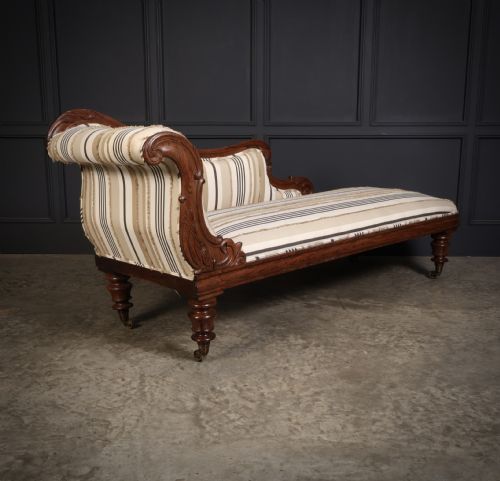
- An upholstered couch or daybed designed for reclining, combining seating with an extended backrest. Regency and Victorian examples feature carved rosewood frames.
Traditional Rosewood Chairs: Frequently Asked Questions
How do I date a rosewood chair?
Dating relies on stylistic markers such as Regency curves, William IV heavy carving, or Victorian balloon backs. Cabinet construction methods and timber characteristics also help place pieces within the nineteenth century.
Comparison with documented examples from the same period provides additional verification. Secondary woods used in the frames further clarify the manufacturing era.
Are Chinese hardwood chairs traditional rosewood?
Chinese pieces made from hongmu or dense tropical hardwoods share the heavy weight and dark grain of European rosewood furniture. Makers in the Qing Dynasty utilised these timbers for carved throne chairs and hall furniture.
While originating from different design traditions, these Asian hardwood chairs group naturally with rosewood furniture through material similarity and age.
How should I care for antique rosewood?
Maintain stable humidity levels to prevent the dense timber from splitting or warping over time. Dust regularly with a dry cloth and avoid harsh chemical polishes that damage the aged surface.
Upholstered sections require gentle vacuuming with a soft brush attachment. Keep chairs away from direct sunlight to preserve the rich colour of the wood.
What is the difference between a side chair and an armchair?
Side chairs lack arms and were designed to sit against a wall or around a dining table without obstructing clothing. Armchairs feature structural side supports and offer more substantial seating for libraries or studies.
Dining sets typically consist of multiple side chairs accompanied by matching armchairs for the head of the table.