


Traditional Room Size Rug
A traditional room size rug anchors a large interior with woven history, offering substantial proportions and enduring regional patterns for grand spaces.
Traditional Room Size Rug
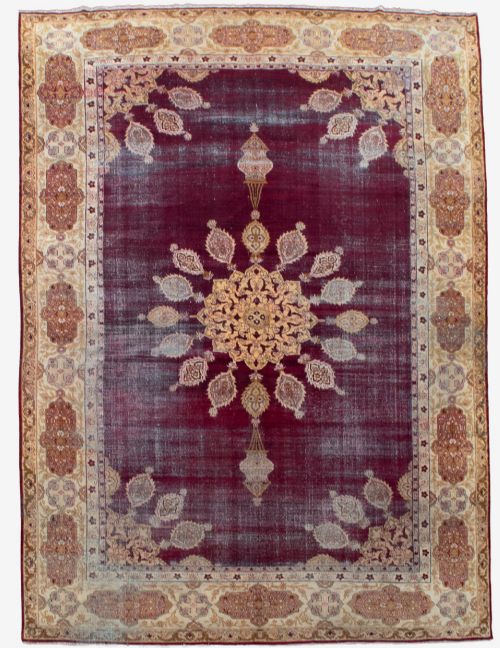
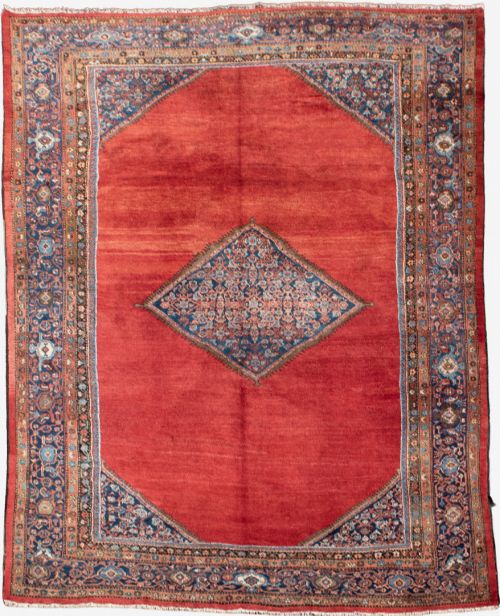
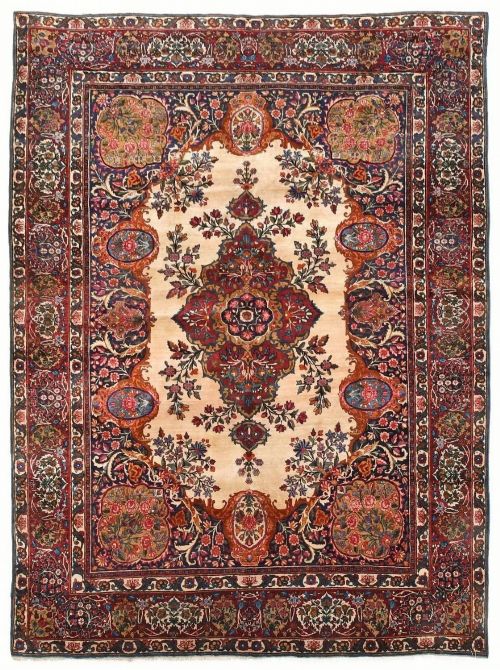
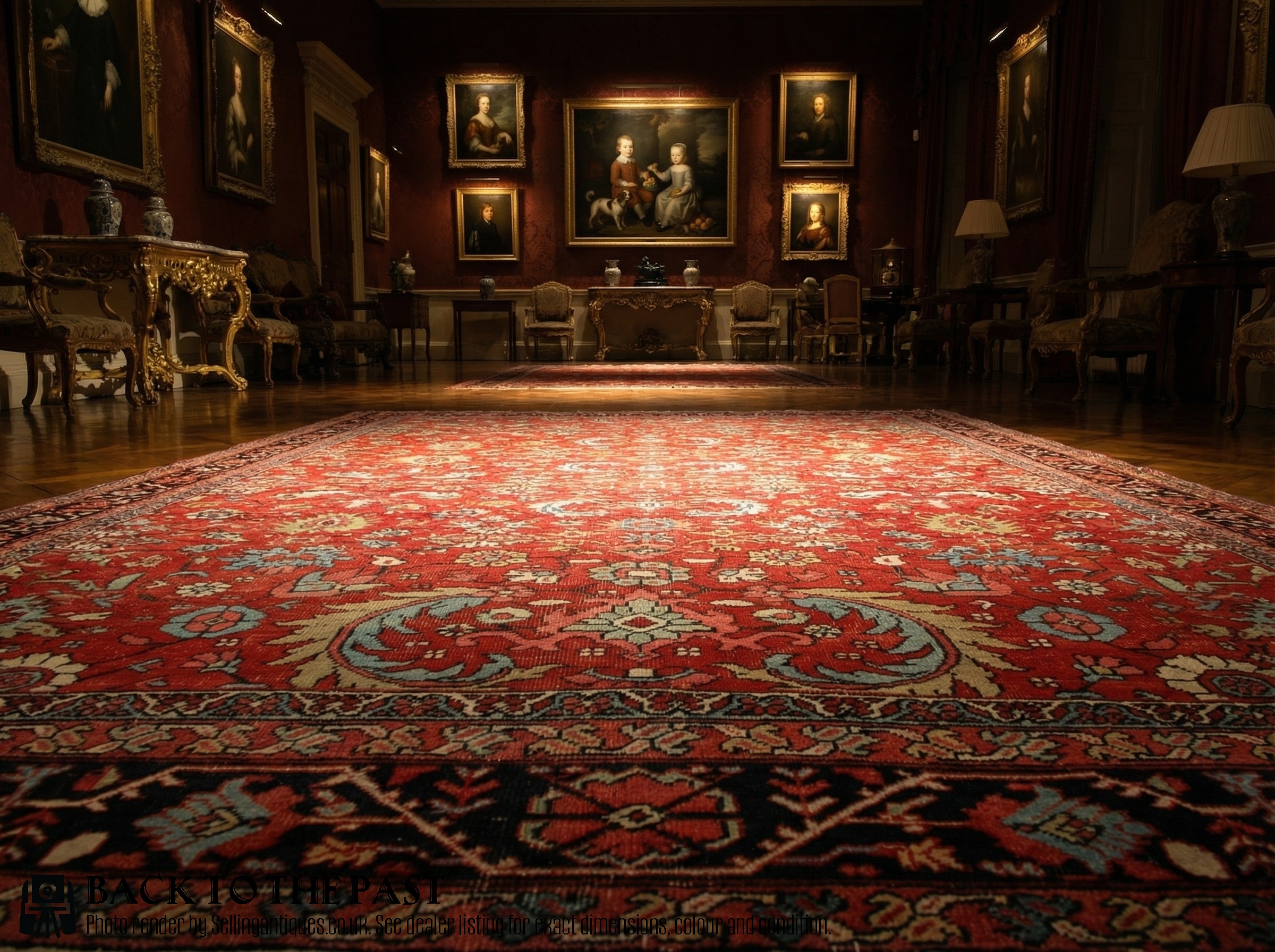
A traditional room size rug provides floor coverings of considerable dimensions, designed to coordinate furnishings within expansive chambers and country house drawing rooms. The selection encompasses large format floor coverings originating from weaving centres across Persia, Turkey, India, and China, dating from the late nineteenth century into the early decades of the twentieth century. Examples on this page include substantial Heriz, Oushak, Amritsar, and Kirman carpets that span several metres in length.
Buyers encounter room size floor coverings in distinct regional styles, ranging from the bold geometric medallions of Heriz and Bidjar to the curved floral compositions of Tabriz, Kirman, and Ferahan. Many pieces reflect classic Persian and Anatolian village traditions, alongside Indian productions from Amritsar and carpets bearing distinct garden or repeat medallion motifs. These large formats serve to define conversational seating areas or extend gracefully beneath large dining tables.
How they were made
Traditional room size rugs utilise natural wool foundations and surface piles, occasionally combined with cotton warps and wefts to provide structural stability for heavy textiles. Weavers knotted the pile by hand onto vertical looms, employing dense knot counts that allowed intricate curvilinear or geometric designs to emerge across expansive surfaces.
Dyers utilised natural botanical and mineral colour sources to saturate the wool, yielding rich tones of indigo, madder red, and softer abrashed neutrals that deepen in character over decades of light and wear.
Several carpets recorded here measure over five metres long, requiring entire rooms to be cleared just to lay them flat.
What varies in quality
Quality in these large formats rests upon the precision of the initial design drafting and the density of the hand-knotted pile, which dictates how sharply the motifs resolve across the field. Master weavers achieved superior handle and structural resilience through careful selection of high-lanolin wool and secure knotting techniques.
The harmony and saturation of the palette further distinguish finer pieces, where subtle variations in dye lots create depth and luminosity across the field rather than flat uniformity.
The Traditional Room Size Rug Glossary
- Abrashed
- Colour variation within a single field of wool, caused by differences in dye batches or natural fading over time.
- Warp
- The vertical threads stretched upon the loom that form the foundational skeleton of the rug and terminate in decorative fringes.
- Weft
- The horizontal threads passed alternately over and under the warp threads to lock the rows of knots securely into place.
- Medallion
- A prominent central ornamental motif placed in the middle of the field, frequently seen in Persian and Anatolian carpet designs.
- Pile
- The upright cut or looped wool surface of the rug that provides the tactile texture underfoot.
Traditional Room Size Rug: Frequently Asked Questions
How do I choose the right size room rug?
Measure the room dimensions while ensuring a uniform border of exposed flooring remains visible around the perimeter of the carpet. Large spaces typically require ample clearance so that furniture legs rest comfortably upon the central field.
Consider the placement of heavy dining tables or seating groups to verify that the central medallion or overall pattern remains visible rather than entirely obscured.
Where were these large carpets woven?
Weavers produced these room size examples across traditional regional hubs including Persian towns like Heriz, Tabriz, and Kirman, alongside workshops in Turkey, India, and China.
Each geographic centre utilised distinct structural foundations and characteristic colour palettes that reflect local weaving heritage.
How should I care for an antique wool rug?
Protect the textile by vacuuming gently without a rotating brush bar to prevent snagging the hand-knotted wool pile. Professional cleaning should be undertaken periodically by specialists familiar with antique vegetable-dyed carpets.
Positioning the rug away from direct, continuous sunlight helps preserve the natural integrity of the botanical dyes over many years.
What defines a room size carpet?
Room size carpets generally measure upwards of three metres in length, providing adequate coverage to anchor significant domestic interiors and country house reception rooms.
These generous proportions distinguish them from smaller scatter rugs or corridor runners intended for hallways and transitional spaces.