




Traditional River Landscape Canvas
These traditional river landscape canvas works capture winding waterways and pastoral banks through historic brushwork, offering timeless rural scenery for period interiors.
Traditional River Landscape Canvas
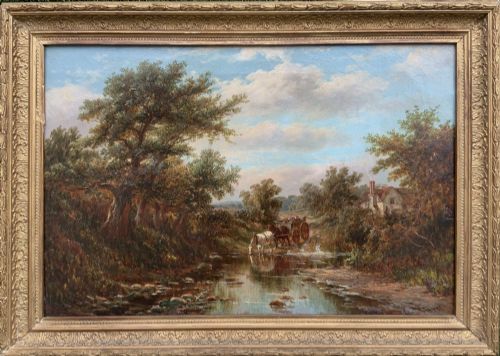
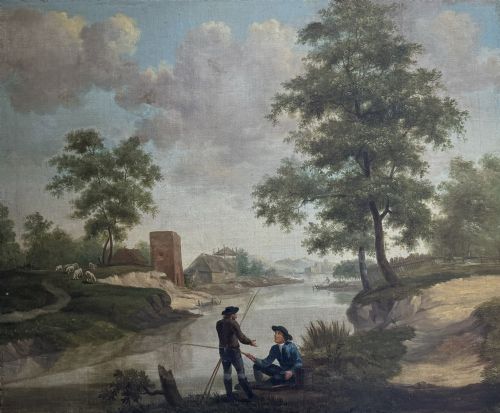
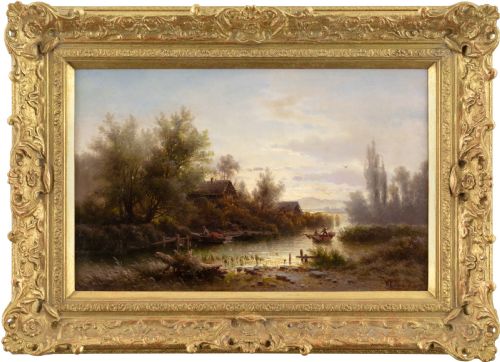
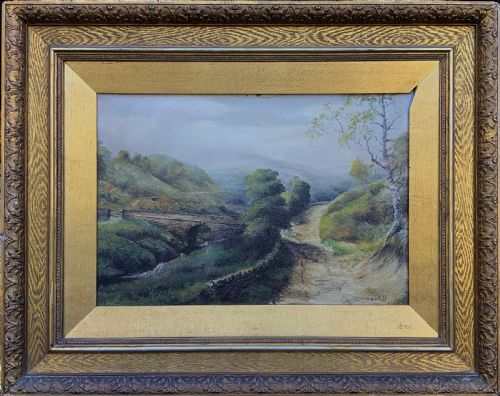
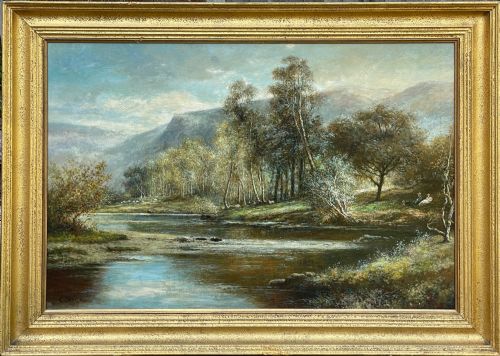
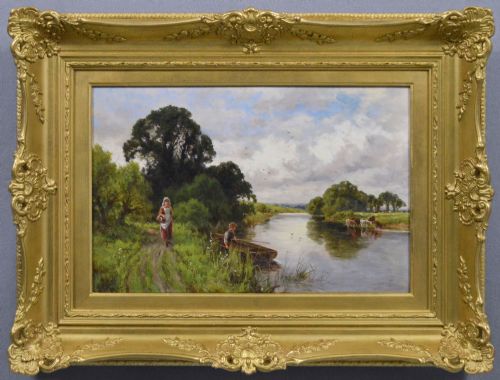
A traditional river landscape canvas portrays natural waterways, often featuring figures fishing, mills, or cattle beside pastoral riverbanks. These oil paintings span from the eighteenth century through the twentieth century, encompassing British, Dutch, and Continental schools.
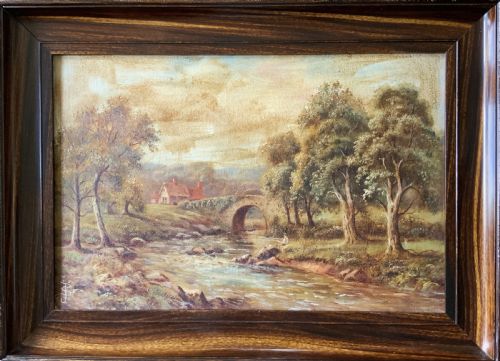
The version most commonly met on this page is the nineteenth-century British oil painting on canvas, housed in a period giltwood frame. Such pieces depict local rivers like the Thames, the Severn, or Welsh streams under various atmospheric conditions.
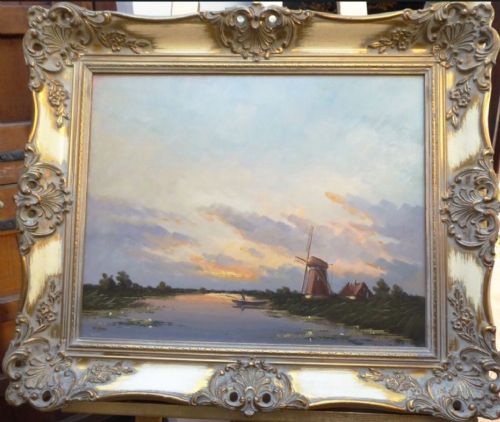
Collectors also encounter works associated with named regional artists working in realistic or impressionistic styles. These range from intimate depictions of secluded streams to expansive panoramic views of rivers at sunset.
Materials and Technique
Artists painted primarily with oil paint on woven canvas stretched over wooden frames, sometimes subsequently laid onto board for structural support. Layers of oil pigment build up translucent water surfaces and textured foliage alongside opaque earth tones.
Many works retain their original moulded gesso and giltwood frames, which contribute decorative weight and protect the perimeter of the canvas. Pigments capture natural light through varied impasto application and thin glazing techniques.
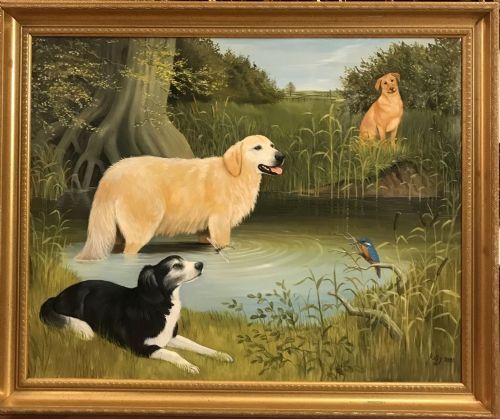
Several canvases capture dogs sharing the riverbank alongside fishermen and cattle.
Assessing Quality
Quality rests upon the handling of light, atmospheric depth, and the naturalism of water reflections across the composition. Master painters achieve convincing motion in river currents and subtle gradations in morning or evening skies.
The integrity of the canvas support, the subtlety of the original brushwork, and the preservation of the matching period gilt frame distinguish finer works. Evidence of authorship through signatures or documented attribution further elevates a piece.
George Graham·Albert Rieger·Henry H Parker·Sydney Yates Johnson·John Horace Hooper·Archibald Kay·Alexandre Le Bihan·Alfred Augustus Glendening Jnr·Owen Bowen·William Sydney Cooper·Stanley Leader·George Vicat Cole·Thomas Spinks·Sidney Richard Percy·David Watts·William Mellor·Walter J Watson·James Gunson Atkinson·Benjamin Williams Leader
The Traditional River Landscape Canvas Glossary
- Canvas
- A heavy woven fabric stretched across a wooden frame to form the foundational surface for oil painting. It provides the flexible yet durable support characteristic of traditional easel art.
- Giltwood
- Wood carved and coated with a thin layer of gold leaf or gold paint, frequently used for traditional picture frames. These ornate surrounds enhance the visual depth of the artwork.
- Gesso
- A white paint mixture consisting of a binder mixed with chalk, gypsum, or pigment, applied to wooden frames before gilding. It creates a smooth, receptive base for decorative moulding.
- Impasto
- A technique where paint is laid onto a canvas in very thick areas, making brush strokes or palette knife marks visibly stand out. This method adds tactile relief and texture to foliage or water.
- Continental School
- A broad classification for artworks produced by artists trained in mainland Europe rather than Britain. These pieces often reflect distinct regional stylistic traditions.
Traditional River Landscape Canvas: Frequently Asked Questions
How do I care for an oil painting on canvas?
Keep the canvas away from direct sunlight and fluctuating humidity to prevent the paint from cracking or warping the wooden stretcher. Dust the surface gently with a soft, dry brush without applying pressure.
Avoid using water or liquid cleaners on either the canvas or the gilt frame. Professional conservation is recommended for any deeper cleaning or structural repairs.
What subjects appear in these river landscapes?
Common subjects include winding rivers, rural mills, cattle watering at the bank, and figures fishing under willow trees. Scenes often capture specific times of day, such as morning mist or sunset over the water.
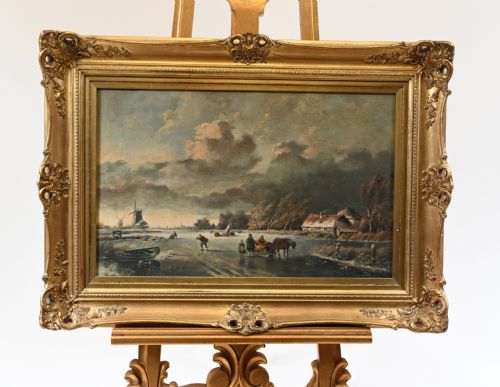
Views frequently feature identifiable locations across Britain, including the Thames, the Severn, and Welsh mountain streams. Continental river scenes and Dutch frozen waterways also appear among the works.
How can I date an antique canvas?
Dating relies upon examining the canvas weave, the construction of the wooden stretcher frame, and the preparation layers visible at the tacking edges. Stylistic clues within the brushwork and clothing of any figures also provide chronological markers.
Maker signatures, artist biographical dates, and original framing techniques offer further evidence. Inscriptions on the reverse of the canvas or stretcher often record titles and dates.
Are these paintings supplied with frames?
Many listings include the original period giltwood or gesso frame accompanying the canvas. These frames often show age-appropriate wear that matches the period of the artwork.
Some pieces retain framing elements characteristic of nineteenth-century or Edwardian presentation styles. The description specifies whether the artwork includes its historic frame.