


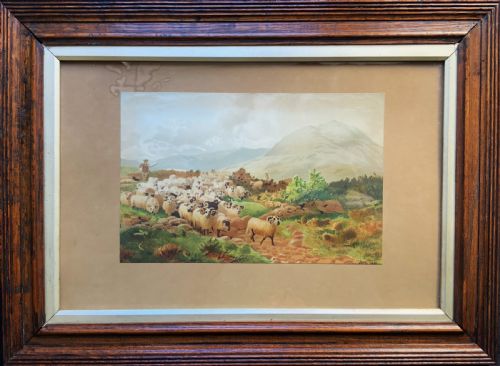


Scottish Country Landscape Painting
These scottish country landscape painting works capture remote glens and quiet agricultural valleys, offering buyers an enduring window into rural Britain.
Scottish Country Landscape Painting
A scottish country landscape painting brings the topography, weather and rural life of northern Britain directly onto canvas or paper. Buyers seeking these works typically encounter oil on canvas or board, alongside occasional watercolours, originating from the nineteenth and early twentieth centuries.
The subjects range widely across the evidence, encompassing sweeping mountain ranges like the Grampians, lonely crofts, rivers crossed by stone bridges and upland scenes populated by Highland cattle, sheep and sporting dogs.
Most examples date from the Victorian era up through the nineteen-twenties, reflecting both traditional academic painting and later regional impressionism. These pieces serve as historical records of rural environments as much as works of visual art.
How they were made
Artists relied principally upon oil paint applied to stretched canvas or wooden board, building up textured surfaces that could render the shifting light over moorland and snow. Canvas provided a flexible support for larger works, whilst boards accommodated smaller plein-air studies.
Watercolour on paper appears in select Victorian works, capturing lighter, more translucent atmospheric effects across remote terrain. Frames were frequently constructed from wood and finished in giltwood, complementing the rich tones within the painted scenes.
The listings show a strong concentration of nineteenth-century oils on canvas alongside several works from the nineteen-twenties.
What varies in quality
Quality rests upon the artist's command of light, atmosphere and naturalistic proportion, particularly in the rendering of animals and difficult terrain like winter snow. The finest works display confident brushwork and a convincing sense of place rather than stiff adherence to academic formula.
The integration of figures, livestock and landscape elements distinguishes superior compositions from more routine topographical records. Preservation of the original paint surface and contemporary framing also mark out the more distinguished survivals from this tradition.
Robert Watson·William Grant Murray·John Charles Tunnard·Charles Jones·William Miller Frazer·Robert Cleminson·GW Horlor·ROBERT MCGREGOR·Henry Birtles·William Crampton·Alastair Flatterly·Stephen Elmer·Sir David Murray·John W Morris·Robert Payton Reid
The Scottish Country Landscape Painting Glossary
- Oil on canvas
- A painting medium where pigments suspended in drying oil are applied to woven fabric stretched across a wooden frame. This combination allows for rich colour blending and durable surface textures.
- Giltwood
- Wood carved and coated with gold leaf or a gold-coloured metallic finish for picture frames. It provides a bright, reflective border that separates the painted scene from its surroundings.
- Scottish Impressionism
- A regional painting style influenced by French techniques yet rooted in domestic light and weather. It favours loose brushwork and spontaneous capture of mood.
- Sporting art
- Depictions of hunting, shooting, fishing and working animals within a landscape setting. These works often combine careful observation of wildlife with topographical scenery.
Scottish Country Landscape Painting: Frequently Asked Questions
What is a scottish country landscape painting?
These works are traditional paintings depicting rural scenes, mountains, rivers and livestock across northern Britain, primarily produced during the nineteenth and early twentieth centuries.
They capture the changing seasons and agricultural life of the era through mediums such as oil on canvas and watercolour on paper.
How do I date a scottish country landscape painting?
Dating relies on stylistic clues, framing materials, artist signatures and the specific dress or agricultural practices shown in the composition.
Victorian works often display heavier giltwood frames and romantic naturalism, whereas pieces from the nineteen-twenties lean towards Scottish impressionist techniques.
Where should I hang a scottish country landscape painting?
These atmospheric works suit traditional dining rooms, studies or hallways where their rich tones and rural subjects can be appreciated at close range.
Protect them from direct sunlight and excessive humidity to preserve the oil paint and canvas over time.
Why do animals often appear in these paintings?
Livestock, working dogs and wildlife were central to the economy and sporting life of rural Britain, making them natural subjects for landscape artists.
Animals added a sense of scale, narrative and local character to depictions of remote glens and snowy moors.