


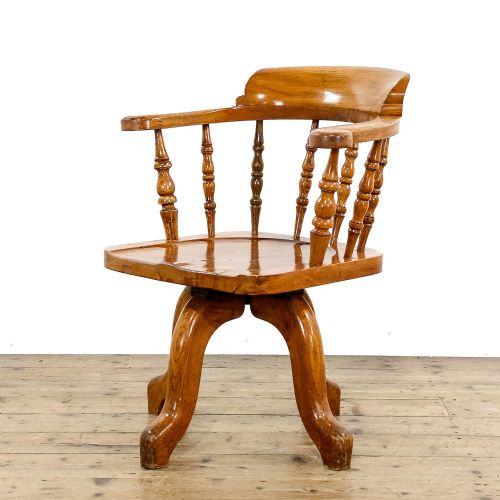


Traditional Revolving Desk Chair
These traditional revolving desk chair options offer solid wood frames and swivel mechanisms built for daily study and writing.
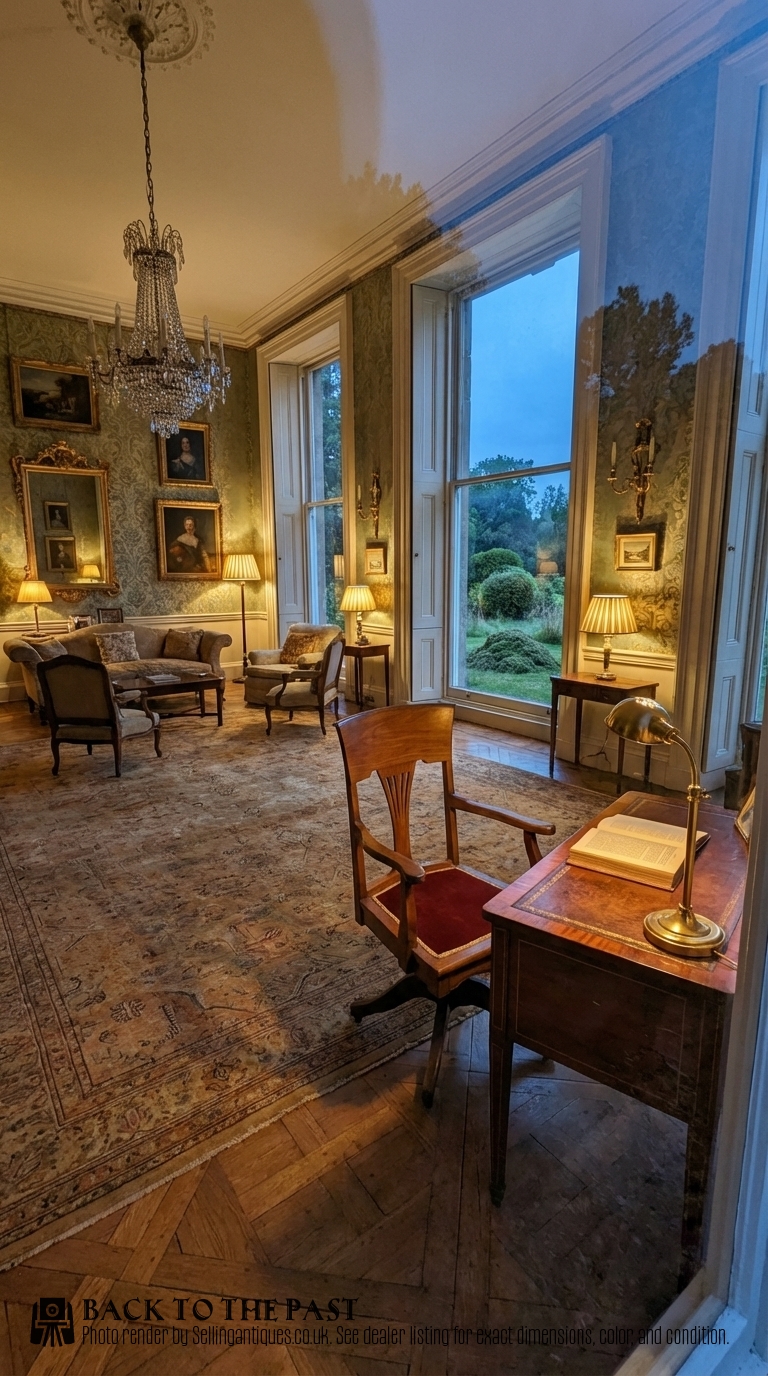
Traditional Revolving Desk Chair
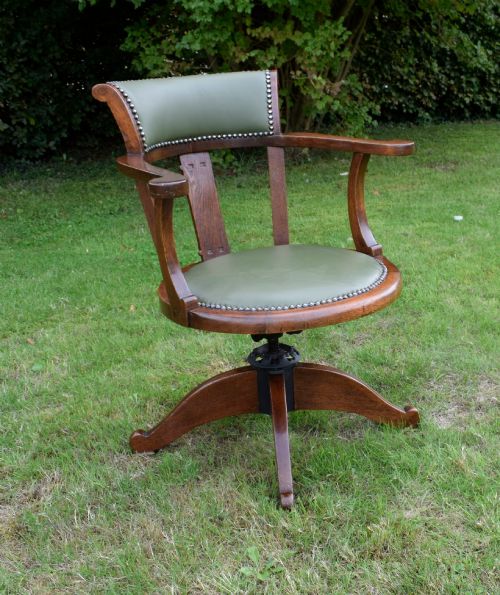
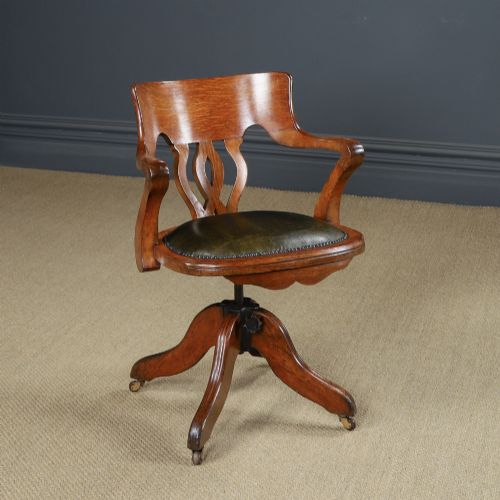
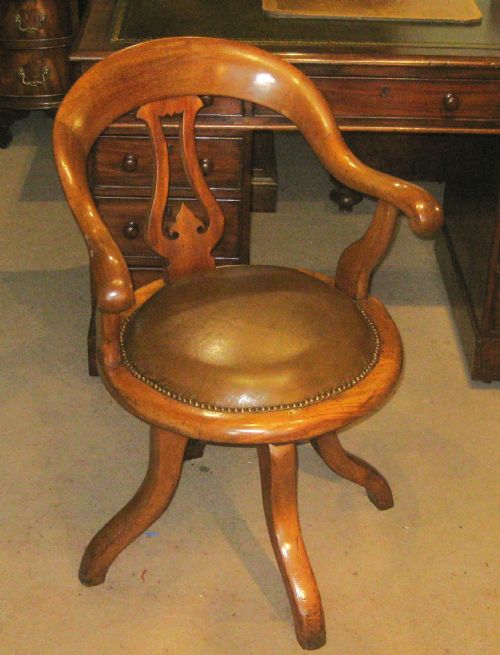
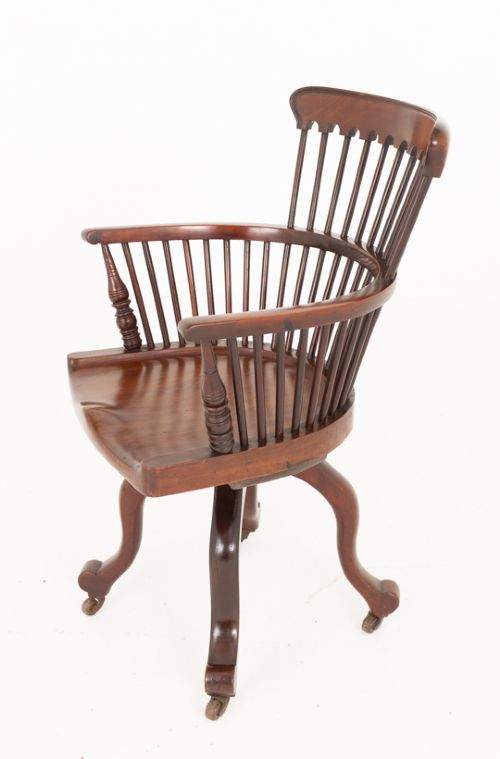
A traditional revolving desk chair provides a movable seat for studies and home libraries, appearing frequently in oak, mahogany, and walnut forms. Buyers seeking a traditional revolving desk chair will encounter Victorian and Edwardian examples equipped with swivels and desk armchairs.
The selection ranges from simple wooden seat variants to upholstered armchairs covered in leather or velvet. Most specimens date from the late nineteenth century through to the early twentieth century, spanning Victorian and Edwardian periods.
What varies in quality
The sophistication of the timber turning and the choice of primary wood set individual examples apart. Golden mahogany and figured walnut finishes demonstrate a higher grade of cabinet making than standard utility oak or beech frames.
The complexity of the swivel and tilt mechanism also dictates the standing of a piece. Robust cast iron hardware paired with integrated wooden spindle structures represents more ambitious manufacture than basic pivot joints.
Listings span from the 1860s through the Edwardian era, featuring oak, mahogany, walnut, and beech.
Edward William Godwin·George Bartholomew and Co
The Traditional Revolving Desk Chair Glossary
- Swivel
- A mechanism allowing the chair seat to rotate fully on its base. This central pivot uses iron or brass components housed beneath the wooden frame.
- Tilt
- A functional adjustment enabling the backrest to recline slightly against a spring tension. It appears on later Victorian and Edwardian office models.
- Captain's Chair
- A sturdy wooden armchair with a rounded spindle back designed for desk use. Many examples incorporate a revolving base and upholstered seat pad.
- Aesthetic Movement
- A late nineteenth-century design style emphasising visual beauty over moral narrative. Pieces from this period often display clean lines and artistic craftsmanship.
- Golden Mahogany
- A specific warm timber tone prized by Victorian cabinet makers. This wood variety yields a distinct luminous grain pattern on polished desk furniture.
Traditional Revolving Desk Chair: Frequently Asked Questions
Are these chairs comfortable for daily work?
These office seats provide sturdy support designed for long hours at a writing table. Many feature ergonomic curved backs and upholstered leather or velvet pads.
While historic mechanisms lack modern pneumatic height adjustment, their swivel and tilt functions offer natural movement during tasks.
How do I distinguish Victorian from Edwardian models?
Victorian versions typically display darker mahogany or walnut timbers with heavier turned wooden components. Their forms often lean towards dense, formal proportions.
Edwardian alternatives frequently utilise lighter oak or beech woods with simpler Arts and Crafts influences and cleaner structural lines.
Did these chairs always have leather seats?
Original upholstery varied according to the intended use and cost of the piece. Many office armchairs received durable green leather or velvet coverings.
Other variants featured solid wooden seats turned directly from the timber without any textile padding.
How should I care for the leather upholstery?
Historic leather benefits from occasional cleaning with a damp cloth followed by a suitable conservation wax or balm. This maintains the suppleness of the hide.
Keep the seating away from direct heat sources and strong sunlight to prevent the natural material from drying out.