


Traditional Red Oriental Rug
A traditional red oriental rug anchors a room with deep madder tones and centuries of village or town weaving heritage.
Traditional Red Oriental Rug
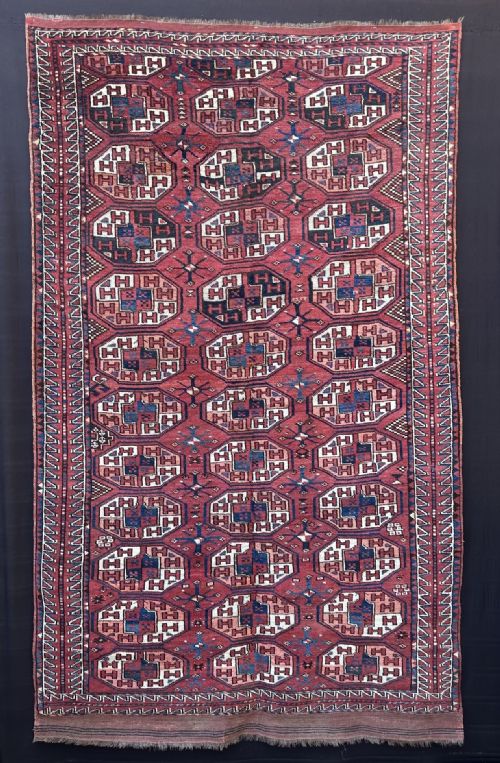
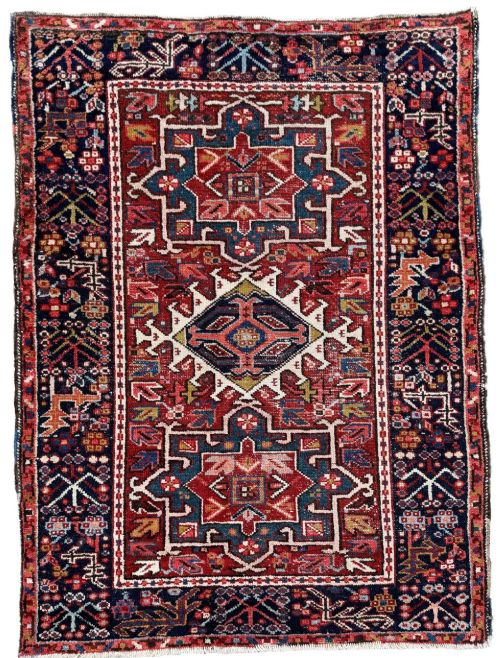
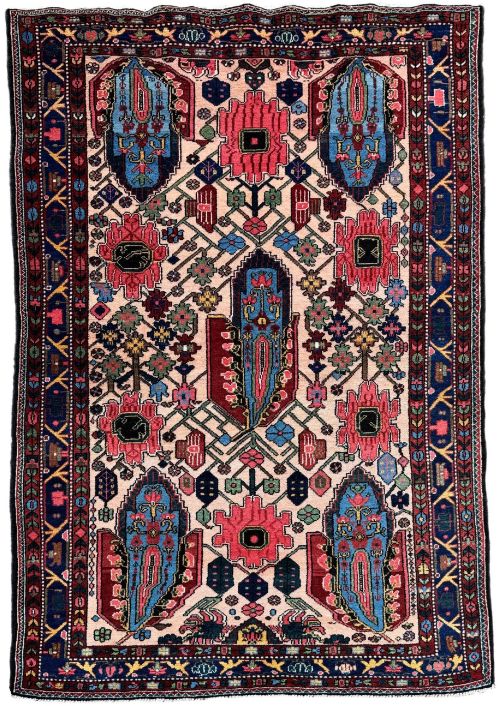
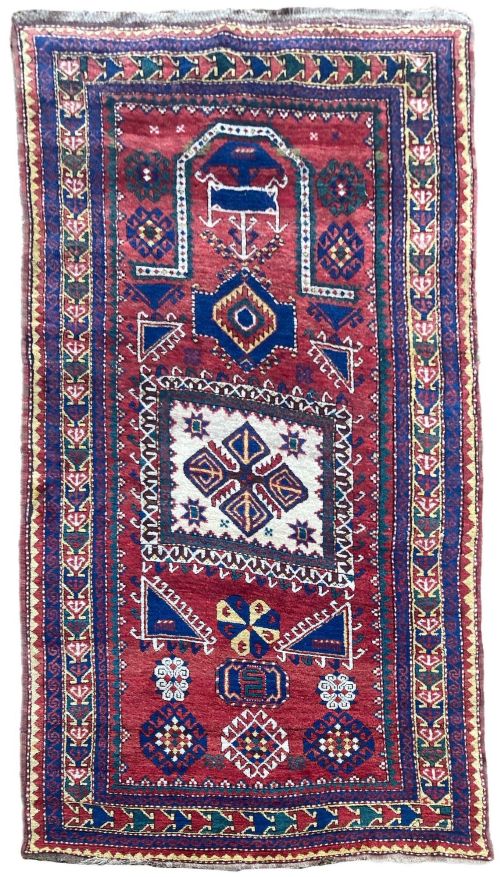
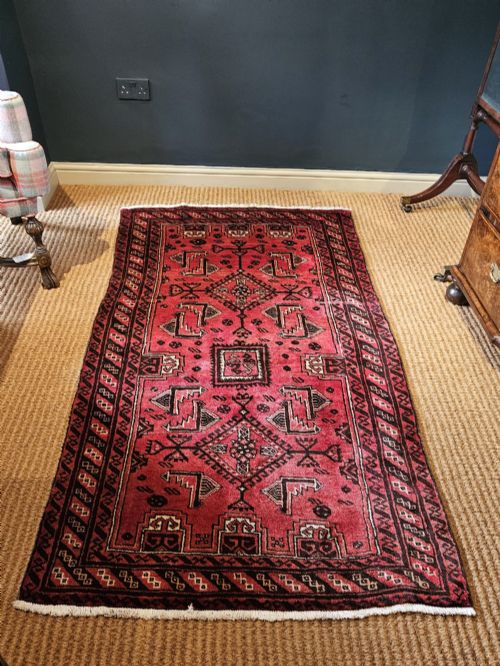
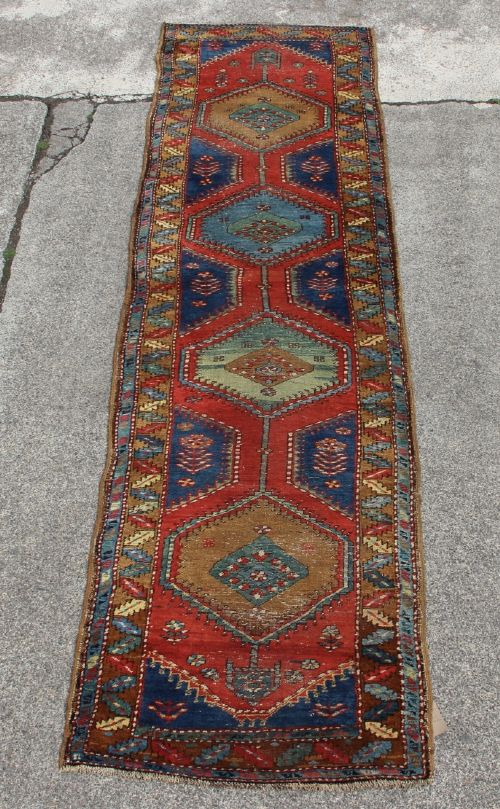
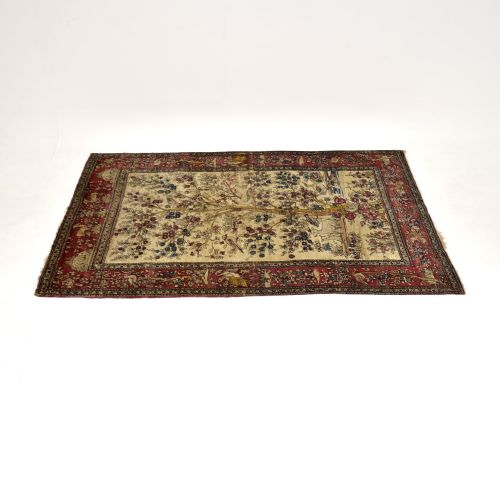
When searching for a traditional red oriental rug, buyers encounter floor coverings originating from Persia, the Caucasus, Anatolia, and Turkmenistan, spanning from the nineteenth century into the early decades of the twentieth century. These textiles include large carpets, room-sized area rugs, long runners, and smaller format prayer rugs created in village workshops, tribal camps, and urban centres.
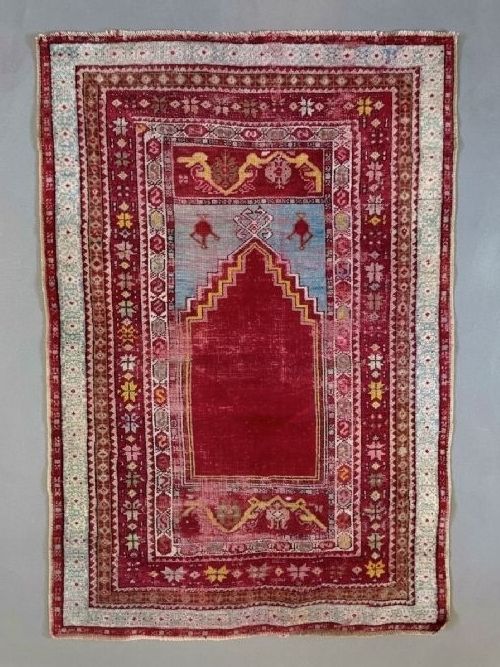
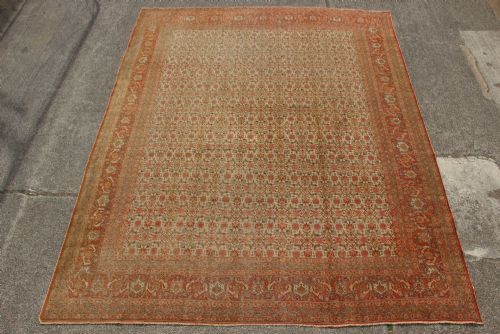
The most common examples on this page are Persian and Caucasian tribal or village pieces produced using wool foundation threads and pile. Regional weaving traditions govern the specific geometric medallions, all-over field patterns, and prayer mihrab designs that characterise each piece.
Format variations range from compact scatter rugs and square formats to expansive room carpets and narrow corridor runners. Each classification reflects the domestic or nomadic requirements of the makers who knotted them by hand.
How they were made
Weavers constructed these rugs using wool, hand-spun wool, cotton, and occasionally silk highlights tied to a cotton or wool foundation. Natural dyes provided the deep reds, rusts, and secondary tones that define the palette of these antique textiles.
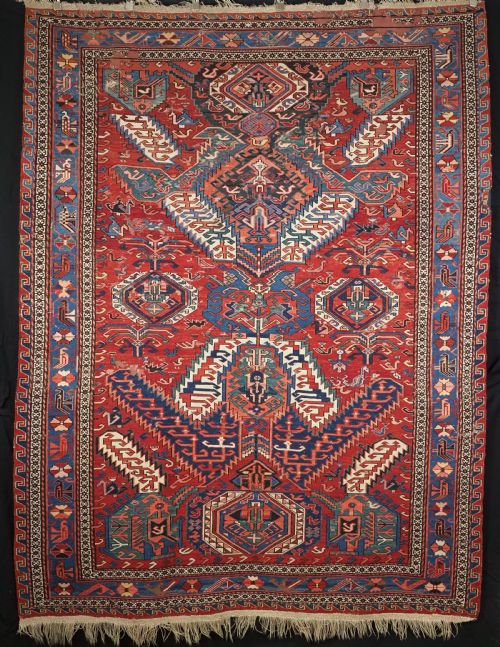
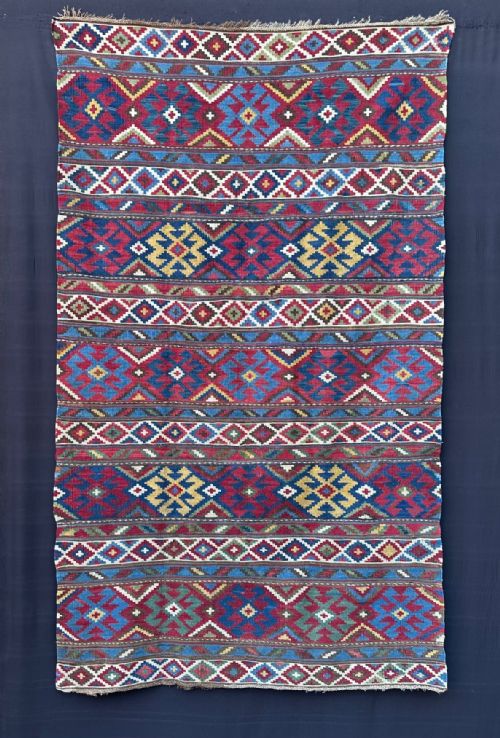
Production methods involved hand-knotting pile yarn onto warp and weft threads, followed by finishing processes like washing and edge binding. Flatweave techniques also appear in specific regional formats such as Soumaks and kilims.
Certain prayer rugs include tiny accidental weaving errors or 'talismanic' shifts in colour where the dyer simply ran out of red.
What varies in quality
Quality differences stem from knot density, material selection, and the stability of the natural dyes used in the pile. Tighter knotting allows for crisper graphic execution in geometric medallions and complex floral fields.
The choice of hand-spun wool and high-grade dyestuffs creates depth of colour and resilience that distinguish finer regional weaving from standard utility output.
The Traditional Red Oriental Rug Glossary
- Mihrab
- A niche design found on prayer rugs, representing the direction of prayer. It typically frames the upper field of the textile.
- Soumak
- A flat-weave technique producing a durable structure without pile. It involves wrapping weft threads around warp threads in a herringbone pattern.
- Natural Dyes
- Colourants derived from plant and insect sources, such as madder root for red. They yield complex tones that mature gracefully over time.
- Warp
- The vertical foundation threads stretched tightly on the loom. Weft threads are interlaced across them to secure the knots.
- Pile
- The vertical surface of cut yarn that forms the soft texture of the rug. It is created by knotting wool, cotton, or silk around the warp.
Traditional Red Oriental Rug: Frequently Asked Questions
How do I clean an antique rug?
Professional specialist cleaning is essential for antique textiles to protect fragile wool foundations and natural dye integrity.
Routine maintenance involves gentle vacuuming without a rotating brush bar to remove embedded grit without pulling individual knots.
Can I place these rugs in heavy traffic areas?
Sturdier wool carpets and runners handle hallway or living room placement well when paired with a quality underlay.
Delicate formats or prayer rugs benefit from lower foot traffic to preserve the historical pile and structure.
How do I identify the region of origin?
Regional attribution relies on examining specific border motifs, colour combinations, and structural characteristics like selvage finish.
Tribal pieces often feature bold geometric designs, whereas town workshops display intricate curvilinear floral compositions.
What is the difference between a carpet and a rug?
Carpets generally refer to larger format floor coverings designed to span major portions of a room.
Rugs encompass smaller dimensions, including scatter sizes, runners, and specialised formats like prayer rugs.