
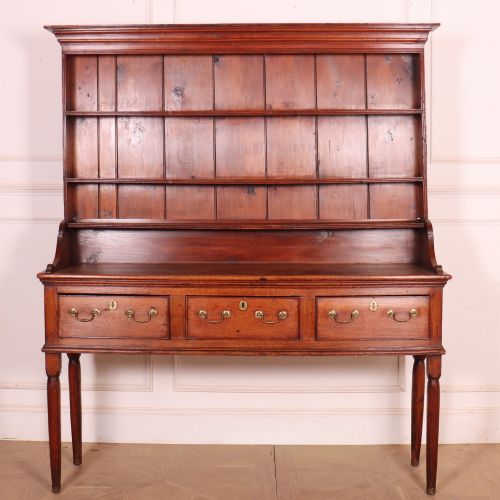
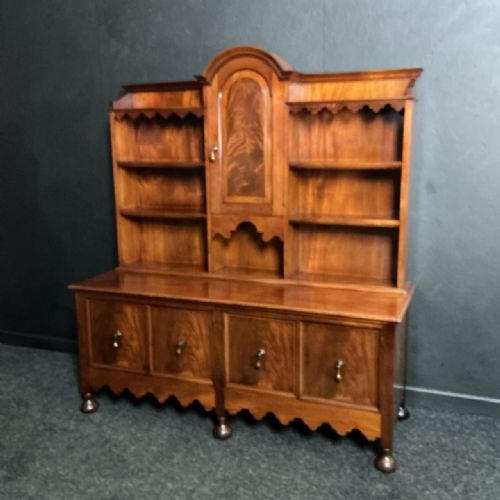
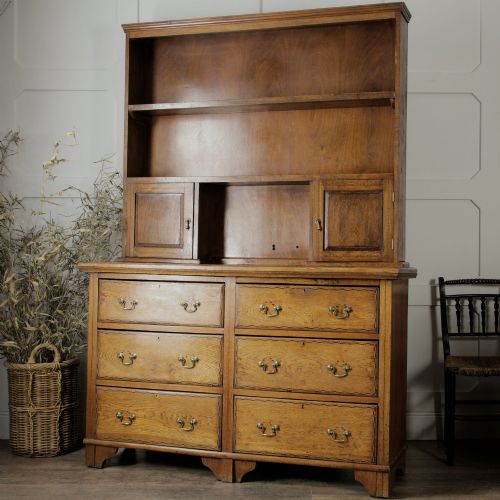

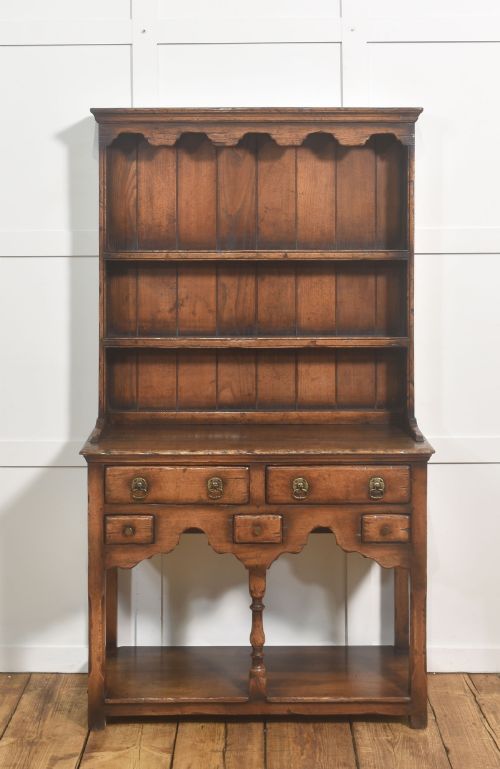
Traditional Plate Rack
A traditional plate rack is a practical timber storage unit designed to display crockery upright against a wall or atop a dresser base.
Traditional Plate Rack
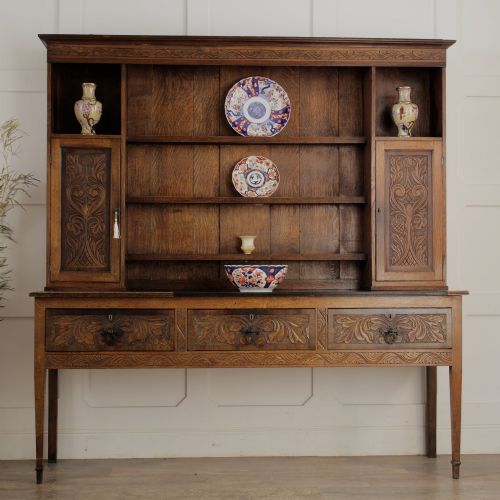
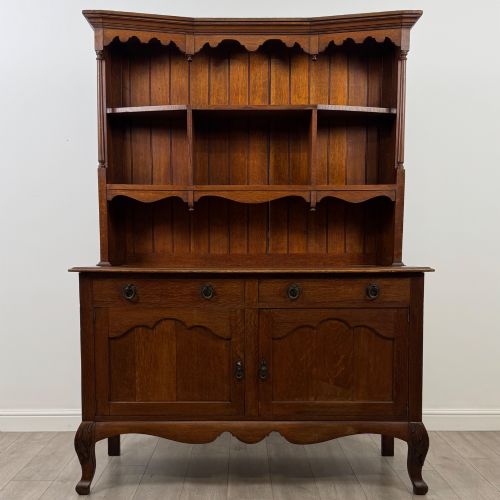
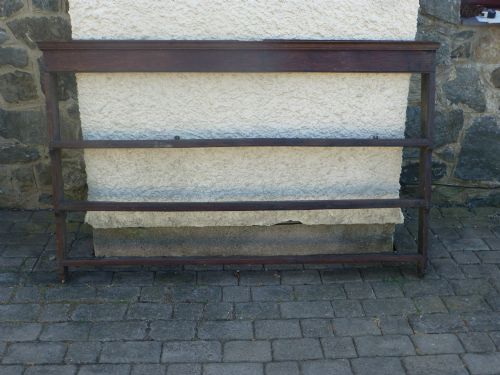
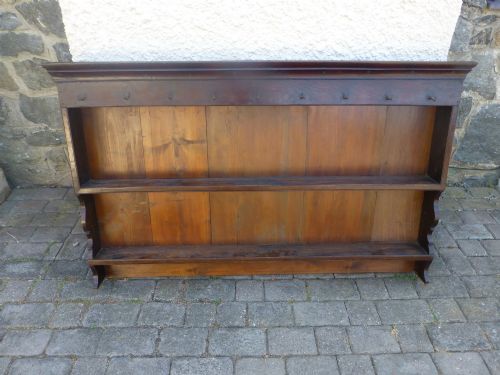
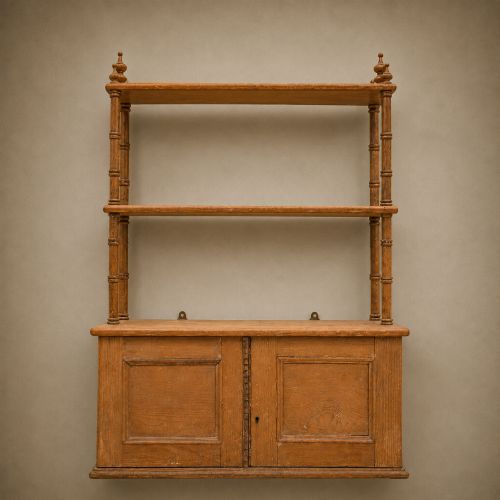
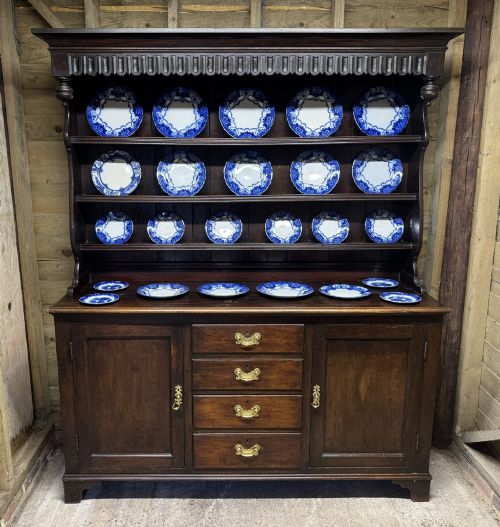
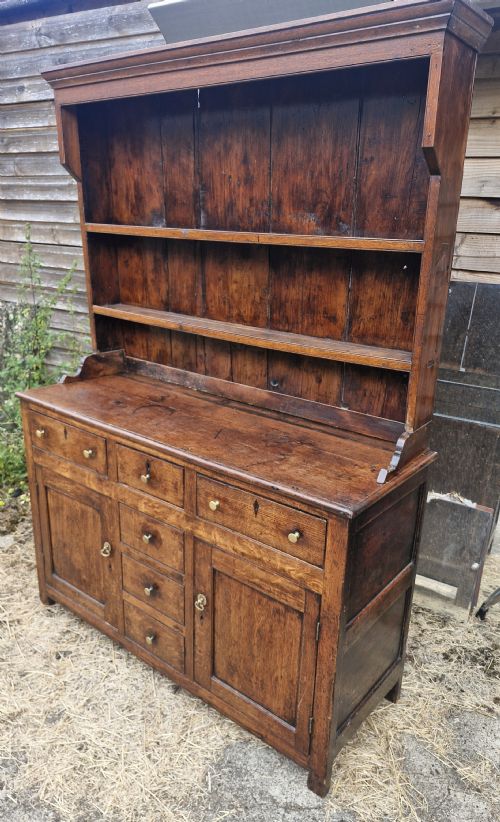
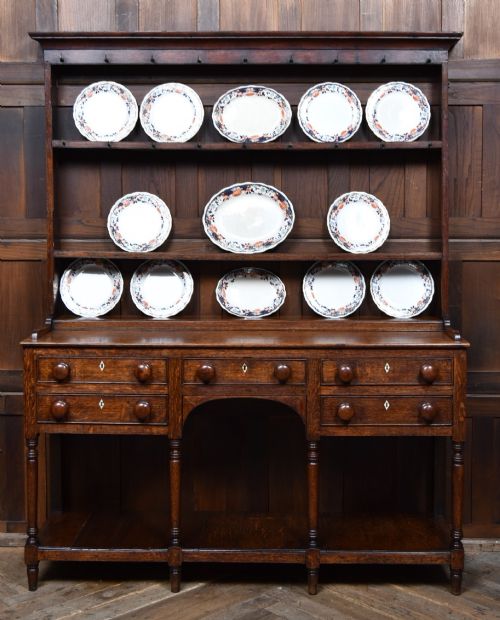
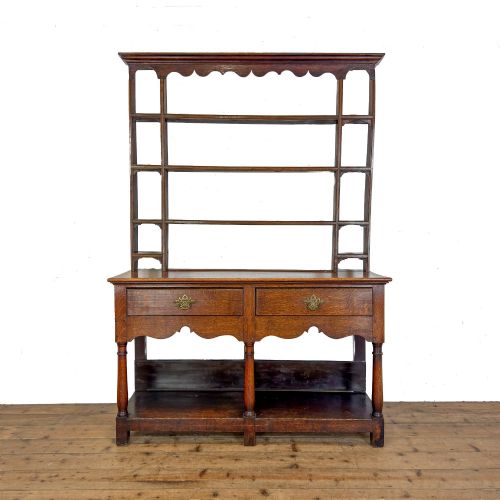
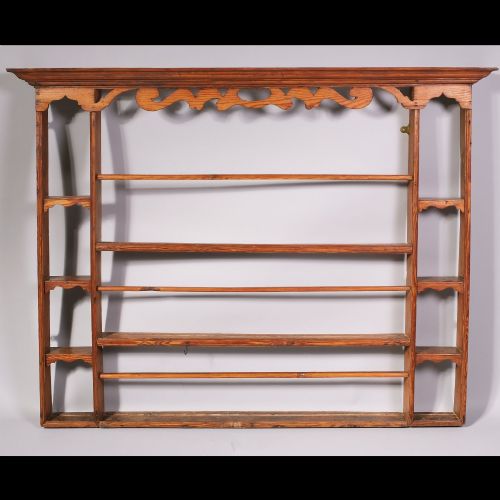
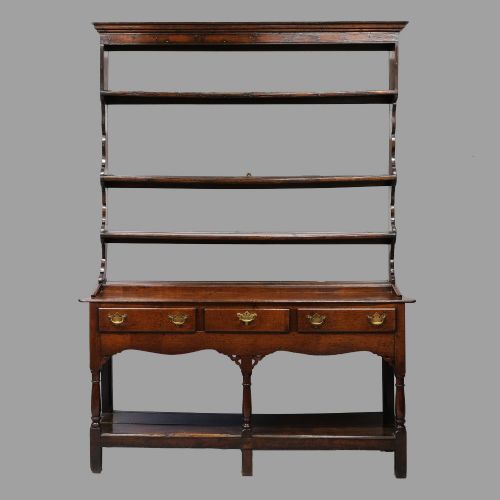
When you search for a traditional plate rack, you encounter functional wall-mounted shelves and the upper tiers of country dressers designed to hold plates vertically. These pieces originate predominantly from the eighteenth and nineteenth centuries, spanning Georgian, Victorian, and Edwardian eras. The examples found here take the form of dedicated wall shelves or integrated sections of Welsh and cottage dressers.
The regional variations reflect historical British cabinet-making traditions, ranging from heavy oak constructions associated with Wales and Shropshire to lighter pine variants from various English counties. Many feature open-backed designs or enclosed cupboard spaces alongside the slatted rack sections. Buyers use these items to store and display earthenware, delftware, and everyday ceramics in domestic kitchens.
How they were made
Traditional plate racks and dresser backs rely heavily on solid timber construction, with oak and pine serving as the primary materials. Carpenters utilised straightforward joinery techniques such as pegged mortise and tenon joints to build durable frameworks capable of supporting heavy earthenware. Secondary woods like mahogany appear in later Edwardian examples, while brass fittings and iron hardware provide structural reinforcement and hanging points.
Surfaces were typically waxed, oiled, or left in a natural timber state rather than heavily varnished, allowing the grain of the oak and pine to weather through decades of domestic use. Wall racks often incorporate shaped friezes or simple moulding along the cornice, reflecting the vernacular style of the local workshop. The slotted or grooved shelves hold plates securely at an angle, a functional detail achieved through hand-cut timber divisions.
The inventory includes both standalone wall shelves and complete dresser units with integrated plate racks.
What varies in quality
Quality in these pieces depends on the integrity of the timber and the retention of original structural components rather than elaborate decoration. Early eighteenth and nineteenth-century examples built from solid oak display tighter growth rings and heavier substance than later mass-produced alternatives. The presence of original backboards, unaltered plate slats, and matching brass or iron fixings elevates a piece significantly.
Proportion and regional character also dictate distinction, with well-balanced Welsh and Shropshire proportions commanding greater appreciation. Pieces that have survived without major timber replacement or aggressive stripping retain a softer patina that speaks to genuine age. A harmonious relationship between the rack and its associated dresser base indicates a superior, unified origin.
The Traditional Plate Rack Glossary
- Delft rack
- An open wooden shelving unit specifically designed with narrow ledges and vertical slats to display tin-glazed earthenware plates. These racks form the upper section of many country dressers.
- Potboard
- A lower open shelf positioned near the floor on traditional dressers, originally intended for storing heavy pots and pans. This feature is commonly found on eighteenth-century oak pieces.
- Vernacular
- Furniture made by local regional craftsmen using traditional methods and native timbers rather than following metropolitan fashion. Welsh and West Country dressers are prime examples of this style.
- Breakfront
- A piece of furniture featuring a central section that projects forward from the flanking sides. This layout provides varied depth for storage and display on larger dressers.
- Cornice
- The decorative moulded projection running along the top edge of a wall rack or dresser. It frames the upper boundary of the piece.
Traditional Plate Rack: Frequently Asked Questions
How do I hang a wall rack safely?
Wall-mounted racks require secure fixing into solid masonry or direct attachment to wall studs using appropriate brackets. Because loaded plate racks bear considerable weight from heavy ceramics, proper wall anchors are essential.
Distributing the load across multiple fixing points prevents strain on the historical timber frame. Professional installation ensures the antique structure remains undamaged during mounting.
Are these racks suitable for modern plates?
Traditional plate racks feature fixed slot widths designed for historical ceramics, which are often shallower than contemporary dinner plates. Thicker modern stoneware may not fit comfortably into the older vertical grooves.
Checking the depth of the display ledges before purchase helps confirm compatibility with your current tableware. Many buyers use alternative slots for saucers, bowls, or decorative chargers.
How do I care for antique pine and oak?
Maintain the timber by applying natural beeswax periodically to nourish the dry wood and preserve the surface finish. Avoid placing racks near direct heat sources or in damp environments that cause wood to warp.
Dust the slats regularly with a soft, dry cloth to prevent grime buildup in the crevices. Avoid modern silicone-based polishes that can degrade the historic patina.
How do I date an antique plate rack?
Dating relies on examining the tool marks, timber species, joint construction, and overall wear patterns visible on the piece. Eighteenth-century examples typically show hand-sawn board marks and pegged joinery, while later Victorian and Edwardian pieces incorporate machine-cut elements.
Comparing the style of the cornice and the configuration of the shelves to dated regional prototypes helps narrow the origin. Original backboards and fixings offer further clues to the period of manufacture.