


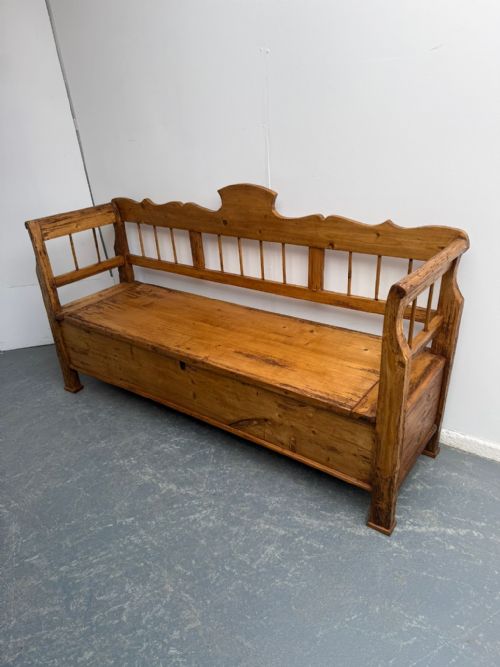

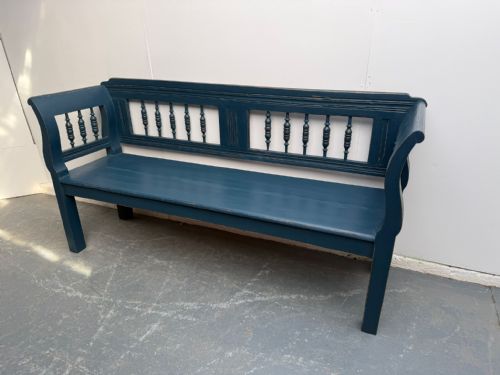
Traditional Pine Settle Bench
A traditional pine settle bench brings solid seating and high-backed shelter to an entryway or fireside, grounded in centuries of rural utility.
Traditional Pine Settle Bench
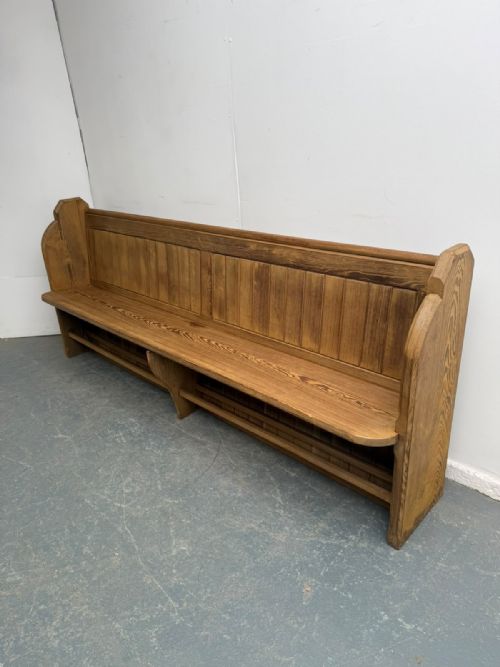
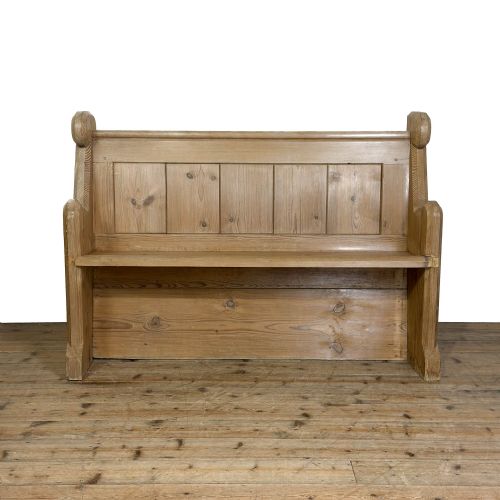
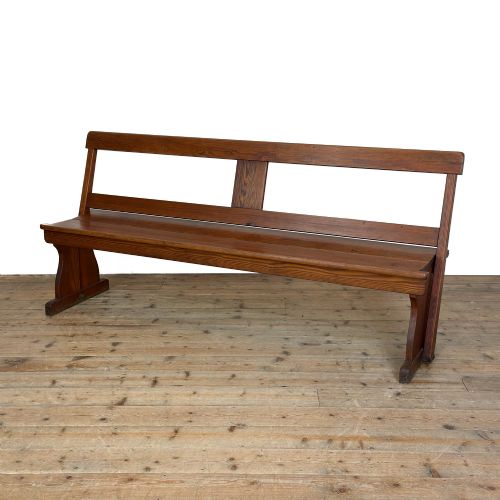
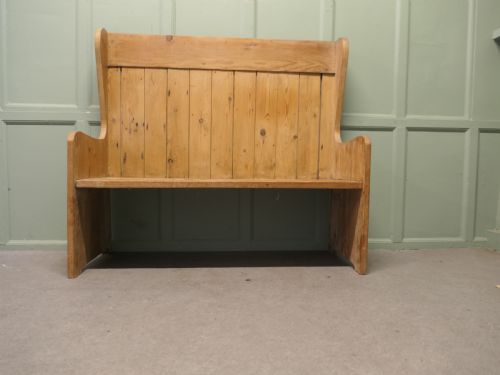
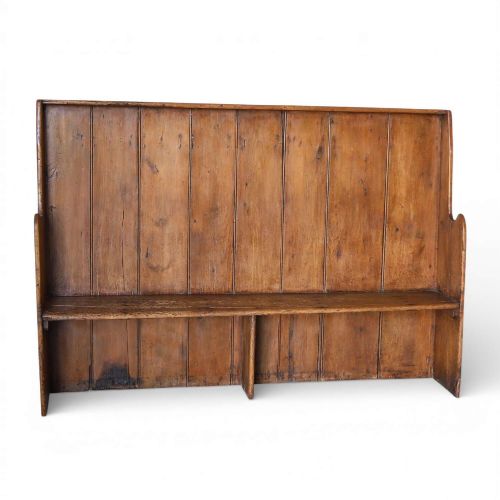
A traditional pine settle bench takes the form of a high-backed seat designed to block draughts in farmhouses, pubs, and churches, often appearing as a straight bench or an enclosed box settle with storage beneath the seat. The examples on this page span several centuries, with pieces originating from Georgian, Victorian, and later nineteenth-century periods.
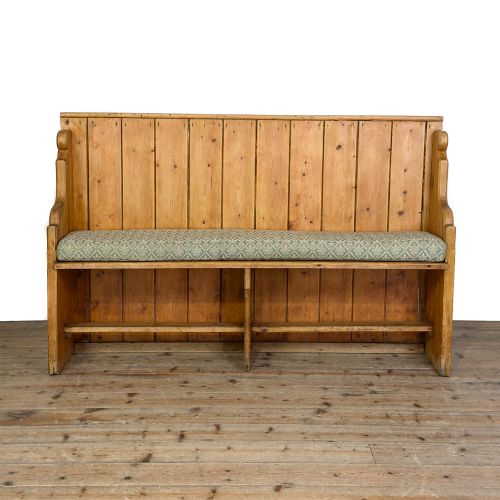
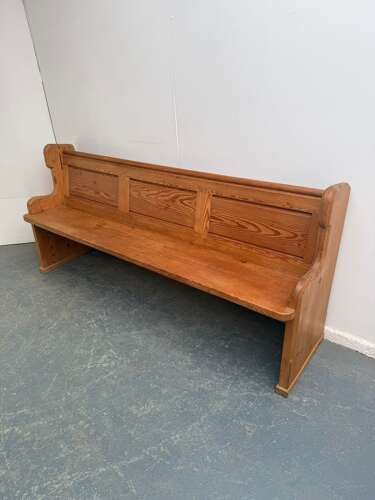
Buyers will encounter regional variations including English, Welsh, Spanish, and Hungarian types, alongside church pews and chapel benches. Many feature high backs intended for fireside placement, while others serve as narrow hallway benches or tavern seating.
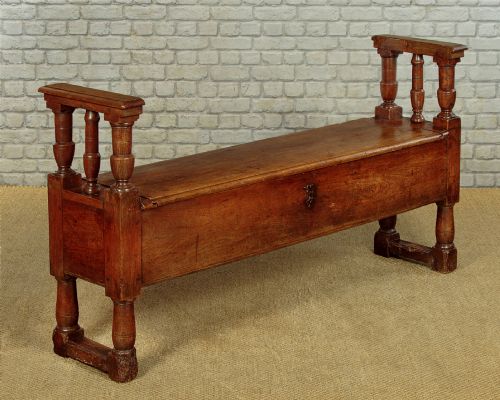
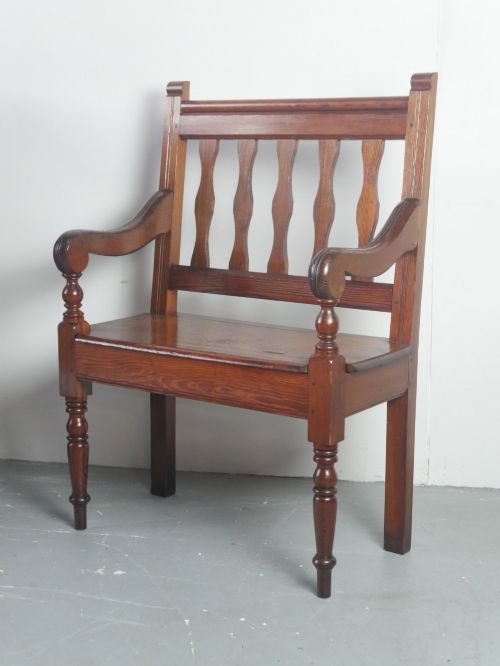
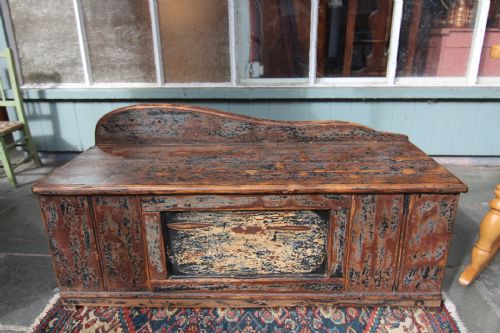
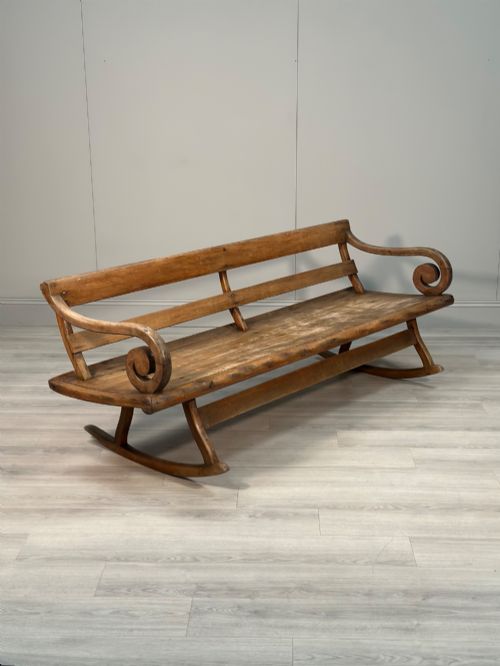
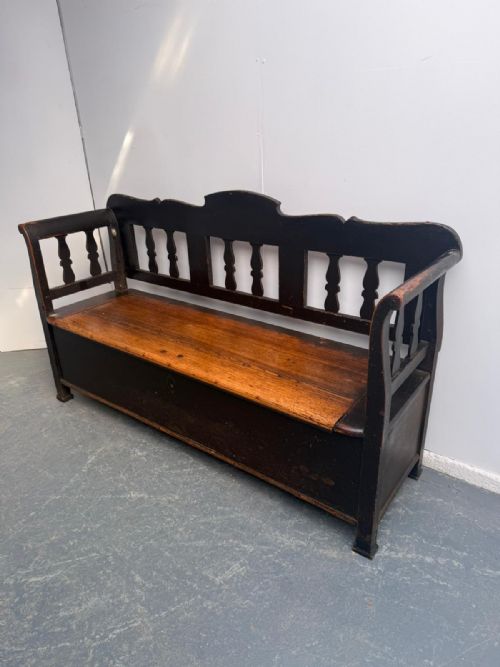
Forms range from open spindled designs to solid panelled box settles with hinged lids, and occasionally include barrel backs or rocking mechanisms. The scale varies from two-seater lengths up to four-seater configurations.
How traditional pine settle benches were constructed
Makers utilised solid pine, pitch pine, and occasionally elm or oak components, joined with traditional carpentry methods suited to robust daily use. Surfaces show either a clear wax finish that highlights the honey brown patina of the wood or layers of original paint in blue, grey, black, cream, and green.
Structural reinforcement often involved iron fixings and brackets, while upholstery appears rarely on these wooden surfaces, sometimes accompanied by fabric or loose squabs. Canopies and curved barrel backs required careful plank shaping to create the characteristic enclosed seating area.
Traditional Pine Settle Bench Retail Price Guide 2026
Typical asking prices for traditional pine settle bench among the pieces listed under this phrase on Sellingantiques today, from the lower quarter to the upper quarter. They describe what is for sale here now, not the wider market.
One persistent eighteenth-century Spanish settle even brought its own roof, offering a miniature porch for the hallway.
What separates examples within this range
Quality rests upon the preservation of original surfaces, whether that is an undisturbed waxed patina with deep grain character or genuine historic paint finishes rather than later decoration. The integrity of the structural joinery and the survival of original board seats and storage box lids dictate the piece's standing.
Proportions and regional detailing also distinguish the pieces, such as the balanced height of a high back or the delicate turning of spindles on Hungarian folk art variants. Pieces retaining their original configuration without heavy timber replacement sit at the higher end of the range.
The Traditional Pine Settle Bench Glossary
- Settle bench
- A wooden bench featuring a high back and solid arms designed to shield the sitter from cold draughts. These pieces often incorporate a box compartment beneath the seat for storage.
- Box settle
- A variant of the bench where the base functions as a chest enclosed by a hinged seat lid. This dual-purpose form provided secure storage in communal rooms.
- Patina
- The surface sheen and colour developed by wood over decades of handling, exposure to light, and waxing. A honey brown tone is typical of aged pine.
- Folk art
- Decorative traditions and construction methods arising from rural communities rather than formal urban workshops. Painted surfaces on Hungarian and regional pieces often fall into this category.
- Barrel back
- A semi-circular enclosing back structure curved to wrap closely around the user. This design offers maximum protection from fireside air movement.
Traditional Pine Settle Bench: Frequently Asked Questions
What is a traditional pine settle bench used for?
These benches were originally positioned near hearths or in hallways to block cold air and provide dual seating and storage. In modern settings, they serve as functional hallway seating or dining benches.
Their high backs create a distinct architectural presence against a wall, while box variants offer concealed storage for household items.
How do I identify a Georgian settle bench?
Georgian examples date from the eighteenth century into the early nineteenth century and frequently exhibit regional European craftsmanship, particularly from Hungarian workshops. They often display hand-painted finishes or simple waxed pine surfaces with primitive joinery.
Construction details and wear patterns align with eighteenth and early nineteenth-century rural cabinet-making traditions rather than later mass production.
Are these benches painted or waxed?
The listings include both clear wax finishes that reveal the natural grain and historic painted surfaces. Colours range from original blues and greys to black, cream, and green.
Many pieces retain their early or original paint layers, which contribute significantly to their character and regional attribution.
Where were these settle benches made?
Origin points span across England, Wales, Spain, Sweden, and Hungary, reflecting diverse rural European woodworking traditions. Country workshops produced them locally using readily available softwoods like pine and pitch pine.
Regional differences appear in the height of the backrest, the presence of canopies, and the use of spindles or solid panels.
Can I store items inside a box settle?
Box settles feature a hinged seat that lifts to access a compartment built into the base. This interior space was historically used for blankets, firewood, or household goods.
The lid operates on traditional pivots or hinges integrated into the bench frame.