
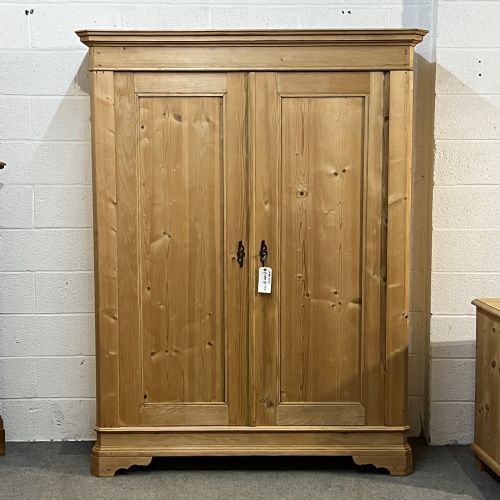
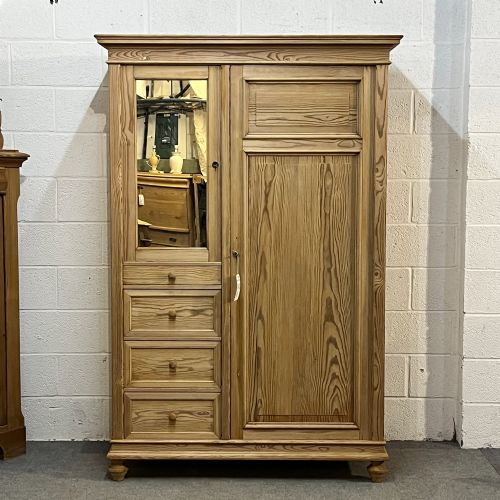
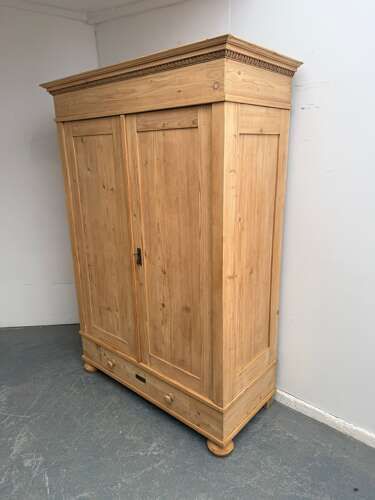
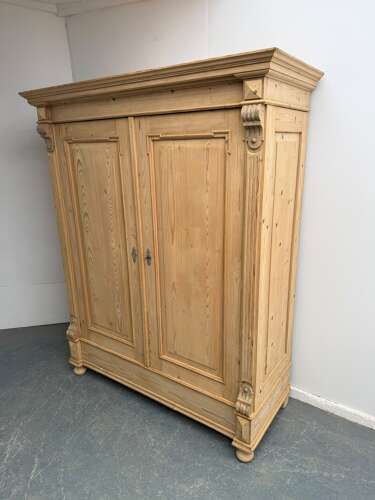
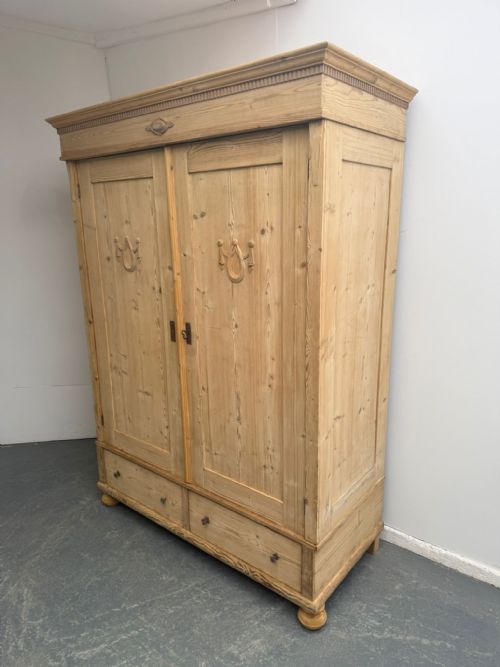


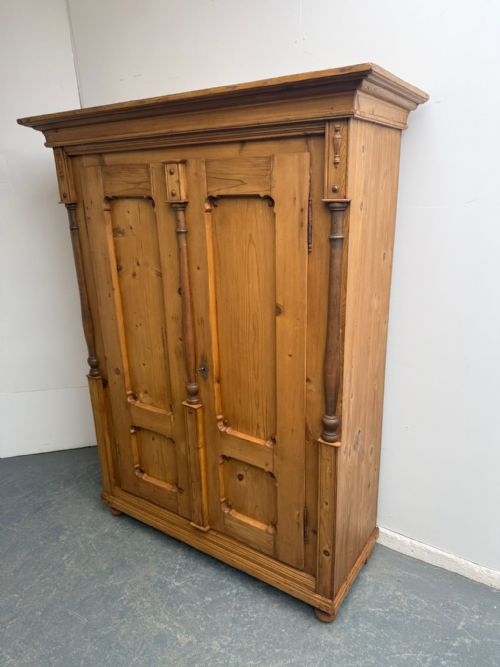


Traditional Pine Clothes Cupboard
A traditional pine clothes cupboard offers honest, robust storage shaped by centuries of domestic utility.
Traditional Pine Clothes Cupboard
A traditional pine clothes cupboard is a utilitarian storage piece built to hold garments, linens, and domestic provisions. When searching for a traditional pine clothes cupboard, buyers encounter forms ranging from simple 19th-century wardrobes to panelled Georgian linen presses and French armoires.
The most common pieces on this page are two-door knockdown wardrobes from the Victorian and Georgian eras, designed to be dismantled for transport. These functional items often feature internal shelving, hanging space, or a lower drawer for smaller garments.
Origins span British workshops, Welsh vernacular pieces, and Northern European examples, alongside French provincial styles. Many of these sturdy cupboards arrive ready to wax or paint, allowing them to adapt to contemporary interiors.
What varies in quality
The standard of a traditional pine clothes cupboard depends largely on the integrity of its original timber and the cleverness of its knockdown construction. Pieces retaining their original brass or iron hardware and uncompromised internal shelving represent higher craftsmanship.
Subtleties in proportion, such as the grace of a moulded cornice or the crispness of panel work, separate ordinary utilitarian examples from more ambitious regional pieces.
The condition of the pine itself, whether cleanly waxed or bearing authentic layers of historic paint, dictates the character and lasting stability of the furniture.
Several knockdown wardrobes still carry pencil marks left by carpenters on hidden joints to guide reassembly in distant bedrooms.
The Traditional Pine Clothes Cupboard Glossary
- Knockdown wardrobe
- A large storage piece constructed to be taken apart into multiple sections for ease of transport and installation. This clever design was essential for moving bulky furniture between rooms and properties.
- Linen press
- A tall cupboard featuring upper sliding trays or shelves for linens, positioned above a chest base with drawers. These pieces served households by keeping textiles flat and protected.
- Compactum
- A multi-compartment wardrobe combining hanging space, shelves, and internal drawers within a single carcass. It provided efficient, organised storage for diverse garments.
- Armoire
- A large freestanding cupboard or wardrobe of European origin, typically featuring double doors enclosing hanging or shelf space. They often display regional decorative mouldings.
- Cornice
- The decorative horizontal moulding that crowns the top of a wardrobe or cupboard. This architectural detail frames the upper edge of the piece.
Traditional Pine Clothes Cupboard: Frequently Asked Questions
How do I assemble a knockdown wardrobe?
Knockdown wardrobes utilise pegged joints, wedges, or internal bolts that slot together without requiring permanent fixings. Keeping the original numbered parts aligned ensures the structure fits together correctly.
Working with a helper allows you to steady the side panels while locating the backboards and cornice into their designated grooves.
Are these cupboards deep enough for modern hangers?
Many older pine wardrobes possess shallower internal depths than modern closets because historical garments were folded or hung differently. Measuring the internal depth before purchase ensures standard coat hangers will fit inside with the doors closed.
Some pieces utilise front-to-back pull-out rails to accommodate modern garment widths within a narrower carcass.
How should I care for waxed pine surfaces?
Waxed pine benefits from occasional applications of natural beeswax to nourish the timber and maintain a soft sheen. Avoid placing these pieces near direct heat sources or damp areas that might cause the wood to warp.
Dusting with a dry, soft cloth prevents surface buildup and preserves the character of the aged finish.
What is the difference between a linen press and a wardrobe?
A linen press traditionally incorporates sliding trays or shelves in the upper section specifically for flat textiles, sitting above a chest of drawers. A wardrobe is designed primarily for hanging garments vertically on rails or hooks.
Many surviving pieces combine both functions through interior modifications made over their long operational lives.