

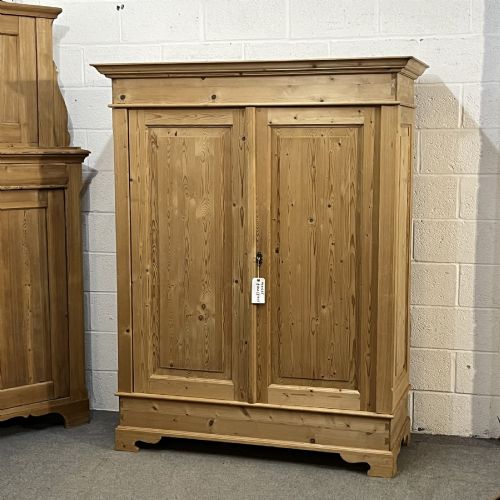
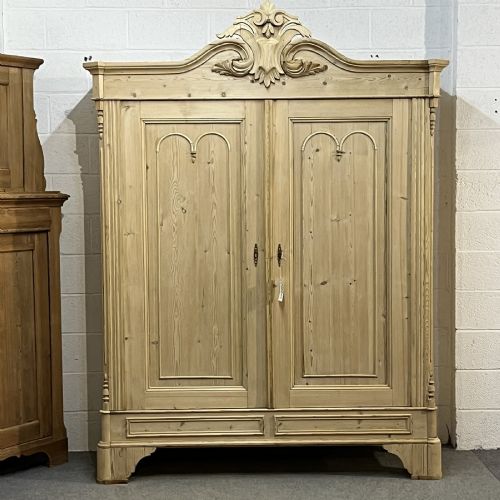
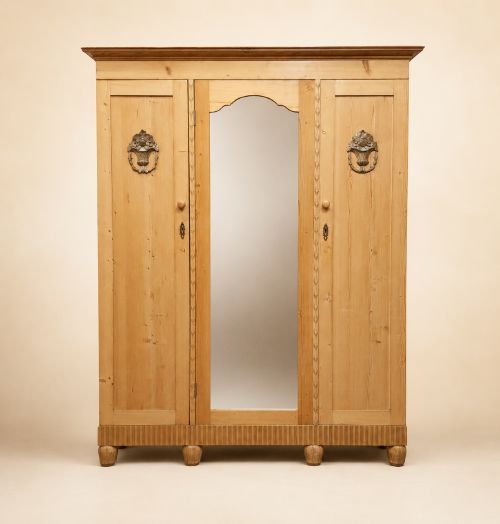
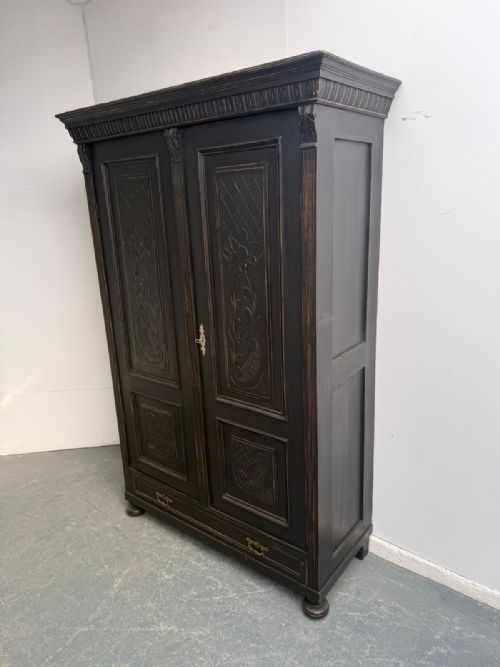



Continental Pine Wardrobe
These continental pine wardrobes bring robust European storage to a room, offering generous hanging space wrapped in charming rustic character.
Continental Pine Wardrobe
A continental pine wardrobe offers large-scale storage rooted in the 18th, 19th, and early 20th centuries. These substantial pieces originate from across Europe, encompassing Hungarian, German, Italian, and Alpine regions.
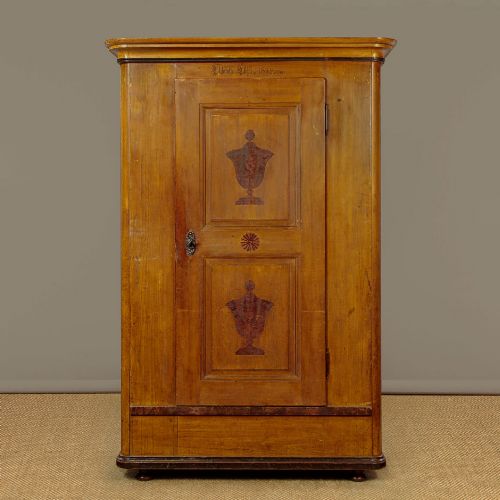
Buyers most frequently encounter Victorian era examples and regional folk art pieces on this page. Forms range from single door cupboards and marriage cupboards to large double and triple wardrobes, alongside armoires that dismantle for transport.
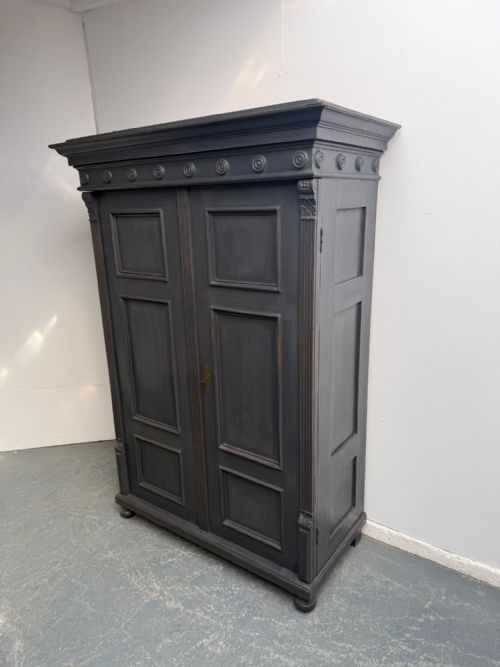
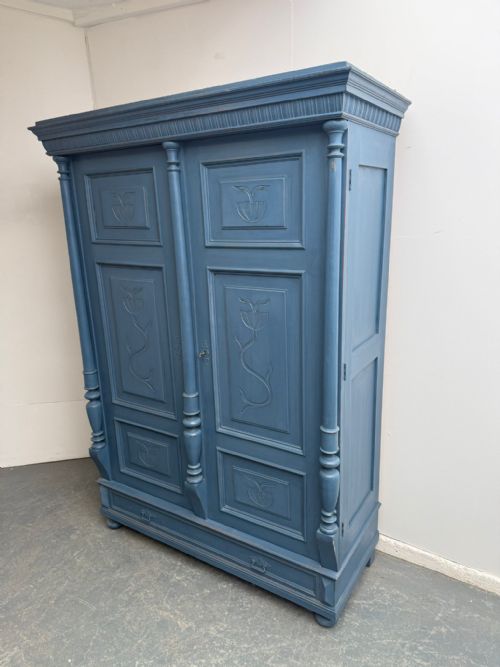
The aesthetic bridges rural practicality and decorative folk tradition. Pieces arrive either in a natural waxed finish or decorated with painted surfaces in black, blue, and grey.
How they were made
Carpenters constructed these wardrobes primarily from solid pine, occasionally combining it with oak for structural resilience. Metal, iron, and brass provided the functional hardware for hinges and locks, while glass and ceramic elements appeared on select fittings.
Makers utilised traditional joinery alongside clever knockdown designs held together by wooden pegs or metal bolts, allowing these massive items to travel easily. Surfaces were either left plain to receive coats of wax or prepared for hand-painted folk finishes.
Continental Pine Wardrobe Retail Price Guide 2026
Typical asking prices for continental pine wardrobe among the pieces listed under this phrase on Sellingantiques today, from the lower quarter to the upper quarter. They describe what is for sale here now, not the wider market.
Some historic wardrobes retain faint chalk markings left by travelling carpenters to ensure the dismantled parts found their correct homes after delivery.
What varies in quality
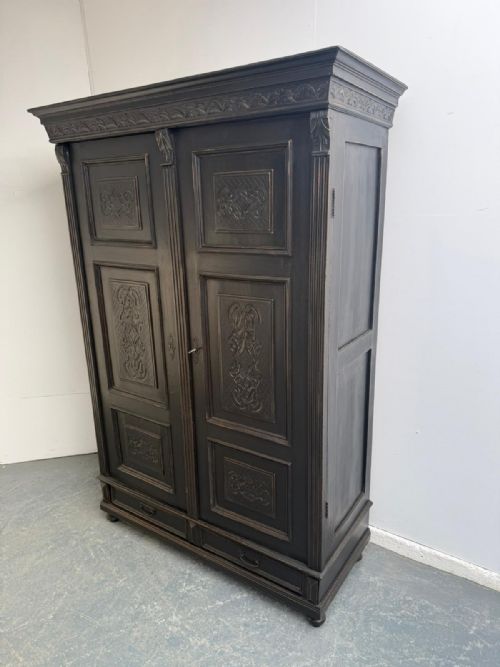
The distinction between standard storage and superior examples rests upon regional decoration and structural integrity. Finely preserved painted folk art or carved detailing elevates a piece well beyond a plain utility cupboard.
Originality of surface finish and hardware dictates much of the appeal. Wardrobes retaining their early painted schemes or functional knockdown framing demonstrate greater craftsmanship than later assembled variants.
The Continental Pine Wardrobe Glossary
- Knockdown
- A piece designed to dismantle completely into flat sections for transport. This practical method uses wedges or bolts rather than permanent glue.
- Armoire
- A tall cupboard or wardrobe used for hanging clothes. The term originates from continental Europe and often denotes grander proportions.
- Marriage cupboard
- A celebratory painted cabinet commissioned for a wedding. These examples frequently carry dates or symbolic folk motifs.
- Alpine folk art
- Regional decorative painting and carving traditions specific to mountain communities. This style brings colourful motifs directly onto the pine surface.
- Waxed finish
- A traditional protective coating rubbed into the timber. It nourishes the pine while retaining a soft, matte sheen.
Continental Pine Wardrobe: Frequently Asked Questions
How do I care for a painted pine wardrobe?
Painted surfaces require gentle cleaning with a soft, dry cloth to preserve the historic pigment. Avoid harsh chemical cleaners that can strip or dull regional folk art.
Waxed pine surfaces benefit from occasional application of natural beeswax to maintain moisture and prevent the timber from drying out.
Are these wardrobes suitable for modern hangers?
Older continental wardrobes often feature shallow internal depths designed for historical garments. Modern padded coat hangers may sometimes prevent the doors from closing fully.
It is wise to verify the internal depth dimensions listed for each piece if modern clothes hanging space is your primary requirement.
How can I tell the period of a pine wardrobe?
Dating relies on observing construction joints, hardware types, and painted decoration styles. 18th and early 19th-century examples often display hand-cut joinery and authentic folk motifs.
Later Victorian and 20th-century pieces generally incorporate standardised fixings while maintaining traditional regional silhouettes.