
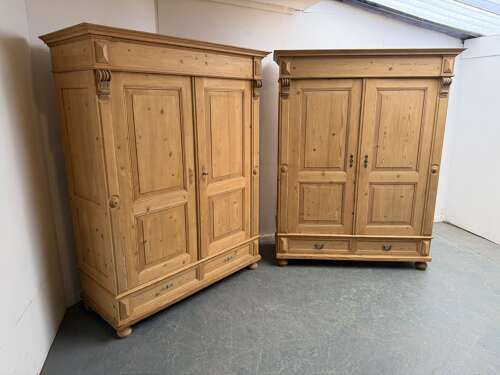
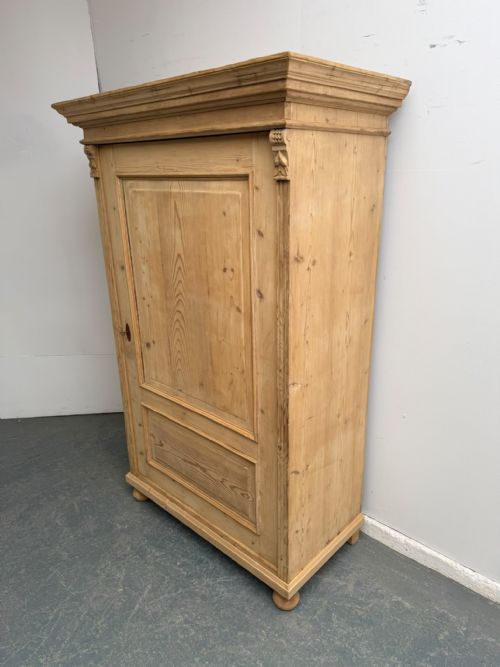
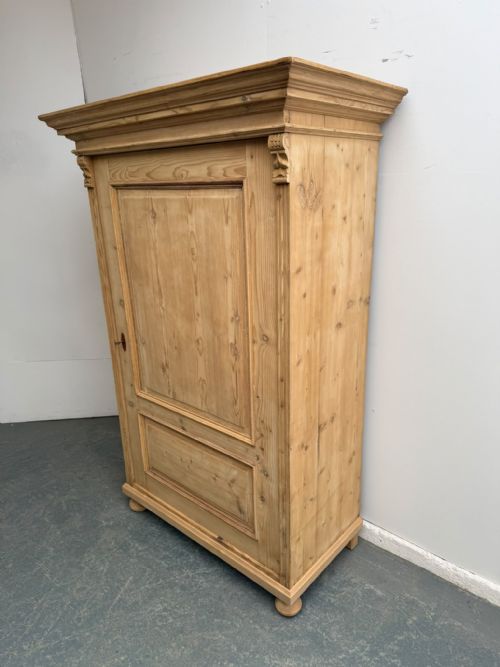


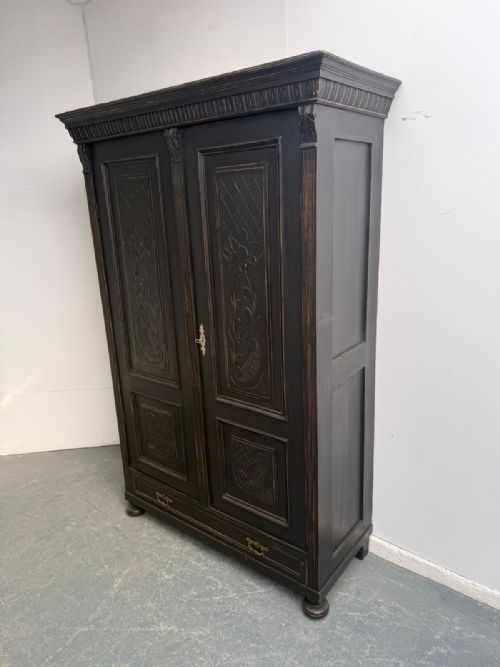
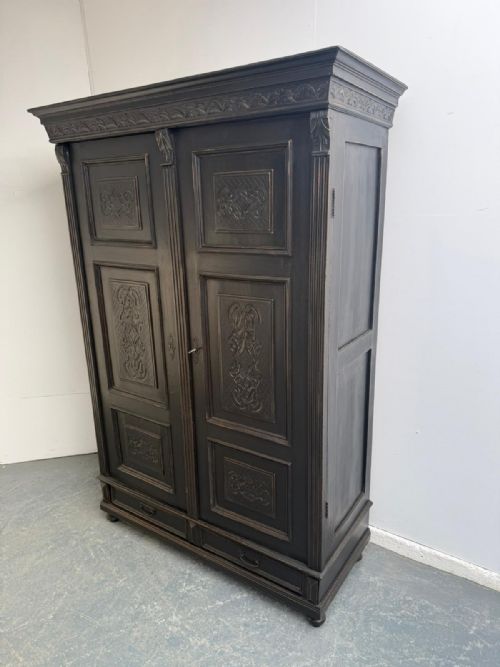
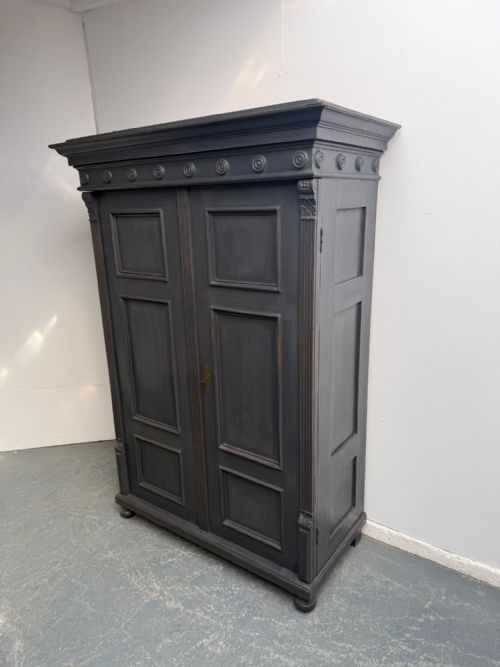


Panelled Pine Wardrobe
A panelled pine wardrobe offers practical bedroom storage combined with honest, rustic character spanning the Georgian and Victorian eras.
Panelled Pine Wardrobe
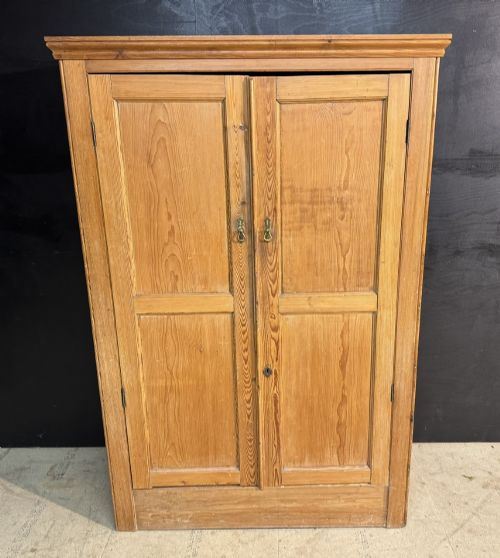
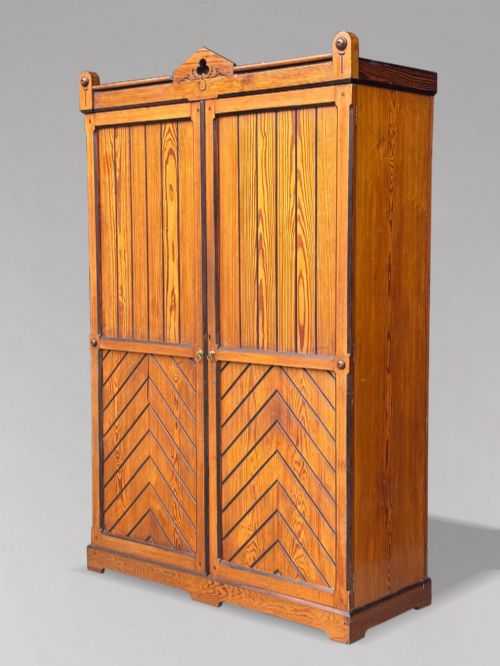
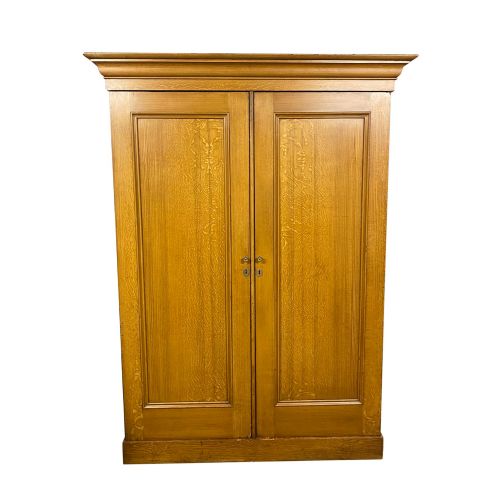
A panelled pine wardrobe is a large storage piece built primarily from softwood, featuring recessed or raised panels set within a heavier frame. You will frequently encounter examples from the Victorian and Georgian periods, ranging from straightforward English country pieces to continental European painted armoires.
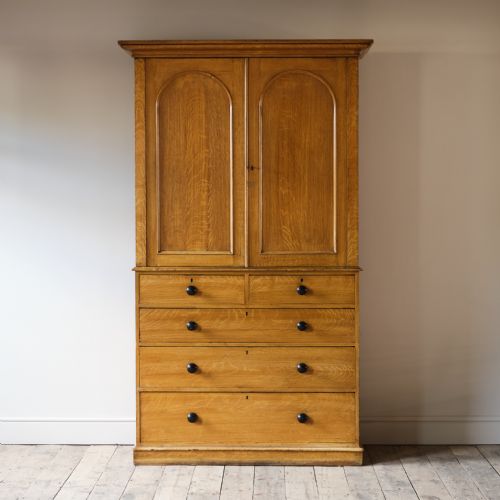
Many of these large storage items are constructed as knockdown pieces, meaning they dismantle into sections for easier transport and installation in older homes. The forms vary from single and two-door cupboards to compactum wardrobes, gentleman's wardrobes, and linen presses equipped with internal shelving or hanging space.
The materials most commonly recorded alongside pine include iron and brass for hinges and locks, with several pieces retaining original paint finishes or scumble glaze. Regional variations appear across English, Scottish, and Hungarian workshops, showing both stripped natural waxed surfaces and bold painted facades.
How they were made
Cabinet makers built these wardrobes using solid pine boards for the main body and panels, often utilising oak or pitch pine for structural reinforcement or specific decorative details. Frame and panel construction allowed the timber to expand and contract naturally with seasonal changes in temperature and humidity without splitting the primary structure.
Metal hardware such as iron strap hinges, brass key escutcheons, and internal hanging hooks were secured by hand to withstand heavy daily use in domestic settings. Surface finishes applied by makers included traditional beeswax, plain paint, and decorative scumble paintwork designed to imitate more expensive hardwoods like oak.
Some industrious Victorian housekeepers used scumble paint to give honest pine the grand appearance of seasoned oak, fooling visitors with clever brushwork.
What varies in quality
The primary distinction in quality lies in the integrity of the timber selection and the precision of the joinery within the panel framing. Pieces featuring tight, stable grain in the pine and well-fitted knockdown fixings demonstrate superior craftsmanship compared to simpler utility items.
Surviving original finishes, whether unblemished scumble paintwork or untouched period wax, elevate a piece above those that have undergone aggressive modern stripping or unsympathetic repainting. Well-proportioned cornices, original brass or iron hardware, and intact internal configurations also indicate higher workshop standards.
Maple & Co.
The Panelled Pine Wardrobe Glossary
- Knockdown wardrobe
- A large piece of furniture designed to be taken apart into flat sections using wedges, bolts, or slot-in joints. This construction method was essential for moving bulky wardrobes up narrow staircases in period houses.
- Scumble paint
- A translucent decorative glaze manipulated with combs, brushes, or rags over a lighter base coat to imitate the grain of expensive hardwoods like oak. It is frequently found on nineteenth-century pine furniture.
- Fielded panel
- A central wooden panel with bevelled edges that sit neatly within a grooved frame. This technique reduces weight while allowing the wood to move safely as humidity shifts.
- Linen press
- A tall storage piece combining sliding trays or shelves in the upper section with drawers or cupboards below. Originally intended for storing household linens flat before modern hanging wardrobes became standard.
- Compactum wardrobe
- A multi-compartment storage unit that integrates hanging space, shelving, and internal drawers within a single footprint. These multifunctional pieces were popular for efficient bedroom organisation.
Panelled Pine Wardrobe: Frequently Asked Questions
How do I take apart a knockdown wardrobe?
Knockdown wardrobes utilise internal wooden pegs, metal bolts, or slot-in joints designed to be disassembled systematically without damaging the softwood frame. Working with a helper is essential to support the heavy panelled doors and cornices as the fixings are released.
Marking each corresponding section with chalk during disassembly ensures the joints line up correctly when reassembling the piece in a new room.
Should I wax or paint my pine wardrobe?
Deciding whether to apply wax or paint depends entirely on the current finish and the historical integrity of the piece. Wardrobes retaining original scumble paintwork or historic coloured finishes should be preserved rather than stripped back to bare wood.
Pieces that have already been stripped to raw pine benefit from regular applications of traditional beeswax to nourish the dry timber and build up a soft protective sheen.
How do I date an antique pine wardrobe?
Dating relies on observing construction methods, hardware types, and stylistic indicators such as cornice moulding and panel proportions. Georgian examples often feature hand-cut dovetails and pegged frames, while Victorian pieces frequently incorporate machine-sawn elements and mass-produced iron hinges.
Makers' stamps, original paperwork, or distinctive regional construction traits like those found on Scottish Arts and Crafts or continental European armoires also help narrow down the period.