




Traditional Piano Seat
A traditional piano seat offers practical seating for musicians, combining period craftsmanship with functional music storage.
Traditional Piano Seat
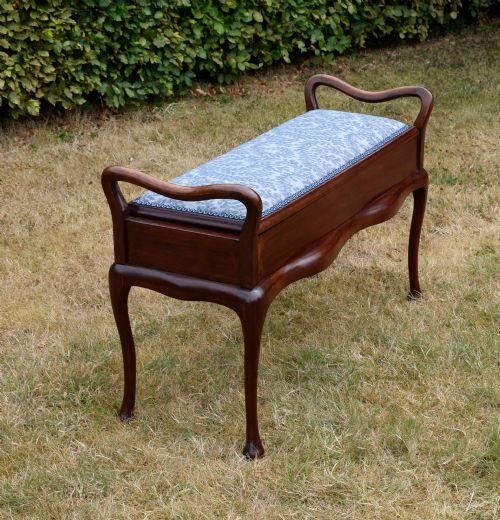
A traditional piano seat provides sturdy and practical accommodation for musicians at the keyboard, appearing frequently in forms such as duet stools, revolving stools, and long benches. These pieces emerge across several periods including the Regency, Victorian, and Edwardian eras, reflecting changing domestic musical habits.
Mahogany forms the dominant material choice among these pieces, alongside walnut, oak, and ebonised wood. Styles range from Georgian and William IV designs to Queen Anne and Chippendale revivals, often incorporating ball and claw details or simple inlaid woodwork.
Buyers encountering this page will most commonly meet mahogany or walnut examples from the late nineteenth and early twentieth centuries. Many feature lift-up or hinged seats designed to hold sheet music, while others utilise a revolving mechanism for adjustable height.
How they were made
Cabinetmakers constructed these frames primarily from solid timbers like mahogany, walnut, and oak, occasionally applying ebonised finishes to achieve a dark surface. Joinery techniques ensured sturdy construction capable of withstanding regular movement and weight at the keyboard.
Seating portions incorporated upholstery fabric, leather, or original textiles, often supported by hinged mechanisms or revolving screws for adjustable height. Decoration relied on wood inlays, carved ball and claw foot details, and stylistic revivals referencing earlier Georgian and Chippendale forms.
Listings span several eras from Regency and William IV through Victorian and Edwardian periods up to the nineteen-twenties.
What varies in quality
The standard of timber selection and cabinetwork distinguishes different examples, with dense grain and precise joinery marking out superior pieces. Carved elements such as ball and claw details show varying degrees of depth and definition from one workshop to another.
The integrity of mechanical elements like revolving screw posts and hinged lift-up lids dictates the daily utility of a stool. Original fabric or high-grade upholstery also influences the character and preservation of the piece.
The Traditional Piano Seat Glossary
- Duet stool
- A wider seating bench designed to accommodate two pianists side by side at the keyboard. These often include hinged lids concealing music compartments beneath.
- Revolving piano stool
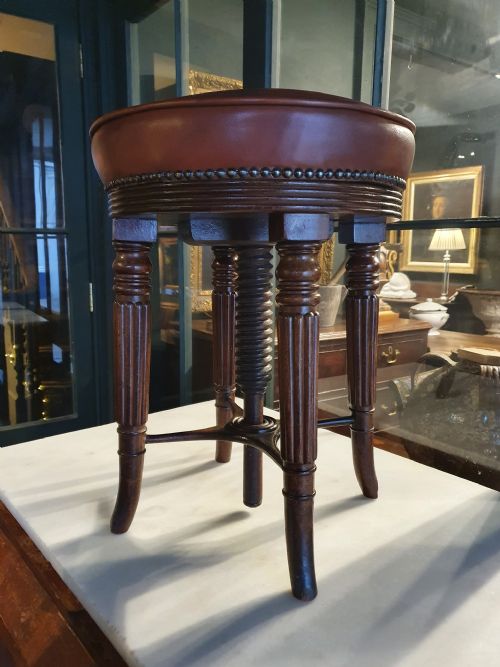
- A seat featuring a central screw mechanism allowing the player to adjust their height by turning the top. This form appears in Georgian and William IV examples.
- Ebonised wood
- Timber treated with a chemical stain or finish to resemble expensive ebony. This dark surface treatment found favour during the Victorian period.
- Inlaid mahogany
- Furniture decorated by inserting contrasting strips or pieces of wood into the primary mahogany surface. This technique appears frequently on Edwardian pieces.
- Ball and claw detail
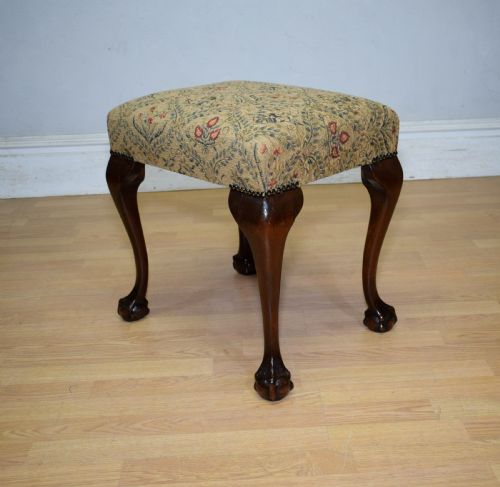
- A carved foot motif depicting a bird talon clutching a spherical ball. This ornamental feature draws on Chippendale and Queen Anne style revivals.
Traditional Piano Seat: Frequently Asked Questions
What is a duet piano stool?
A duet piano stool is an elongated seating bench built to accommodate two musicians at the same time. These pieces frequently incorporate hinged seats that lift up to reveal storage space for sheet music.
Such stools appear across the nineteenth and early twentieth centuries in timbers like mahogany and walnut, matching the scale of larger domestic pianos.
How do revolving piano seats work?
Revolving piano seats operate on a central threaded screw mechanism that allows the player to adjust their seating height by spinning the top. This design provided flexibility before adjustable hydraulic stools became common.
These pieces emerge in Georgian and William IV periods, often standing on single central pedestals with carved wooden legs.
What woods were used for piano stools?
Cabinetmakers primarily utilised mahogany for these stools, though walnut, oak, and ebonised wood also appear across the inventory. The choice of timber generally reflected prevailing furniture tastes of the period.
Mahogany examples span the nineteenth century into the Edwardian era, often featuring carved details or decorative wood inlays.
How can I identify an Edwardian piano stool?
Edwardian piano stools typically date from the opening decades of the twentieth century and frequently combine mahogany with subtle inlaid woodwork. They appear as music stools with lift-up seats, dressing stools, or longer upholstered benches.
These pieces often display lighter proportions and refined decorative details compared to heavier Victorian counterparts.