


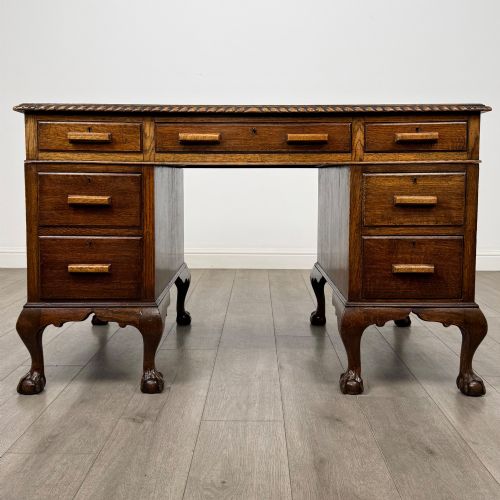
Traditional Pedestal Writing Desk
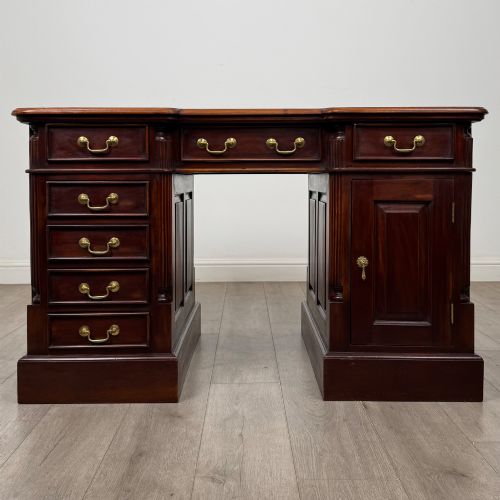
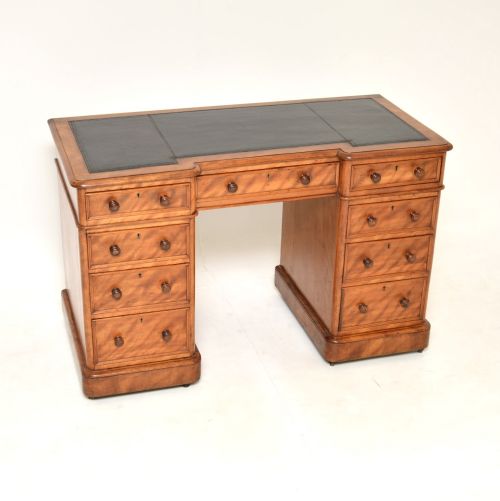
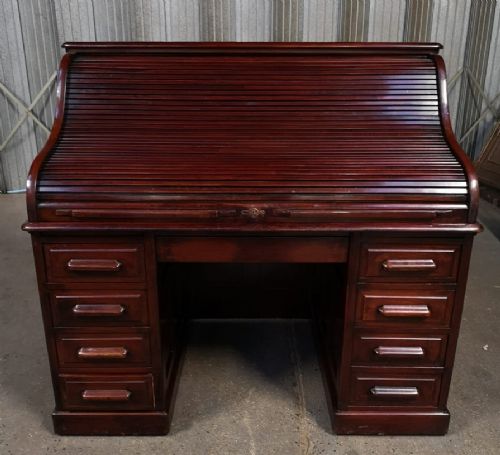
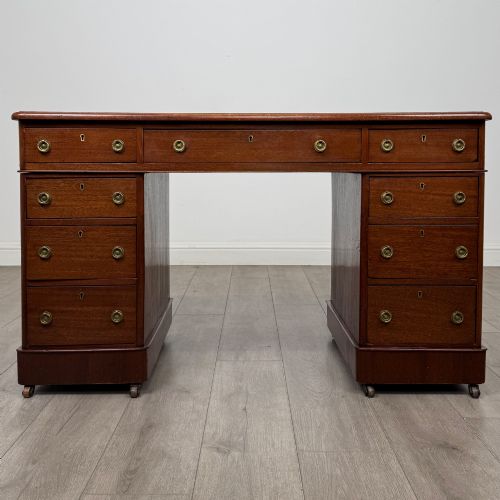
A traditional pedestal writing desk is a substantial work station built with two banks of drawers supporting a central writing surface, designed to anchor a proper study.
Traditional Pedestal Writing Desk
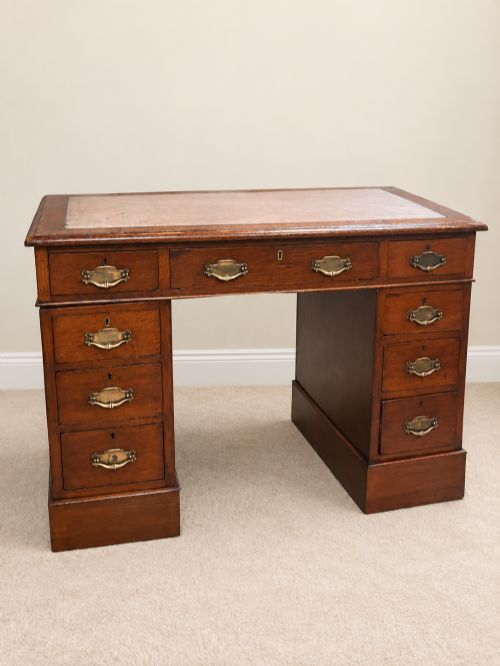
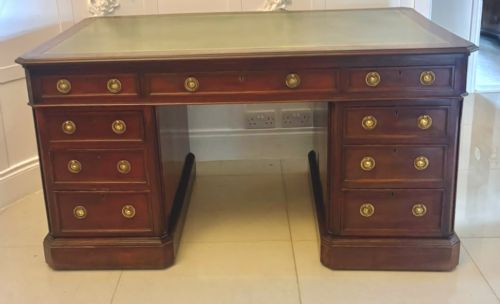
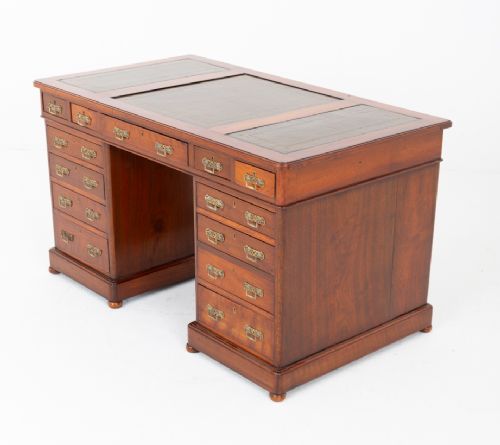
A traditional pedestal writing desk comprises a spacious top set across two separate drawer modules, offering a large timber surface for correspondence and paperwork. Most examples encountered here hail from the Victorian and Edwardian eras, alongside pieces built in earlier 18th century Georgian periods or later revivals.
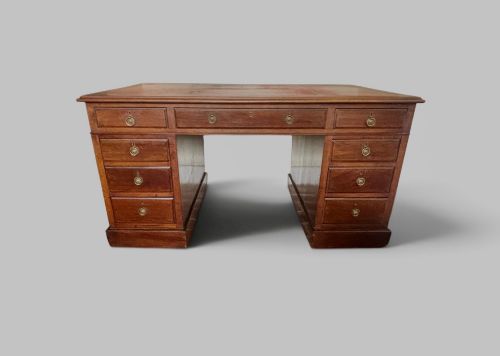
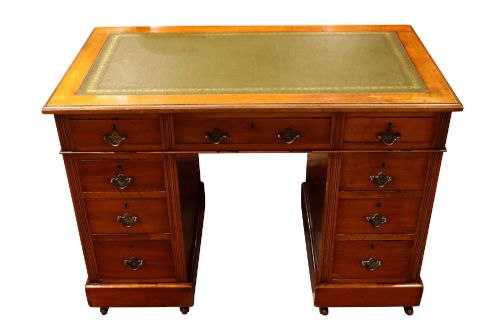
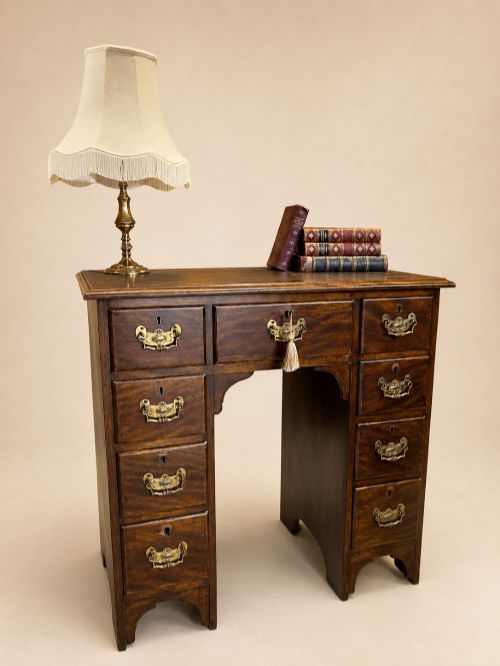
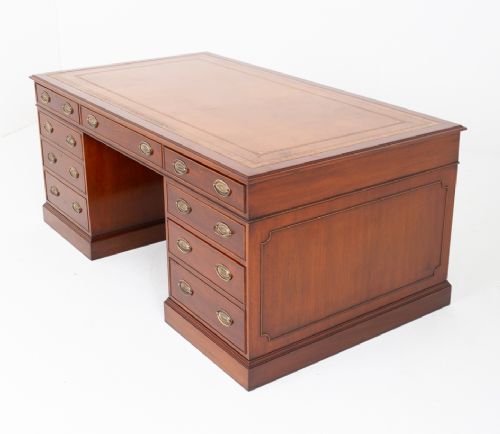
The layout typically takes the form of a kneehole desk with a single central drawer flanked by pedestals, or a larger partners desk finished on all sides for use in the middle of a room. Woods range from rich mahogany and burr walnut to sturdy oak and pine.
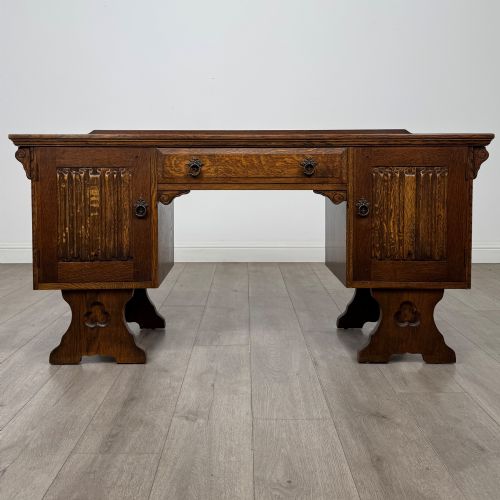
Makers utilised various revival styles such as Queen Anne, Chippendale, and Gothic motifs to decorate these heavy pieces of library furniture. Buyers find everything from compact nine-drawer kneehole desks to grand breakfront pedestals fitted with leather writing surfaces.
How traditional pedestal writing desks were made
Cabinet makers constructed these desks using solid timbers like mahogany, oak, and walnut, frequently applying burr walnut veneers to drawer fronts for figured grain patterns. Brass handles, escutcheons, and drawer pulls provided functional hardware across the pedestals.
Writing surfaces were traditionally inset with panels of tooled leather, often highlighted with gilt borders around the outer edges. Interior construction involved dovetailed drawer boxes in pine or oak, occasionally featuring fitted stationery compartments and sliding writing shelves.
Hidden stationery compartments and secret drawers inside nineteenth-century pedestal desks prove that Victorians loved a good place to stash smuggled sweets.
What varies in quality
The selection of timber grain and the precision of the cabinet work define the upper tier of these desks, particularly where figured burr walnut or dense mahogany is matched symmetrically across the pedestals. Superior examples show careful attention to internal drawer construction with hand-cut dovetails and tidy secondary woods.
Hardware and finishing details separate standard workshop production from finer pieces, seen in the crispness of carved linenfold or revival motifs and the quality of fitted leather tops. Free-standing partners desks finished with panelled backs on both sides demand higher levels of craftsmanship than single-sided wall desks.
Trollope & sons
The Traditional Pedestal Writing Desk Glossary
- Pedestal desk
- A heavy writing table supported by two vertical banks of drawers rather than four separate legs.
- Partners desk
- A large double-sided pedestal desk designed for two people to work opposite one another, finished identically on all faces.
- Kneehole desk
- A smaller pedestal desk featuring a central recess for the legs, often fitted with a single shallow drawer above.
- Breakfront
- A piece of furniture where the central section projects forward from the flanking pedestals or cupboards.
- Escutcheon
- A protective brass plate surrounding a keyhole on a drawer front or cupboard door.
Traditional Pedestal Writing Desk: Frequently Asked Questions
What is a traditional pedestal writing desk?
A traditional pedestal writing desk is a heavy timber bureau built with two vertical stacks of drawers holding up a wide writing surface. These pieces provide substantial storage alongside a dedicated workspace.
They appear in various period styles, ranging from plain 19th-century oak models to decorative Victorian and Edwardian burr walnut designs.
What woods were used for these desks?
Cabinet makers relied primarily on mahogany, oak, and walnut for the main structure and exterior surfaces of these desks. Burr walnut veneer was frequently applied to drawer fronts for decorative effect.
Secondary woods like pine often appear inside the drawer boxes and internal partitions of 19th-century workshop builds.
How do I care for the leather top?
The leather writing surface benefits from occasional cleaning with a damp cloth followed by a suitable leather cream to maintain flexibility. Avoid using harsh chemical sprays or excess water on the gilt tooling.
Keeping the leather conditioned prevents the hide from drying out and cracking under regular use.
Can these desks sit in the middle of a room?
Many larger desks, particularly partners desks and freestanding models, are finished on all four sides so they look correct away from a wall. Standard single-sided desks usually feature a plain panel at the rear.
Checking the back of the piece reveals whether the construction is finished for central placement.