


Traditional Pastoral Canvas Painting
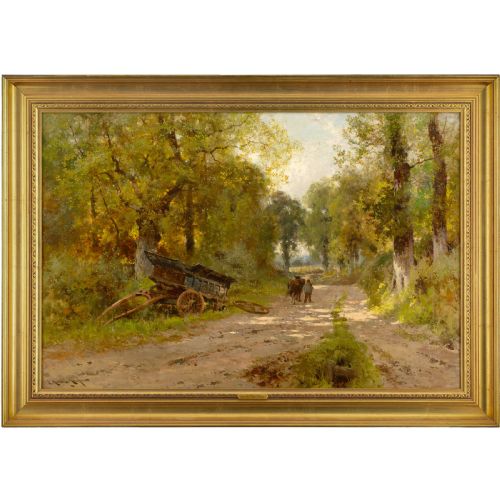
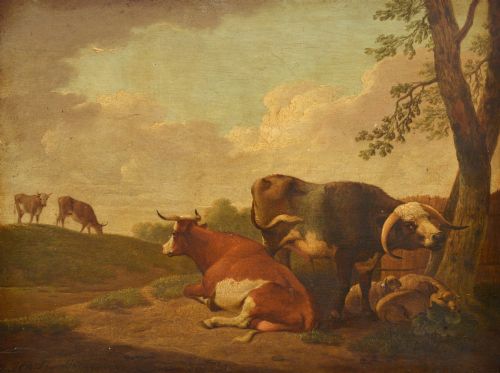
Traditional pastoral canvas painting captures rural life, framing quiet fields, grazing cattle, and riverbanks through historic brushwork.
Traditional Pastoral Canvas Painting
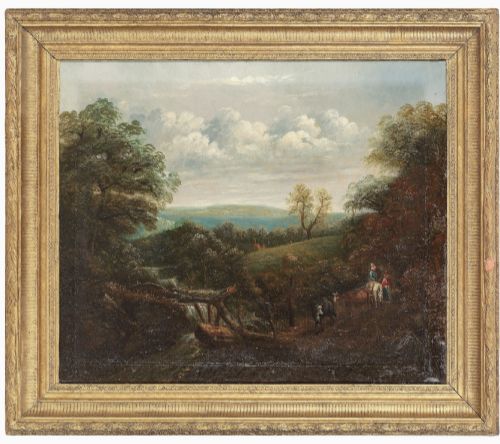
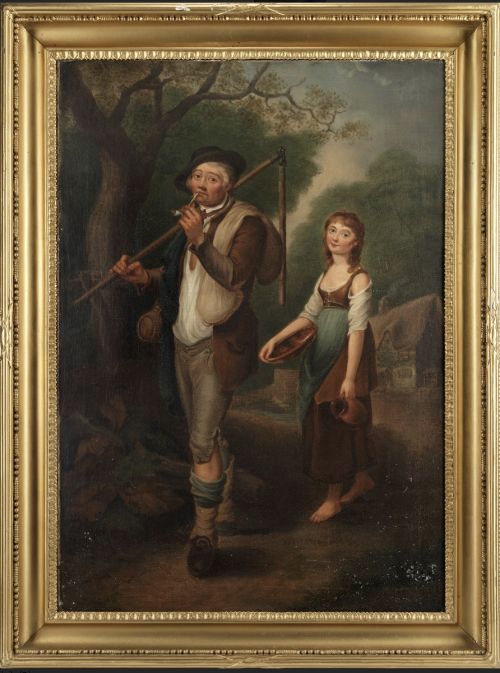
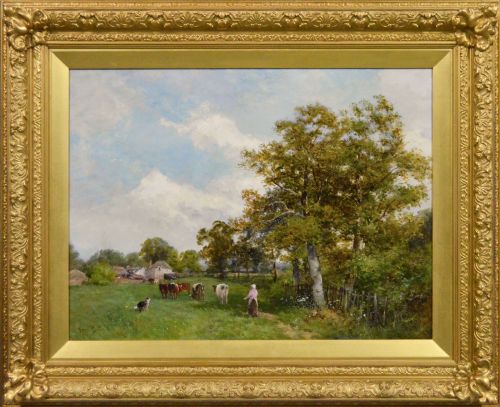
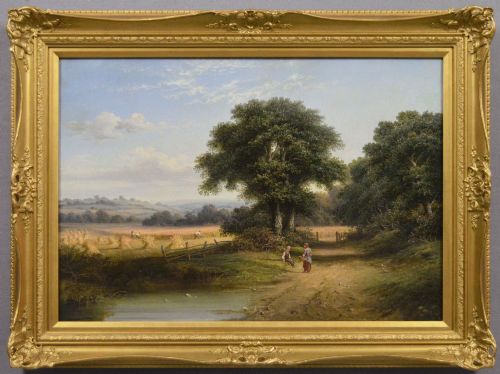
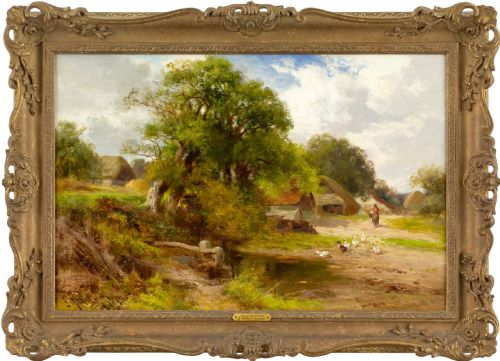
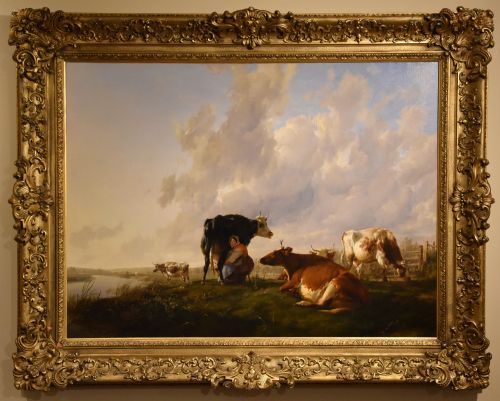
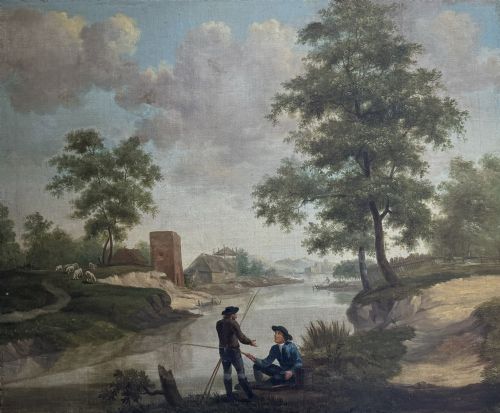
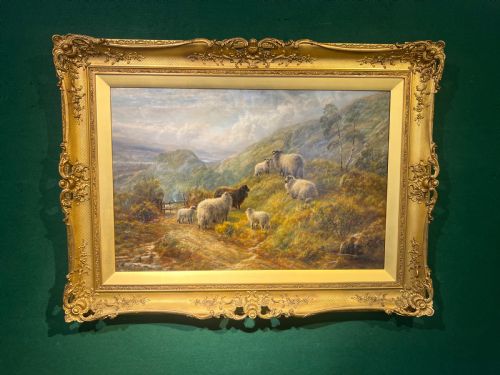
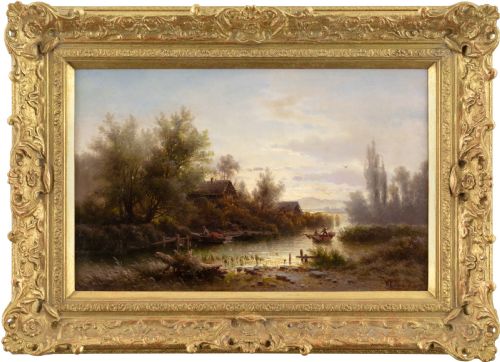
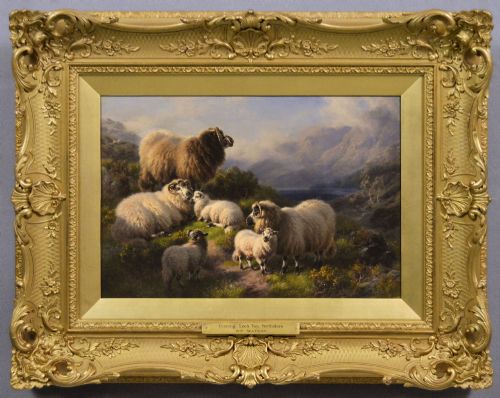
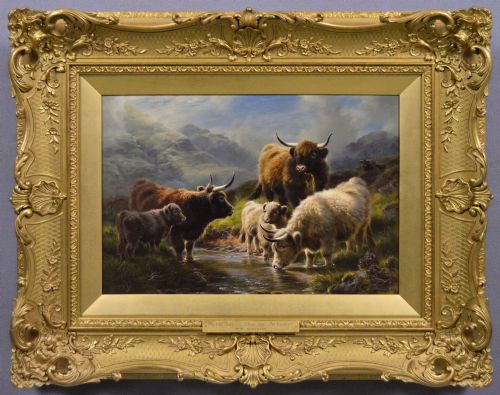
Traditional pastoral canvas painting focuses on rural scenery, featuring figures, livestock, cottages, and river landscapes set in the countryside. These artworks draw heavily from nineteenth-century realism, romanticism, and British impressionism.
The pieces on this page span from the eighteenth century through the Edwardian era, with Victorian examples appearing most frequently. Viewers encounter compositions depicting cattle, sheep, harvest fields, and rural waterways.
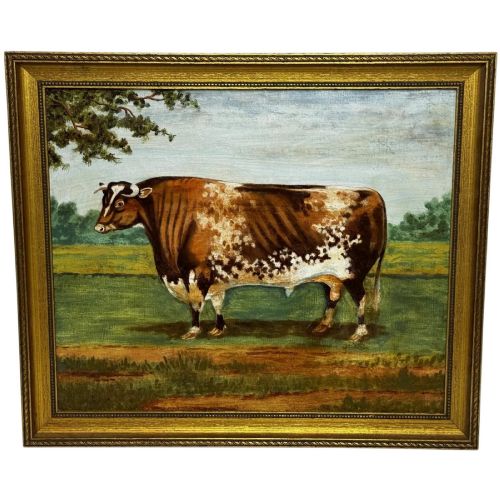
Makers recorded in the evidence range from named academic painters to regional British and European schools. Works frequently highlight agricultural scenes, including prizewinning livestock and milking practices.
Materials and Methods
These works consist primarily of oil paint applied directly to woven canvas supports. Canvases are frequently stretched over wooden frames and housed in decorative giltwood or gesso surrounds.
Artists built depth through layered oil pigments, capturing natural light across pastoral terrain. The physical support relies on durable timber chassis to maintain tension across the painted textile surface.
The listings on this page span the 18th century, the Victorian period, and the Edwardian era, utilising oil on canvas stretched over wood.
Distinctions in Quality
Quality rests on the handling of light, anatomical precision in rendered livestock and human figures, and the depth of the surrounding landscape. Stronger examples display confident brushwork that defines textures in foliage, water, and wool without stiffness.
The integrity of the original canvas and the preservation of the pigment layers dictate the standing of a piece. Finer works retain their early framing, often executed in carved gilt wood, which complements the period of the painting.
William H Myers·George Graham·John Horace Hooper·Hendrik Willem Schweickhardt·Thomas Barker of Bath·David Bates·Walter Heath Williams·Thomas Sidney Cooper·Albert Rieger·William Watson Jnr·Johann Friedrich Voltz·Robert Watson·Henry H Parker·Henry Schouten·A M Gauci·Owen Bowen·William Henry Mander·John Sanderson Wells·Alfred Augustus Glendening Jnr·Friedrich von Kaulbach·William Sydney Cooper·Samuel Joseph Clark·George Vicat Cole·Henry John Boddington·Andre de Moller
The Traditional Pastoral Canvas Painting Glossary
- Oil on Canvas
- A painting medium where pigments are suspended in a drying oil, applied to a stretched woven fabric support. This combination allows for rich colour blending and textured application.
- Giltwood
- Timber that has been coated with a thin layer of gold leaf or gilt paint. It provides ornate framing for historic canvases.
- Gesso
- A paint mixture consisting of a binder mixed with chalk, gypsum, or pigment. It serves as a preparatory layer on wooden frames before gilding.
- Pastoral Art
- Artwork depicting rural life, shepherds, agricultural labour, and idealized country landscapes. It emphasises harmonious coexistence between humans, animals, and nature.
Traditional Pastoral Canvas Painting: Frequently Asked Questions
What subjects appear in these pastoral paintings?
These works feature rural landscapes, agricultural scenes, river views, and farm animals such as cattle and sheep. Many compositions include figures engaged in harvesting, fishing, or tending livestock.
The settings draw upon British and European countryside traditions, highlighting rural trades and domestic animals during the eighteenth, nineteenth, and early twentieth centuries.
How do I care for an oil painting on canvas?
Keep the canvas away from direct sunlight, damp environments, and sudden temperature fluctuations. Avoid touching the painted surface directly to prevent oils from skin transferring to the pigment.
Dust the frame gently with a soft, dry brush. Leave professional cleaning or canvas tightening to a trained painting conservator.
How can I tell the period of a canvas painting?
Examine the materials of the stretcher frame, the weave of the canvas, and the style of the giltwood surround. Nails, wedges, and framing techniques often provide clues to the age of the object.
Artists' signatures, inscriptions on the reverse, and stylistic markers tied to nineteenth-century realism or impressionism help narrow down the date of execution.
Where should I hang a pastoral landscape?
Display these works on interior walls away from moisture sources like bathrooms or kitchens. Position them at eye level where ambient, indirect lighting can illuminate the brushwork.
Pairing a historic giltwood frame with neutral wall colours helps the rich tones of the oil paint stand out within a room.