



Traditional Paisley Carpet
A traditional paisley carpet brings centuries of woven heritage into a room through intricate, flame-like boteh motifs.
Traditional Paisley Carpet
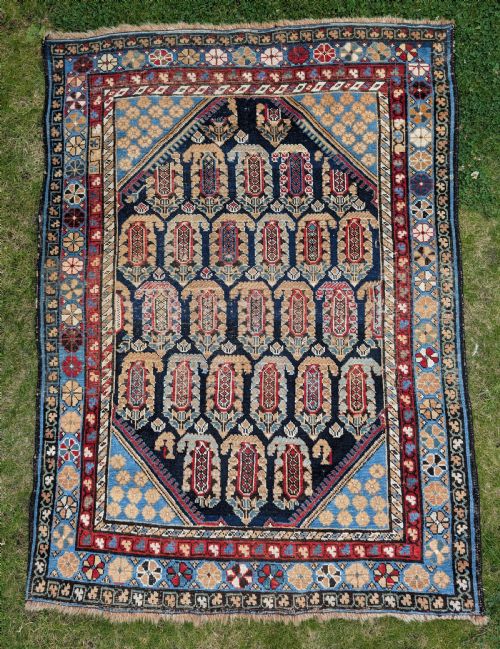
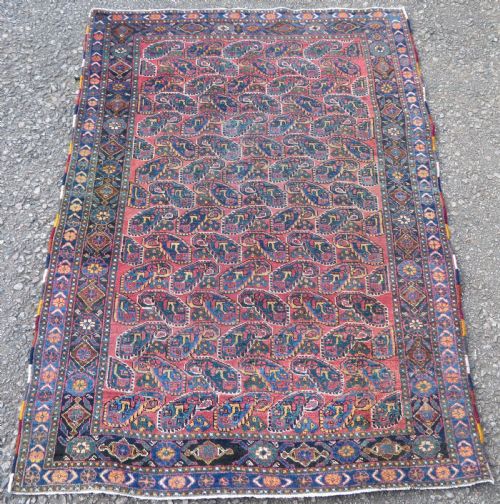
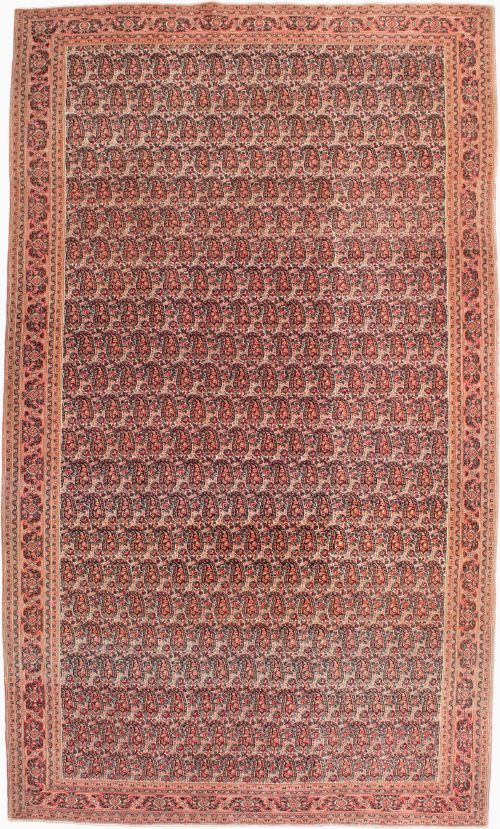
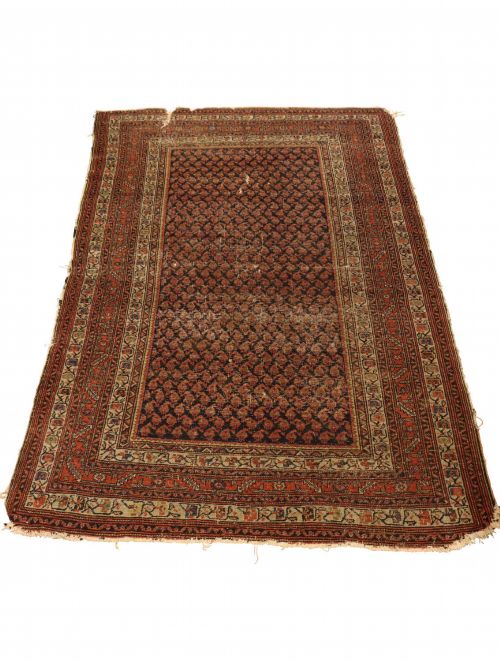
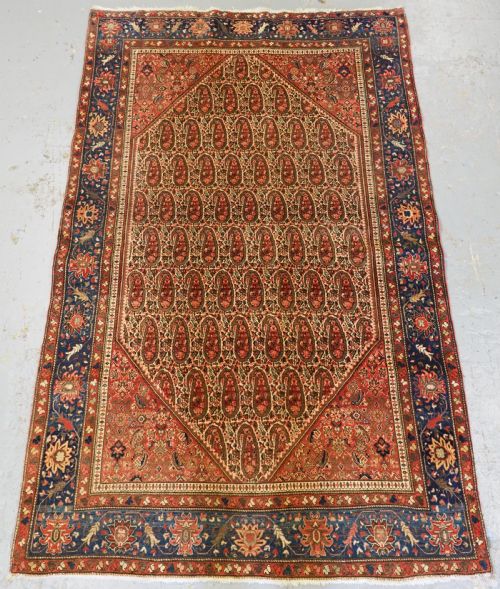
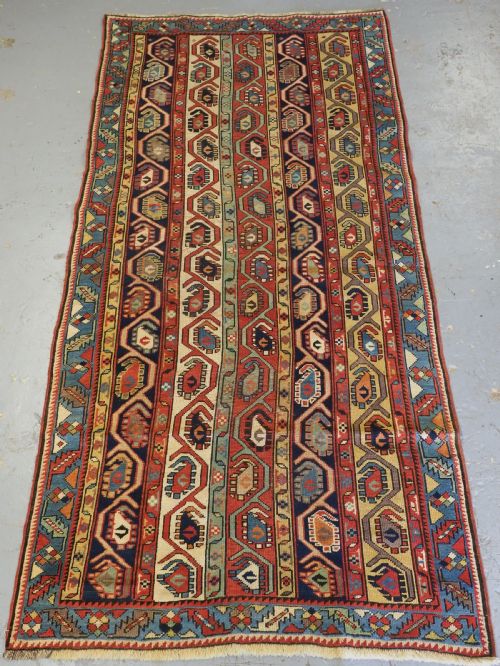
When buyers search for a traditional paisley carpet, they encounter hand-knotted woven floor coverings featuring the distinctive curved pinecone or almond-shaped motif known as the boteh. These textiles span the nineteenth and early twentieth centuries, originating primarily from Persian workshops, villages, and Caucasian weaving centres.
The pieces appearing in this selection include room-size carpets, long gallery runners, and smaller area rugs. Most examples rely heavily on repeated boteh patterns, sometimes arranged in all-over field designs or framed by elaborate geometric and floral borders.
Originating from historic regions such as Khorassan, Kirman, Tabriz, and Shiraz, these floor coverings reflect diverse regional weaving traditions. Buyers find both room-scale carpets suited to major living spaces and narrow runners designed for hallways.
How they were made
Weavers constructed these floor coverings using natural fibres, predominantly wool for the pile alongside cotton foundations. Certain fine or specialised examples incorporate angora wool or silk to achieve softer textures and subtle lustre.
Artisans knotted each piece by hand on vertical looms, building dense piles that could withstand generations of use. Vegetable and natural dyestuffs provided the rich palette of soft colours seen across nineteenth and early twentieth-century examples.
Listings feature pieces spanning the nineteenth century through to the 1930s, constructed from wool, cotton, angora wool, and silk.
What varies in quality
Knot density dictates the crispness and clarity of the intricate boteh patterns across the woven field. Finer knotting allows for sharper outlines and more complex detailing within the floral and geometric borders.
The choice of raw materials influences tactile quality and durability. High-grade wool yields a resilient, lustrous pile, whereas softer luxury fibres like silk or angora impart a refined drape and specific handle.
The Traditional Paisley Carpet Glossary
- Boteh
- A stylised curved floral motif resembling a pinecone, almond, or flame, which forms the signature pattern of traditional paisley carpets. This ancient Persian symbol represents life and eternity.
- Pile
- The upright yarn loops or cut ends that form the soft surface of a carpet. It is created by knotting warp and weft threads on a vertical loom.
- Runner
- A long, narrow carpet format specifically designed for corridors, staircases, and hallways. These pieces typically emphasise repeating linear patterns.
- Warp
- The stationary vertical foundation threads stretched tightly on a loom before weaving begins. Weft threads pass horizontally over and under these structural elements.
Traditional Paisley Carpet: Frequently Asked Questions
How do I care for a wool rug?
Vacuum these floor coverings gently using a suction-only attachment without a rotating brush roll. This prevents unnecessary friction on delicate hand-knotted wool and silk piles.
Professional specialist cleaning is essential to preserve natural dye stability. Keep pieces out of direct, prolonged sunlight to prevent fading of soft regional colours.
What is a boteh design?
The boteh is a curved, almond-shaped motif adorned with floral and geometric fills. It serves as the primary visual element in traditional paisley carpets.
Weavers arranged these motifs in repeating all-over rows, contained them within medallions, or paired them in mother-and-child configurations across the field.
Are these pieces suitable for hallways?
Long runners and gallery formats fit naturally into corridors, entryways, and narrow transitional spaces. Their elongated proportions guide movement while adding warmth to functional areas.
Selecting a suitably sized runner depends on leaving an even border of exposed wooden flooring around the perimeter of the hallway.