






Traditional Oversized Carpet
A traditional oversized carpet anchors a large room with grand scale and centuries of woven design.
Traditional Oversized Carpet
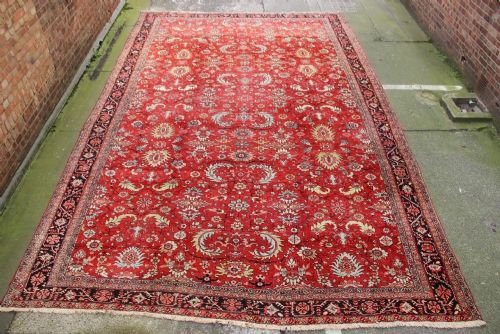
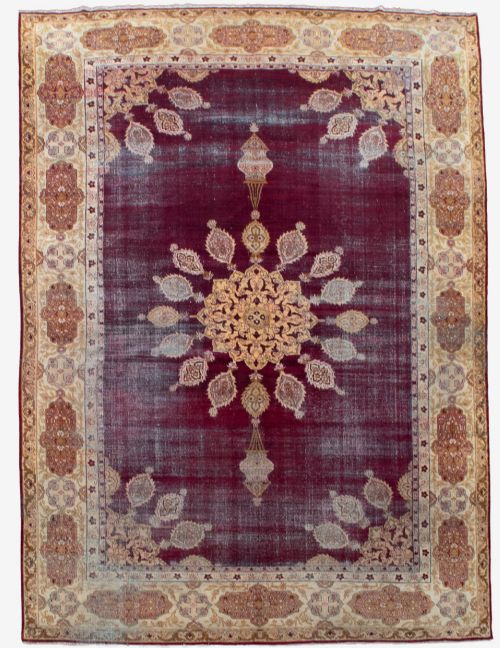
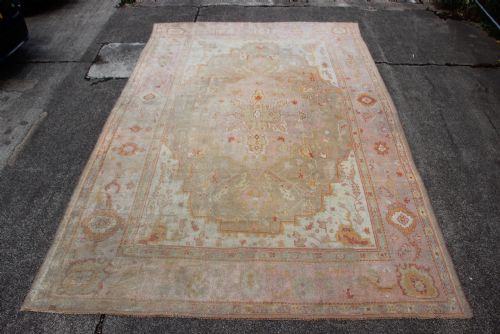
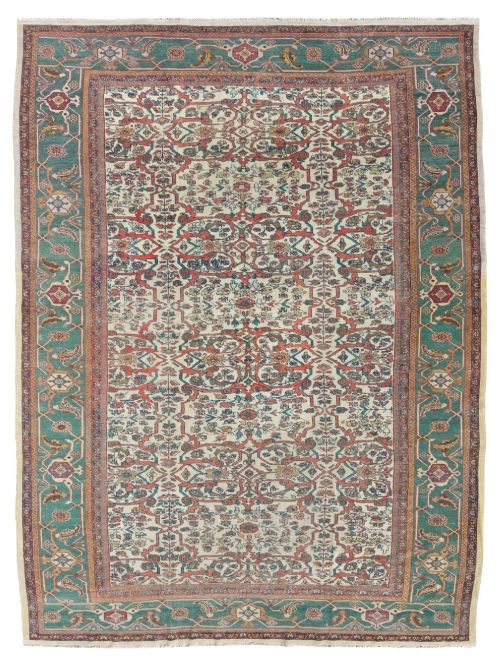
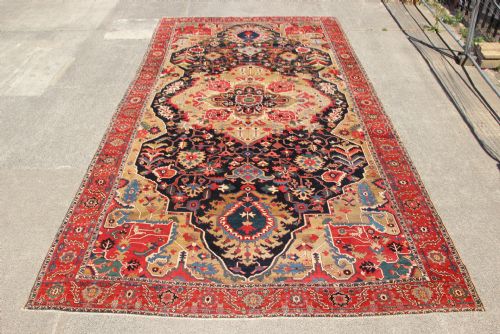
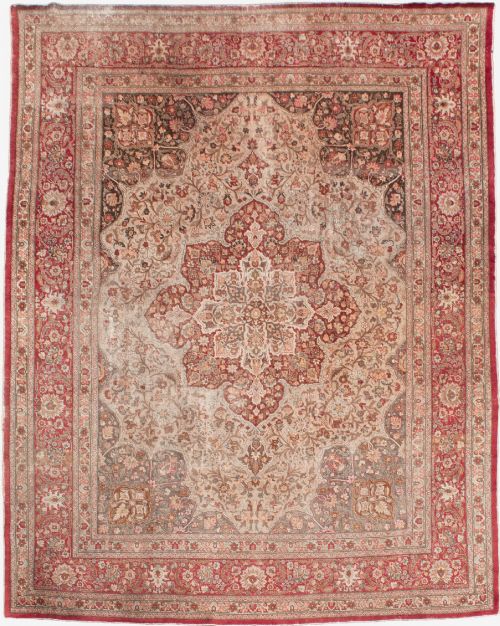
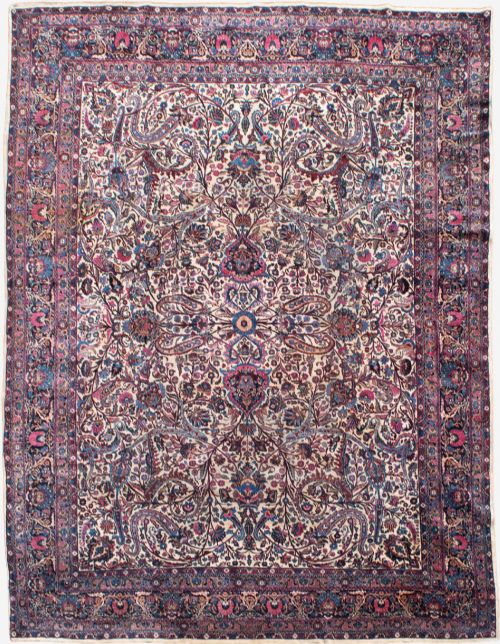
When searching for a traditional oversized carpet, you encounter large floor coverings originating from the 19th century and the early decades of the 20th century. These pieces span significant room-scale formats designed for country houses and expansive drawing rooms.
The selection on this page centres on major woven traditions including Oushak, Heriz, Sultanabad, Kirman, and Mahal. These regional types provide the heavy proportions and substantial dimensions required for major architectural interiors.
Materials and construction methods
These carpets rely on wool pile foundations paired with cotton structures to support grand surface areas. The natural fibres handle heavy foot traffic while maintaining rich colour depths across vast expanses.
Weavers knot the wool by hand onto cotton warps and wefts, achieving dense pile surfaces that weather centuries of use. This construction technique allows large formats to retain structural integrity despite their considerable weight.
Traditional Oversized Carpet Retail Price Guide 2026
Typical asking prices for traditional oversized carpet among the pieces listed under this phrase on Sellingantiques today, from the lower quarter to the upper quarter. They describe what is for sale here now, not the wider market.
Some carpets carry the legacy of old department stores like Maples, having warmed Victorian floors before reaching modern homes.
Distinctions in craftsmanship and condition
Quality separates ordinary room-scale weaving from exceptional output through knot density, dye purity, and overall structural survival. Finer examples display precise drawing and harmonious natural dye combinations across the field.
Condition plays a major role in how these large textiles present in a room. Surface wear, faded areas, and historical repairs alter the visual weight and textural balance of the wool pile.
Ziegler and Co·Maples
The Traditional Oversized Carpet Glossary
- Oushak
- A Turkish weaving tradition known for soft wool, muted palettes, and expansive floral designs. These carpets suit large drawing rooms.
- Heriz
- A Persian carpet style distinguished by geometric medallions and robust structural wool. They originate from the northwest region of Iran.
- Sultanabad
- A nineteenth-century commercial carpet type featuring oversized patterns and gentle coloration. Commercial workshops produced them for Western decoration.
- Warp
- The vertical threads stretched on a loom that form the structural foundation of the carpet. Cotton provides the strength for these large formats.
Traditional Oversized Carpet: Frequently Asked Questions
How do I clean a large antique carpet?
Vacuum gently using a suction-only attachment without the beater bar to protect the old wool pile.
Professional specialist cleaning remains necessary for large formats to prevent dye bleeding across cotton foundations.
Where should I place an oversized carpet?
These large rugs suit grand reception spaces, dining rooms, and open living areas with substantial floor plans.
Ensure furniture sits comfortably on the carpet surface to anchor the room's proportions effectively.
How do I tell an Oushak from a Heriz?
Oushak carpets feature curving floral motifs and softer, muted wool palettes with relaxed geometry.
Heriz carpets display bold geometric central medallions and crisp, angular lines woven with sturdy structural wool.
Why choose an antique carpet over a new one?
Antique carpets offer weathered patinas and organic natural dyes that modern chemical processes cannot replicate.
These large historical pieces bring depth and character built from decades of actual household use.