

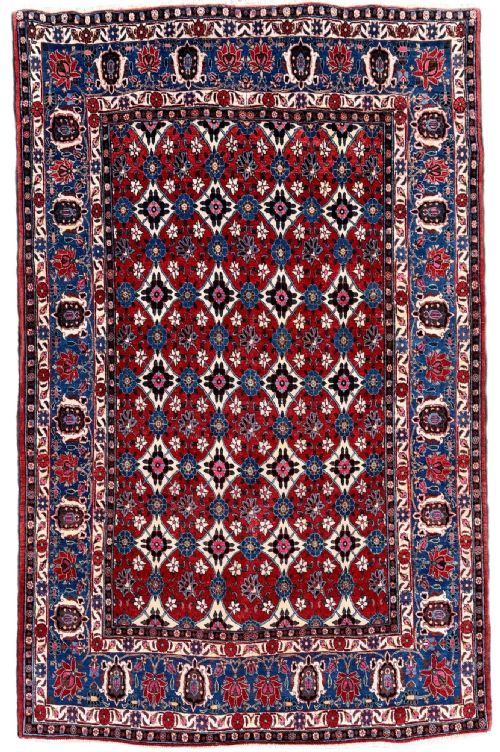
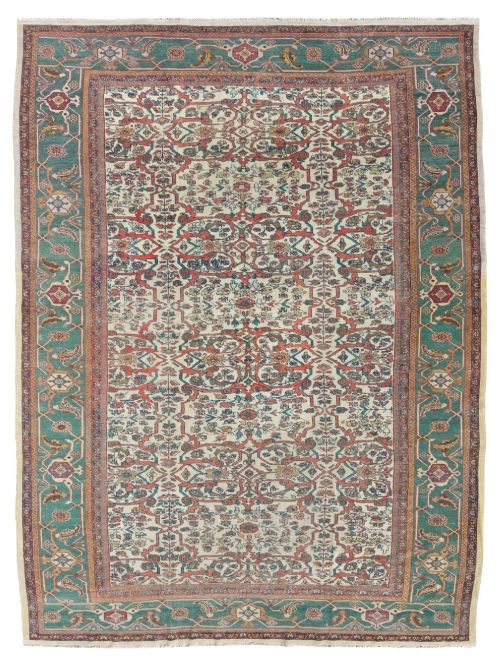
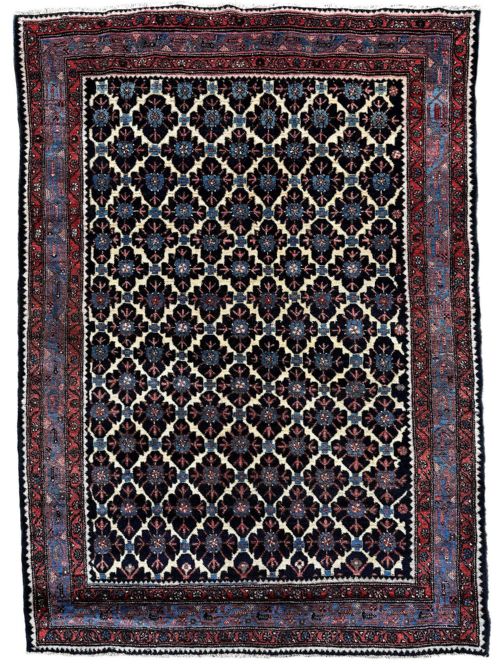


Floral Lattice Persian Carpet
These floral lattice persian carpet pieces bring enduring design and natural materials into a room, offering authentic motifs rooted in traditional weaving centres.
Floral Lattice Persian Carpet
A floral lattice persian carpet brings together structured geometric grids and botanical motifs across wool and cotton foundations. These textiles originate from various traditional centres, including Sultanabad, Veramin, Hamadan, Mahal, Bidjar, Khorasan, Kirman, and Kurdish regions.
Buyers will encounter multiple formats on this page, spanning larger carpets alongside area rugs and narrow hallway runners. The designs incorporate repeating floral patterns such as the Mina Khani arrangement across pieces dating from the late nineteenth century into the early twentieth century.
The aesthetic merges Persian traditional and tribal styles with influences from Mughal traditions. Each piece reflects the specific regional palette and knotting technique of its origin.
Materials and construction
The construction relies on natural wool pile knotted onto cotton foundations, providing both durability and flexibility for floor coverings. Weavers utilised hand-spun yarns dyed with traditional colourants to create the field and border patterns.
Village and regional workshops employed traditional upright looms where artisans tied symmetrical or asymmetrical knots by hand. The density of these knots and the preparation of the fibres determine the handle and weight of each carpet.
Floral Lattice Persian Carpet Retail Price Guide 2026
Typical asking prices for floral lattice persian carpet among the pieces listed under this phrase on Sellingantiques today, from the lower quarter to the upper quarter. They describe what is for sale here now, not the wider market.
Village weavers sometimes added stray abrash colour shifts where the dye batch ran out mid-row, leaving a charming horizontal stripe of changing tone.
Judging quality and execution
Quality rests in the precision of the lattice drawing and the crispness of the botanical motifs across the field. Finer execution shows in the balanced proportion of borders to the central design.
The integrity of the wool pile and the structural soundness of the cotton foundation dictate the durability of the textile. Consistency in knot density and the subtlety of the dye work separate standard regional pieces from exceptionally fine examples.
The Floral Lattice Persian Carpet Glossary
- Mina Khani
- A traditional repeating floral lattice pattern typically composed of daisy-like blossoms linked by curved vines. This design appears frequently in Persian and Kurdish village rugs.
- Sultanabad
- A regional designation for carpets produced in and around the town of Sultanabad, known for large-scale botanical designs and muted vegetable dyes. These pieces date predominantly to the late nineteenth and early twentieth centuries.
- Veramin
- A town south of Tehran famous for distinctive village and town production, often featuring structured mina khani or repeated floral lattice layouts on dark blue or red grounds.
- Mahal
- A category of carpets originating from the Mahallat region, sharing similarities with Sultanabad work through open floral fields and soft colour palettes.
- Bidjar
- A town in western Iran known for exceptionally dense, heavy carpets woven with a stiff foundation. They earn the descriptor iron rugs due to their robust construction.
Floral Lattice Persian Carpet: Frequently Asked Questions
What materials were used to make these carpets?
These textiles consist primarily of a wool pile hand-knotted onto a cotton foundation. Wool provides the soft, resilient surface texture while cotton forms the warp and weft threads of the structural grid.
The quality of the wool and the preparation of the natural dyes influence how the pile ages and wears under foot traffic.
Where were these regional rugs woven?
The pieces originate from various weaving centres and villages across Persia, including Sultanabad, Veramin, Hamadan, Mahal, and Bidjar. Other examples come from Kurdish regions, Khorasan, Kirman, and historical Indian workshops.
Each area developed distinct knotting techniques, colour combinations, and drawing styles that distinguish its provenance.
How do I care for an antique carpet?
Regular gentle vacuuming without a beater bar removes dust and grit from the wool pile. Professional cleaning tailored to antique textiles preserves the natural lanolin in the wool.
Placing a quality rug underlay beneath the carpet prevents slippage and reduces friction against the floorboards.
What is the difference between a carpet and a runner?
Carpets are proportioned for main rooms and larger seating areas, offering expansive fields to display repeating patterns. Runners are narrow, elongated formats specifically designed for hallways, corridors, and stairs.
Both formats utilise the same traditional weaving techniques and regional designs, scaled to fit different spatial requirements.