




Traditional Oriental Kilim
These traditional oriental kilim pieces bring woven heritage into a room, offering flatweave wool textures shaped by tribal and regional traditions.
Traditional Oriental Kilim
A traditional oriental kilim encompasses flatweave rugs, runners, cushions, and wall-hanging panels originating from regions such as the Caucasus, Anatolia, Persia, and Central Asia. Buyers seek these items for their distinct geometric patterns and rich histories rooted in tribal workshops.
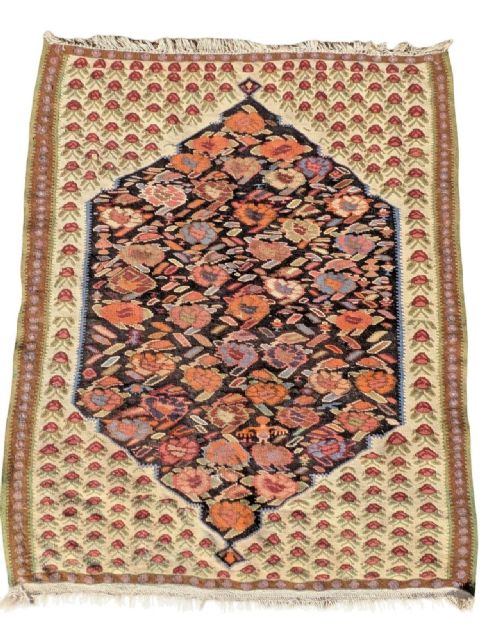
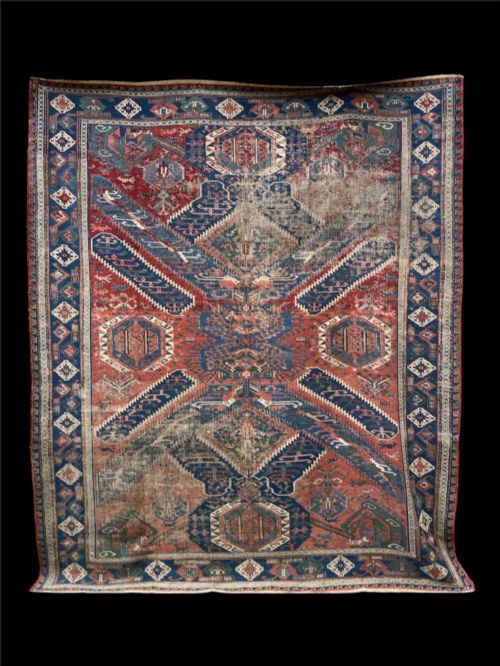
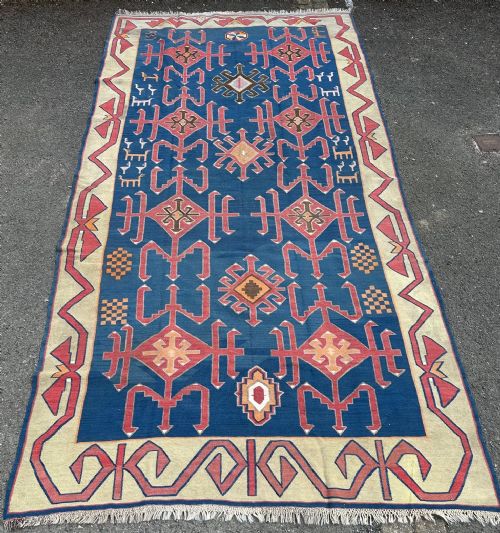
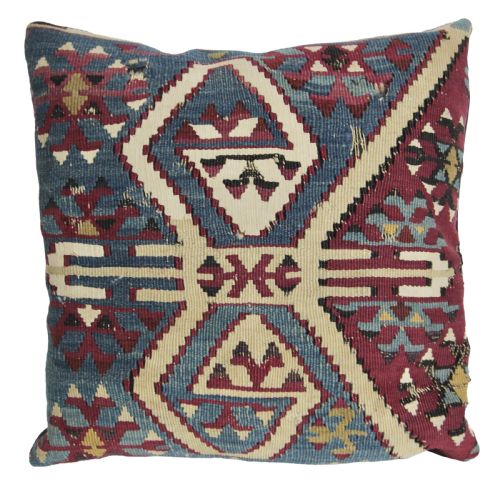
The pieces available include room-size carpets, narrow runners, square cushions fashioned from old bag faces, and multi-strip textiles woven in various locations like Shirvan, Bidjar, and Daghestan. Most examples date from the late nineteenth century through to the early decades of the twentieth century, reflecting established weaving practices.
Regional variations dictate the visual character, ranging from the bold designs of Turkish Esme and Konya pieces to the intricate shields of Caucasian Kuba rugs. Each origin employs specific structural approaches, resulting in items that function equally well as floor coverings or decorative textile art.
Materials and construction
Makers utilised hand-spun wool and cotton as the primary foundation materials, often pairing the woven surfaces with timber elements or velvet trims in related furnishings. Natural dyes impart the characteristic colour palettes seen across the textiles.
The flatweave technique avoids pile entirely, relying instead on tightly interlaced warp and weft threads to build geometric and pictorial motifs. Certain examples incorporate soumak wrapping or embroidery techniques like cicim to add textural depth to the surface.
Several cushions are born from antique bag faces, meaning nomads once stored salt and grain in what is now your lumbar support.
Judging the work
Quality rests in the precision of the flatweave structure and the clarity of the natural dye palette. Tighter interlacing and consistent tension throughout the textile indicate superior regional craftsmanship.
The integrity of the wool, the complexity of the tribal design, and the survival of original kilim ends differentiate standard production from finer examples.
The Traditional Oriental Kilim Glossary
- Kilim
- A flatweave textile produced without a pile, traditionally used as a rug, wall hanging, or storage bag face.
- Soumak
- A brocading technique that wraps weft threads over the warp to create a textured, durable surface.
- Cicim
- An embroidery style applied to woven ground fabrics, often seen in Anatolian panels.
- Warp
- The stationary vertical threads stretched across a loom before the weaving process begins.
- Weft
- The horizontal threads passed through the warp to build the pattern and structure of the textile.
Traditional Oriental Kilim: Frequently Asked Questions
How do I clean a traditional oriental kilim?
Gentle surface vacuuming without a beater bar removes loose dirt from the flatweave structure. Professional textile cleaning is necessary for deeper care.
Water and harsh detergents damage natural dyes and wool fibres, so professional maintenance preserves the integrity of the piece.
Can I use these rugs on modern floors?
Placing a suitable rug underlay beneath the flatweave textile prevents slipping and reduces friction against hard flooring.
Because these pieces lack a traditional pile, an underlay also adds cushioning and extends the lifespan of the wool.
What is the difference between a kilim and a carpet?
Kilims are constructed using a flatweave technique that interlaces threads without creating a raised pile. Carpets often feature knotted piles that yield a thicker, softer surface underfoot.
Both forms share traditional regional motifs, but their physical structures affect how they feel and drape.
Where were these textiles originally made?
Weavers produced these textiles across nomadic and settled communities in the Caucasus, Anatolia, Persia, and regions of Central Asia. Specific towns and tribes, such as Bidjar, Shirvan, and Yomut groups, developed distinct local styles.
Local materials and cultural symbols heavily influenced the patterns created in each specific area.