



Traditional Oil Burner Lamp
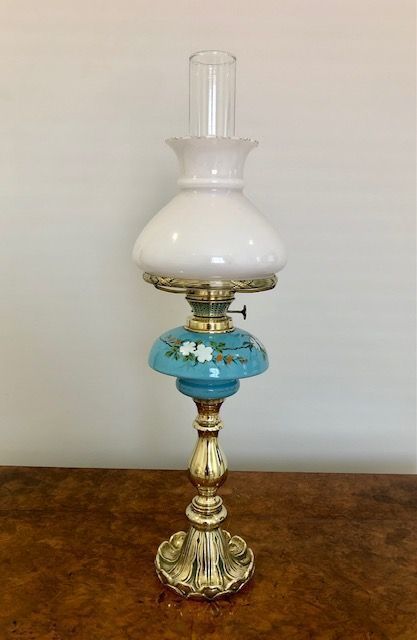
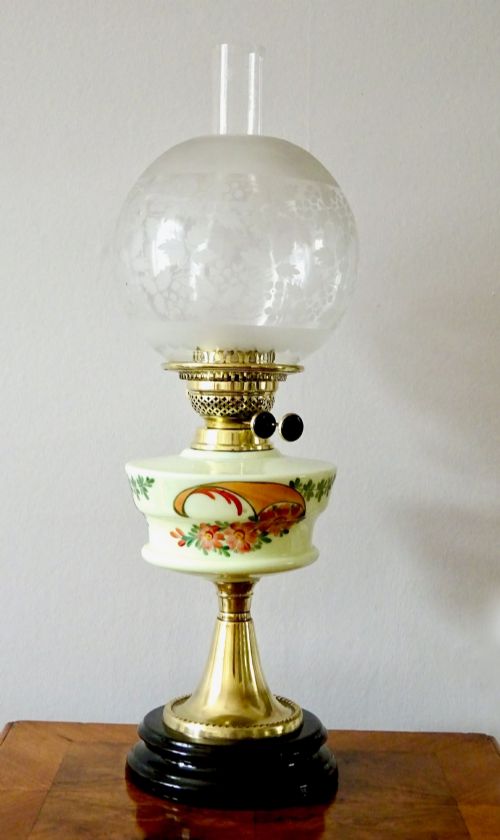
These traditional oil burner lamp examples bring period illumination into modern spaces, offering genuine brass and glass construction from Victorian and Edwardian workshops.
Traditional Oil Burner Lamp
When searching for a traditional oil burner lamp, you are examining functional nineteenth and early twentieth-century lighting designed to burn paraffin or oil. These pieces originate predominantly from the Victorian and Edwardian eras, spanning table and floor lamps alongside specific cultural forms.
The versions most commonly met on this page combine a heavy brass column with a glass font or shade. Examples range from simple cottage table models to elaborate duplex burners fitted with etched glass tulip or opaline shades.

How they were made
Construction relies heavily on cast and spun brass combined with blown or pressed glass fonts. Metals such as copper and ebonised wood appear alongside opaline, cut, and cranberry glass elements.
Assembly techniques unite metal columns with contrasting glass reservoirs, often incorporating Corinthian capitals and detailed brass mountings to secure the burner mechanisms.
Traditional Oil Burner Lamp Retail Price Guide 2026
Typical asking prices for traditional oil burner lamp among the pieces listed under this phrase on Sellingantiques today, from the lower quarter to the upper quarter. They describe what is for sale here now, not the wider market.
Listings incorporate nineteenth and early twentieth-century pieces, spanning Georgian, Victorian, and Edwardian periods with brass, copper, and glass materials.
What varies in quality
Quality rests in the weight of the metal casting and the clarity or colour of the glass components. Substantial brass columns and heavier gauge materials distinguish the better pieces from lighter utilitarian versions.
Artistic execution in the glass shades, such as etched tulip patterns or layered cranberry glass, elevates certain examples above standard domestic lighting.
Messengers·Harrods·Young's Special
The Traditional Oil Burner Lamp Glossary
- Duplex burner
- A twin-wick burner mechanism designed to produce a significantly brighter flame than single-wick predecessors. This system required wider fonts and matching galleries.
- Font
- The oil reservoir of the lamp, commonly fashioned from coloured glass, cut glass, or polished brass. It sits atop the column or base.
- Opaline glass
- An opaque, milky-white glass frequently utilised for shades during the Victorian and Edwardian periods. It diffused light evenly across a room.
- Corinthian column
- A classical architectural column style frequently adapted for the stems of heavy brass table lamps. These columns feature ornate leaf-carved capitals.
Traditional Oil Burner Lamp: Frequently Asked Questions
How do I operate a traditional oil burner lamp safely?
These lamps utilise paraffin or lamp oil drawn up through a cotton wick for illumination. Modern usage typically requires keeping them as decorative items rather than burning fuel.
Ensure the wick is trimmed flat and the burner mechanism is clean before attempting any demonstration of the original mechanics.
What is the difference between Victorian and Edwardian lamps?
Victorian models frequently display heavier ornamentation, including Corinthian brass columns and richly coloured cranberry glass fonts. They lean towards ornate domestic presence.
Edwardian examples often exhibit slightly more restrained lines while maintaining quality brass and opaline glass shade combinations.
Can standard modern light bulbs be fitted to these lamps?
Most of these pieces survive in their original oil-burning configuration without electrical conversion. Altering the internal reservoir to take a modern bulb removes the original burner assembly.
Many collectors prefer to keep them in their authentic mechanical state rather than converting them for electric illumination.
Where were these traditional lamps used in the home?
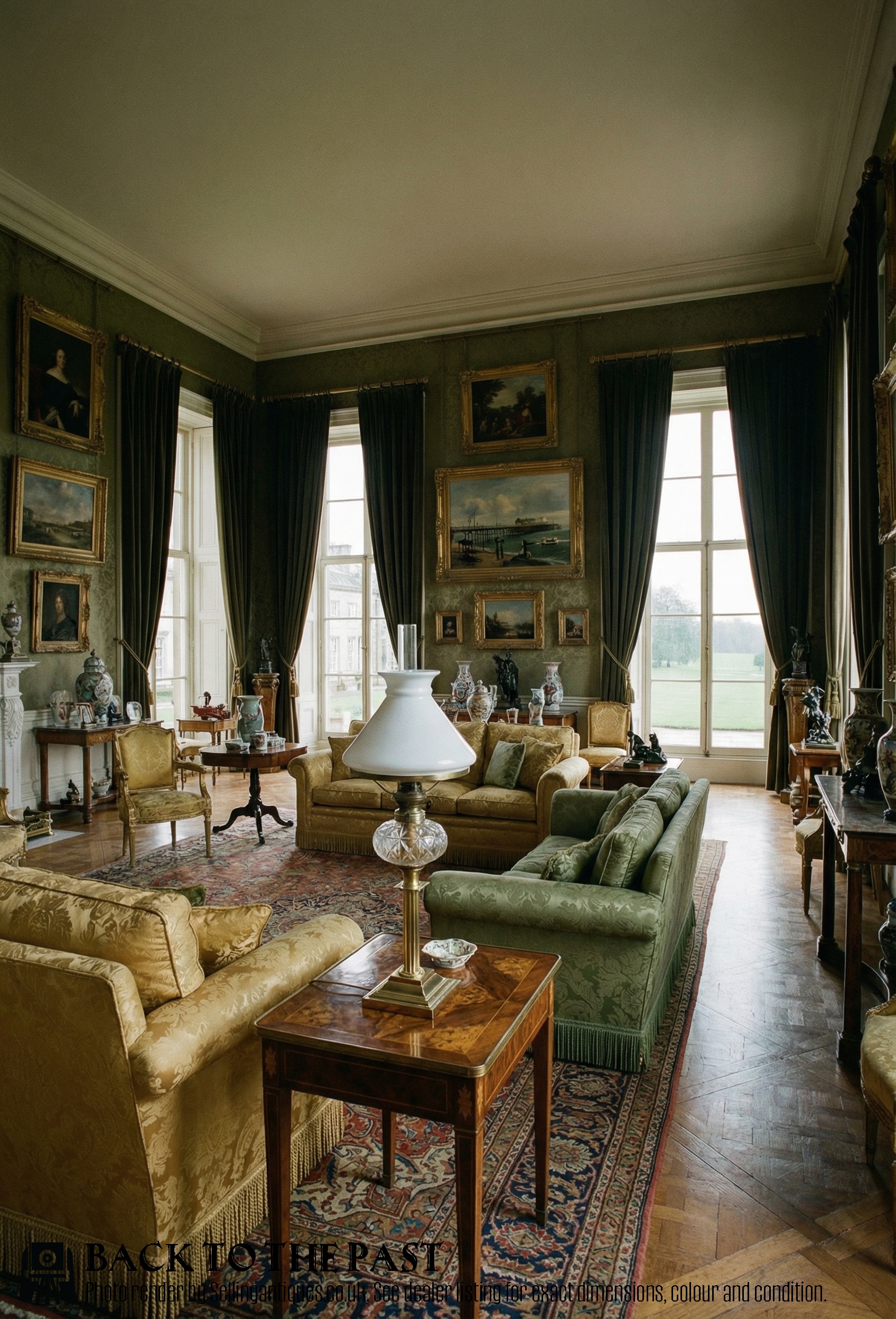
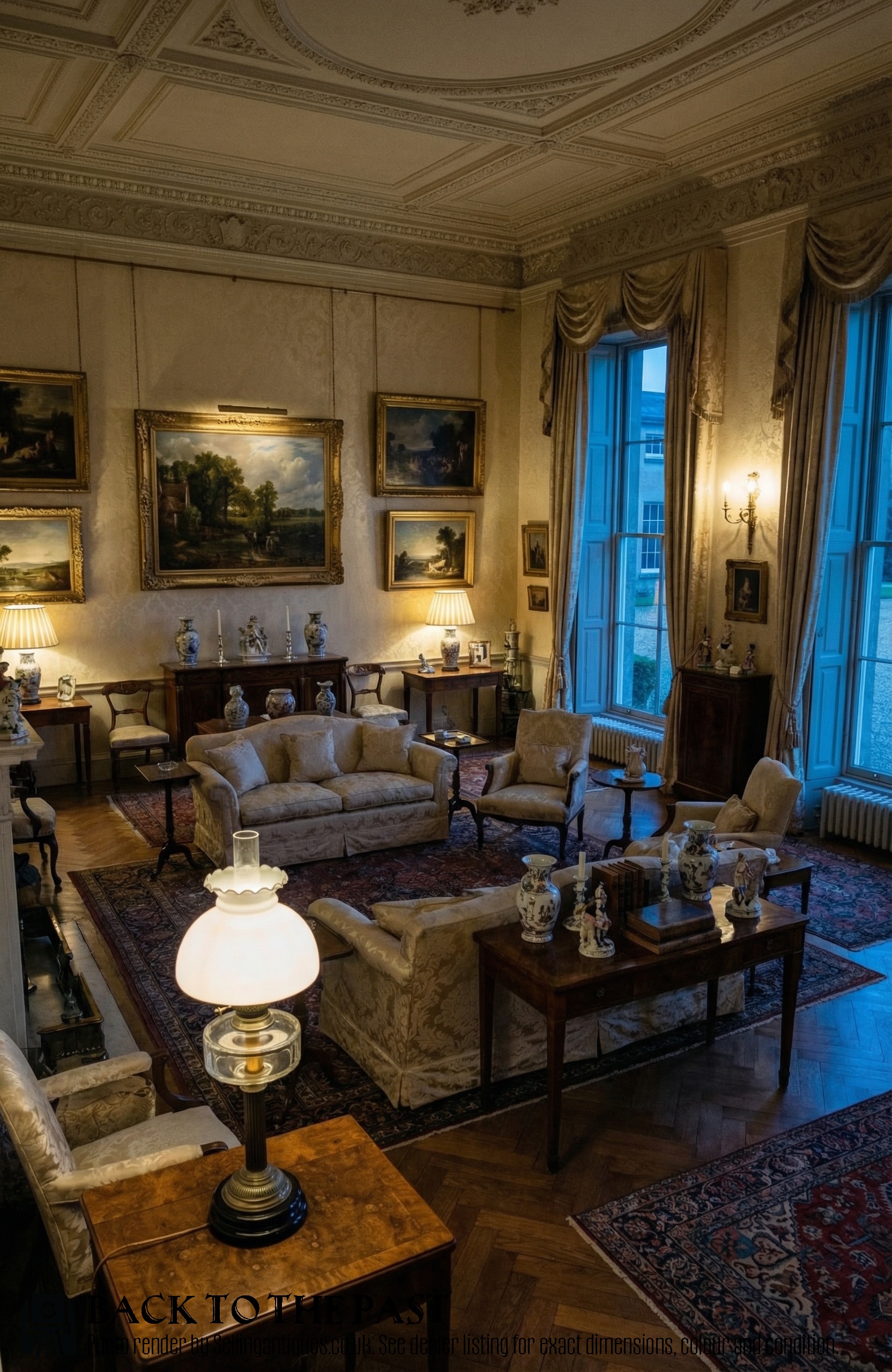
Table models served as portable light sources for parlours, bedrooms, and studies before widespread electricity. Floor lamps or standard lamps stood in larger reception rooms to illuminate darker corners.
Specialist variants like Jewish Sabbath lamps or Himalayan butter lamps served distinct cultural and religious purposes.