

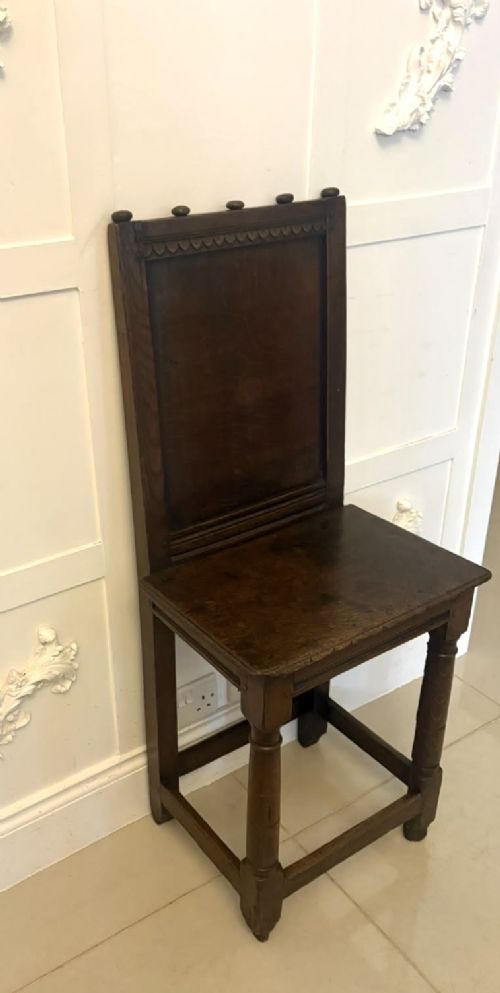
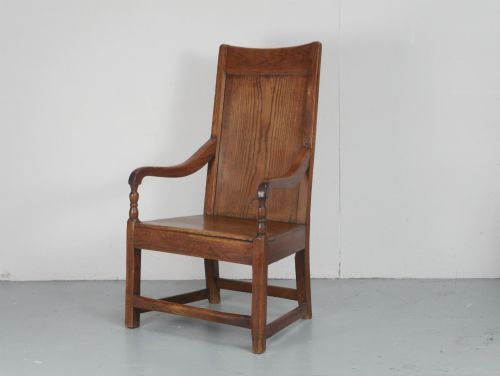
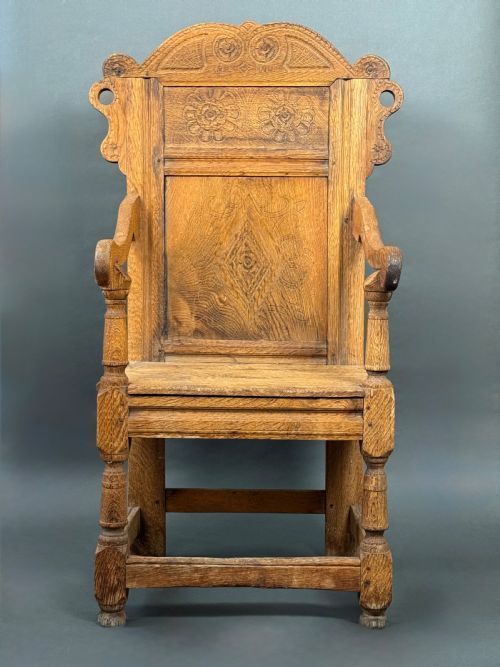
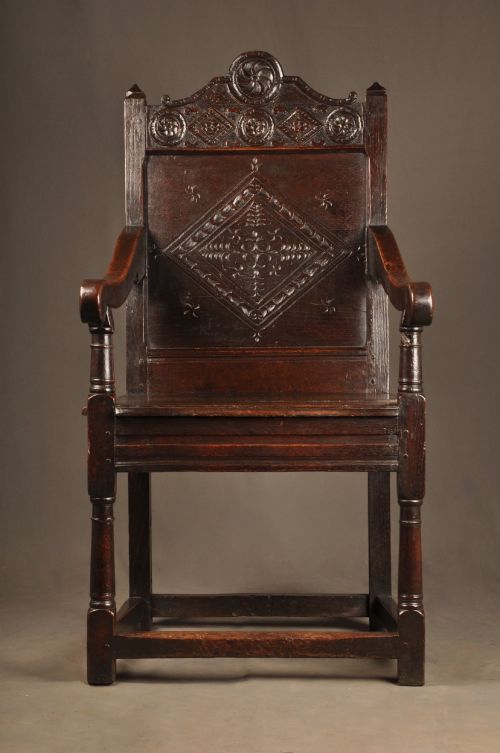



Traditional Oak Wainscot Chair
A traditional oak wainscot chair is a heavy wooden armchair built for the principal rooms of early houses.
Traditional Oak Wainscot Chair
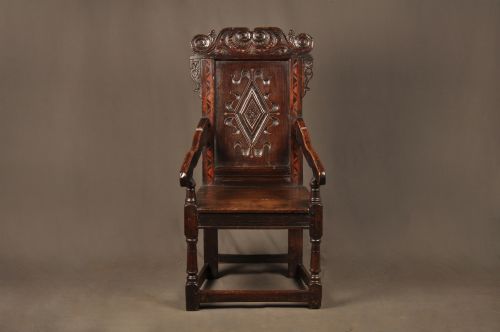
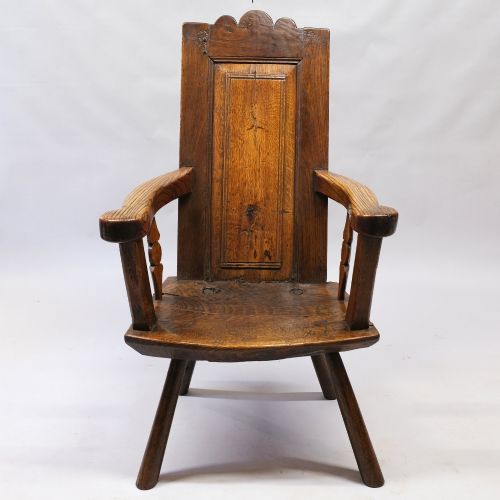
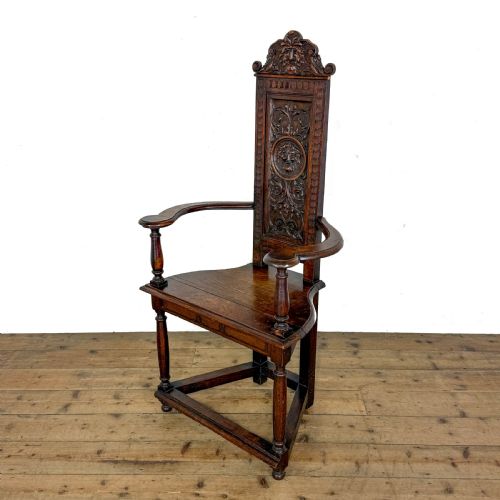
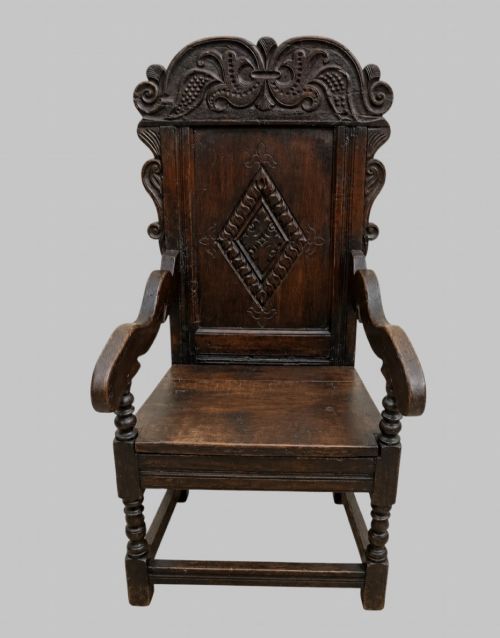
A traditional oak wainscot chair is a solid armchair built with a panelled wooden back and enclosed arms, designed to keep draughts away from the sitter. These heavy seats date from the seventeenth century onwards, with revival pieces appearing through the nineteenth and twentieth centuries.
Most examples found here belong to the seventeenth and eighteenth centuries, originating from regional workshops across England, Wales, and Scotland. Alongside true period armchairs, the selection includes later nineteenth-century revival pieces made in the seventeenth-century manner.
How they were made
Traditional oak wainscot chairs rely on heavy timber construction, using solid oak supplemented occasionally by elm or pine for secondary parts. Joinery is traditionally held together with wooden pegged mortise and tenon joints.
Carpenters shaped the panels using hand tools, often embellishing the wood with carved strapwork, floral motifs, or arcading on the backboards. The timber gained its structure from quartersawn boards that expose the characteristic medullary rays of oak.
Traditional Oak Wainscot Chair Retail Price Guide 2026
Typical asking prices for traditional oak wainscot chair among the pieces listed under this phrase on Sellingantiques today, from the lower quarter to the upper quarter. They describe what is for sale here now, not the wider market.
Several listings include scaled-down child wainscot armchairs, proving that toddlers once sat just as formally as the household master.
What varies in quality
Quality in a traditional oak wainscot chair rests on the crispness of the original carving and the proportion of the timber frame. Pieces retaining their original panel thickness and unthinned seats command greater authority.
The integrity of the construction distinguishes superior examples, particularly where joints remain tight without excessive modern timber replacement. Surface patination, developed through centuries of handling, also defines the visual weight of the piece.
The Traditional Oak Wainscot Chair Glossary
- Wainscot
- A heavy wooden armchair characterised by a panelled back and solid arms. The term originally referred to high-grade imported oak boards used for panelling walls.
- Mortise and tenon
- A joint formed by inserting a shaped projection into a corresponding cavity, secured with wooden pegs. This method provides the rigid frame essential for heavy oak furniture.
- Strapwork
- A carved ornament resembling flat interlaced bands or leather straps. It appears frequently on the crest rails and panels of seventeenth-century chairs.
- Medullary rays
- Flakes or lines radiating across the grain visible in quartersawn oak. Their presence indicates high-quality radial conversion of the timber.
Traditional Oak Wainscot Chair: Frequently Asked Questions
Where were traditional oak wainscot chairs used?
These chairs stood in the halls and parlours of substantial houses where they belonged to the head of the household.
Their solid construction and enclosed lower sections offered protection from cold draughts in large, unheated rooms.
How do I spot a later revival piece?
Nineteenth-century revival pieces often display machine-sawn timber marks and mechanically uniform carving patterns.
Period examples show the irregular tool marks and deeper patination associated with seventeenth-century hand working.
Are these chairs comfortable to sit in?
Early wainscot chairs have rigid wooden seats and upright backs designed for posture rather than lounging.
Sitters often added loose squab cushions filled with wool or feathers to soften the hard oak surface.
Why do regional styles differ?
Regional carvers interpreted fashionable London motifs through local traditions and available timber stocks.
This independence produced distinct characteristics in Yorkshire, Lancashire, and Welsh chairs.