
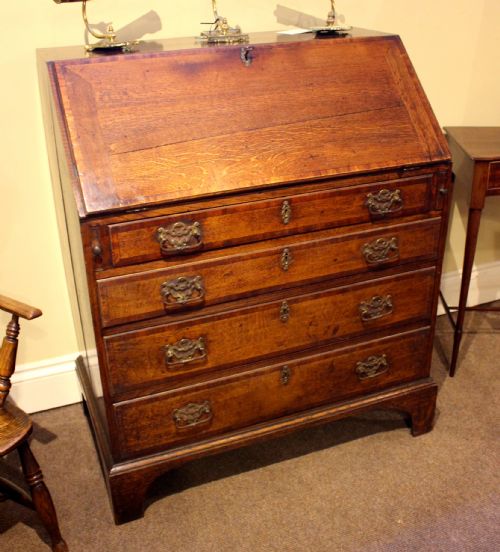


Traditional Oak Secretary Desk
These traditional oak secretary desk pieces combine sturdy timber with practical writing compartments, offering a classic writing surface for daily correspondence.
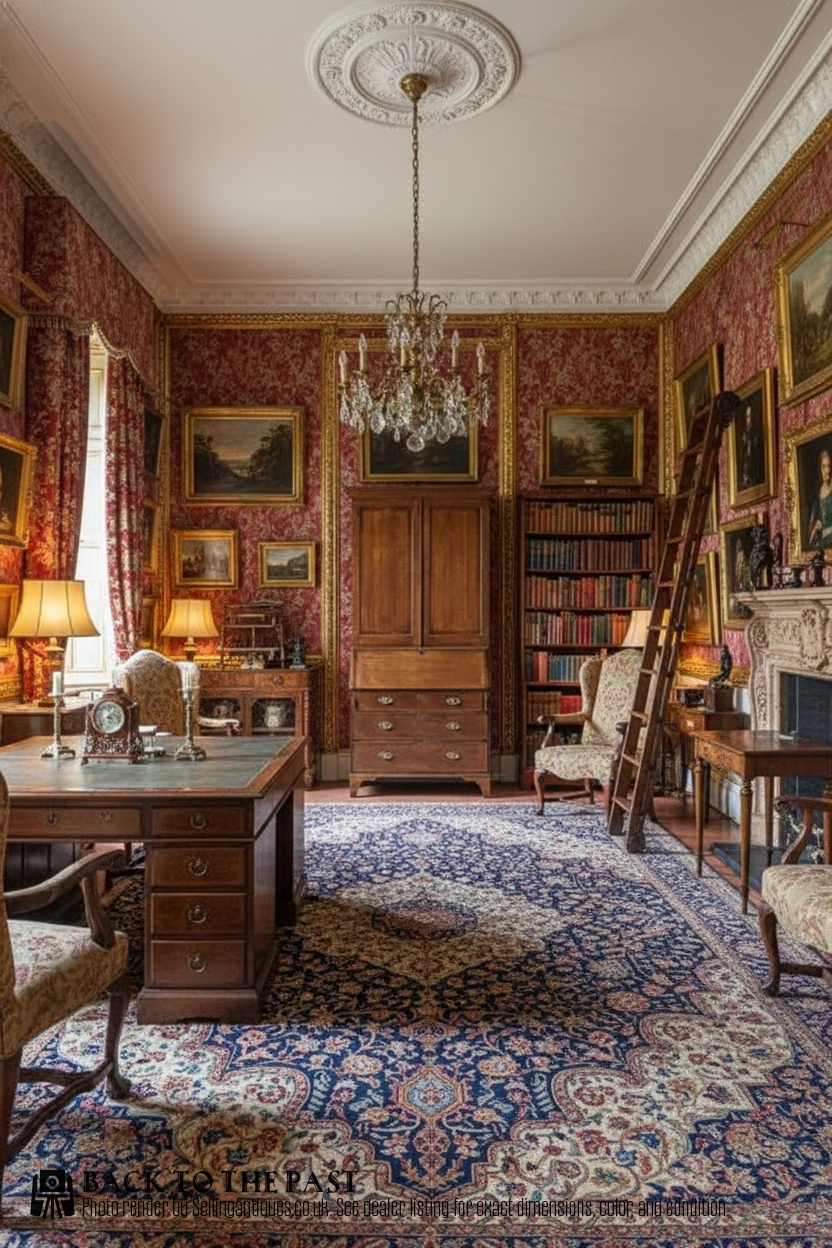
Traditional Oak Secretary Desk
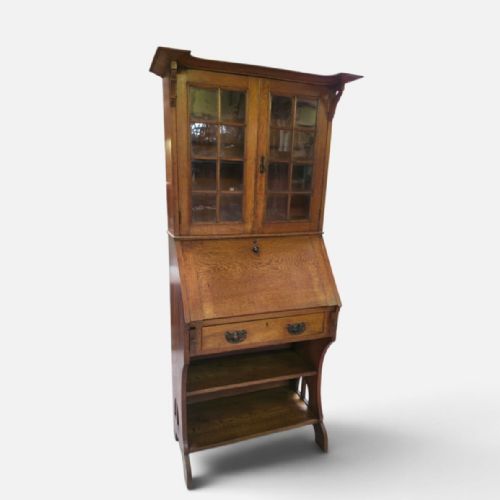
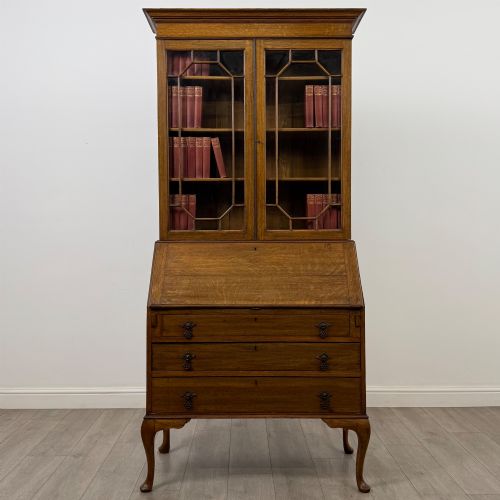
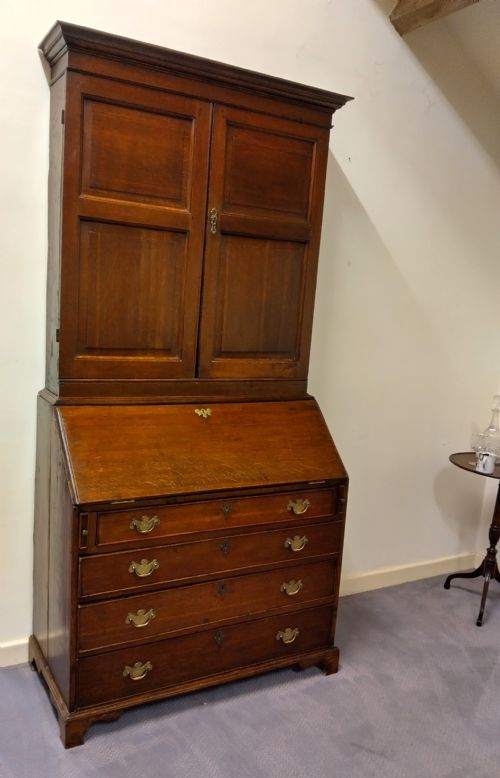
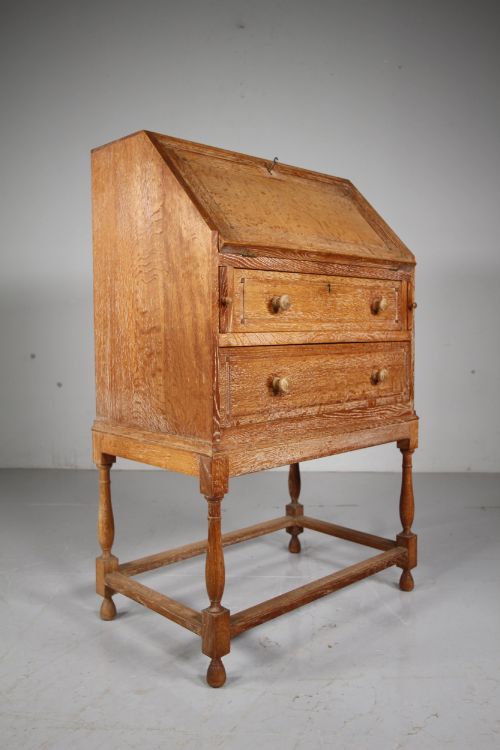
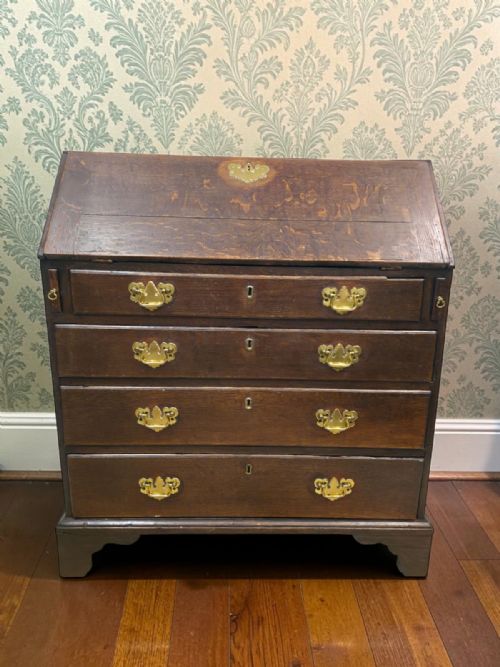
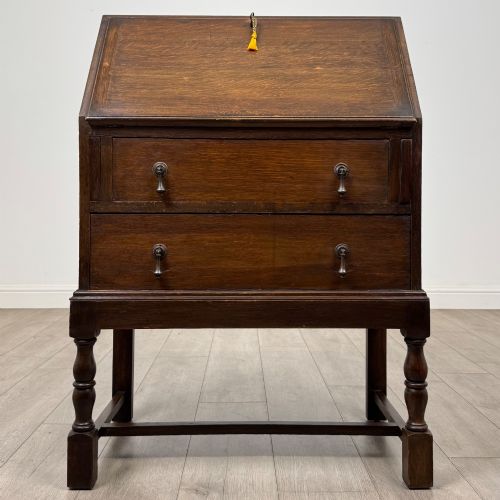
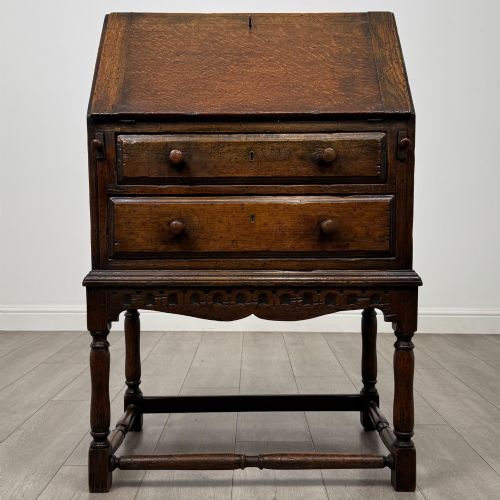
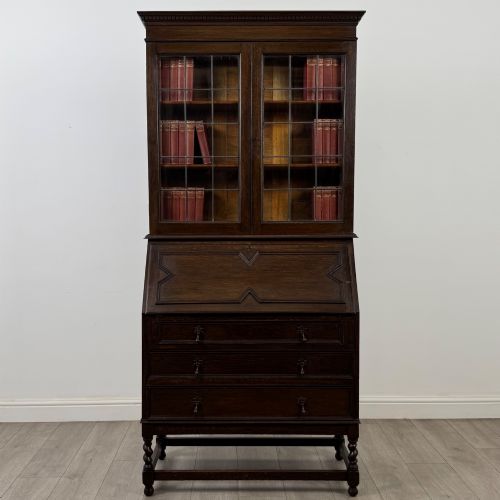
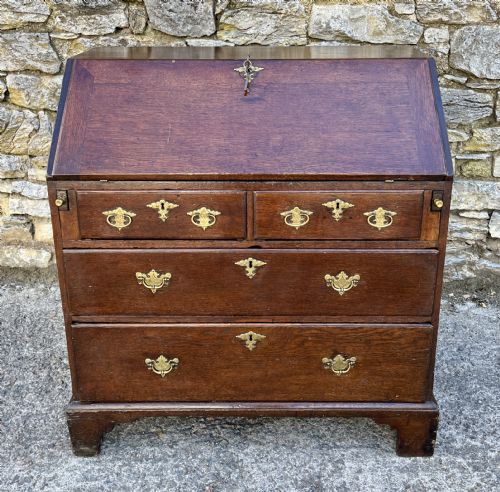
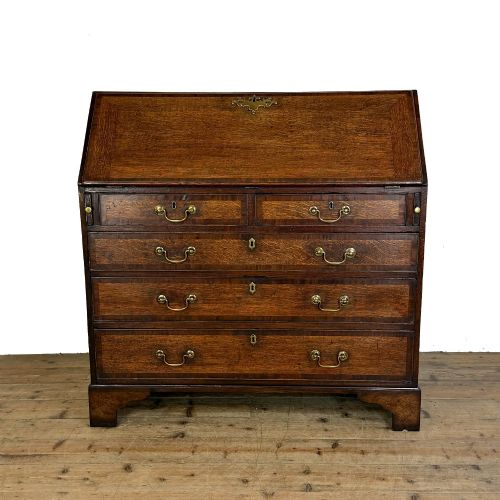
A traditional oak secretary desk primarily takes the form of a bureau or bureau bookcase, designed for storage and writing. The selection includes drop-front cabinets that conceal fitted pigeonholes and small drawers behind a sloping writing surface.
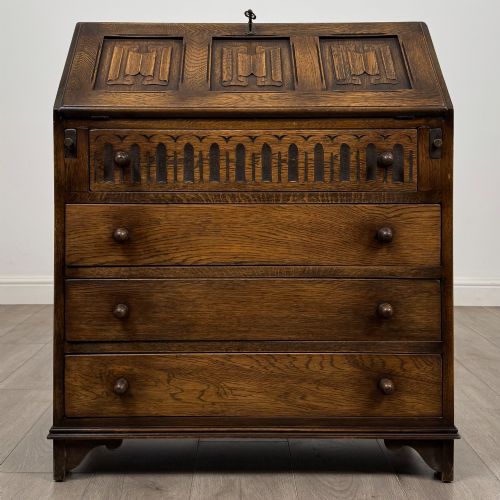
Most examples originate from the Georgian period and the twentieth century, including Edwardian and 1920s pieces. Buyers encounter both solid timber constructions and variants featuring oak veneer or carved details such as linenfold panels.
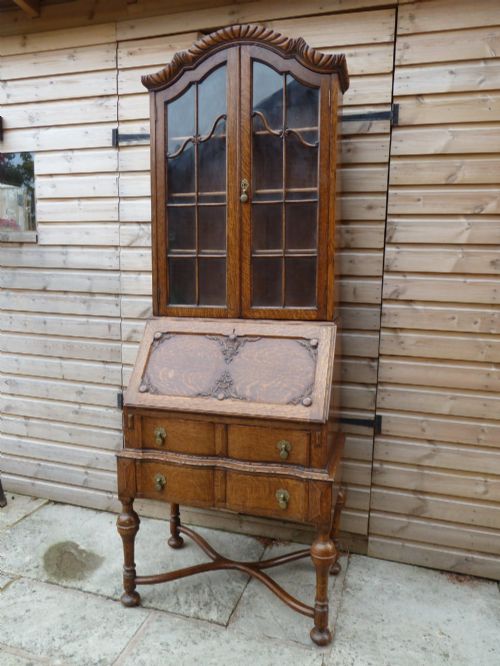
Tall bureau bookcases with glazed upper doors appear alongside smaller, compact writing desks. Revival styles, particularly Jacobean and Tudor interpretations, feature prominently alongside genuine eighteenth-century pieces.
How they were made
Cabinet makers utilised solid oak and oak veneer over structural timbers, often incorporating brass for hinges, keyplates, and handles. Interiors frequently include writing surfaces lined with green baize alongside small wooden drawers and compartments.
Construction techniques range from traditional eighteenth-century joinery to twentieth-century workshop production, incorporating applied wood inlay and carved decorative motifs. Glass is used in upper bookcase doors on taller cabinet variants.
Current listings feature oak writing desks spanning from the early 1700s through the Edwardian era to the 1930s.
What varies in quality
Quality separates through the selection of timber grain, the crispness of carved details such as linenfold panels, and the structural integrity of the fall-front mechanism. Pieces by recorded workshops like Heals of London demonstrate distinct maker quality.
Proportion and interior configuration dictate value among writing desks, with unusually configured or small-scale examples showing finer cabinet work. The condition of the internal fitted drawers and the integrity of the oak veneer determine the grade of twentieth-century revivals.
Heals of London
The Traditional Oak Secretary Desk Glossary
- Bureau
- A writing desk featuring a sloping fall-front lid that opens to reveal a fitted interior of small drawers and pigeonholes.
- Bureau bookcase
- A tall cabinet combining a sloping writing bureau base with an upper shelving section enclosed by doors.
- Fall front
- A hinged writing flap that drops down to a horizontal position to provide a flat surface for correspondence.
- Linenfold
- A carved wooden panel motif designed to resemble folded fabric, frequently seen on twentieth-century Edwardian pieces.
- Green baize
- A woven wool fabric traditionally used to cover writing surfaces inside the fall-front compartments.
Traditional Oak Secretary Desk: Frequently Asked Questions
What is a traditional oak secretary desk?
It is a writing cabinet featuring a sloping fall-front lid that opens to reveal compartments, drawers, and a writing surface. These pieces range from compact writing desks to tall bureau bookcases.
They serve as both storage furniture and practical writing stations, utilising solid oak or oak veneer across various periods including the Georgian era and the 1920s.
How do I use a bureau in a modern room?
The drop-front lid provides a concealed workspace that can be closed when writing tasks are finished, hiding papers and stationery from view. Internal pigeonholes help organise mail and small items.
Larger bureau bookcases offer display shelving behind glass doors above the writing desk, combining book storage with a functional writing surface in study or living spaces.
How can I tell a Georgian desk from a 1920s revival?
Georgian pieces generally show eighteenth-century construction methods, timber ageing, and characteristic hardware associated with the period from 1700 to 1820. They often feature solid oak construction with hand-cut dovetails on the internal drawers.
Twentieth-century Jacobean and Tudor revival pieces display heavier machine-cut details, distinct interior layouts, and occasional maker labels such as those from Heals of London.
What materials are used in these desks?
The primary timber is oak, appearing as solid boards or as oak veneers applied to secondary woods. Interiors often incorporate green baize on the writing surface and small wooden drawer components.
Hardware typically includes brass for key escutcheons, hinges, and drawer pulls, while taller bookcase variants incorporate glass panels in the upper doors.