


Traditional Oak Library Furniture
Traditional oak library furniture brings solid timber and enduring function into a room, offering everything from tall open bookcases to sturdy partner's desks and library steps.
Traditional Oak Library Furniture
Traditional oak library furniture comprises utilitarian and scholarly pieces designed for storing books, working, and accessing high shelves. When searching for traditional oak library furniture, buyers encounter forms ranging from George III and Georgian pieces to Victorian, Edwardian, and early twentieth-century examples.
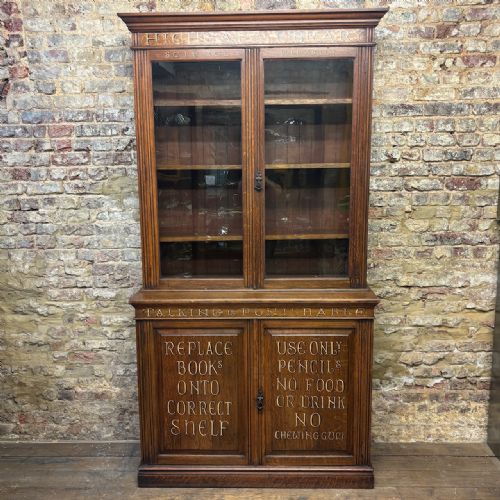
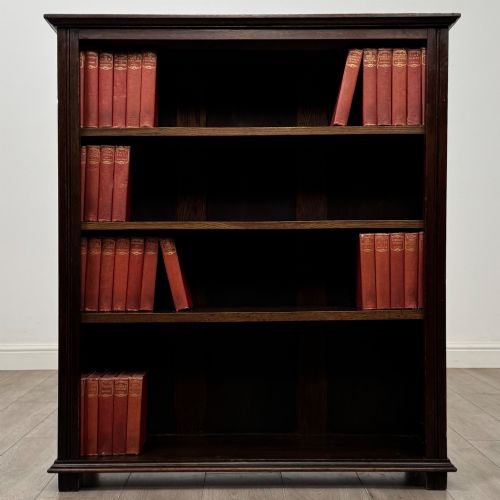
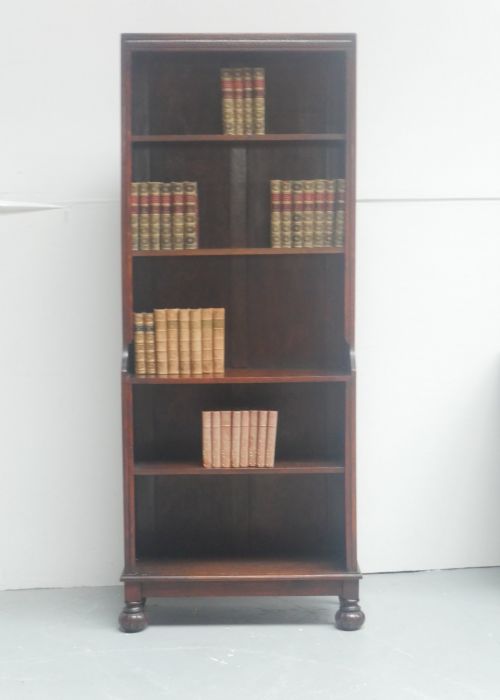
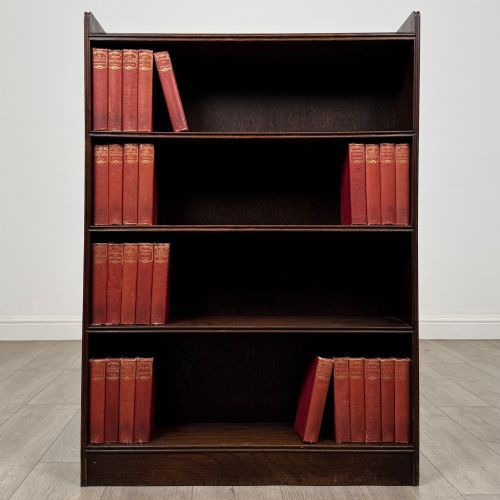
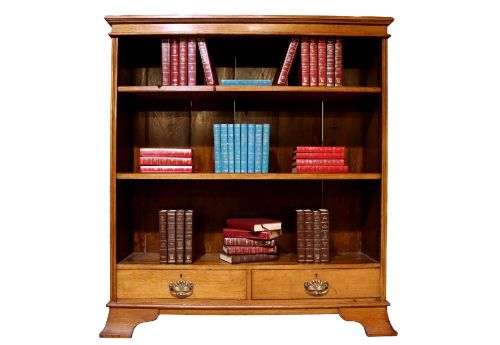
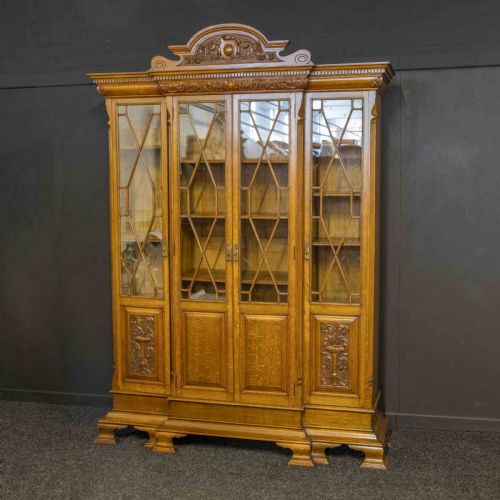
The selection on this page includes open bookcases, breakfront bookcases, partner's desks, standard desks, A-frame library steps, library ladders, and adjustable reclining upholstered armchairs. These objects reflect centuries of functional interior woodwork built for heavy daily use.
Earlier pieces span the Georgian and George III eras, while the nineteenth and early twentieth centuries are represented by Victorian, Edwardian, 1900, 1910, and 1920s examples. Golden oak finishes and school library forms also appear within this group.
How they were made
These pieces rely primarily on solid oak, chosen for its strength and prominent grain pattern, sometimes highlighted as golden oak. Construction involves traditional joinery suited to heavy loads, particularly in large bookcases and library steps.
Secondary materials enhance the utilitarian function of the furniture, incorporating glass for display cabinets, brass for handles and adjustment mechanisms, and iron for structural support. Desks and armchairs integrate leather and fabric for writing surfaces and upholstery.
Listings span periods from Georgian and George III through Victorian, Edwardian, and the 1920s, utilising oak, brass, glass, leather, iron, and fabric.
What varies in quality
Quality in these pieces rests upon the selection of the timber and the integrity of the structural joinery, especially in weight-bearing items like library ladders and A-frame steps. Finer pieces demonstrate careful attention to proportion, such as the breakfront configuration on larger bookcases.
The refinement of brass hardware, the execution of adjustable mechanisms on chairs and steps, and the quality of leather inserts on partner's desks and standard desks distinguish standard utility items from finer examples.
The Traditional Oak Library Furniture Glossary
- Partner's desk
- A large double-sided desk designed for two people to work opposite one another, typically fitted with drawers and cupboards on both faces.
- Breakfront
- A cabinet design where the central section projects forward from the flanking outer sections, creating architectural depth.
- A-frame library steps
- Self-supporting folding steps constructed with two hinged sides, allowing safe access to high bookshelves without leaning against a wall.
- Open bookcase
- A shelving unit enclosed at the sides and back but left open at the front without doors.
- Golden oak
- A bright, warm finish applied to oak timber that accentuates the natural figure of the wood, popular during the late nineteenth and early twentieth centuries.
Traditional Oak Library Furniture: Frequently Asked Questions
What types of traditional oak library furniture exist?
The category encompasses bookcases, display cabinets, partner's desks, standard desks, library steps, ladders, and reclining armchairs. These range from Georgian and Victorian designs to early twentieth-century school and Edwardian pieces.
Most items are built from solid oak, frequently paired with brass hardware, leather writing surfaces, or glass panels.
How do I date an oak bookcase?
Dating relies on stylistic markers and construction methods, moving from Georgian and George III proportions through Victorian heaviness to Edwardian and 1920s simplification. Details such as breakfront cornices or open shelving configurations help assign pieces to specific eras.
Periods represented span from the eighteenth century through the nineteenth century and into the early twentieth century.
Were library ladders and steps made differently?
Library steps take various forms, including A-frame folding steps and larger freestanding ladders constructed in oak. They utilise robust joinery and brass fittings to support weight safely.
Golden oak examples from the nineteenth century sit alongside twentieth-century variations built for school and domestic libraries.
How do I live with a partner's desk?
A partner's desk provides double-sided workspace with drawers and storage accessible from both faces, making it suitable as a freestanding centrepiece in a room. Leather inserts on the top surface require regular conditioning to maintain their condition.
These desks pair well with adjustable reclining upholstered armchairs and surrounding oak bookcases.