
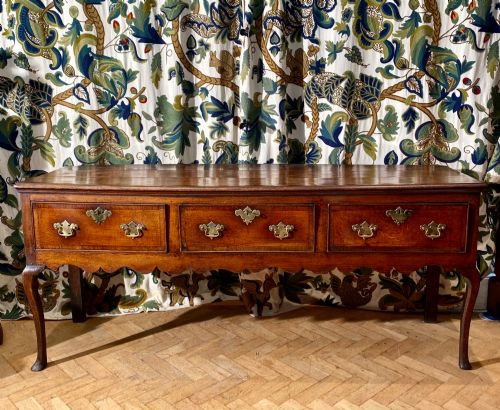
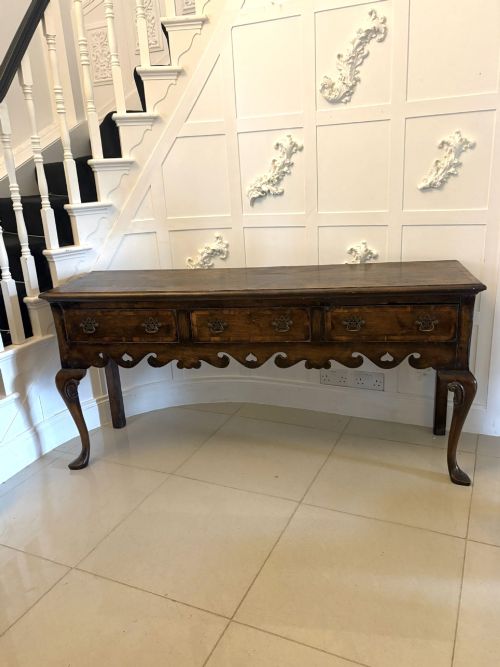

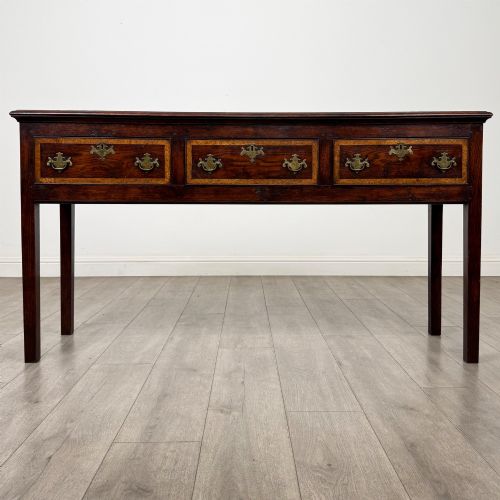
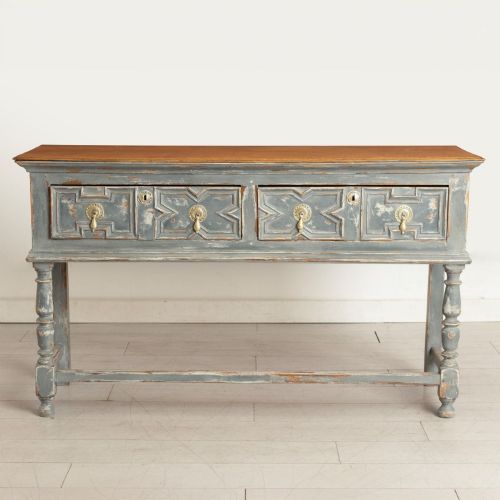


Traditional Oak Dresser Table
A traditional oak dresser table offers sturdy lower storage and generous surface utility, grounding a dining room or kitchen with centuries of utilitarian craft.
Traditional Oak Dresser Table
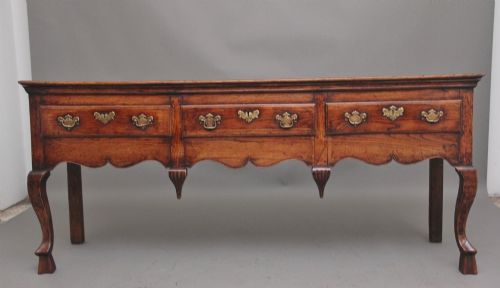
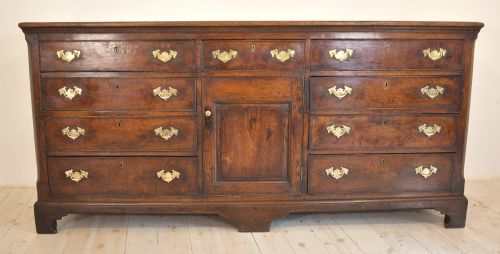
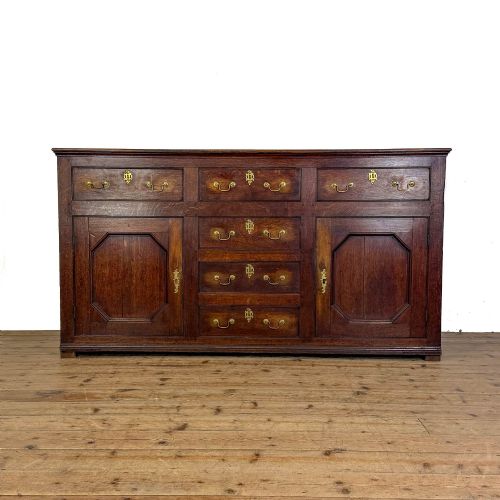
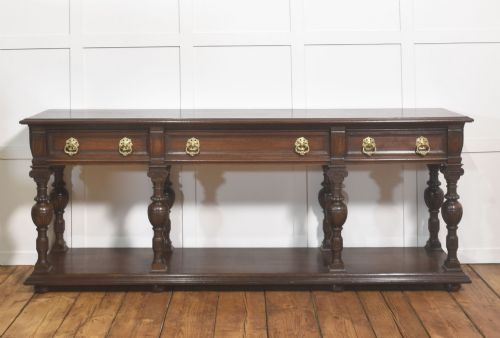
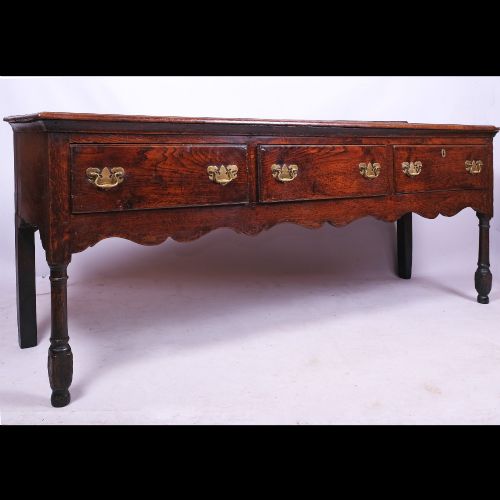
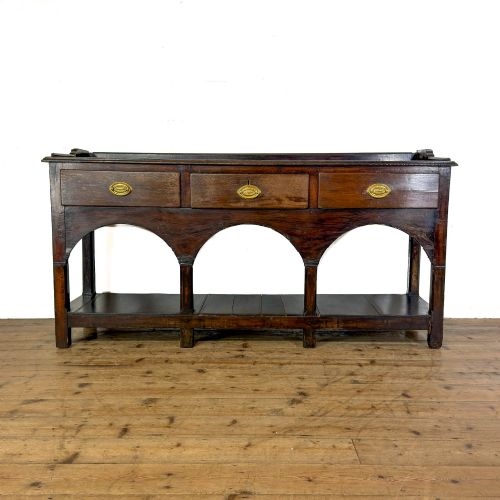
When you search for a traditional oak dresser table, you are looking at substantial timber base units designed originally for domestic service and food preparation. These pieces function variously as serving tables, sideboards, and console surfaces, equipped with drawers and often open lower shelves.
The version you are most likely to meet on this page is the dresser base, spanning forms from the 18th century and the Georgian period through to Edwardian interpretations and later revivals. Regional variations such as Welsh and Lancashire types appear alongside English country and Dutch examples.
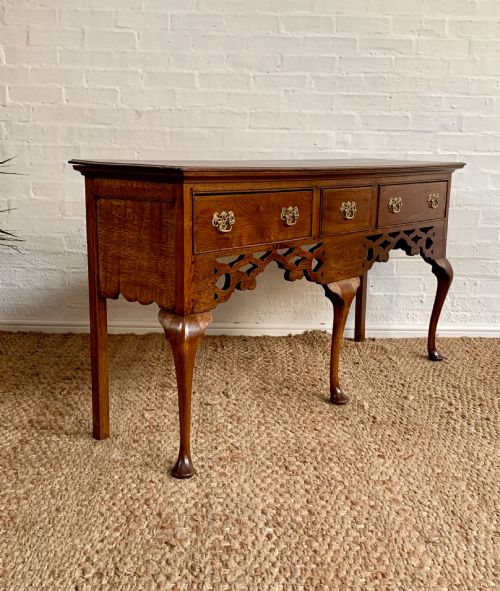
Makers constructed these sturdy items primarily to anchor a room, combining a heavy top board with functional storage beneath. Whether standing on cabriole legs, turned supports, or potboards, each piece reflects the practical demands of historic households.
What varies in quality
The degree of integrity in the timber and the honesty of the construction separate everyday examples from the finest survivals. Superior pieces retain their original brassware, undisturbed patination, and structural boards without excessive timber replacement.
Proportion and regional character also define the upper tier of these items, where crisp carving and well-balanced turned legs or potboards demonstrate the skill of the original workshop. Lesser examples may show heavy alteration or mismatched elements over centuries of domestic service.
Several pieces include open potboards, designed originally so damp pots could dry safely near the kitchen flags.
The Traditional Oak Dresser Table Glossary
- Potboard
- An open lower shelf built into the base of a dresser, originally designed to hold pots and heavy domestic utensils. This shelf sits close to the floor, supported by the main legs of the table.
- Dresser base
- The lower section of a traditional kitchen dresser, functioning independently as a sideboard or serving table with surface space and drawers. It lacks the upper plate rack of a full dresser.
- Cabriole leg
- A furniture leg that curves outward and then tapers inward, typically ending in a pad or foot. This stylistic feature appears on several Georgian and revival pieces.
- Vernacular
- Furniture made by regional craftsmen using local traditions and materials rather than following metropolitan high-style designs. Welsh and Lancashire pieces often embody this utilitarian approach.
- Inlay timber
- Contrasting wood types inserted into the primary oak surface to create decorative patterns or borders. This technique adds visual interest to drawer fronts and tabletops.
Traditional Oak Dresser Table: Frequently Asked Questions
How were traditional oak dresser tables used originally?
Households utilised these heavy wooden bases in kitchens and dining rooms for food preparation, serving meals, and storing heavy pots on open potboards. The drawers kept utensils and linens close at hand for daily domestic service.
Over time, these utilitarian tables moved from working kitchens into more formal dining spaces, evolving into valued serving surfaces and sideboards.
How do I tell an 18th-century piece from a later revival?
Early pieces from the Georgian and 18th-century periods display hand-cut joinery, pegged joints, and natural patination accumulated through generations of use. The timber shows the subtle irregularities typical of early conversion methods.
Later pieces from around 1900 or the Edwardian era often reflect Jacobean or Queen Anne revival styles with machine-finished elements and different interior secondary woods such as pine.
Where should I place a dresser base in my home?
These long, low tables fit naturally against a dining room or kitchen wall, providing a wide surface for serving food or displaying ceramics. Their lower drawers and potboards offer substantial storage for tableware.
They also serve well in hallways as console tables or in living spaces where sturdy wooden furniture anchors the room's proportions.
What is the difference between a sideboard and a dresser base?
While both terms describe long storage tables with drawers, traditional dresser bases often feature an open potboard shelf near the floor. Sideboards typically focus on enclosed cupboard storage beneath the top surface.
In practice, historical cataloguing often uses both terms interchangeably for these versatile oak pieces.