


Traditional Oak Carver Chair
A traditional oak carver chair offers sturdy seating with armrests, bringing solid construction and historic character to a dining table or study.
Traditional Oak Carver Chair
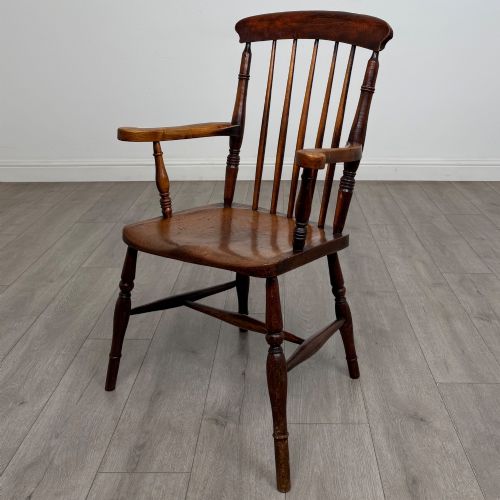
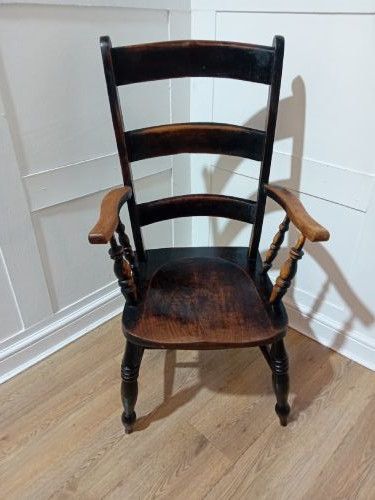
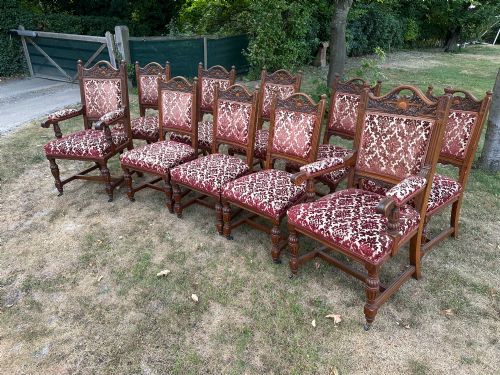
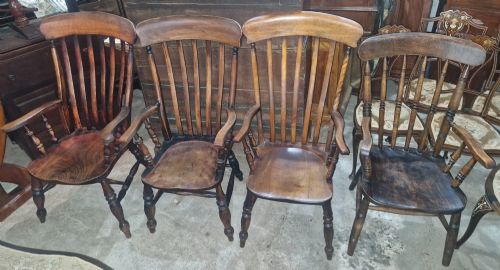
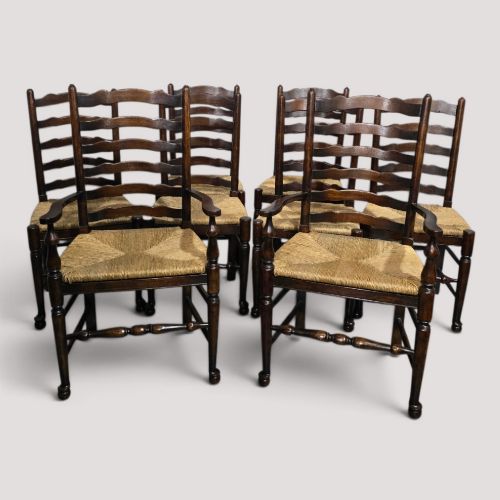
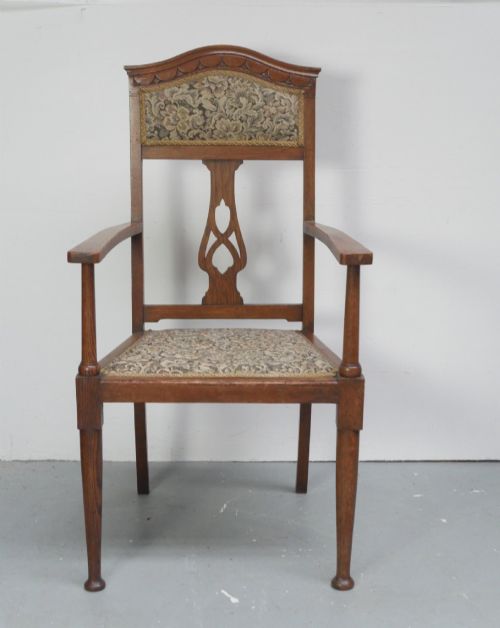
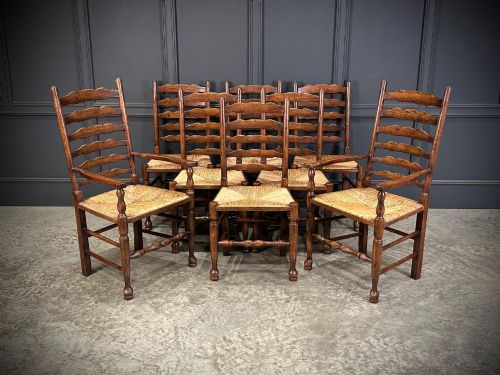
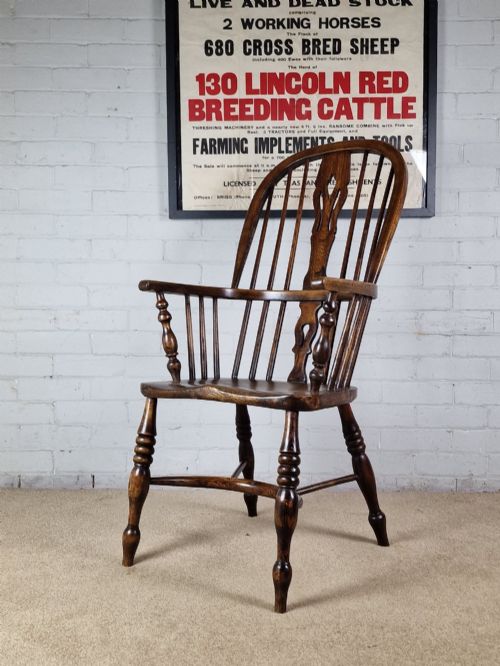
A traditional oak carver chair is an armchair designed to match a set of dining chairs or serve as a standalone seat for a desk or fireside. When searching for a traditional oak carver chair, buyers encounter various forms including Windsor models, ladder backs, and revival styles spanning the eighteenth, nineteenth, and early twentieth centuries.
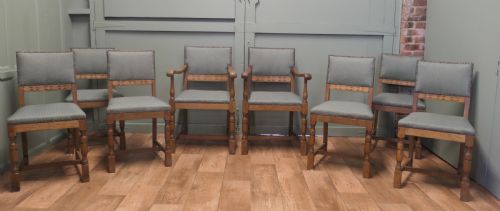
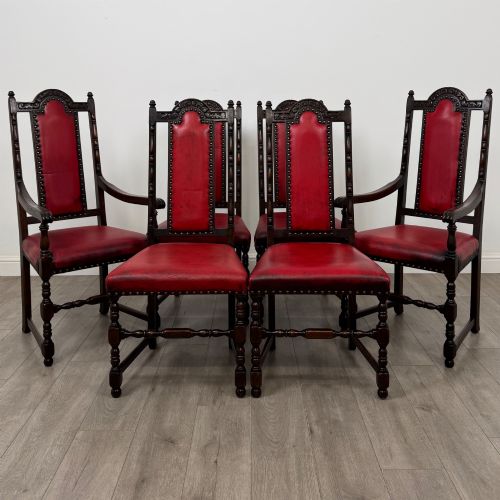
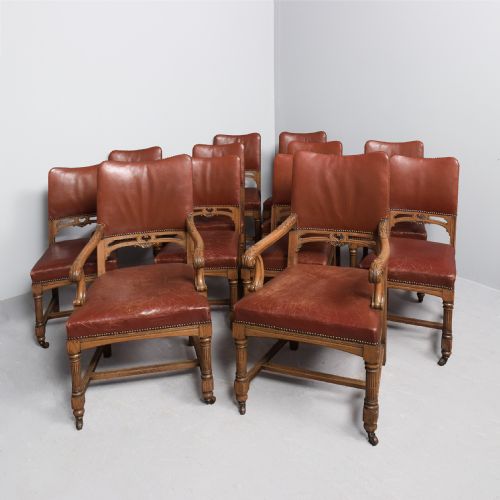
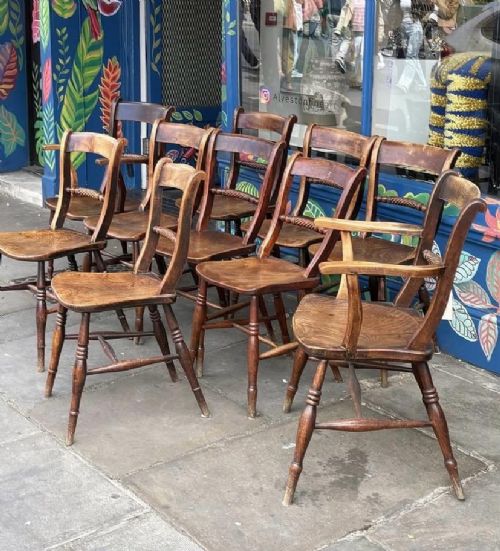
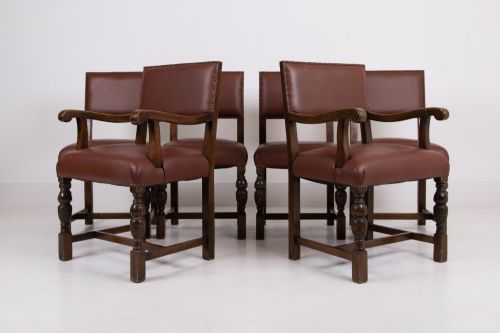
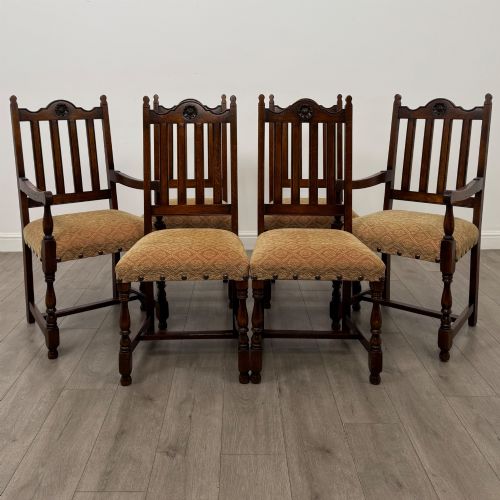
The selections on this page range from simple farmhouse kitchen armchairs to elaborate Jacobean and Carolean revival seating. Many examples feature high backs, spindle backs, or solid splats, often accompanied by matching side chairs in larger dining sets.
Origins stretch across English country workshops, with regional types such as Thames Valley and Cheshire variations appearing alongside formal Georgian and Victorian interpretations. Buyers frequently find single armchairs or pairs intended to sit at the head of a dining table.
Materials and construction
Makers built traditional oak carver chairs using solid timber frames, frequently combining oak with supporting woods such as elm, ash, beech, and occasional brass hardware. Seat construction varies between solid timber planks, woven rush, cane panels, and upholstered pads finished in leather or fabric.
Joinery methods rely on traditional pegged mortise and tenon joints, turned spindles, and steam-bent components for arched Windsor backs. Surfaces often retain original finishes, polish, or painted details applied by regional carpenters and turners.
Traditional Oak Carver Chair Retail Price Guide 2026
Typical asking prices for traditional oak carver chair among the pieces listed under this phrase on Sellingantiques today, from the lower quarter to the upper quarter. They describe what is for sale here now, not the wider market.
Styles span English Country, Jacobean Revival, Victorian Country, Arts and Crafts, and Georgian Country designs.
Judging quality in these chairs
Quality rests upon the integrity of the timber frame, the tightness of the joints, and the preservation of original surfaces. Chairs retaining their initial finish or showing honest patination from decades of use command greater appreciation among collectors.
Proportion and comfort distinguish superior examples, particularly in Windsor and ladder back forms where turned arm supports and sculpted seats balance utility with aesthetic presence.
William Morris
The Traditional Oak Carver Chair Glossary
- Carver chair
- An armchair designed to match a set of dining chairs, traditionally placed at the head of a table. These seats feature supportive armrests integrated into the frame.
- Windsor chair
- A wooden chair constructed with a solid wooden seat into which the legs and back sticks are bored directly. Regional variations include comb backs, wheel backs, and stick backs.
- Ladder back
- A chair back featuring multiple horizontal wooden slats or rails between the upright posts. These frames often incorporate woven rush or splat seats.
- Rush seat
- A seating surface woven from dried marsh rushes, creating a durable and textured platform. This traditional method appears frequently on country dining and farmhouse chairs.
- Splats
- Central vertical wooden strips set into the back of a chair for structural support and decoration. They appear in plain, shaped, or pierced designs across various periods.
Traditional Oak Carver Chair: Frequently Asked Questions
What is a carver chair used for?
A carver chair serves as an armchair placed at the head of a dining table, traditionally used by the person carving the joint of meat. Beyond the dining room, these sturdy armchairs function well at desks, in hallways, or beside a fireplace.
Their substantial arms and supportive backs provide greater comfort than standard side chairs while maintaining a cohesive look with matching dining sets.
Are these chairs suitable for daily use?
Traditional oak and elm carver chairs are built with robust joinery designed for centuries of practical service. Solid wooden seats and pegged frames withstand regular sitting without losing structural integrity.
Upholstered, rushed, or caned examples require slightly more mindful daily care, but solid timber variants easily accommodate everyday dining and study use.
How can I tell the period of a chair?
Dating relies on examining the timber species, tool marks, joinery techniques, and stylistic revivals present in the frame. Eighteenth-century pieces often display Georgian proportions and Chippendale influences, while nineteenth-century examples frequently show Victorian country or Gothic revival details.
Turned legs, stretcher patterns, and the wear patterns on the seat also offer clear indicators of the era in which the piece was constructed.