

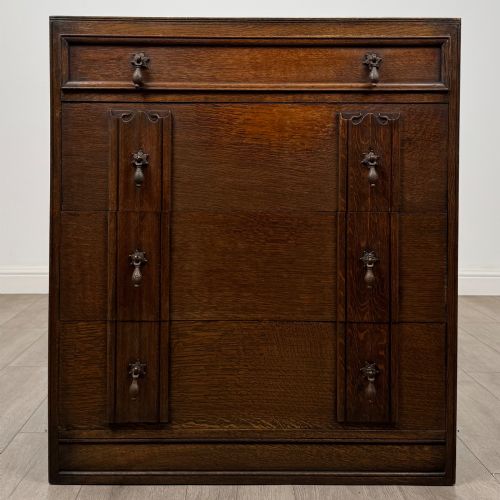
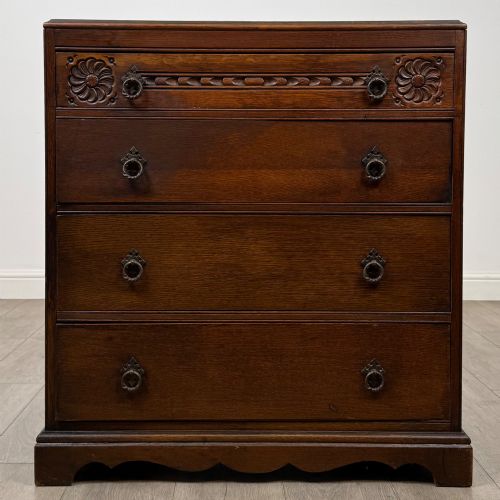
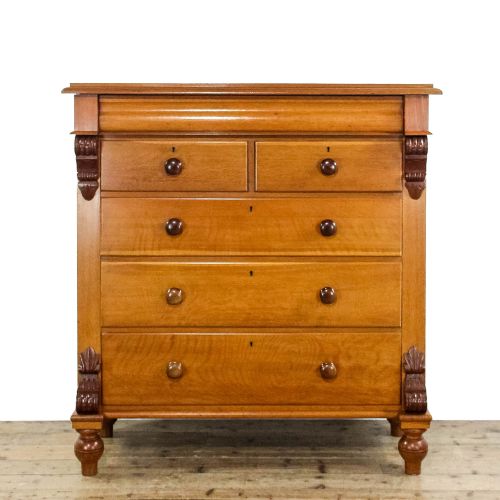
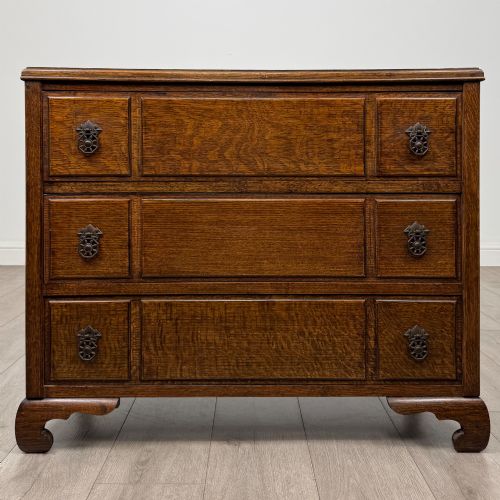
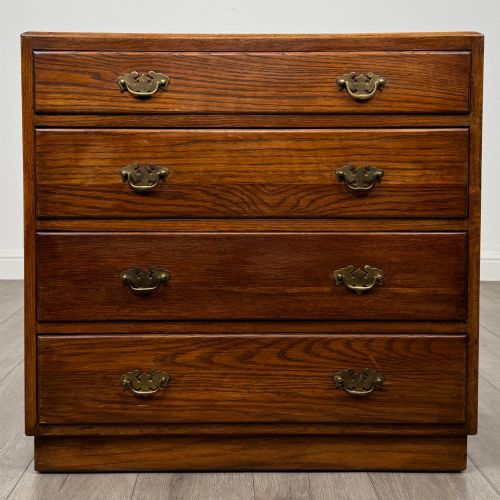
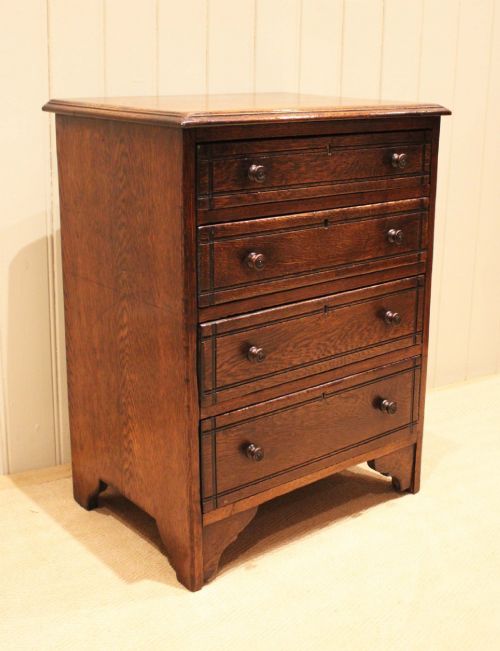
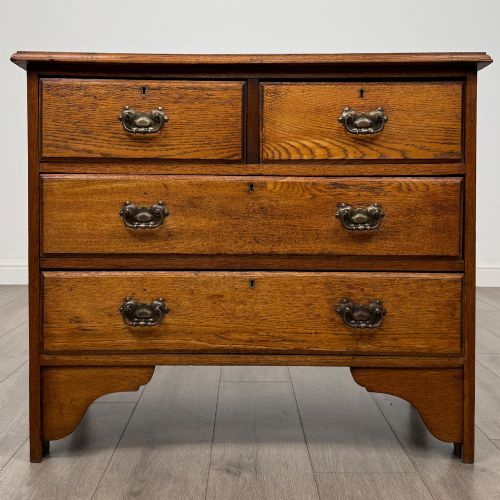
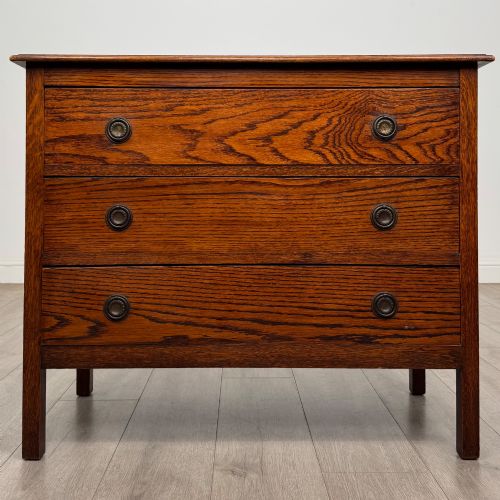
Traditional Oak Bedroom Dresser
A traditional oak bedroom dresser is fundamentally a chest of drawers built for domestic storage from sturdy timbers.
Traditional Oak Bedroom Dresser
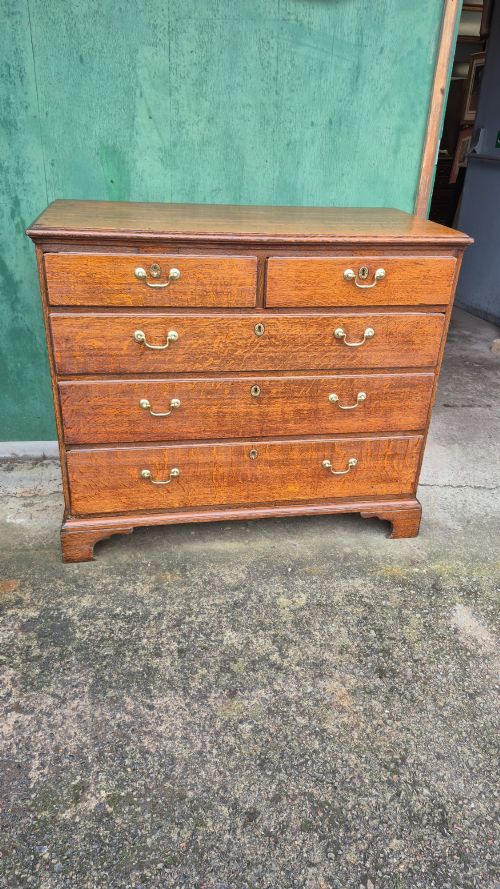
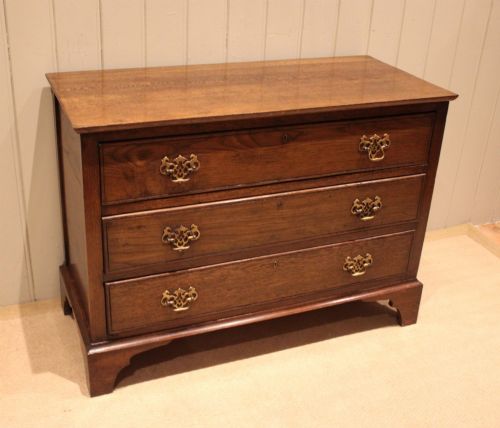
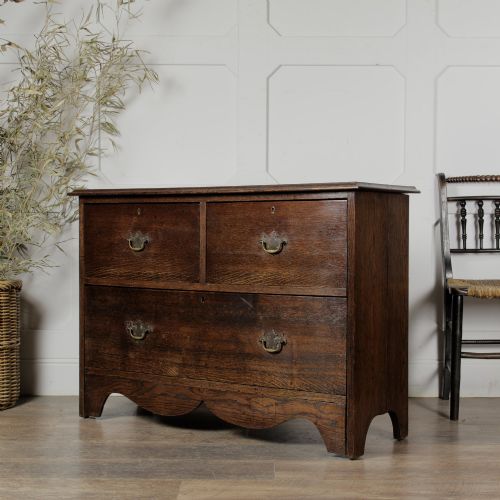
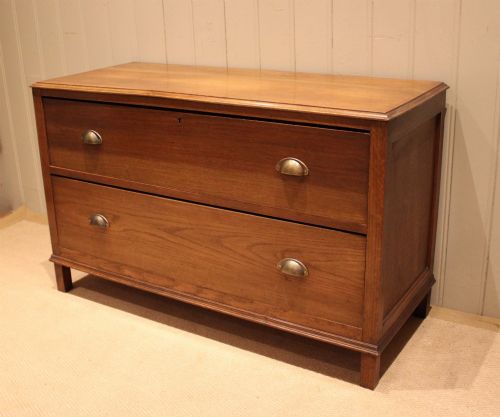
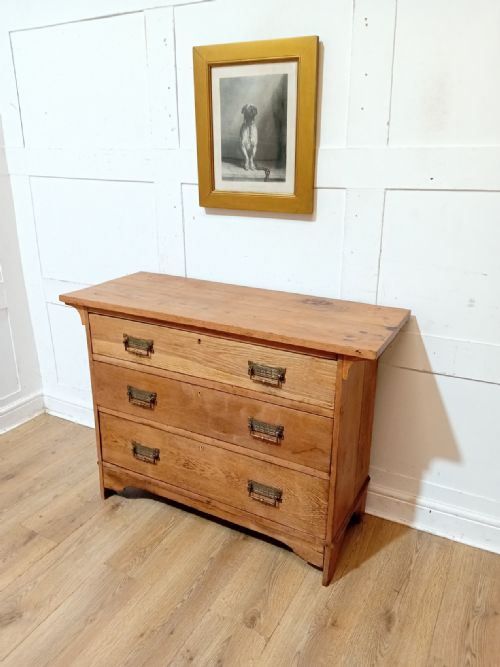
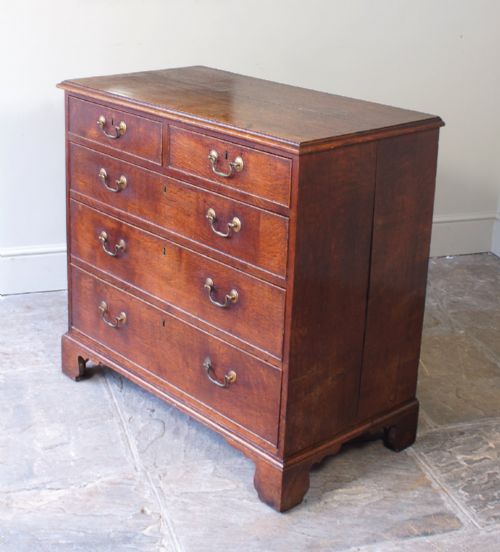
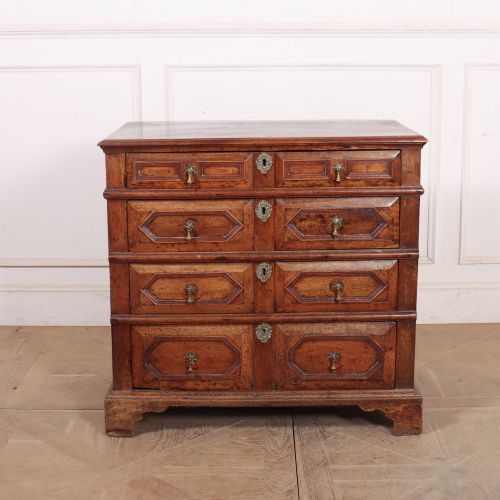
A traditional oak bedroom dresser takes the form of a chest of drawers, built across periods from the seventeenth century through to the Edwardian era. These pieces provide storage for clothing and household linens within bedroom spaces, taking varied proportions from low models to tall straight-front configurations.
The materials span solid oak, golden oak, and painted surfaces, sometimes combined with mahogany cross-banding, walnut inlay, or brass and metal hardware. Stylistic influences range from English Country and Georgian to Jacobean Revival and Arts & Crafts.
Buyers meet pieces originating from Georgian workshops, Victorian houses, and early twentieth-century makers. Forms include standard drawer arrangements, bachelor's chests, and examples featuring linenfold carving or secret compartments.
How they were made
Carpenters constructed these chests using solid oak timbers, often enhanced with secondary woods such as mahogany for cross-banding or walnut inlay. Iron and brass hardware secured the drawer fronts and provided operational pulls.
Joinery techniques relied on traditional framing methods, evident in panelled sides and fitted bracket feet. Surfaces received finishes ranging from limed treatments and painted layers to polished golden oak patinas.
One exceptional nineteenth-century piece hides five primary drawers alongside two secret compartments for private valuables.
What varies in quality
Construction methods separate standard utilitarian pieces from finer cabinet work. The integration of cross-banding, decorative walnut inlay, and linenfold carving indicates higher artisan involvement during manufacture.
The selection of timber grain, particularly in golden oak or figured panels, influences visual depth. Original hardware and undisturbed bracket feet retain historical integrity more effectively than later replacements.
The Traditional Oak Bedroom Dresser Glossary
- Bracket foot
- A structural foot supporting the corners of a chest, shaped in a simple profile like an L-bracket. These feet lift the case timber clear of damp floors.
- Cross-banding
- A decorative border of veneer laid around the perimeter of a drawer front with the grain running perpendicular to the centre. This technique frames the primary timber.
- Linenfold
- A carved wooden panel motif resembling folded cloth linen. It appears frequently on panels from revival and earlier periods.
- Straight front
- A chest profile where the drawer facade remains flat from side to side rather than curving. This utilitarian design dominates standard bedroom storage.
Traditional Oak Bedroom Dresser: Frequently Asked Questions
What is a traditional oak bedroom dresser?
A traditional oak bedroom dresser is a chest of drawers designed for domestic storage, constructed primarily from solid oak.
These pieces span periods from the seventeenth century to the early twentieth century, incorporating styles like Georgian, Arts & Crafts, and Jacobean Revival.
How do I date a traditional oak bedroom dresser?
Dating relies on observing construction methods, hardware types, and stylistic details such as bracket feet or panelled sides.
Pieces range from seventeenth-century examples to Georgian, Victorian, and Edwardian interpretations.
Are these chests made entirely of oak?
While solid oak is the primary material, makers often integrated secondary woods such as mahogany for cross-banding or walnut inlay.
Hardware typically includes brass or metal pulls and handles.
Where were these pieces used?
These chests served primarily as bedroom furniture for storing clothing, linens, and personal items in domestic homes.
Their robust timber construction suited daily practical use across centuries of English household life.