


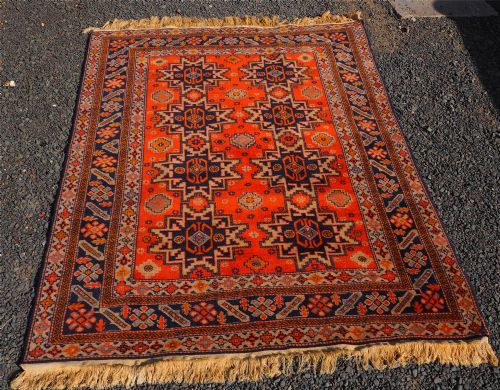
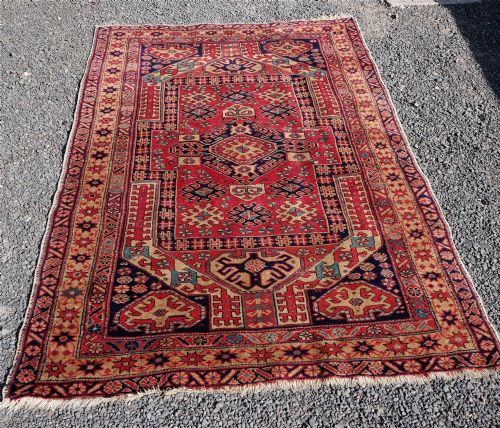
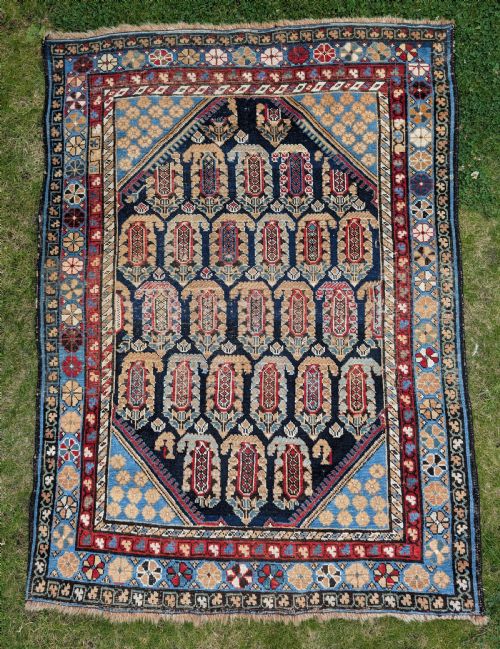
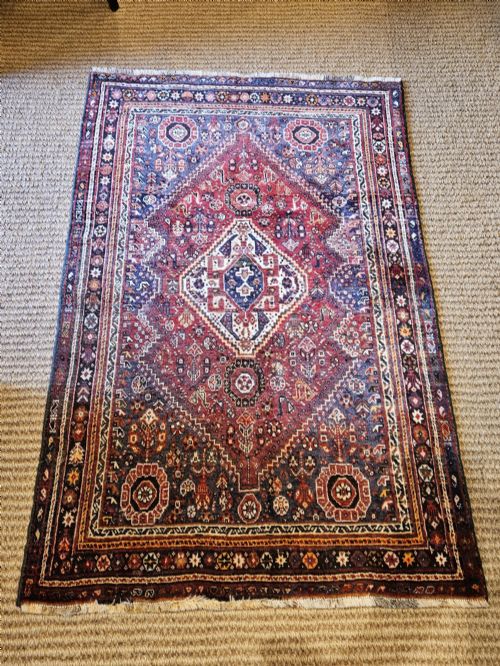
Traditional Navy Oriental Rug
A traditional navy oriental rug anchors a room with deep indigo tones and intricate patterns woven across centuries.
Traditional Navy Oriental Rug
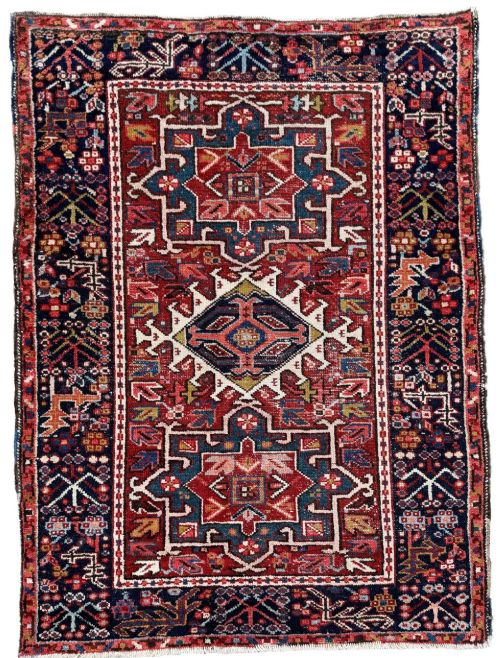
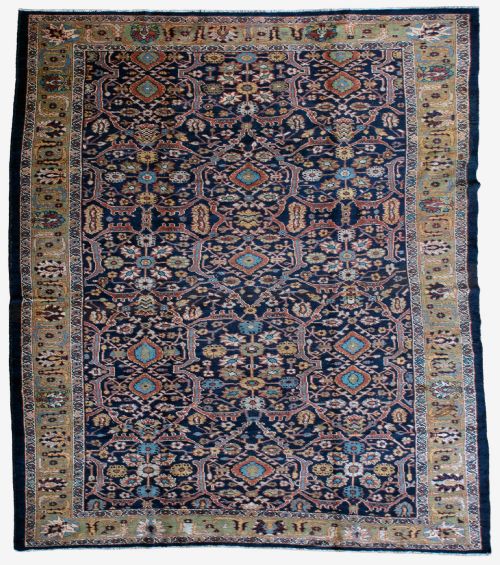
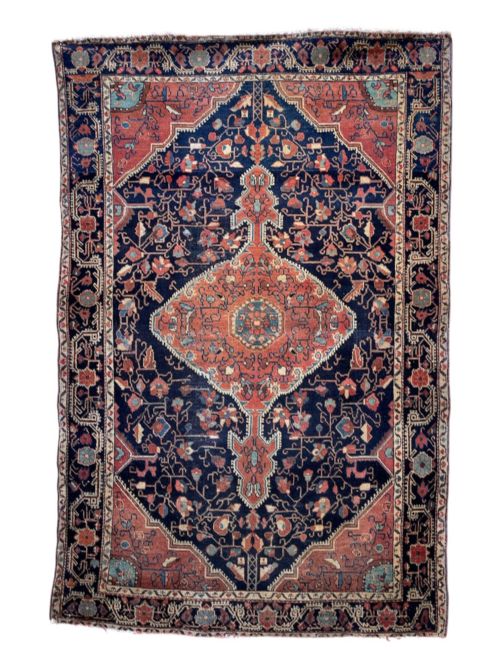
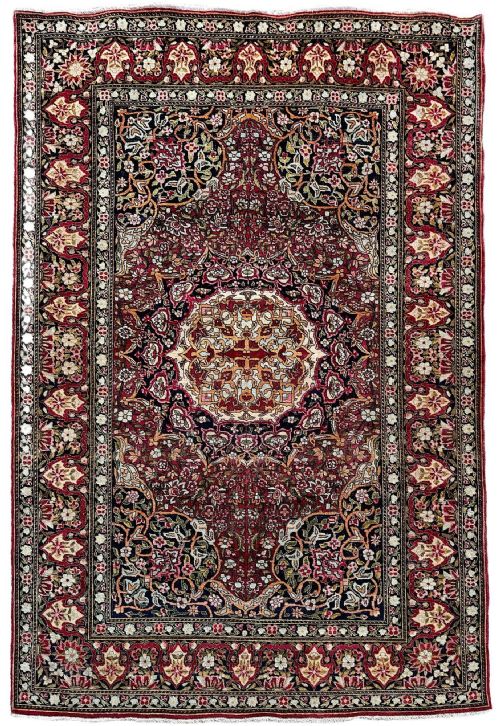
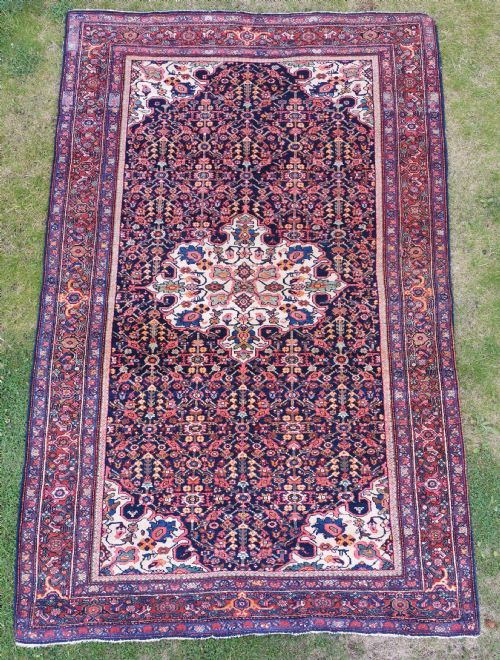
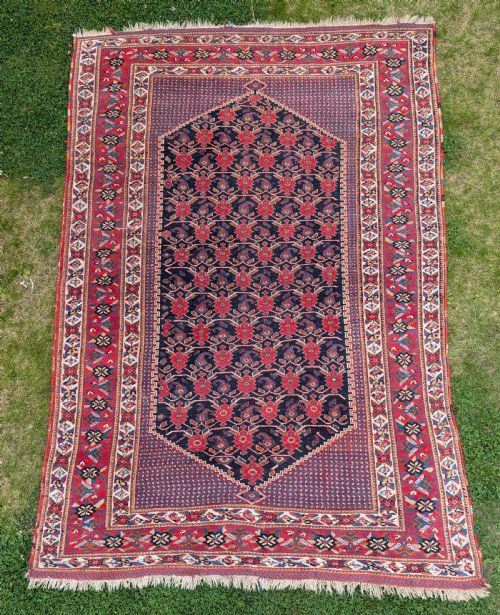
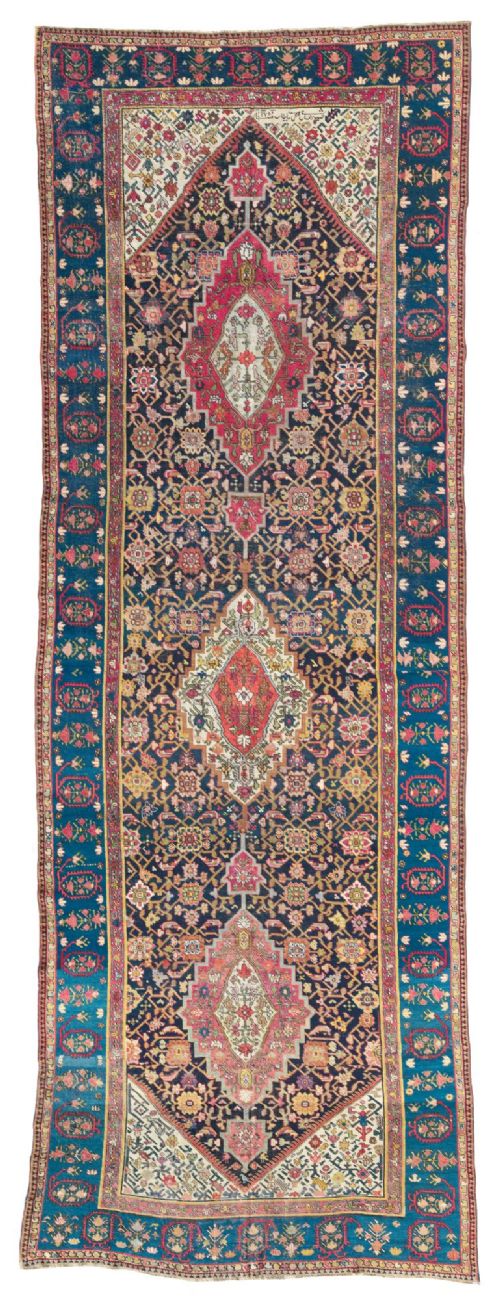
A traditional navy oriental rug brings centuries of weaving heritage into domestic spaces through floor coverings originating from Persia and the Caucasus. These textiles take forms such as area rugs, large carpets, long runners, and smaller prayer mats produced across the nineteenth and early twentieth centuries.
The pieces listed on this page span styles including Persian Heriz, Caucasian tribal, Kurdish, and Khamseh traditions. Buyers encounter everything from compact Karaja rugs to expansive Serapi and Mahal carpets bearing geometric medallions or floral compositions.
How they were made
Weavers constructed these carpets using natural materials, predominantly employing hand-spun wool for the pile alongside cotton foundations in many Persian and Caucasian examples. Some finer pieces incorporate silk or fine wool to render intricate details within the medallion and lattice designs.
Every piece relies on hand-knotting techniques executed on vertical looms by skilled makers. The resulting pile provides durability while allowing complex regional motifs, from tree of life scenes to geometric repeats, to emerge sharply in deep navy and contrasting rust or ivory hues.
Early weavers occasionally embedded tiny protective amulets or intentional minor colour shifts into the pile to ward off the evil eye.
What varies in quality
Quality rests in the precision of the knotting and the clarity of the design structure across the field. Finer density allows geometric medallions and Mina Khani lattice patterns to hold their definition sharply against the navy ground.
The integrity of the wool and the depth of the dye saturation distinguish superior examples. Uniformity in the weave and balanced proportions elevate certain carpets from standard village production to exceptional workshop creations.
The Traditional Navy Oriental Rug Glossary
- Medallion
- A large central ornamental design motif placed in the middle of the rug field. This central ornament often dictates the geometric symmetry of the surrounding borders.
- Runner
- A long, narrow carpet format designed specifically for hallways and corridors. These elongated rugs guide movement through domestic spaces.
- Pile
- The raised surface of the rug formed by the cut ends of knotted yarn. The density of this yarn layer determines how well the textile withstands foot traffic.
- Kilim
- A flat-woven carpet or rug made without a pile by tightly interweaving warp and weft strands. This technique produces a lightweight textile with reversible patterns.
- Mina Khani
- A traditional all-over repeating pattern composed of stylized flowers linked by delicate vines. This ancient design motif appears frequently on Kurdish and Persian long rugs.
Traditional Navy Oriental Rug: Frequently Asked Questions
Where should I place a runner rug?
These long, narrow formats suit hallways, corridors, and narrow entryways where foot traffic benefits from a durable floor covering.
They direct movement through a floor plan while introducing rich indigo and patterned borders to otherwise plain transitional spaces.
How do I care for wool carpets?
Regular gentle vacuuming without a beater bar prevents dust accumulation within the dense wool pile.
Professional cleaning preserves the natural lanolin in the fibres and protects the integrity of vegetable and natural dyes.
What is a prayer rug?
These smaller formats feature a distinct mihrab or arch design indicating the direction of prayer during use.
Historically utilised for personal devotion, today they serve as compact decorative mats for small spaces or wall display.
How do I identify a Heriz carpet?
Heriz carpets typically display bold, geometric central medallions set against large angular corner spandrels.
They utilise sturdy wool structures woven in specific regions of northwest Persia, resulting in heavy, durable floor coverings.