





Traditional Mahogany Wall Mirror
A traditional mahogany wall mirror brings warmth and depth to a room through dark timber frames and classic Georgian or Victorian proportions.
Traditional Mahogany Wall Mirror
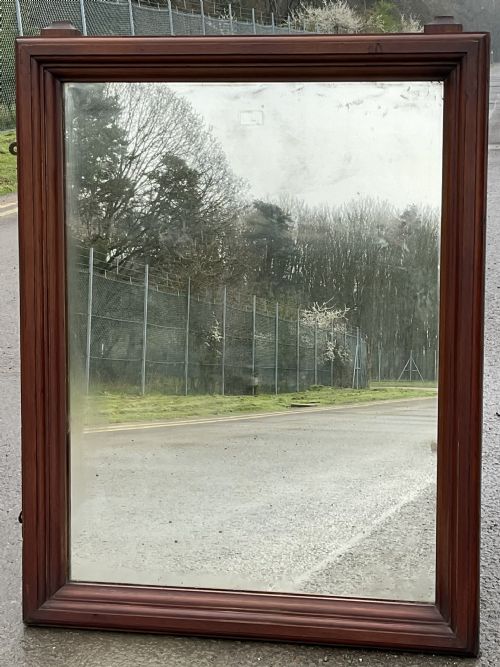
A traditional mahogany wall mirror is a hanging looking glass set within a dark timber frame, often drawing on Georgian, Victorian or Edwardian design. These pieces serve to brighten interior spaces while adding the substantial presence of polished mahogany to a wall.
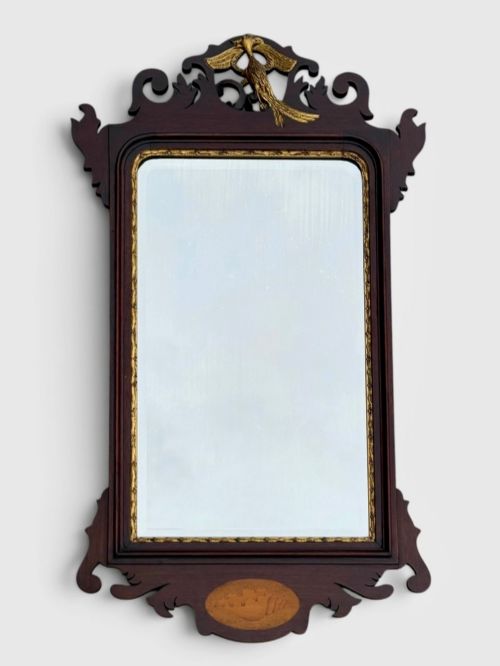
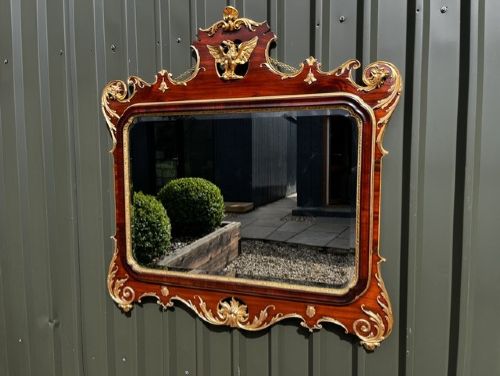
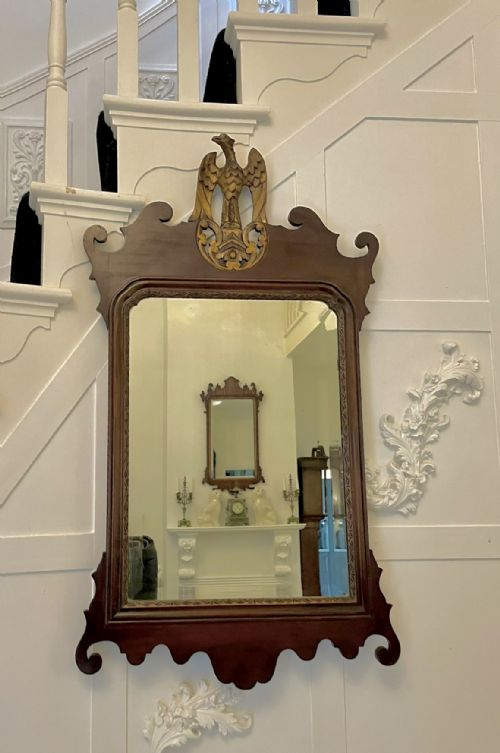
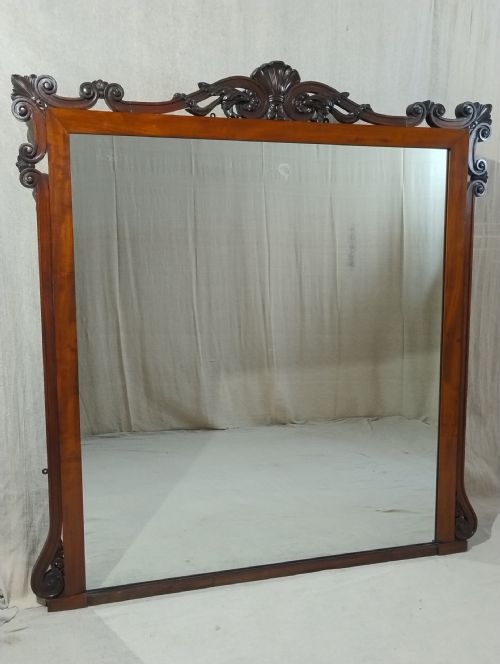
Buyers will most frequently meet pieces fashioned in the Georgian style or the Victorian Chippendale revival, featuring fretwork borders, parcel gilt details or carved Ho Ho birds. These wall mirrors range from compact oval formats to large overmantel proportions designed to hang above a fireplace.
The selection also encompasses related wall furniture and recording instruments framed in matching timbers, such as banjo barometers and console tables. Such items share the rich reddish-brown grain and cabinetmaker techniques characteristic of the primary mirrors.
Materials and construction
Makers built these frames using solid mahogany and mahogany veneers, frequently enhancing the timber with wood inlay, satinwood stringing, or rosewood accents. Giltwood and parcel gilt highlights were often applied to carved mouldings, fretwork ears, and inner bezels to catch the candlelight or daylight.
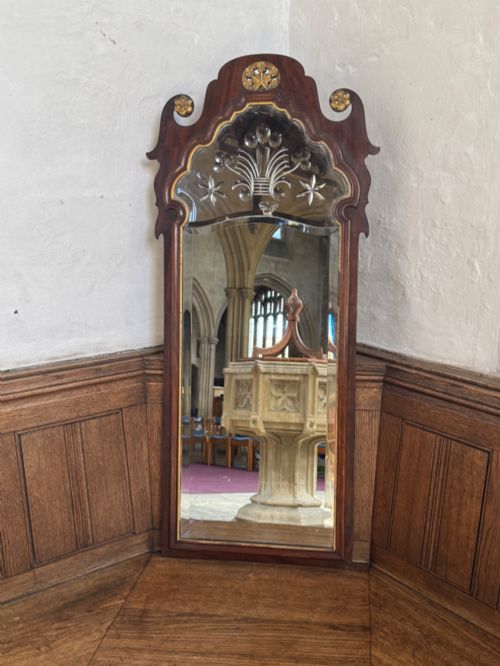
Glass plates were silvered using traditional methods, sometimes featuring reverse cut decoration or bevelled edges. Joinery relied on precise hand-cut joints, while fretted outlines were painstakingly pierced through the timber before being smoothed and polished.
Some Victorian examples invite peculiar reflections into the parlour by serving as sorcerer's mirrors.
Distinctions in quality
Quality rests in the crispness of the hand-carving and the depth of the mahogany grain rather than mere size. Finer examples display delicately pierced fretwork and well-preserved parcel gilt touches that integrate harmoniously with the dark wood.
The nature of the mirror plate itself distinguishes better pieces, particularly where original mercury plates or reverse cut glass survive intact. Superior cabinetmaking is evident in the weight of the timber framing and the integrity of the original backing boards.
The Traditional Mahogany Wall Mirror Glossary
- Mahogany
- A durable tropical hardwood prized for its reddish-brown colour and fine grain. Cabinetmakers utilised it extensively for high-quality furniture and mirror frames from the eighteenth century onwards.
- Parcel Gilt
- Partially gilded decoration applied to specific carved details of a frame. It creates a striking contrast against the dark polished mahogany.
- Fretwork
- Openwork ornamentation cut out of thin timber with a fretsaw. It defines the scrolling outlines seen on many eighteenth and nineteenth century wall mirrors.
- Overmantel Mirror
- A wide mirror specifically proportioned to hang on the wall directly above a fireplace mantelpiece. These pieces often incorporate multiple sections or extensive carved crestings.
- Convex Mirror
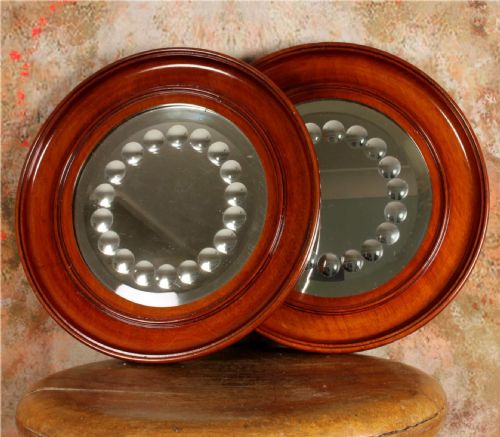
- A circular looking glass with a bulging curved surface that reflects a wide panoramic view of the room. They are frequently framed with gilded balls and classical mouldings.
Traditional Mahogany Wall Mirror: Frequently Asked Questions
How do I hang a heavy mahogany mirror safely?
Heavy wall mirrors require secure fixings anchored directly into the wall studs or masonry rather than standard plasterboard hooks. Ensure the hanging wire or integrated brass strap brackets on the rear are robust enough to support the substantial weight of the timber frame and glass plate.
Position the mirror at a comfortable eye level where it can reflect light effectively without taking an undue strain from uneven wall surfaces. Using two fixing points distributes the weight evenly and keeps the frame level over time.
How do I tell an 18th century mirror from a later revival?
Distinguishing period pieces from later revivals involves examining the construction methods, the type of timber used, and the ageing of the mirror plate. Eighteenth-century frames often show hand-cut joinery, old pine backing boards, and subtle wear to the timber that reflects centuries of handling.
Revival pieces from the Victorian and Edwardian eras frequently utilise machine assistance or display different secondary woods behind the primary mahogany veneer. The silvering on the glass and the composition of the gesso under any gilding also offer clues to the actual decade of manufacture.
Can these mirrors be cleaned safely?
Cleaning antique mirror glass requires a gentle touch and mild solutions that will not seep behind the bevels or damage the silvered backing. Apply a small amount of glass cleaner to a soft cloth rather than directly onto the glass to prevent moisture damage to the frame.
Keep polishes and harsh chemicals away from the mahogany and any gilded areas, as modern solvents can strip historical finishes. A soft, dry dusting brush is usually sufficient to maintain the carved wooden frame.
What is a Chippendale style mirror?
A Chippendale style mirror draws inspiration from the rococo and chinoiserie designs published by Thomas Chippendale in the eighteenth century. These pieces are characterised by elaborate fretwork frames, asymmetrical scrolls, and often feature a carved Ho Ho bird at the crest.
Victorian cabinetmakers frequently revived this aesthetic, producing substantial mahogany interpretations with similar pierced ears and gilded accents. These revival mirrors capture the ornate decorative ambition of the original Georgian workshop tradition.