

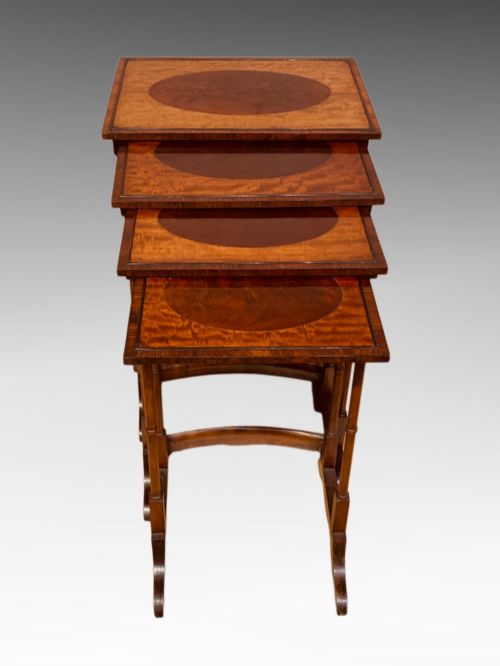


Traditional Mahogany End Table
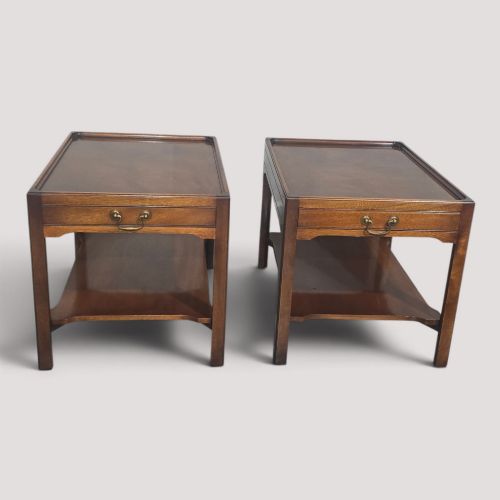
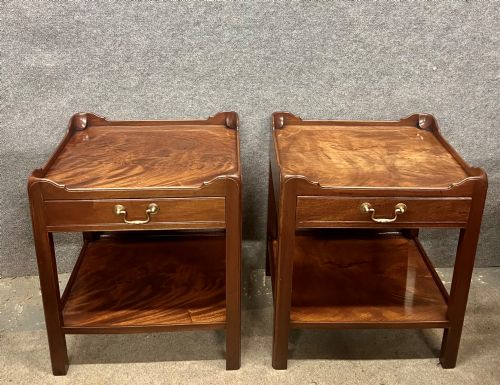
A traditional mahogany end table brings rich timber grain and compact surface utility to a room, drawing on eighteenth- and nineteenth-century forms.
Traditional Mahogany End Table
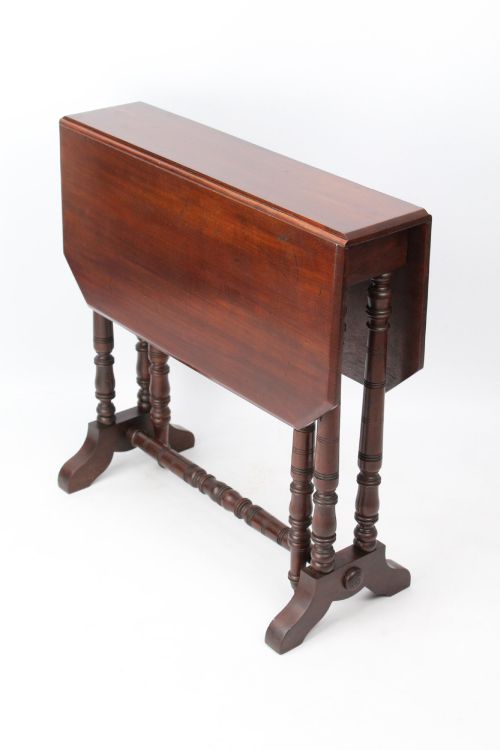
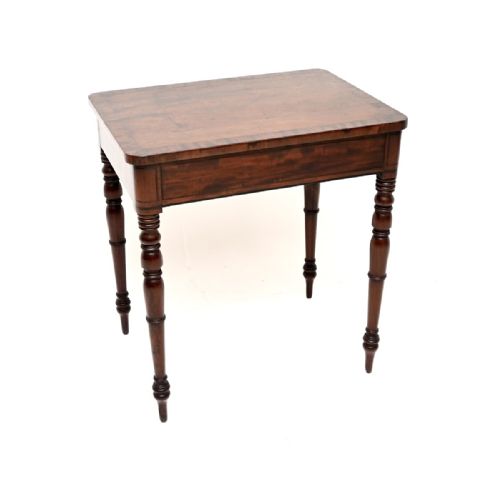
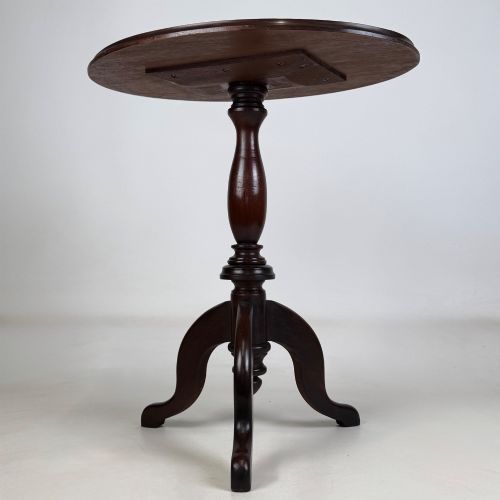
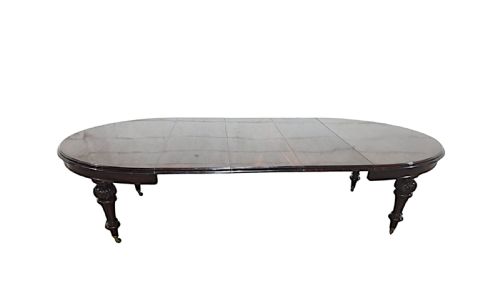
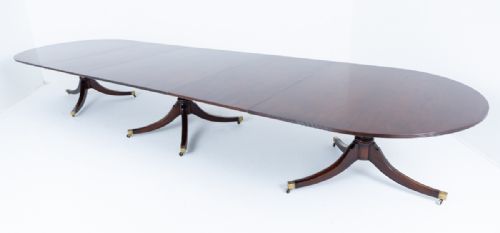
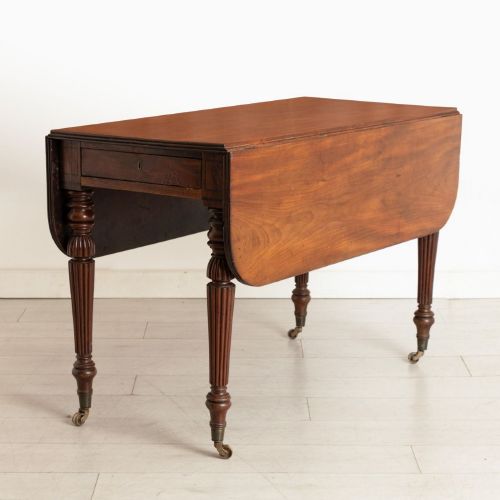
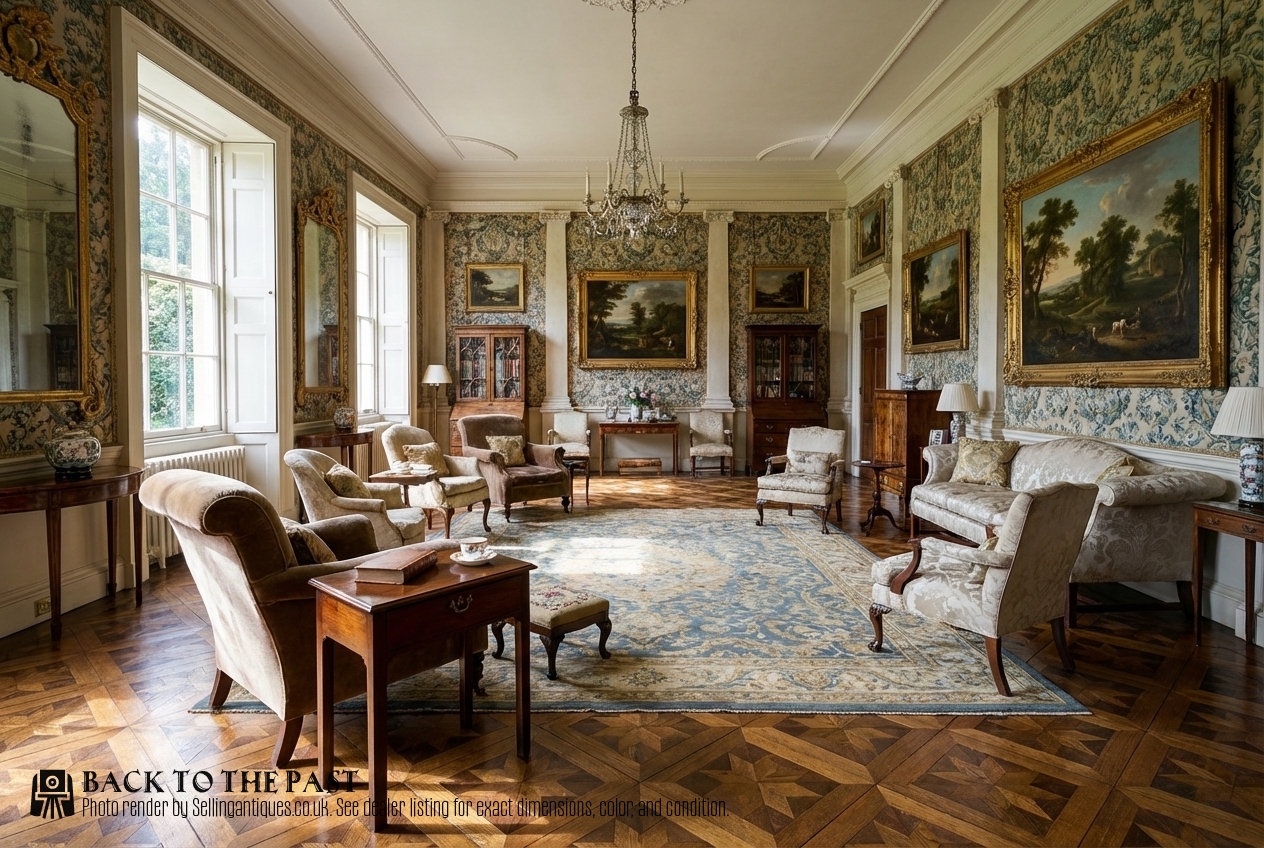
A traditional mahogany end table encompasses a variety of compact surfaces designed for placement beside seating or beds, drawing from periods spanning the eighteenth century through to the early twentieth century. The selection ranges from slender lamp tables and spider leg designs to nests of tables and small drop-leaf pembroke forms.
Makers working in Georgian, Regency, Victorian, and Edwardian idioms shaped these pieces to serve practical domestic needs while displaying the deep reddish-brown tones characteristic of the timber. Buyers frequently encounter side tables, occasional tables, and nests originating from the nineteen-twenties and nineteen-thirties alongside genuine nineteenth-century examples.
The assortment on this page reflects diverse domestic functions, including bedside units, sofa tables, and work tables fitted with drawers. Each piece demonstrates how cabinet makers adapted classical proportions to fit smaller spaces without losing the character of the primary wood.
What separates the tiers of quality
Quality in these pieces is dictated by the selection of the timber grain, the precision of the joinery, and the subtlety of any inlay work. Superior examples exhibit tightly figured mahogany boards on the top surface, carefully matched at the seams to maintain a continuous visual flow.
Finer construction shows in the hand-cut dovetails of drawer boxes, the crispness of turned or fluted legs, and the restraint applied to decorative satinwood or boxwood stringing. Lesser pieces rely on simpler mechanical assembly and plainer timber stocks without the depth of finish found in workshop-produced items.
Traditional Mahogany End Table Retail Price Guide 2026
Typical asking prices for traditional mahogany end table among the pieces listed under this phrase on Sellingantiques today, from the lower quarter to the upper quarter. They describe what is for sale here now, not the wider market.
Some tables require four separate surfaces to stack into the floor space of just one.
Waring and Gillow
The Traditional Mahogany End Table Glossary
- Mahogany
- A durable, heavy tropical hardwood known for its deep reddish-brown colour and ability to take a high polish. It served as the primary material for fine British cabinet making from the eighteenth century onwards.
- Pembroke table
- A small, versatile table featuring two hinged drop leaves on opposing sides and frequently a single end drawer. This form emerged in the eighteenth century for breakfasting or light writing.
- Nest of tables
- A graduated set of three or four freestanding tables designed to slide neatly beneath one another when not in use. They became particularly popular during the Victorian and Edwardian periods.
- Stringing
- A narrow strip of contrasting lighter wood, such as boxwood or satinwood, inlaid into channels cut into the dark mahogany surface. It creates geometric borders and outlines panels on tabletops.
- Spider leg table
- A table constructed with exceptionally slender turned wooden legs braced by delicate stretchers. This fragile-looking profile reached its height of popularity during the Georgian era.
Traditional Mahogany End Table: Frequently Asked Questions
How do I date a mahogany table?
Dating relies on examining construction methods, timber characteristics, and stylistic details such as leg profiles and inlay patterns. Pieces from the Georgian era display hand-cut joinery and native wax finishes, whereas twentieth-century revivals often show standardised machine milling.
Secondary woods inside drawers and the weight of the timber also provide clues. Earlier pieces frequently utilise denser Cuban mahogany compared to later commercial reproductions.
What is a pembroke table used for?
A pembroke table functions as a flexible surface that expands when the drop leaves are raised and contracts against a wall when space is limited. Historically, they served light dining, writing, or needlework duties.
The presence of a small drawer allowed for the storage of writing implements or sewing accessories within easy reach of an armchair.
Are nests of tables Edwardian?
Nests of tables appear in various forms from the nineteenth century through the Edwardian period and into the nineteen-twenties. While Edwardian makers produced many inlaid nests in mahogany, the form itself is not restricted to a single decade.
Earlier nineteenth-century examples often feature solid timber construction without the decorative stringing favoured by later makers.
How should I care for mahogany?
Mahogany requires stable room humidity and protection from direct sunlight to prevent the rich reddish-brown timber from fading or drying out. Dusting with a soft cloth and applying traditional beeswax periodically maintains the sheen.
Avoid placing damp items or synthetic materials directly onto polished wooden surfaces to preserve the original finish.