



Traditional Mahogany Dining Buffet
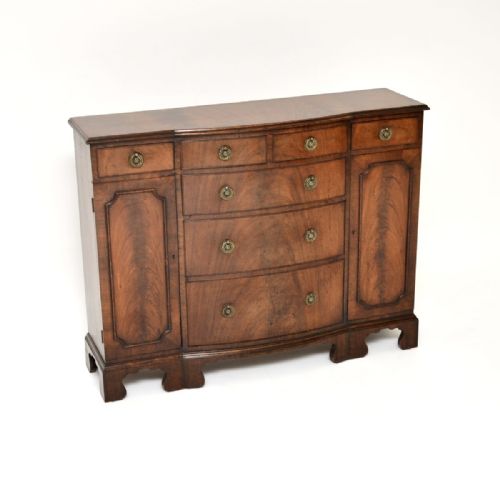
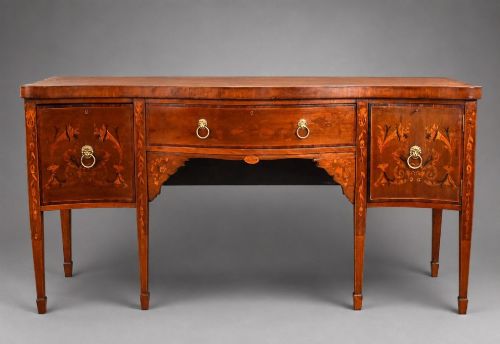
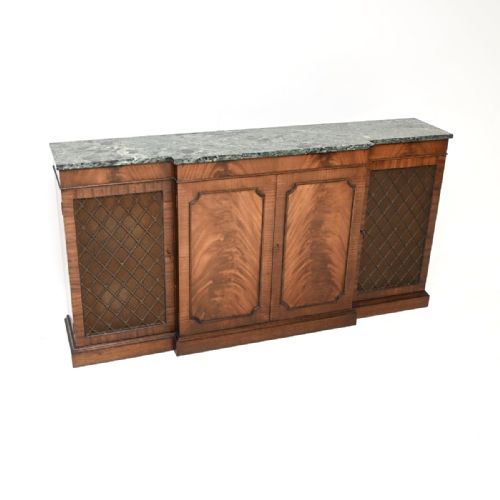
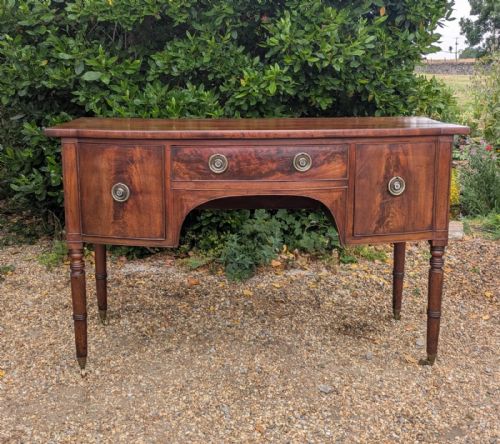
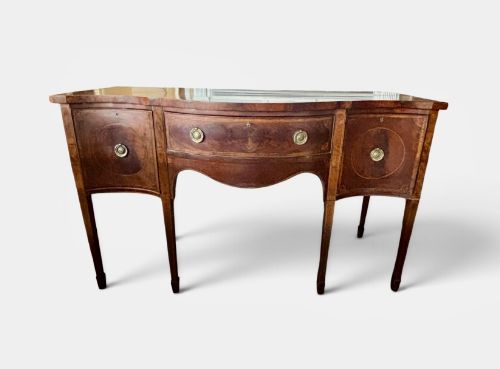
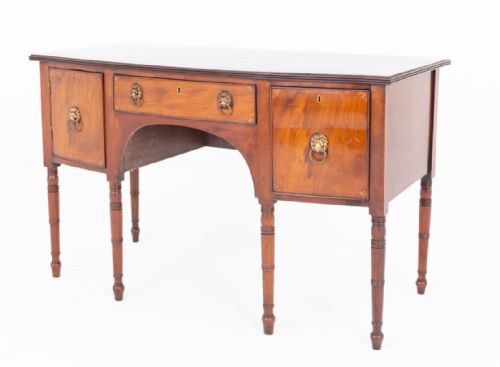
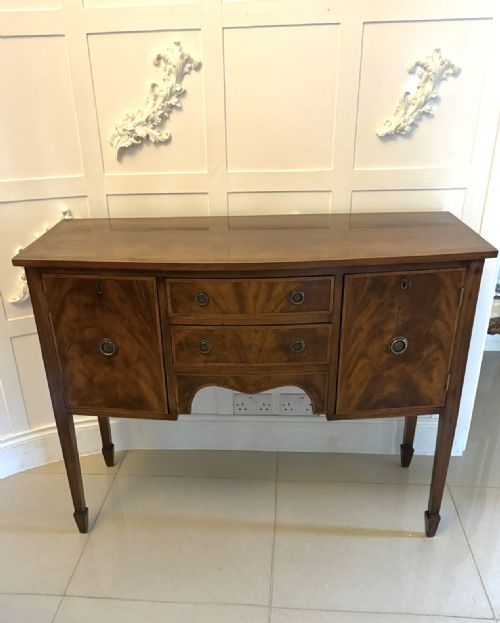
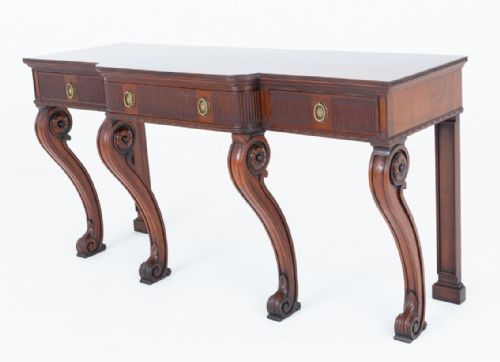
A traditional mahogany dining buffet anchors a formal dining room with ample storage and rich timber grain.
Traditional Mahogany Dining Buffet
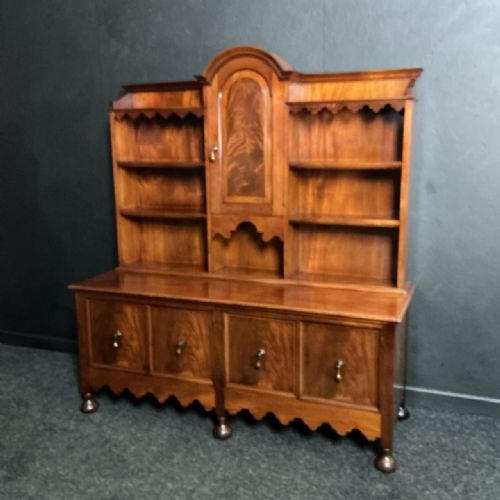
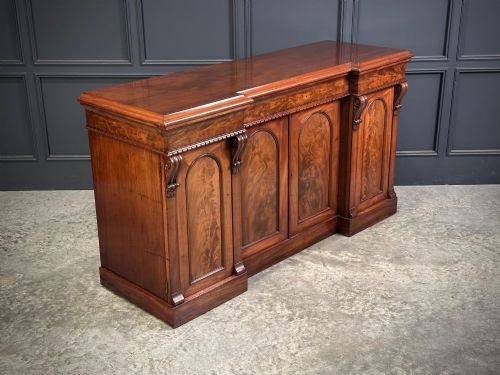
A traditional mahogany dining buffet encompasses a broad range of large dining room storage forms, including sideboards, servers, chiffoniers, and breakfront cabinets. These pieces serve as the functional centrepiece of a dining space, designed to hold china, cutlery, and serving dishes while anchoring the room's proportions.
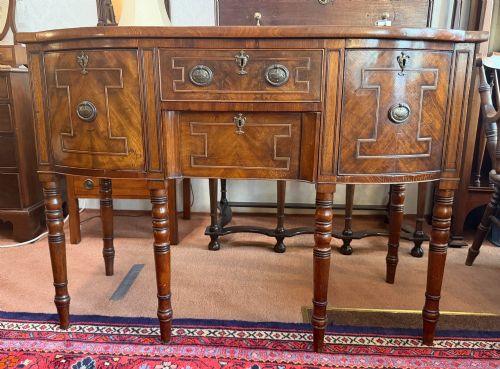
The pieces appearing on this page span several centuries and stylistic revivals, stretching from 18th century Georgian origins through the Regency, William IV, and Victorian eras, up to Edwardian and later revival interpretations. Buyers encounter forms ranging from simple bow-front servers to monumental four-door pedestals and mirror-back chiffoniers.
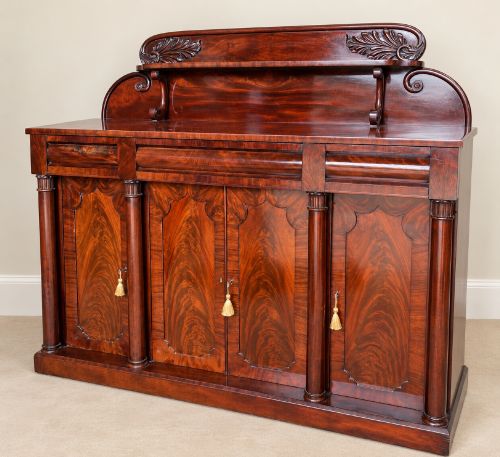
Georgian and Regency examples tend to feature restrained linear elegance or serpentine fronts, whereas Victorian and Edwardian iterations often scale up in size, incorporating multiple doors, carved details, and occasional mirror backs or marble tops.
Markers of Distinction
Quality in these dining pieces resides in the choice of timber and the precision of its application, particularly where flame mahogany veneer is matched symmetrically across drawer fronts and cupboard doors. Superior examples display thoughtful proportions, crisp carving on the timber, and harmonious inlay work rather than heavy-handed ornamentation.
The integrity of the construction, from smooth-sliding drawers to substantial brass fittings and well-hung doors, separates standard utility furniture from finer dining room server pieces produced by skilled cabinet makers.
Some Edwardian sideboards doubled as secret cocktail stations long before home bars became fashionable.
The Traditional Mahogany Dining Buffet Glossary
- Mahogany
- A durable tropical hardwood prized for its reddish-brown colour and stability in furniture making. It forms the primary structural and visual medium for the majority of these dining pieces.
- Flame mahogany veneer
- A thin slice of timber cut from the point where branches join the trunk, creating a fiery, undulating grain pattern. Cabinet makers applied this to prominent surfaces such as door panels and drawer fronts for decorative effect.
- Serpentine front
- A furniture front curving outward in the centre and inward toward the ends in a continuous wave shape. This demanding geometric form appears on select Georgian and Edwardian sideboards.
- Breakfront
- A cabinet design where the central section projects forward from the flanking outer sections. This architectural arrangement creates depth and visual interest across larger dining room sideboards.
- Chiffonier
- A compact sideboard or low cabinet equipped with shelving or cupboards, occasionally featuring a mirror back. These pieces offer versatile storage within dining and reception rooms.
Traditional Mahogany Dining Buffet: Frequently Asked Questions
How do I style a mahogany buffet?
Pair the deep reddish tones of the timber with neutral walls and subtle metallic accessories like brass candlesticks or silver trays. Keeping the top uncluttered allows the grain and veneer patterns to remain the focal point of the dining room.
Position the piece against a main dining wall where it can function practically during meals while establishing a formal, traditional atmosphere.
What is the difference between a sideboard and a buffet?
While the terms are often used interchangeably today, sideboards traditionally featured a long surface for serving food with cupboards and drawers beneath. Buffets historically offered similar storage but sometimes included upper display sections or a more enclosed cabinet structure.
Both forms served the primary dining room function of storing tableware and facilitating meal service.
How do I care for mahogany surfaces?
Dust the timber regularly with a soft, dry cloth to prevent particulate buildup on the polish. Avoid placing the piece in direct sunlight or near heat sources to protect the wood and veneer from drying out.
Apply a quality beeswax polish periodically to nourish the mahogany and maintain its warm, natural lustre.
How do I distinguish Georgian from Victorian pieces?
Georgian dining pieces typically exhibit restrained classical proportions, elegant tapering legs, and subtle string-line inlays. Victorian examples frequently scale up in mass, featuring heavier mouldings, four-door configurations, and bolder carved details.
Examining the internal drawer construction and timber thickness often reveals the manufacturing techniques characteristic of each respective era.