

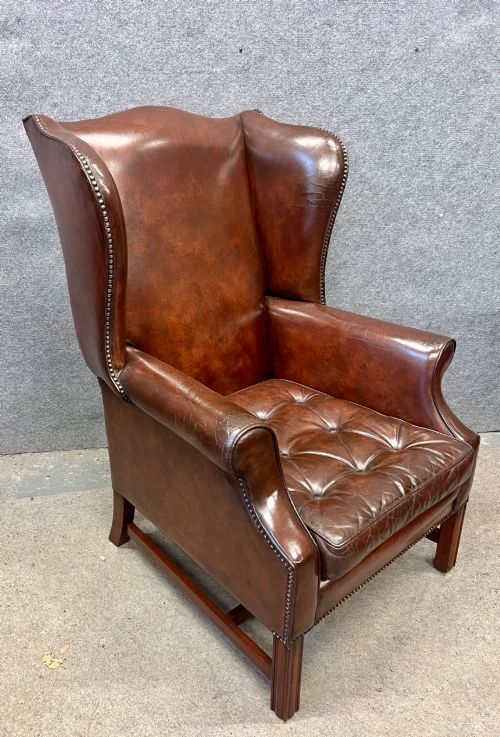
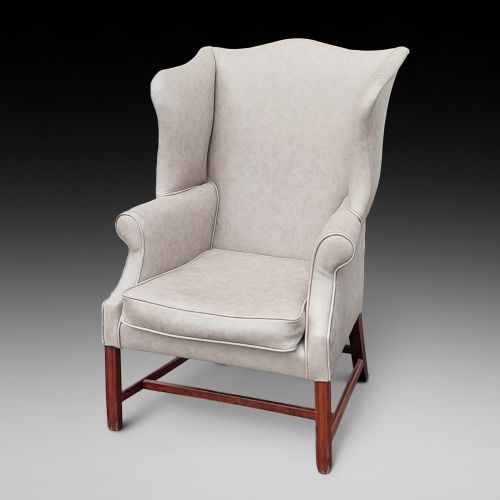
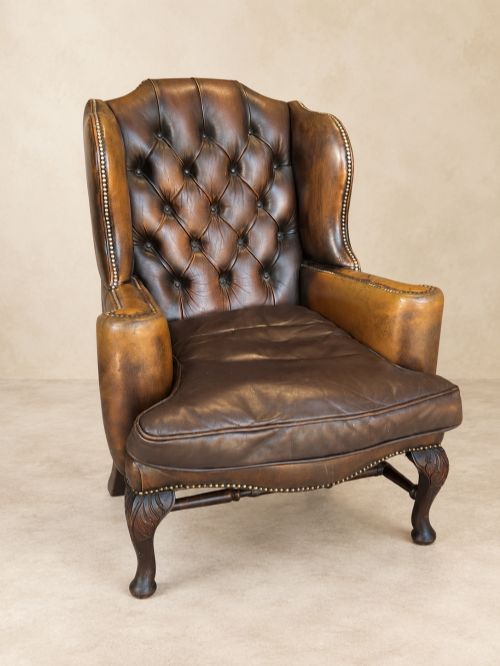
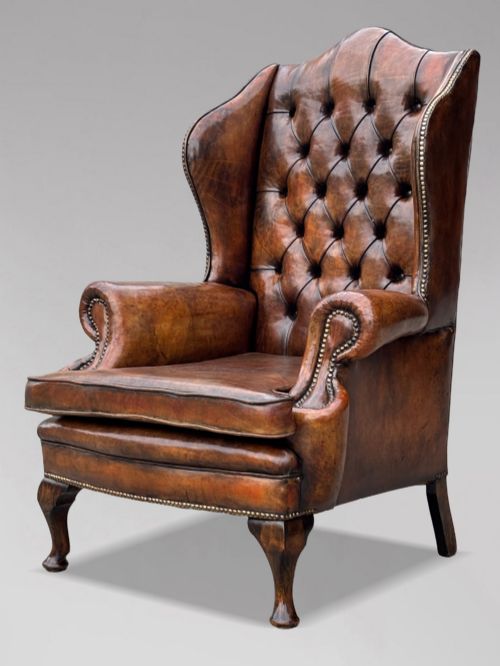


Traditional Leather Wingback
A traditional leather wingback offers deep-seated comfort and timeless library style, anchored by protective side wings.
Traditional Leather Wingback
A traditional leather wingback is a quintessential seating form designed to shield the sitter from drafts while retaining warmth from a fireplace. These pieces span periods from the Georgian era through Victorian times, Edwardian examples, and various revival styles into the 1930s.
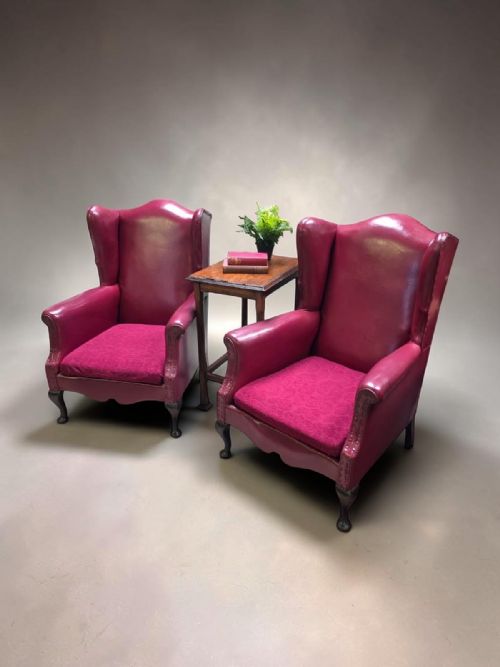
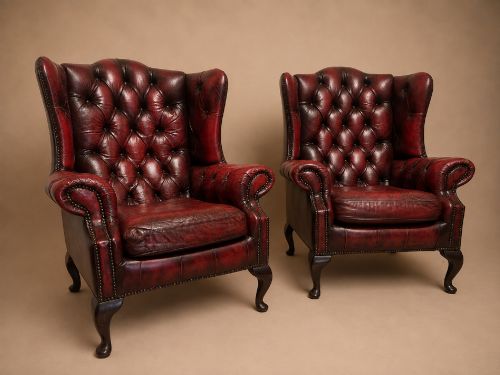
The selections on this page encompass individual armchairs, matching pairs, and occasional sofas or settees. Most examples meet the eye in tan, brown, oxblood, or red leather upholstery.
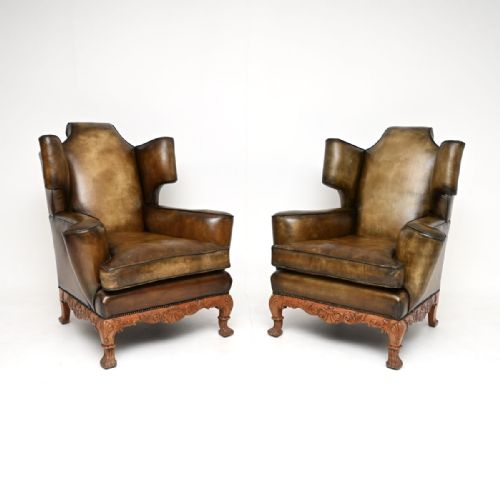
Forms range from straightforward library seating to elaborate George I and George III revival designs with carved mahogany or walnut frames. Button backs and hand-dyed finishes frequently define the appearance of these pieces.
How traditional leather wingbacks were made
Makers built the foundational frames of traditional leather wingbacks using sturdy timbers such as mahogany, oak, walnut, and general hardwood. These wooden structures often featured exposed carved details on legs or arms, particularly in revival pieces.
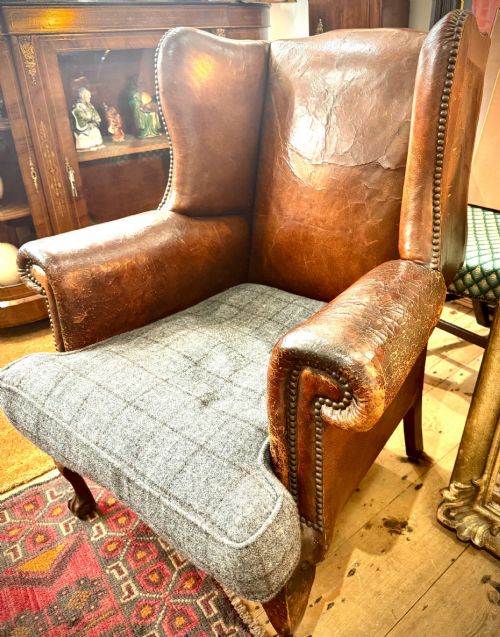
Upholstery relied on durable leather, sheep's hide, and sometimes secondary fabric components, fastened securely with brass details. Button tufting was applied to provide structural tension and surface pattern across the backrests and seats.
The selection includes individual armchairs, matched pairs, settees, and library chairs spanning Victorian, Edwardian, and Georgian revival periods.
What varies in quality in traditional leather wingbacks
Quality in a traditional leather wingback rests upon the depth of character in the hide and the integrity of the underlying timber frame. Hand-dyed finishes and full button upholstery display varying levels of craftsmanship across different decades and revival periods.
Proportion and wood selection also dictate distinction, separating standard utility seating from generously proportioned library armchairs or finely carved George style interpretations.
The Traditional Leather Wingback Glossary
- Wingback
- A traditional chair design featuring protective side panels attached to the arms to block draughts. These wings also served to trap heat from an open fire.
- Chesterfield
- A classic furniture style traditionally characterised by deep button tufting and rolled arms of equal height to the back. Versions appear here in both armchair and sofa formats.
- Button back
- An upholstery technique where buttons are pulled deep into the padding to create a diamond pattern. This method secures the internal stuffing and adds texture.
- Hand dyed
- Leather that has received colouring by hand rather than factory spraying, resulting in varied tones. This treatment develops a rich patina over time.
- Revival style
- A design movement looking back to earlier periods, such as George I, George III, or Jacobean eras. Makers in later decades reinterpreted these historic aesthetics.
Traditional Leather Wingback: Frequently Asked Questions
What is a traditional leather wingback?
A traditional leather wingback is an upholstered seat featuring side panels designed to protect the user from cold draughts. These pieces span multiple historical eras and revival styles.
They serve as prominent focal points in studies, libraries, and living rooms, combining structural timber frames with durable leather coverings.
How do I date a wingback chair?
Dating relies on examining the timber frame, upholstery techniques, and stylistic revival cues. Details like hand-dyed leather and specific leg carvings offer clues to the period.
Comparing construction methods against known Victorian, Edwardian, and Georgian revival standards helps narrow down the decade of manufacture.
Were these chairs used in libraries?
Yes, many traditional leather wingbacks were designed specifically for reading rooms and libraries. Their enclosed sides provided privacy and comfort for long periods of study.
Library chairs of this type often featured generous proportions and robust mahogany or oak frames.
What colours do these leather chairs come in?
The listings show a palette centred on tan, rich brown, oxblood, red, and sheep's hide tones. Many surfaces feature hand-dyed finishes that enhance the natural grain.
Over the decades, these leathers age and acquire a distinct patina unique to each piece.
Are matching pairs common?
Pairs of armchairs appear frequently alongside single pieces and occasional two-seat sofas. These matching sets are often found from 1920 and 1930 revival periods.
Finding a matched pair provides a balanced arrangement for fireside seating or formal room layouts.