



Button Backed Wingback
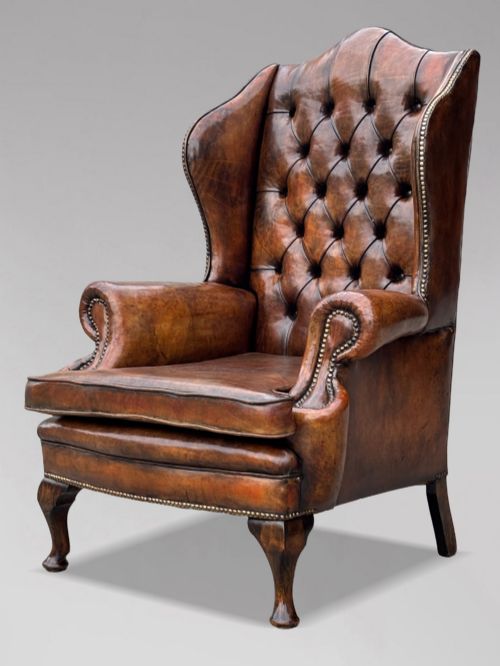
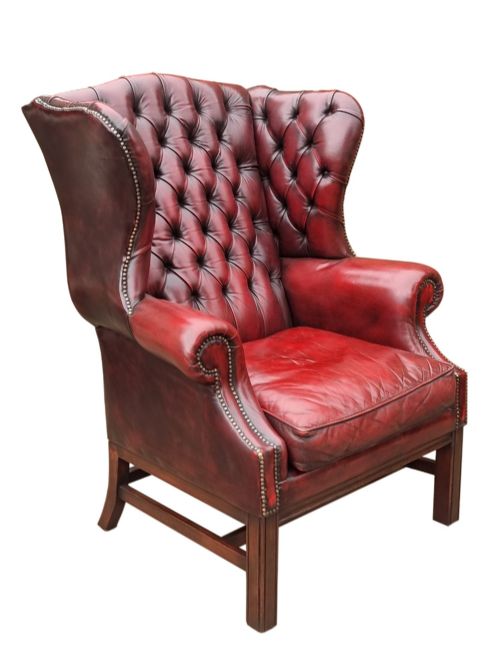
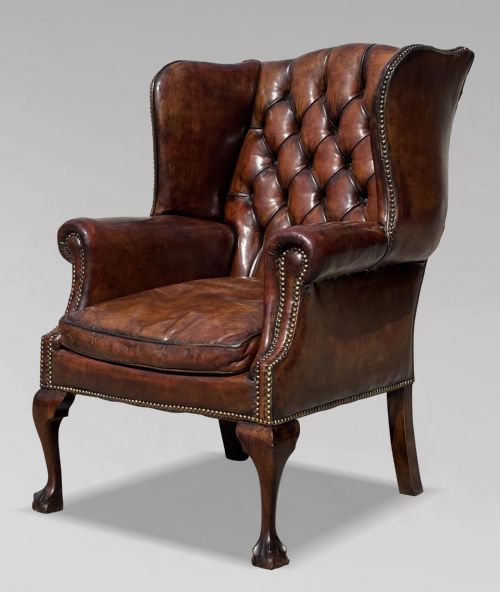
A button backed wingback brings immediate gravitas to a room, offering deep upholstery and high protective sides designed to catch draughts.
Button Backed Wingback
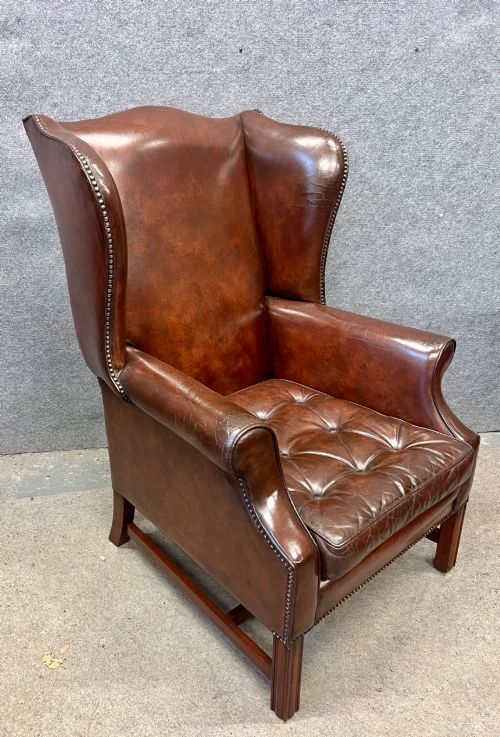
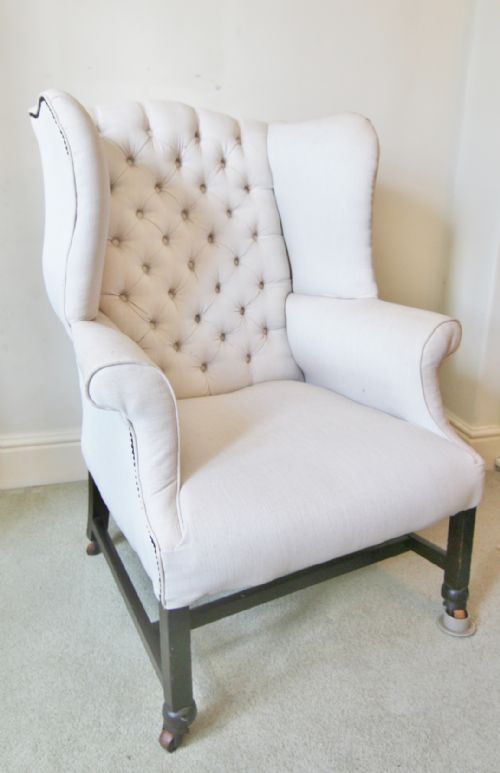
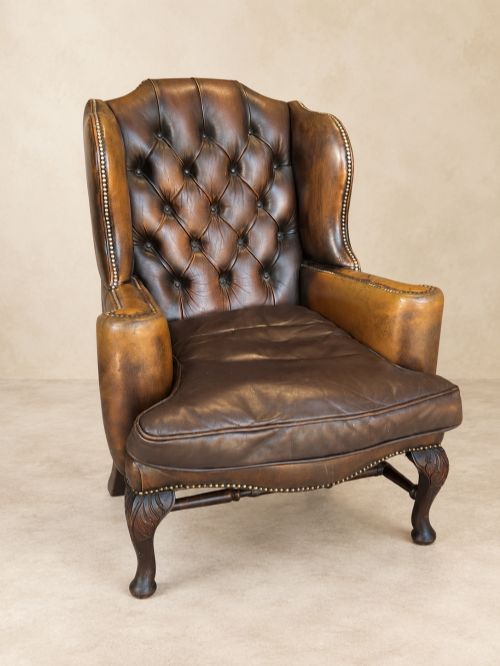
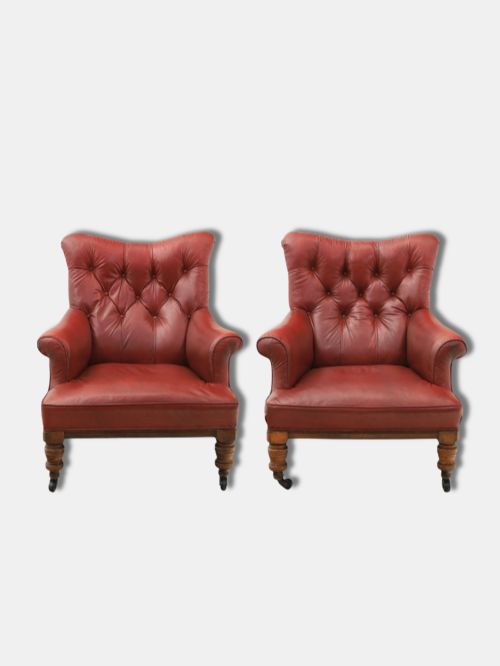
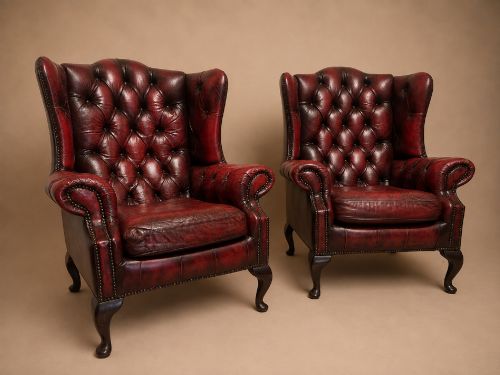
A button backed wingback combines traditional deep buttoning with extended side panels, known as wings, designed to shield the sitter from chilly air. These pieces primarily take the form of armchairs, pairs of armchairs, Chesterfields, and occasional two-seat sofas. Surviving examples span from the eighteenth century through the Victorian and Edwardian eras up to the nineteen-thirties.
The materials and styles range widely across the periods represented. Earlier pieces from the Georgian era often feature mahogany or hardwood frames paired with fabric or leather, whilst later Victorian, Edwardian, and nineteen-twenties iterations frequently utilise brown, tan, or oxblood leather alongside brass details. Revival pieces also appear, emulating the classic George III aesthetic with generous proportions and hand-dyed hides.
How they were made
Frames rely on sturdy timbers such as mahogany and general hardwood, providing the structural integrity needed to support deep seats and high backs. Wood and metal components work together beneath the upholstery to maintain the characteristic curved silhouette and flared arms.
Upholstery involves securing fabric or leather over substantial padding, punctuated by buttoning that pulls the material into distinct diamond patterns. Brass studs frequently edge the leather panels, hammering into the timber frame to secure the hides firmly in place.
Button Backed Wingback Retail Price Guide 2026
Typical asking prices for button backed wingback among the pieces listed under this phrase on Sellingantiques today, from the lower quarter to the upper quarter. They describe what is for sale here now, not the wider market.
Victorian artisans occasionally added carved lion motifs to chair frames, letting fierce beasts guard the upholstery.
What varies in quality
The distinction between ordinary and exceptional pieces rests upon the proportions of the frame and the integrity of the timber. Skilled proportions give the wings a balanced sweep rather than a stiff or heavy appearance, whilst high-grade mahogany or hardwood provides lasting stability.
Leather quality and buttoning execution dictate the tactile character of the piece. Supple, hand-dyed leathers with neatly executed deep buttoning and precise brass detailing elevate an armchair above standard commercial production of its period.
Sopwith
The Button Backed Wingback Glossary
- Wingback
- An armchair featuring projecting side panels attached to the arms and back to keep draughts away from the user's head. These wings form the defining silhouette of the seating style.
- Buttoned
- An upholstery technique where indentations are created across the backrest by pulling thread through padding and securing it with covered buttons. This creates a tufted pattern.
- Chesterfield
- A large sofa or armchair characterised by equal height in the arms and back, traditionally upholstered in deep-buttoned leather. The term applies to both individual chairs and multi-seat sofas.
- Mahogany
- A durable, reddish-brown tropical hardwood frequently utilised for the exposed legs and structural frames of Georgian and later seating. It accepts fine carving and polishing.
Button Backed Wingback: Frequently Asked Questions
What is a button backed wingback?
A button backed wingback is an upholstered seat featuring protective side panels on the upper frame and a tufted backrest secured with buttons.
Such seating provides both physical enclosure and traditional decoration, originating in earlier centuries and persisting through various revival periods.
How do I date a wingback chair?
Dating relies on examining the timber of the legs, the style of the upholstery, and the construction methods used beneath the leather or fabric.
Georgian examples display different wood turning and proportions compared to Victorian or Edwardian interpretations.
Where should I place a wingback chair?
These armchairs suit studies, libraries, or living rooms where their high backs can anchor a seating arrangement or sit beside a fireplace.
Pairs often work well opposite one another or flanking a larger sofa.
Are these chairs comfortable?
The deep cushioning and high enclosed sides are designed to offer substantial support and head protection from room draughts.
Sitters find the angled backrests and padded arms well suited for reading or resting.