

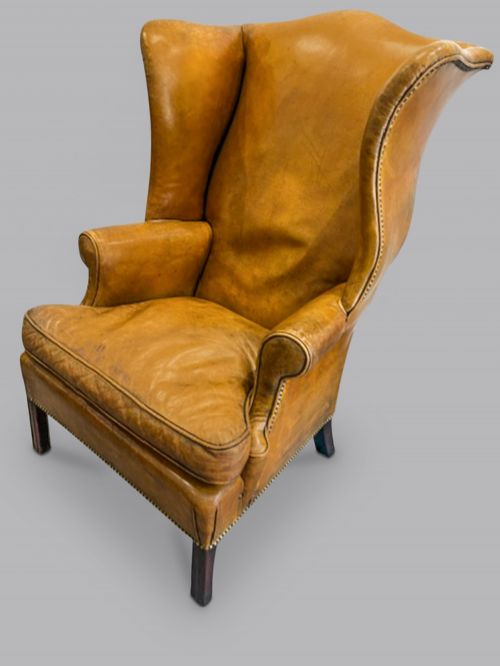
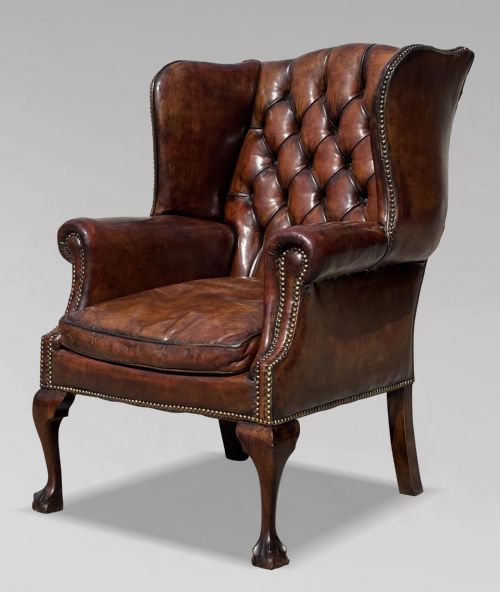
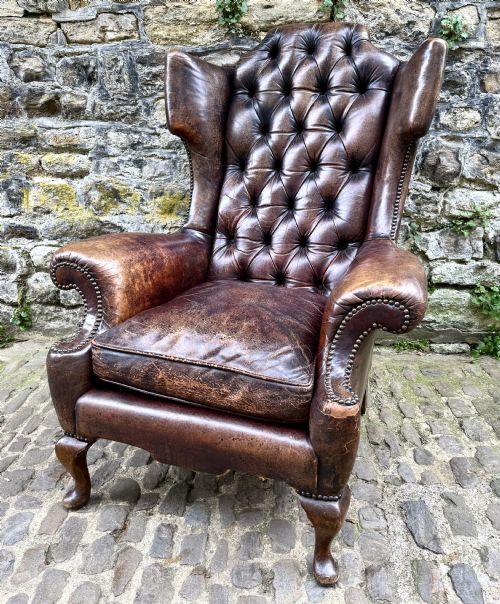


Mahogany Leather Wingback
A mahogany leather wingback offers deep-seated comfort and classic proportion, grounding a study or library with traditional presence.
Mahogany Leather Wingback
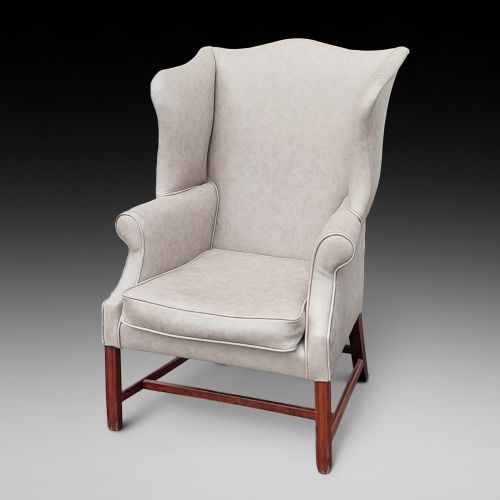
A mahogany leather wingback combines substantial timber frames with upholstered hide wings designed to shield the sitter from draughts. These armchairs appear in various forms, from authentic Georgian period examples to later revivals executed in the George III and Victorian styles.
Most pieces encountered on this page date from the nineteenth and early twentieth centuries, spanning Victorian, Edwardian, and revival periods. Makers often utilised mahogany for the exposed frame elements, matching the rich dark timber with patinated leather upholstery.
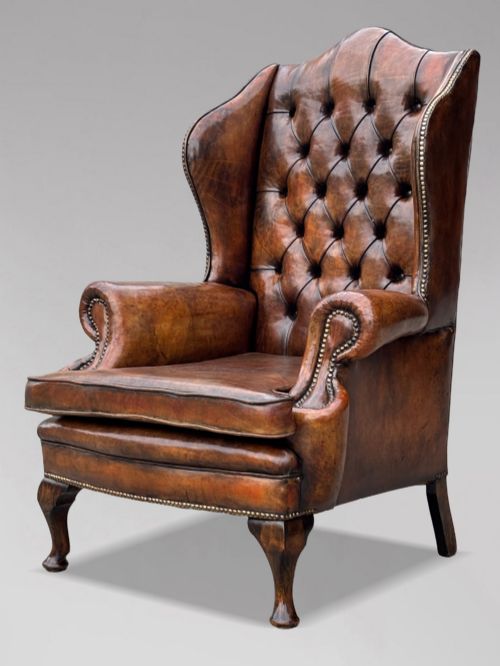
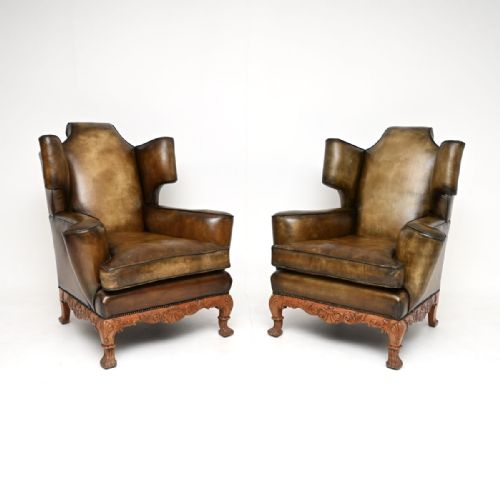
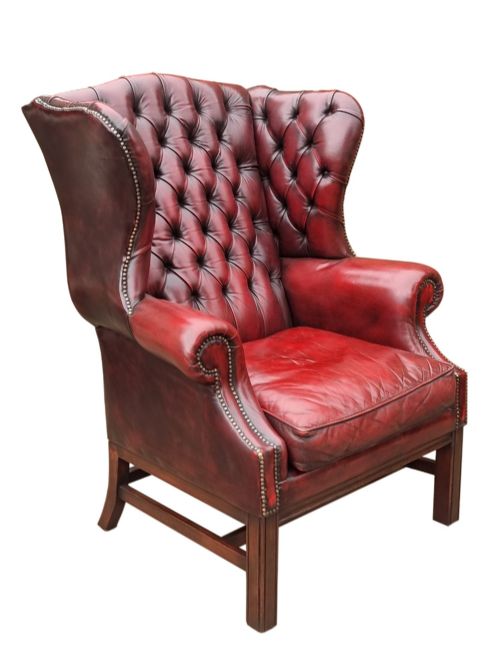
The characteristic high back and protective side panels define the silhouette, sometimes accompanied by button-tufted backrests or brass nailhead detailing. Buyers find single armchairs as well as matched pairs suitable for fireside placement.
Assessing quality and craftsmanship
Quality rests in the integrity of the timber frame and the depth of the leather's natural ageing. Superior examples show crisp carving on the mahogany legs and structural joinery that remains firm under weight.
The tactile character of the hide separates standard production from finer pieces. Hand-dyed leather with suppleness and authentic wear carries more distinction than uniform modern replacements.
Some Victorian examples include specialist mechanical adjustments for invalids, proving that nineteenth-century comfort engineering took relaxation very seriously indeed.
The Mahogany Leather Wingback Glossary
- Wingback
- An armchair featuring side panels attached to the arms and back to block cold air. This design originated to keep sitters warm near fireplaces.
- Button-tufted
- An upholstery method where deep indentations are secured with buttons pulled tight into the padding. This technique creates a diamond pattern across the leather backrest.
- Patina
- The surface sheen and softening of colour acquired by wood and leather over decades of handling. Collectors value this natural indicator of age.
- Chesterfield
- A style of upholstered seating characterised by rolled arms and backrests of equal height. Versions in this category apply the treatment to wingback armchairs.
- Porters chair
- A fully enclosed hooded armchair designed to keep draughts away from attendants stationed in entrance halls. These pieces often feature domed leather hoods.
Mahogany Leather Wingback: Frequently Asked Questions
How do I spot a reproduction?
Examine the timber frame, fixing methods, and the quality of wear on the leather. Older pieces exhibit hand-cut joints and uneven patination consistent with decades of use.
Reproductions often display uniform modern fixings and artificial distressing that lacks the genuine depth found in nineteenth-century and earlier examples.
Are these chairs comfortable for daily use?
These seating options provide firm support due to traditional horsehair and spring stuffing methods. The high backrests and padded wings offer considerable head and neck support for reading or resting.
Buyers should check the seat height and depth to ensure the proportions suit their personal sitting preferences.
How do I care for antique leather?
Maintain the hide by applying appropriate leather balms or waxes to keep the material supple and prevent cracking. Avoid placing chairs in direct sunlight or close to heat sources.
Gentle dusting with a soft cloth preserves the surface without disturbing the historic finish.
What is the difference between Georgian and revival styles?
Authentic Georgian pieces date from the eighteenth century and display the specific joinery techniques and proportions of that era. Revival pieces are later interpretations built in the nineteenth or twentieth centuries using historical design vocabularies.
Both categories utilise mahogany and leather, but differ significantly in age and manufacturing context.