
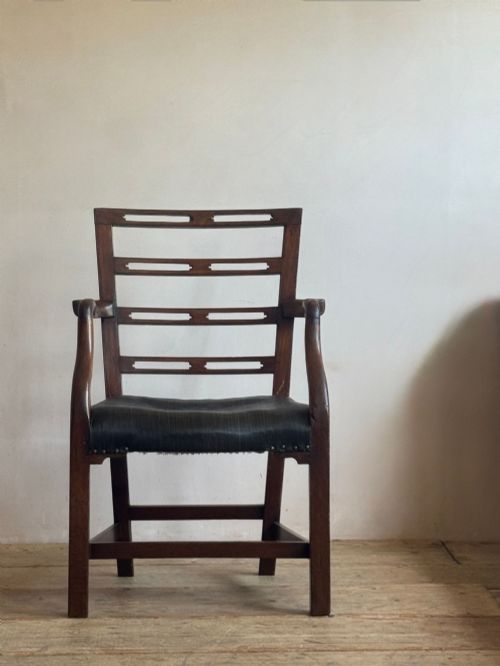
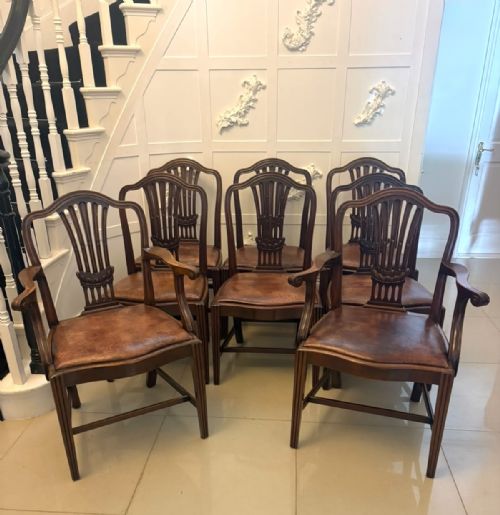
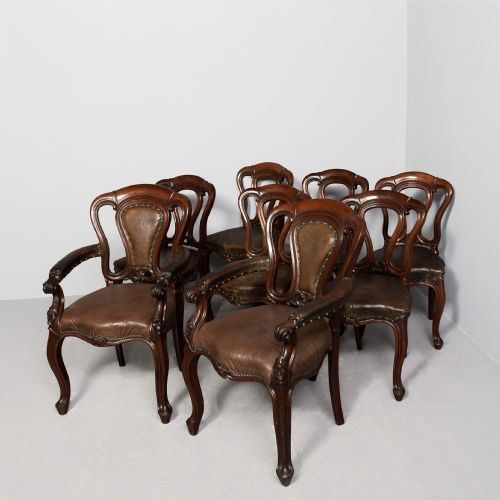
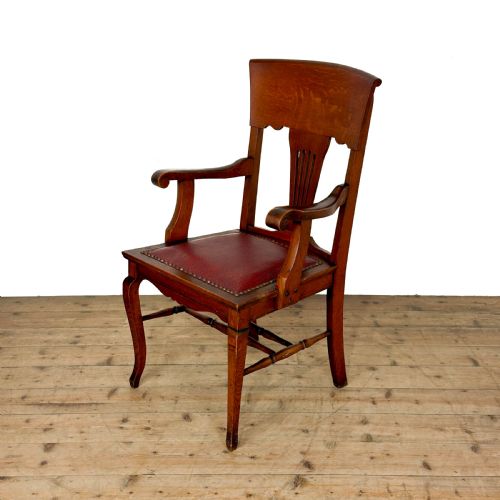


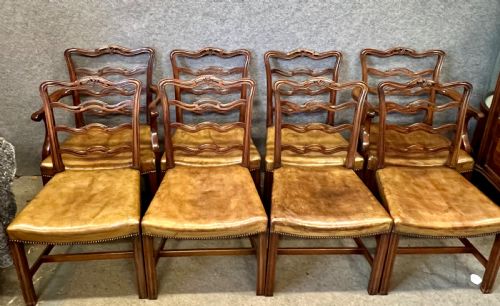
Traditional Leather Dining Carver
A traditional leather dining carver brings substantial seating to the table, pairing sturdy timber frames with durable hides for daily dining.
Traditional Leather Dining Carver
A traditional leather dining carver is an armchair designed for the head or sides of a dining table, featuring upholstered leather seats or backs set within a supportive timber frame. These seats appear across multiple historical periods, ranging from Georgian and Regency eras through to Victorian designs and 20th century revivals.
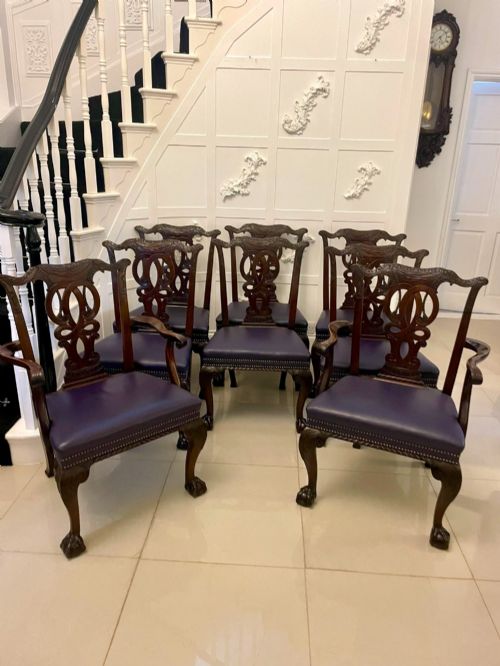
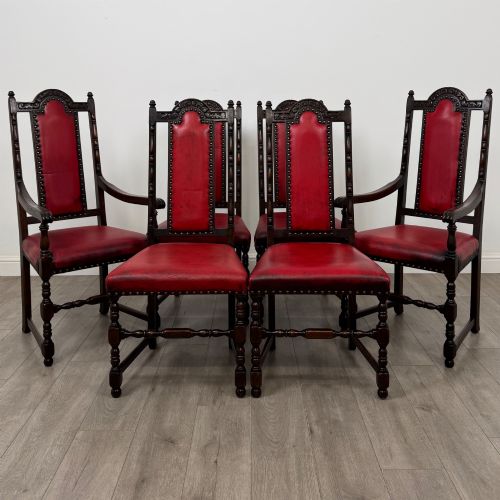
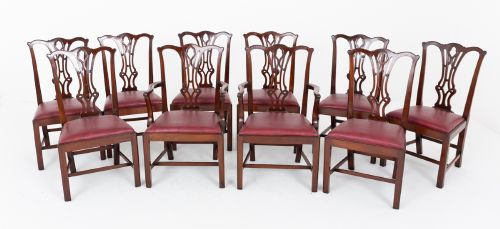
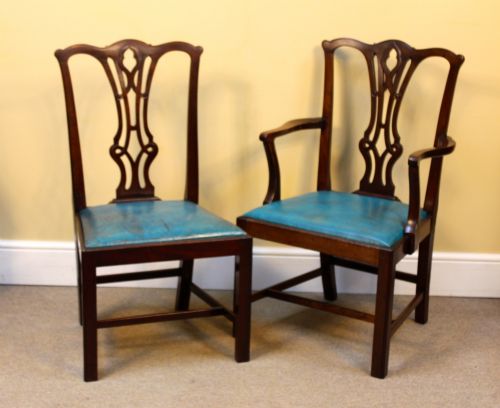
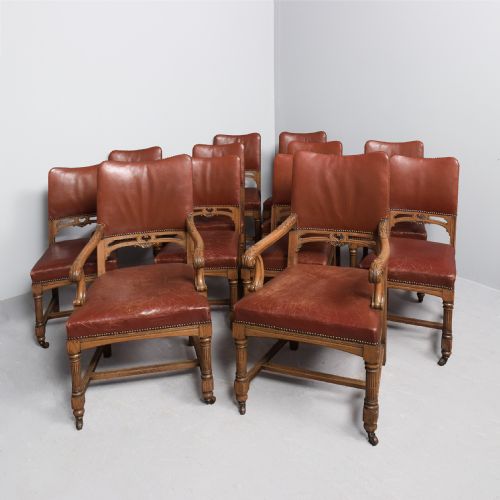
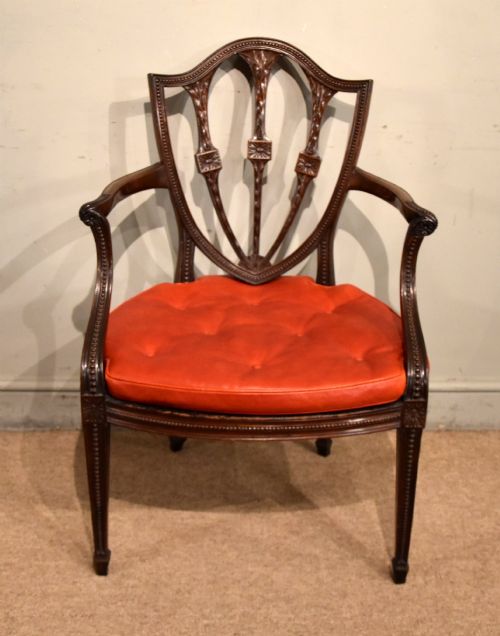
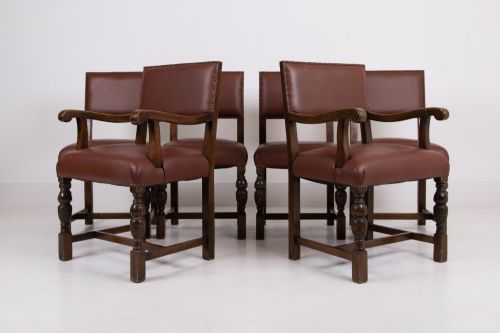
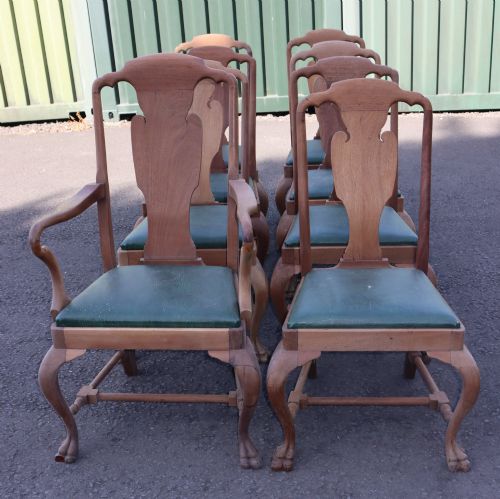
The listings on this page show these carvers predominantly formed from mahogany or oak, often grouped with matching dining chairs or offered as pairs and individual elbow chairs. Buyers searching for a traditional leather dining carver will encounter pieces displaying revival aesthetics such as Chippendale and Hepplewhite styles, alongside older Georgian and Victorian examples.
Forms include dedicated scroll arm carvers, desk chairs, and elbow chairs outfitted with tan, red, or black leather upholstery. These chairs serve functional dining roles while providing the wider proportions and armrests characteristic of carver seating.
How traditional leather dining carver pieces were made
Cabinet makers constructed the frames of these carvers using dense hardwoods like mahogany, oak, and walnut, often joining the structural components with traditional mortise and tenon joints. Woodcarvers embellished specific styles with details such as ladder backs, shield backs, and scroll arms.
Upholstery techniques involved stretching leather over padding and securing the edges directly to the wooden rails using decorative brass studs. Selected pieces incorporate hand-dyed leather finishes that complement the dark tones of the polished timber frames.
Brass upholstery studs held the leather firmly in place while doubling as shiny armour against clumsy carving knives.
What varies in quality in traditional leather dining carver pieces
The standard of a traditional leather dining carver depends upon the crispness of the timber carving and the structural integrity of the frame joints. Superior examples exhibit well-proportioned arms and backrests that remain rigid under daily use.
Material selection dictates much of the distinction between pieces, with finely figured mahogany or substantial quarter-sawn oak setting the better items apart. The treatment and weight of the leather upholstery further distinguish standard utility chairs from finer parlor and dining seating.
The Traditional Leather Dining Carver Glossary
- Carver
- An armchair designed specifically for use at a dining table, featuring armrests to accommodate the head of the household. These chairs usually match a set of smaller, armless side chairs.
- Elbow chair
- An alternative term for an armchair, describing seating with wooden supports for the arms. They appear frequently in dining sets alongside standard chairs.
- Chippendale style
- A decorative aesthetic drawing upon the 18th-century designs of Thomas Chippendale, characterised by carved splat backs and cabriole or straight legs. Revival versions of this style were widely produced in the 19th and 20th centuries.
- Scroll arm
- An armchair armrest shaped into an outward-curling scroll profile. This feature appears on numerous Victorian and Regency seating forms.
- Shield back
- A chair back carved into the outline of a heraldic shield, popularized by designers like Hepplewhite. This shape provides a broad surface for decorative pierced splats.
Traditional Leather Dining Carver: Frequently Asked Questions
How do I clean leather seats?
Leather upholstery requires gentle dusting with a soft, dry cloth to remove surface particles. Conditioning treatments help maintain the suppleness of the hide over time.
Harsh chemical cleaners and excessive moisture should be avoided to preserve the natural finish of the leather.
Can I mix chair styles?
Combining different chair styles is a common approach in traditional dining rooms, particularly when pairing single chairs with a matching pair of carvers. Matching the timber type or general period helps maintain visual cohesion.
Many antique sets historically combined a larger number of side chairs with two matching elbow chairs for the table ends.
How do I identify a revival piece?
Revival furniture is identified by its reproduction of earlier historical styles, such as Chippendale or Hepplewhite, using manufacturing techniques common to the 19th or 20th centuries. Examining the construction underneath often reveals machine-cut elements or later hardware.
These later interpretations adopted the popular aesthetics of Georgian and Victorian eras while remaining practical for modern domestic use.